

Views: 258 Author: Princee Lee Publish Time: 03-16-2026 Origin: Princee Lee


Content Menu
● The Evolution of the Keychain: From Chaos to Order
● Understanding the Mechanics of a Modern Key Organizer
>> Space Optimization and Pocket Profile
● Material Excellence: Choosing Durability
>> Carbon Fiber and Modern Composites
● The Multi-Function Aspect: More Than Just Keys
>> Minimalism and Intentionality
>> Customization and Personal Expression
>> Cleaning Different Materials
● Comparing Key Organizers vs. Traditional Methods
● Conclusion: The Final Word on Key Management
● Frequently Asked Questions (FAQs)
>> 1. Will a key organizer fit my car key?
>> 2. How many keys can I actually fit in one?
>> 3. Do I need any special tools to assemble it?
>> 4. Will the keys stay in place, or will they swing out on their own?
>> 5. Can I add tools other than keys?
For decades, the standard way to carry keys has remained largely unchanged. A simple metal ring, often difficult to pry open and prone to snagging on fabric, has served as the primary vessel for our most essential access tools. However, as the concept of Everyday Carry (EDC) has evolved, so too has our demand for more sophisticated, functional, and aesthetically pleasing solutions. The traditional "janitor-style" key bundle—characterized by its bulk, its incessant jingling, and its tendency to scratch smartphones in the same pocket—is increasingly being replaced by the durable key organizer.
A multi-function key holder is more than just a storage device; it is a piece of pocket engineering designed to streamline a person's daily routine. By transforming a disorganized mass of metal into a sleek, stackable, and silent tool, these organizers have become a cornerstone of modern minimalist living. Whether you are an urban professional, an outdoor enthusiast, or someone who simply values efficiency, the transition to a structured key management system represents a significant upgrade in quality of life.
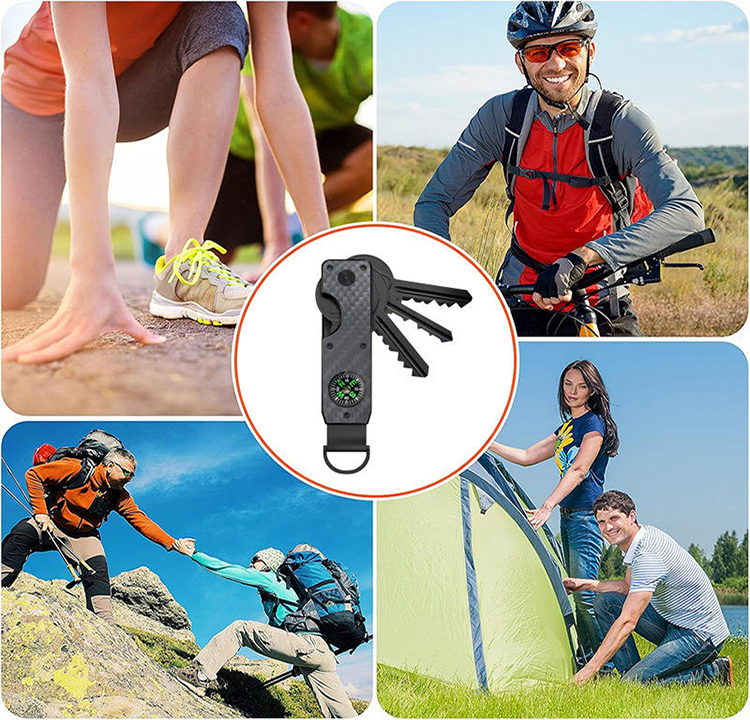
At its core, a durable key organizer functions much like a Swiss Army knife for your keys. Instead of hanging loosely from a center point, keys are stacked neatly between two protective plates or within a flexible wrap. They are typically secured by a tension-based screw system that allows the user to pivot a specific key out when needed, while keeping the others firmly in place.
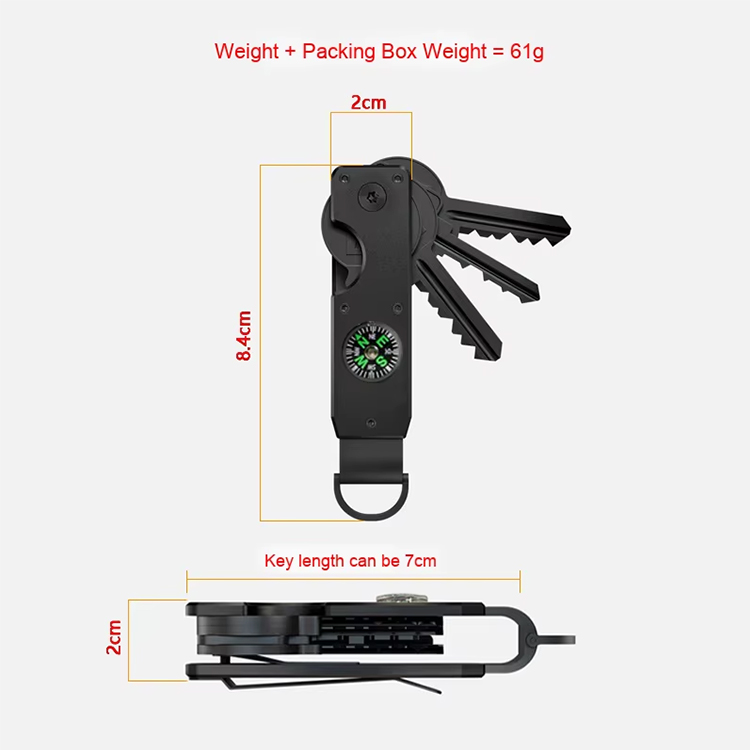
The magic of the multi-function key holder lies in its adjustability. Most high-quality organizers utilize stainless steel or brass hardware that can be tightened or loosened to suit the user's preference. This tension ensures that keys do not flop around loosely, eliminating the noise traditionally associated with walking or running. Furthermore, this system allows for an expandable capacity; by using longer screws or extension posts, a single organizer can often hold anywhere from two to twenty keys.
Traditional key rings create a spherical or irregular shape in the pocket, which can be uncomfortable and unsightly. In contrast, a key organizer aligns keys in a linear fashion. This creates a flat, slim profile that sits flush against the leg. This intentional design prevents the "pocket bulge" that can ruin the silhouette of a well-tailored suit or cause discomfort during long periods of sitting.
When searching for a "durable" key organizer, the material of the chassis is the most critical factor. Manufacturers have experimented with a wide array of substances, each offering unique benefits in terms of weight, strength, and tactile feel.
Aluminum remains one of the most popular choices for EDC gear due to its exceptional strength-to-weight ratio. Anodized aluminum key holders are resistant to corrosion and come in a variety of colors. They provide a rigid structure that protects the keys from bending while remaining light enough that the user hardly notices it in their pocket.
For those who demand the absolute pinnacle of durability, titanium is the gold standard. Known for being as strong as steel but significantly lighter, titanium is also biocompatible and extremely resistant to the elements. A titanium key organizer is essentially a lifetime investment, capable of withstanding extreme drops, heavy pressure, and the wear and tear of decades of use.
Carbon fiber has made its way from the worlds of aerospace and professional racing into our pockets. It offers a distinct, high-tech aesthetic and incredible tensile strength. Because it is non-metallic, it doesn't set off some sensors and provides a unique "warm" feel compared to cold metals. Similarly, G10—a high-pressure fiberglass laminate—is often used for its ruggedness and grip texture.
Not all organizers are hard-shelled. Brands like Orbitkey have popularized the use of top-grain leather and high-performance elastomers (TPU). Leather organizers offer a classic, sophisticated look that ages beautifully over time, developing a unique patina. TPU versions are ideal for active individuals, as they are water-resistant, dust-resistant, and highly flexible, making them perfect for gym sessions or hiking trips.
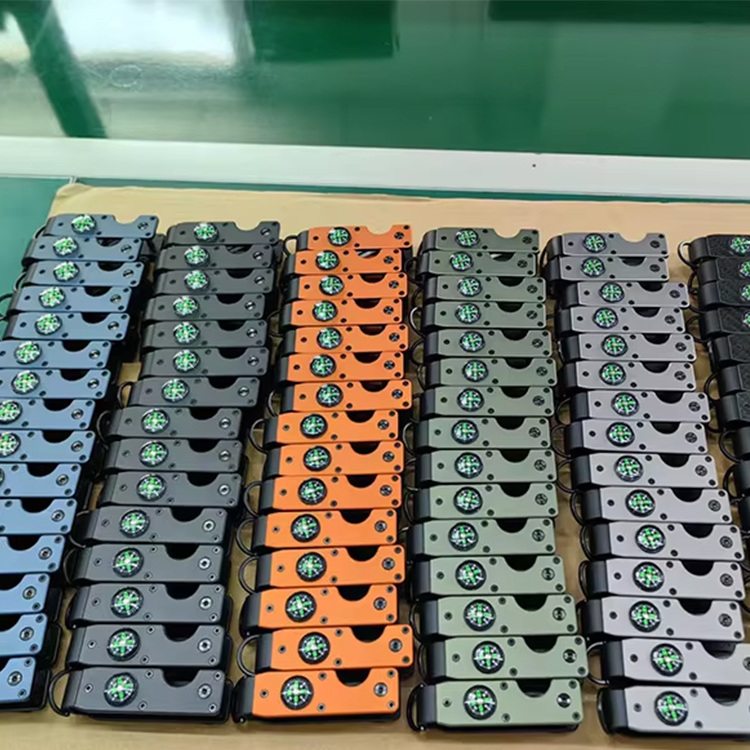
The term "multi-function" in a key holder refers to its ability to consolidate multiple tools into a single, compact footprint. In the modern world, we carry more than just house and car keys; we carry digital tools and utility gadgets.
Many top-tier key organizers come equipped with, or allow for the addition of, specialized inserts. Common additions include:
- Bottle Openers: A staple of EDC, integrated seamlessly into the frame.
- Multi-tools: Small pry bars, screwdrivers, and even scoring edges for opening boxes.
- USB Flash Drives: Allowing you to carry important documents or digital backups in a secure, physical format.
- Scissors and Files: Miniature versions of grooming tools for quick fixes on the go.
One of the most significant advancements in key management is the integration of Bluetooth tracking technology. Some multi-function holders are designed specifically to house a Tile, AirTag, or a proprietary tracking chip. This ensures that if you ever misplace your keys, you can locate them using a smartphone app, and some even allow you to ring your phone from your keys if the phone is the item that is lost.
Beyond organizing keys, a primary function of these devices is protection. In a world where we carry expensive smartphones with glass screens, placing a jagged metal key ring in the same pocket is a recipe for disaster.
A durable key organizer acts as a buffer. Because the keys are tucked inside the "scales" or the wrap of the holder, the sharp teeth of the keys are never exposed to the other contents of your pocket. This simple design feature can save hundreds of dollars in repair costs for scratched screens or torn pocket linings.
For many, the most appreciated feature of a key organizer is the silence. The constant "jingle-jangle" of a traditional keychain can be distracting in professional environments or annoying during a quiet walk. By applying tension to the keys, the organizer keeps them silent, allowing for a more discreet and peaceful experience.

In the 21st century, the items we carry are an extension of our personal style. A messy, overstuffed keychain can look unprofessional and cluttered. A sleek, well-maintained key organizer communicates a sense of order and attention to detail.
The move toward key organizers is part of a larger trend of minimalism. It encourages users to evaluate what they truly need to carry every day. When you switch to a dedicated holder, you are forced to remove the "dead weight"—the old keys to long-forgotten locks, the plastic loyalty cards, and the decorative trinkets that serve no purpose. The result is a more intentional and streamlined daily kit.
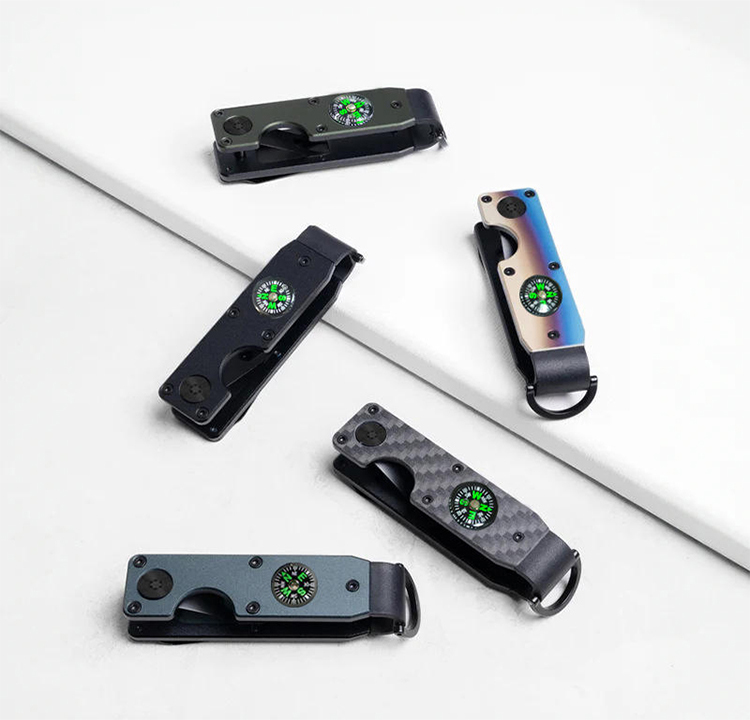
With a vast market of colors, materials, and accessories, a multi-function key holder is highly customizable. You can choose a rugged, tumbled metal finish for a "tactical" look, or a slim, polished leather wrap for a professional office setting. Some brands even offer interchangeable faceplates, allowing you to change the look of your organizer without replacing the entire unit.
While some critics argue that a key organizer might be slower to use than a traditional ring, the opposite is often true once a user becomes accustomed to the device.
Most organizers are designed for ergonomic "flicking." Much like using a pocket knife, you can use your thumb to rotate the desired key out of the stack. Because the keys are always in the same order, you develop muscle memory, allowing you to find the right key for your front door or office without even looking.
A common question regarding these organizers is how they handle modern car fobs, which are often too thick to fit inside the stack. High-quality multi-function holders solve this by including a "D-ring" or a dedicated attachment point at the end of the device. This allows the fob to hang independently while the smaller house and office keys remain neatly tucked away.
To ensure your key holder remains a "durable" companion for years, a small amount of maintenance is required.
Because these devices rely on screws, the vibrations of daily movement can occasionally cause them to loosen. Many manufacturers include rubber washers or O-rings to provide friction and prevent "self-unscrewing." Users are generally advised to check the tightness of their screws every few months. Some enthusiasts use a tiny drop of low-strength thread locker to ensure the screws stay exactly where they want them.
- Metal Holders: Can be wiped down with a damp cloth or a bit of isopropyl alcohol to remove pocket lint and oils.
- Leather Holders: Benefit from an occasional application of leather conditioner to prevent drying and cracking, especially if they are frequently exposed to moisture.
- Fabric/TPU Holders: Can usually be washed with mild soap and water.
To fully appreciate the value of a durable key organizer, it is helpful to look at the direct comparisons across several categories.
A traditional split-ring is made of spring steel. Over time, if you add too many keys or a thick car fob, the ring can become permanently "sprung," leaving a gap where keys can slip out. In contrast, a bolt-and-nut system used in organizers is far more secure. The structural plates of an organizer are also much harder to deform than a thin wire ring.
Losing a key is a major security risk and a significant inconvenience. Key organizers provide a much more secure attachment method. While a key can theoretically slip off a cheap ring, a key inside a bolted organizer is going nowhere unless the entire device is disassembled.
While a traditional key ring is often free or costs only a couple of dollars, a high-quality multi-function holder can range from $20 to over $100. However, when you consider the cost of replacing a scratched phone screen, the value of the integrated tools, and the fact that a titanium or aluminum version can last a lifetime, the investment becomes much easier to justify.
The "Durable Key Organizer: Multi-Function Key Holder" is not just a gadget; it is a solution to a universal problem. By applying modern engineering and material science to the humble task of carrying keys, these devices have elevated an everyday necessity into a refined tool. They offer a rare combination of protection, organization, and versatility that the traditional keychain simply cannot match.
Transitioning to a key organizer is an invitation to simplify your life. It is about removing the literal and figurative noise of a cluttered pocket and replacing it with the smooth, silent, and satisfying operation of a well-designed tool. Whether you choose the ruggedness of titanium, the elegance of leather, or the utility of an all-in-one multi-tool version, you are choosing a more organized way to move through the world. In the grand scheme of an everyday carry setup, it is often the smallest changes—like how we carry our keys—that make the biggest difference in our daily comfort and efficiency.
Most modern car keys are "fobs" which are thick and made of plastic. These generally do not fit *inside* the stacked part of the organizer. However, almost all durable key organizers come with a loop piece or a D-ring specifically designed to attach your car fob to the outside of the organizer.
Standard setups usually accommodate between 3 and 7 keys. However, many brands offer "extension posts" or longer screws that can expand the capacity to hold up to 20 or more keys. It is important to remember that as you add more keys, the device will become thicker and heavier.
In most cases, no. Many organizers are designed to be tightened with a standard flat-head screwdriver or even a small coin. Some specialized "heavy-duty" versions might require an Allen wrench (hex key), which is almost always included in the package by the manufacturer.
The tension is controlled by how tightly you fasten the screws. If tightened correctly, the internal washers (usually made of nylon or copper) provide enough friction to keep the keys tucked away until you intentionally pull one out with your thumb.
Yes! This is the "multi-function" part of the holder. Many companies sell compatible accessories such as bottle openers, pocket knives, USB drives, and multi-tools that are shaped exactly like a standard key so they can fit perfectly into the stack.


