

Views: 220 Author: Gstar Technology Publish Time: 10-10-2026 Origin: Site


Content Menu
● Start with Gstar: Front Pocket Wallet OEM Development
● What Is a Front Pocket Wallet—and Why "Front Pocket Waller"?
>> Front Pocket Carry Is a Design Requirement
● Choose a Front Pocket Wallet by Loaded Comfort
>> Check Thickness, Weight, and Edge Shape
● Metal, Leather, or Hybrid: Which Slim Wallet Fits Your Customer?
● Capacity Claims: Separate Maximum Storage from Everyday Use
● RFID Blocking: Explain the Feature Without Overpromising
>> Ask for a Defined Test Method
● What Public User Feedback Reveals About Front Pocket Wallets
>> Turn Feedback into Product Requirements
● A Practical Sample-Testing Plan for OEM Buyers
>> Step 1: Document the Starting Configuration
>> Step 2: Evaluate Everyday Access
>> Step 3: Inspect Pocket Interaction
>> Step 4: Review Construction and Retention
>> Step 5: Resolve Problems Before Approval
● Build a Better OEM Brief Before Requesting a Quote
● Product Content Should Show the Wallet in Use
● Develop Your Custom Front Pocket Wallet with Gstar
>> What is the difference between "front pocket waller" and "front pocket wallet"?
>> How many cards should a front pocket wallet hold?
>> Is a metal wallet better than a leather wallet?
>> Does RFID blocking prevent every type of card fraud?
>> Can Gstar customize a front pocket wallet for my brand?
>> What should I send when requesting an OEM quotation?
Gstar Technology (Shenzhen) Co., Ltd. helps overseas brands, wholesalers, and manufacturers develop slim wallets, RFID card holders, leather wallets, and related accessories. If you searched for "front pocket waller," you probably mean a front pocket wallet: a compact wallet designed to carry everyday essentials without unnecessary bulk.
From a manufacturing perspective, the right wallet is not simply the smallest one. It balances loaded thickness, card access, pocket comfort, material quality, and realistic capacity.
This guide explains how to choose a wallet for everyday use and how to turn those same requirements into a practical OEM specification. The goal is straightforward: create a product people enjoy carrying, not just one that looks slim in a photograph.

Gstar offers OEM and ODM options across metal card holders, RFID wallets, leather wallets, and related everyday-carry products. Customization options include branding, colors, packaging, and product or mold development, depending on the selected project.
For buyers, these options matter only when they support a clearly defined customer need.
A commuter may prioritize quick card access. A minimalist customer may want fewer compartments. A gift buyer may value presentation and personalization. A premium leather customer may care more about texture and stitching than a mechanical card-release feature.
Our recommended starting point is therefore a carry profile, not a logo placement.
Define the intended user, typical card load, cash requirements, preferred material, and retail positioning before choosing a wallet structure.
A front pocket wallet is a compact wallet intended to fit comfortably in a trouser's front pocket. Common formats include leather card sleeves, slim bifolds, rigid metal card holders, and hybrid designs.
"Front pocket waller" is a spelling variation, not a separate product category.
The important distinction is between a wallet that appears compact when empty and one that remains usable when filled.
A narrow wallet with multiple overlapping pockets can become bulky. A rigid card holder may have a small footprint but feel uncomfortable if its edges press against the pocket.
Judge the complete carrying experience, not the product name alone.
Front pockets vary across jeans, chinos, workwear, and tailored trousers.
That means there is no universal "perfect" wallet size. A suitable design must work with the intended clothing and the customer's actual belongings.
For an OEM project, pocket compatibility should be part of sample evaluation rather than an assumption made from dimensions.
The first useful question is: what do you genuinely need to carry?
Make a list of your daily cards, identification, emergency cash, and any receipts you cannot avoid. Separate daily essentials from items used occasionally.
Then compare wallets with that load.
Three characteristics deserve attention:
- Loaded thickness: include cards, folded notes, and any tracker.
- Loaded weight: compare complete configurations, not empty shells.
- Contact surfaces: inspect corners, seams, clips, and exposed hardware.
For personal use, walk, sit, bend, and climb stairs with the sample in your normal pocket.
For brand development, repeat the exercise with several representative users. Record observations consistently instead of relying on "feels premium" or "looks comfortable."
This does not replace formal testing. It helps identify practical problems before the design becomes expensive to change.
Material selection affects structure, appearance, access, and maintenance. None of these categories is automatically best.
| Wallet type | Practical appeal | Trade-off to evaluate | Useful OEM checks |
|---|---|---|---|
| Metal card holder | Rigid structure and technical styling | Edge comfort, surface marking, clip pressure | Deburring, finish consistency, fastener security |
| Leather card sleeve | Flexible feel and simple organization | Slot tightness, stretching, layered thickness | Leather specification, stitching, edge finishing |
| Slim leather bifold | Familiar layout with space for notes | Folded bulk and overlapping compartments | Loaded thickness, seam placement, cash access |
| Metal-and-leather hybrid | Combines a structured holder with additional storage | Extra components and assembly complexity | Bonding, stitching, mechanism access |
| Tracker-compatible wallet | Provides a dedicated place for a compatible tracker | Added thickness and device fit | Retention, compatibility, loaded pocket profile |
Ask for precise material descriptions.
"Genuine leather" alone does not tell a buyer enough about grade, finish, thickness, or construction. Likewise, "metal wallet" does not identify the alloy, coating, or hardware.
Clear specifications make comparisons more useful and reduce ambiguity during production.
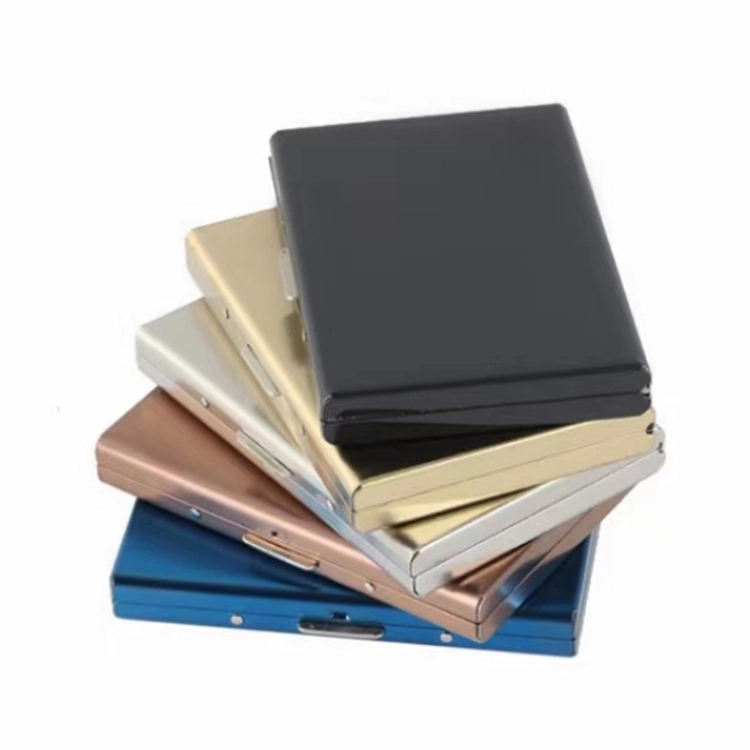
A wallet's advertised maximum capacity is not necessarily its most comfortable carrying capacity.
Card thickness, embossed details, folded cash, and accessory inserts can change the loaded profile. Access also matters: a wallet may retain many cards but make the middle card awkward to retrieve.
For shoppers, test your own card combination.
For brands, specify three different conditions:
1. Minimum load: the smallest intended card stack.
2. Typical load: the expected everyday configuration.
3. Maximum load: the upper limit you plan to advertise.
Evaluate retention and retrieval at every condition.
This distinction produces more honest product descriptions. It also helps customers understand whether a wallet suits their habits before they buy.
A useful listing describes capacity together with the configuration used to assess it.
An RFID blocking front pocket wallet is intended to reduce communication between compatible contactless cards and readers while the cards remain inside its protected area.
That is a specific function, not complete protection against financial fraud.
RFID shielding does not prevent phishing, account compromise, or every form of card misuse. Nor should a supplier assume that one shielding design works equally well with all credentials or devices.
Contactless payment technology and a wallet's shielding performance are separate issues.
For an OEM RFID wallet, request documentation that identifies:
- The wallet model and tested configuration.
- The cards, readers, or laboratory equipment used.
- The relevant frequency or technology.
- Card positions and wallet orientations.
- The acceptance criteria and observed results.
An informal reader demonstration can help explain the feature, but it is not automatically equivalent to an independent laboratory report.
Avoid broad claims such as "blocks every signal" or "makes your money completely safe."
Specific, documented statements build more trust than fear-based marketing.
Public everyday-carry discussions show that buyers do not all want the same minimalist setup. Some describe carrying around six cards. Others want cash, an identification window, or a tracker without excessive bulk.
These comments are useful for identifying questions, not proving how every customer behaves.
They also should not be presented as Gstar testimonials.
Three practical themes deserve attention:
- Capacity must match real belongings, not an idealized minimalist lifestyle.
- Access and organization matter alongside size.
- Long-term satisfaction can depend on retention and material behavior.
Instead of copying review language into a sales page, translate each concern into something the development team can evaluate.
"Too bulky" becomes loaded-thickness measurement.
"Cards are difficult to remove" becomes a retrieval task.
"Cards slip out" becomes a retention check at different loads.
"Leather feels too tight" becomes an evaluation of initial slot fit and behavior after use.
This approach connects customer language with measurable design decisions while keeping the distinction between anecdote and evidence clear.
Before approving a custom front pocket wallet, create a repeatable sample-review process.
The following framework is a proposed evaluation method, not a claim that any particular Gstar product has already passed these checks.
Record the sample version, materials, dimensions, weight, card load, and cash arrangement.
Photograph the empty wallet and the loaded wallet. Include a scale reference so reviewers can interpret the images.
Ask reviewers to remove the same frequently used card, return it, and access cash.
Note whether the task requires reorganizing the whole wallet. Check both right-handed and left-handed use when relevant.
Assess standing and seated comfort in the intended clothing.
Look for sharp contact points, awkward clip placement, and interference with other belongings. Do not assume a successful test in loose jeans applies to tailored trousers.
Inspect stitching, edge finish, screws, clips, straps, and moving parts.
Check retention at the minimum and typical loads. Agree on any cycle, abrasion, or other durability testing separately with the supplier.
List findings by severity and assign a corrective action.
Retest the revised sample against the same configuration. Keep the approved version as the reference for subsequent production discussions.
A detailed brief makes quotations easier to compare and reduces avoidable misunderstandings.
Include the following information:
- Target market and intended customer.
- Preferred wallet structure and material specification.
- Typical and advertised maximum card capacity.
- Cash, identification-window, and tracker requirements.
- Target dimensions and loaded-profile expectations.
- Logo method, position, and artwork.
- Color and finish requirements.
- Packaging, labeling, and instructions.
- Required testing and supporting documentation.
- Forecast quantity, destination, and requested schedule.
Request a clear distinction between standard-product customization and new structural development.
Also clarify which costs relate to samples, tooling, packaging, testing, and production. Avoid treating a preliminary quotation as a final commitment before the specification is agreed.
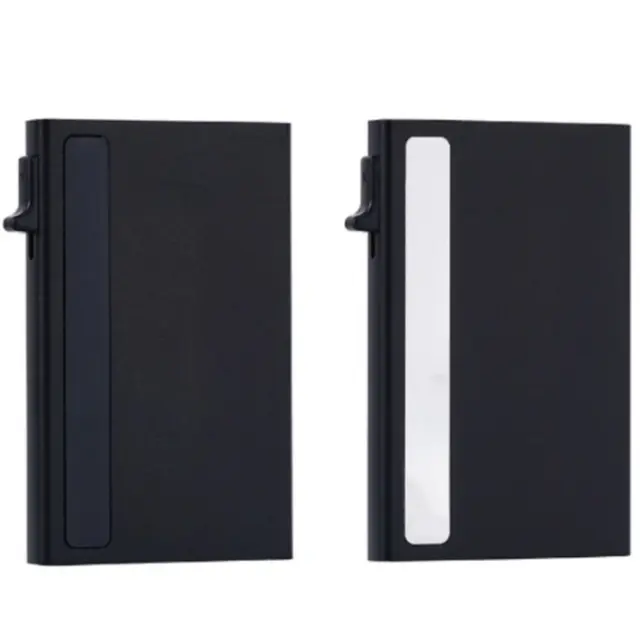
A front pocket wallet product page should help customers visualize their actual carry setup.
Use photographs of the wallet with representative cards and cash, not only empty studio images. State what is included and what is shown for illustration.
Useful visual content includes:
- A loaded side view with dimensions.
- A short card-access demonstration.
- A pocket-fit sequence showing standing and sitting.
- Close-ups of stitching, edges, clips, and finishes.
- A comparison of available configurations.
Keep demonstrations consistent with advertised specifications.
If a tracker is optional or sold separately, say so. If an image shows a prototype, identify it rather than allowing buyers to assume it represents final production.
A successful wallet combines a clear customer need with a specification that can be evaluated.
Gstar Technology (Shenzhen) Co., Ltd. provides a starting point for brands exploring metal card holders, RFID wallets, leather wallets, and related OEM accessories.
Send your target card capacity, preferred material, branding artwork, forecast quantity, and destination market to sales@gstartec.com.
Ask for a suitable product proposal, sample-development options, and a quotation based on your agreed requirements. Confirm current availability, project scope, testing needs, and production schedule directly before placing an order.
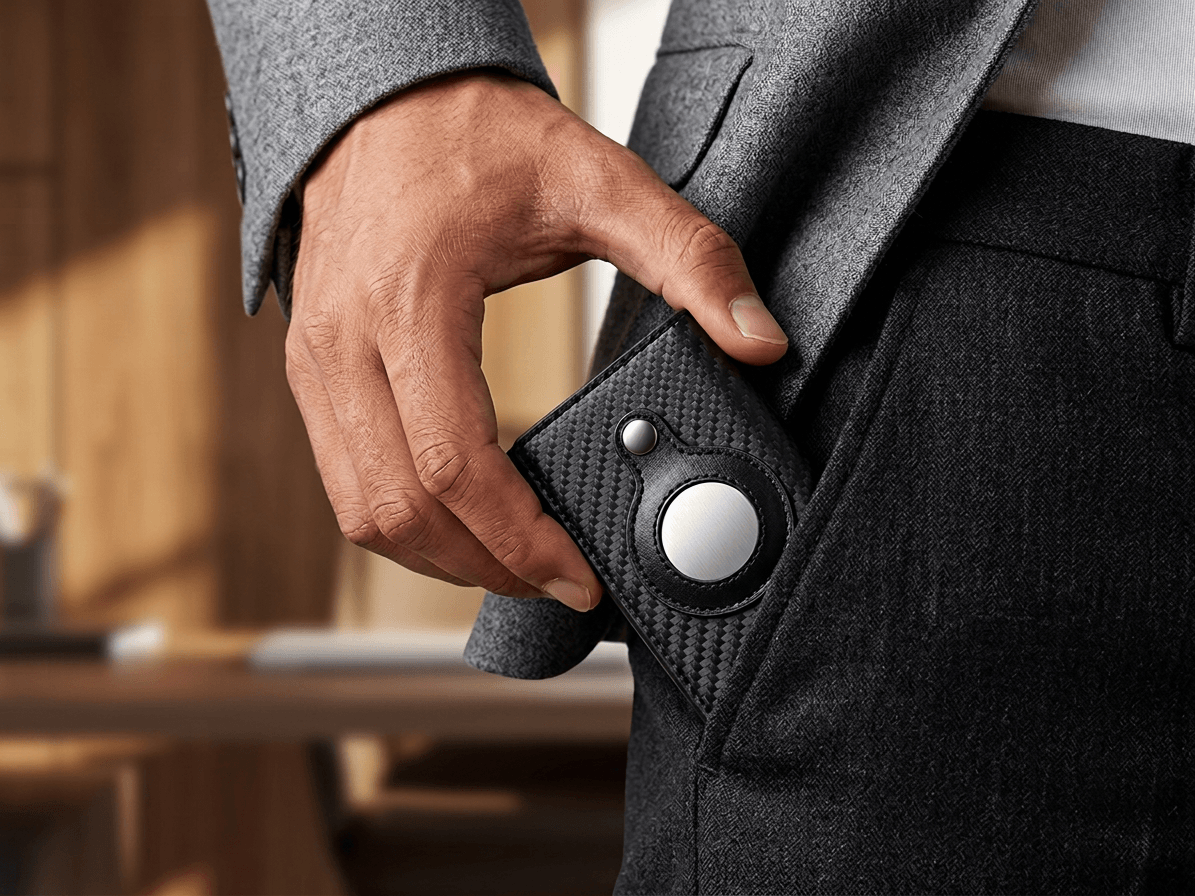
"Front pocket waller" is a spelling variation of "front pocket wallet." Both searches generally refer to a compact wallet intended for front-pocket carry. Use the correct spelling when comparing product specifications.
It should hold your daily essentials while remaining comfortable and easy to use. Check your actual cards rather than relying only on advertised capacity. For OEM development, distinguish minimum, typical, and maximum loads.
Not universally. Metal offers a rigid structure, while leather provides a more flexible construction. Compare loaded comfort, access, finishing, and maintenance requirements. The better choice depends on the user and the specific design.
No. RFID shielding addresses compatible contactless communication within its tested conditions. It does not prevent phishing, compromised accounts, or all other fraud. Request evidence that matches the exact product and claim.
Gstar lists OEM and ODM services, including branding, color, packaging, and product-development options. Confirm what is available for your chosen model and project. New structural requirements may involve different development steps from standard customization.
Provide the wallet structure, material requirements, card capacity, cash needs, artwork, packaging expectations, quantity forecast, and destination. Add any testing or documentation requirements so the quotation reflects the intended product rather than assumptions.
Hot Tags: China, Global, OEM, private label, manufacturers, factory, suppliers, manufacturing company


