
B2B Manufacturing · Shenzhen
A product that survives retail scrutiny
NDA before any drawing exchange
DFM report before tooling spend
Full custom: tooling + 5,000 pcs min
Ready stock from 500 pcs, or logo and packaging customization from 3,000 pcs? Browse wholesale products — fast dispatch, no tooling required.

Choose a route
Start where your product actually is
Most buyers arrive with one of three situations. Pick the one that matches yours — the requirements, MOQ and timeline below are the real constraints, not sales copy.
| Route | Best for | MOQ | Lead time | Tooling |
|---|---|---|---|---|
| Private label | First SKU, market test | 500 pcs | 25–30 days | None |
| OEM (your design) | Existing drawings | 3,000 pcs | 30–35 days | Customer-owned |
| ODM (we develop) | New category entry | 3,000 pcs | 75–110 days | Shared or buy-out |
MOQ at a glance. 500 pcs when we add your logo to an existing model; 3,000 pcs for any route that requires new tooling, a new structure or a new material system; reorders from 1,000 pcs once tooling exists.
Private label
Existing design, your brand
Our catalog platform, your logo, colors and packaging. Fastest route to a first SKU with no tooling cost.
OEM · build to print
You own the design
Send 2D/3D files and tolerances. We return a DFM review, tooling plan and unit price, then build exactly to your document.
ODM · concept to shelf
The product does not exist yet
We develop the design, mechanism, CMF and packaging with you, then take it to tooling and production in the same building.
What buyers actually check
Four things that decide whether a factory is worth a sample order
Engineering comes before money
You get a manufacturability report — wall thickness, draft angles, tolerance stack-up, assembly risks — before a tooling PO is raised. If a feature cannot hold tolerance at your target price, we say so in writing.
The critical steps are not subcontracted
Stamping, CNC, anodizing, PVD, leather cutting, stitching and final assembly run on our floor. Plating and magnetic testing sit with audited partners we can name on request.
Compliance is a file, not a promise
ISO 9001, ISO 14001, BSCI audit reports, REACH and RoHS declarations are on file. Batch test reports ship with the goods — you do not have to ask twice.
One named engineer owns the file
From sample to shipment, a single engineer answers you. No handoff between a sales inbox and an anonymous production queue, and replies land inside your working day.
Category benchmarks
The standards our tolerances get measured against


Inside the plant
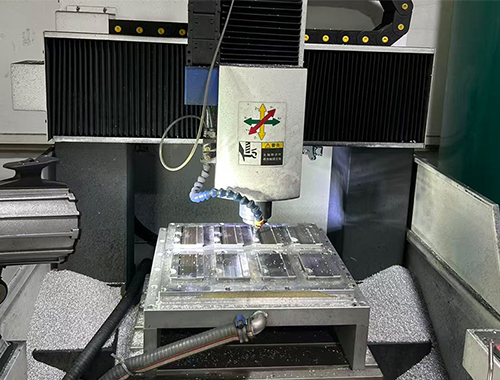
Where your order is actually made
Four areas decide the outcome of a metal-and-leather product. You are welcome to audit all of them, in person or by video walk-through.
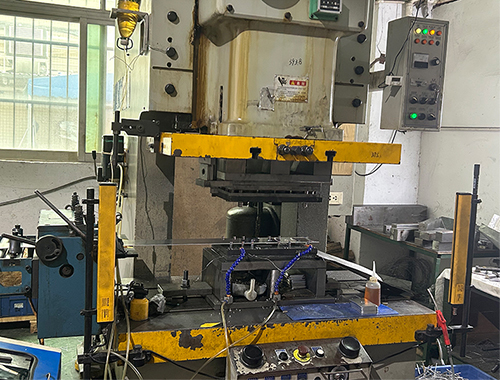
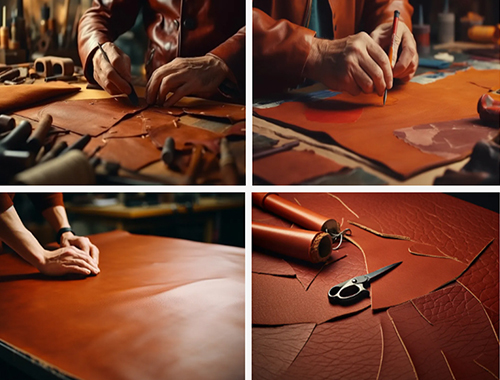
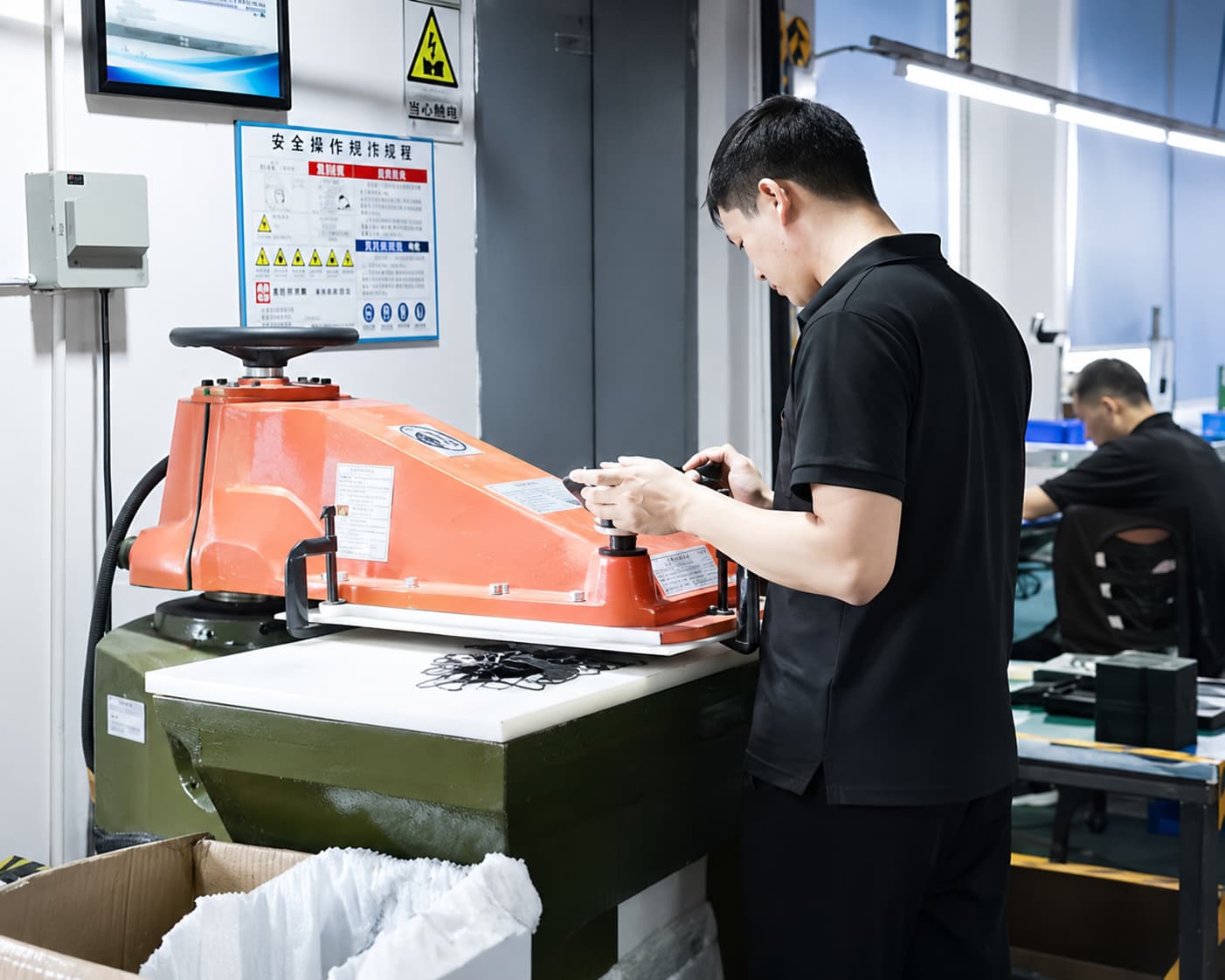
OEM · build to print
You send a drawing. We send back a manufacturability decision.
OEM is the right route when you already control the design and need a supplier who will not quietly change it. We work from your 2D/3D files and tolerances; every deviation is raised in writing before production.
Seven stages, with the weeks attached
Brief and drawing review
Send files, target quantity, market and price band. We confirm scope and flag anything that cannot be quoted without a missing dimension.
1–2 days
DFM report and tolerance sign-off
Written review of wall thickness, draft angles, tolerance stack-up, finish feasibility and assembly risk — with a cost impact for every change we recommend.
3–5 days
Quote, tooling PO and NDA
Unit price at three quantity tiers, tooling cost, lead time and payment terms. Tooling is owned by you unless you ask otherwise.
2–3 days
T1 sample and CMF approval
Functional sample in production material and finish. You approve color, texture and mechanism, or send back a marked-up correction list.
7–10 days
Pilot run and golden sample
A small pre-production run proves the process before it scales. The approved unit is sealed as the golden sample and kept on file.
5–7 days
Mass production with IQC / IPQC / OQC
Incoming material inspection, in-process checks at every operation, and AQL final inspection against the golden sample.
25–30 days
Documents, inspection and shipment
Test reports, packing list, commercial invoice and photos before dispatch. Third-party inspection (SGS, BV, Intertek) is welcome at any stage.
3–5 days
Commercial terms
What you can hold us to
- Minimum order
- 500 pcs per SKU with your logo; 3,000 pcs for deep customization that needs new tooling
- Sampling
- 7–10 working days after drawing approval; charged at unit cost plus courier
- Mass production
- 25–30 days after golden sample approval, excluding Chinese New Year
- Tooling ownership
- Customer-owned by default; buy-out price available on request
- Payment
- 30% deposit / 70% before shipment; repeat orders can ship against B/L copy
- Inspection
- AQL 2.5 final inspection; third-party inspection supported at your cost
- Documents
- REACH and RoHS declarations, batch test report, packing list and invoice
- Confidentiality
- NDA signed before files are exchanged; drawings never reused in our catalog
Customization
What can be changed without new tooling
These eight dimensions are the usual scope of an OEM customization. Anything outside them needs a tooling change — we price it separately instead of hiding it in the unit cost.
Logo and branding
Laser engraving, silk screen, pad print, hot stamping, debossed leather and metal badge. We confirm durability against your cleaning and handling assumptions.
Packaging
Retail box, sleeve, tray, mailer and FBA-ready poly bag with your label and barcode. Dielines are produced from your artwork before printing.
ODM · concept to shelf
When the product does not exist yet
ODM is a development project, not a purchase order. We take a brief, propose two or three design routes, engineer the mechanism, validate it, then tool and produce it in the same facility. You own the result; we keep the process.
OEM
Design and drawings are yours. We build to your document and raise every deviation in writing. Fastest and cheapest route when the design already exists.
ODM
Design, mechanism and CMF are developed with us. Higher engineering cost and longer timeline, but you get a product that is not resold under someone else’s SKU.
Seven development stages
Concept brief and benchmark teardown
Category review, target price, competing products opened and measured. We define what has to be different, not just what has to exist.
Week 1
Industrial design directions
Two or three routes with form, proportion, material story and cost implication. You choose one; we do not proceed on an unapproved direction.
Week 2–3
Mechanical design and tooling plan
Internal structure, hinge or pop-up mechanism, wall thickness, RFID cavity and assembly sequence, with a tooling list and cost.
Week 3–5
Prototype
3D-printed or CNC-machined working sample in the intended material. This is where ergonomics and mechanism problems surface.
Week 5–7
Validation
RFID shielding, drop, salt spray, UV and cycle-life testing. Failures are fixed before tooling, not after 1,000 units are made.
Week 7–9
Tooling, T1 and pilot
Molds cut, T1 samples evaluated, corrections applied, pilot run approved against the golden sample.
Week 9–14
Mass production and retail packaging
Full run with IQC/IPQC/OQC, retail packaging assembled, test reports issued per batch.
Week 14–16
What you receive
Deliverables, not promises
Cost structure
How a development project is billed
- Design and engineering
- Quoted per brief; credited against the production PO at 1,000 pcs or above
- Tooling
- One-time charge, customer-owned by default, buy-out available if you prefer shared tooling
- Samples
- Charged at unit cost plus courier; refunded against the first mass-production order
- Unit price
- Fixed at PO stage and held for six months at the agreed quantity tier
Process capability
Fourteen steps, and where each one happens
A metal-and-leather wallet passes through fourteen operations. The list below is the honest split: what runs on our floor, and what is supervised at an audited partner.
Material and finish
Eight material systems, five color routes, eight finishes
| System | Options | Typical use |
|---|---|---|
| Aluminium | Plate 0.8–1.5 mm, anodized or brushed | Slim everyday wallets, lowest weight |
| Stainless steel | Brushed or PVD coated, screw-frame construction | Heavier hand-feel, card-pop mechanisms |
| Titanium | Machined, sandblasted or PVD | Premium positioning, high wear resistance |
| Carbon fibre | Real carbon weave, gloss or matte clear coat | Lightweight premium, scratch resistance |
| Full grain leather | Natural grain, ages with use | Luxury and brand-gift lines |
| Top grain leather | Consistent surface, cost-balanced | Volume programmes |
| Vegetable tanned leather | Natural tones, low chemical input | Brands with material-origin claims |
| Microfibre / PU | Uniform colour, low cost | Entry price points |
| Colour routes | Anodizing, gradient anodizing, spray, laser, PVD tint | Match a Pantone target or brand palette |
| Finish | Brushed, sandblasted, laser engraved, PVD, high polish | Per-SKU texture and logo |
Material choice drives weight, feel, durability and price more than any other decision. These are the systems we hold stock and process knowledge for.
Metals
5052 and 6061 aluminum, 304 stainless steel, brass, zinc alloy. Thickness from 0.6 to 3.0 mm depending on the structure.
Leather and soft goods
Top-grain cowhide, full-grain, crazy horse, PU and microfiber. Skiving depth and stitch density are specified per panel.
Color
Anodized dye, PVD, spray, leather drum dye and print. Pantone matching against a physical chip, not a screen render.
Finish
Sandblast, bead-blast, brushed, mirror, matte, gloss, soft-touch and two-tone. Each is validated for wear before approval.
RFID verification
How we prove the shielding actually works
“RFID blocking” is the easiest claim in this category to fake. We test it as a measurable, batch-recorded property — not a marketing line on the box.
Frequency sweep
Inlays and finished goods are swept at 13.56 MHz, the band used by payment cards and transit readers, plus the 125 kHz band for access cards.
Read-range and attenuation
The reader is moved from contact to 10 cm in three orientations. Attenuation is recorded in dB, not described as “blocks signals”.
Card-in / card-out test
A live card is inserted and withdrawn ten times per sample. Any read event is a failure, and the batch is rejected rather than reworked silently.
Batch sampling and records
Every 500 units are sampled, results logged per lot and kept for 24 months. Test sheets ship with the goods on request.
Quality and compliance
Auditable, not aspirational
Three inspection gates
IQC on incoming metal and leather, IPQC at every operation, OQC against the sealed golden sample at AQL 2.5.
Reliability testing
48-hour salt spray, 1.2 m drop test, 72-hour UV exposure, hinge cycle life to 5,000 open/close cycles.
Certificates on file
ISO 9001 and ISO 14001 management systems, BSCI social audit, SGS test reports, REACH and RoHS declarations.
Third-party visits
SGS, BV or Intertek inspections are welcome at any production stage. Video walk-throughs are available for remote buyers.
Intellectual property
Five controls that protect your design
If you need a specific clause added to the agreement — field-of-use limits, regional exclusivity, or raw-file return — raise it at quotation stage. We would rather negotiate once than argue later.
Next step
What happens after you send a brief
- 1
Send the briefDrawing or 2D/3D file, target quantity, market and price band. A reference product photo is enough if no file exists.
- 2
Get a cost-driver reply in one business dayWe identify the three or four decisions that move your unit price — thickness, finish, packaging, quantity — and confirm what is feasible.
- 3
Receive a formal quote with risk notesUnit price at three quantity tiers, tooling cost, lead time, payment terms and any tolerance risk we want on record.
What to prepare
Missing half of this is normal. Send what you have — we will ask for the rest in one message instead of twelve.
Questions buyers ask
Straight answers
What is the real minimum order quantity?
500 pcs per SKU when we apply your logo to an existing model. Deep customization — a new structure, mould or material system — starts at 3,000 pcs because the tooling has to amortize, with reorders from 1,000 pcs. Trial orders below 500 are possible on existing tooling — ask, and we will quote the actual surcharge.
Do you charge for samples?
Yes, at unit cost plus courier. A free sample is usually a sample nobody engineered. The sample charge is credited against your first mass-production order.
How long does a sample take?
7–10 working days for OEM once drawings and finish are agreed. ODM prototypes take 5–7 weeks because the mechanism is still being validated.
Who owns the mold and tooling?
You do, by default. Tooling invoices are issued in your name and the tooling is either handed over or held exclusively for your orders. Shared-tooling pricing is available if you prefer a lower upfront cost.
Can you produce our existing design as a private-label product?
Yes, if the design is yours or you hold a license. We will require a design ownership declaration before we start tooling, and we will not reproduce another brand’s protected design.
How do you verify RFID blocking performance?
Attenuation measurement at 13.56 MHz and 125 kHz in three orientations, plus ten card-in/card-out cycles per sample. Every 500 units are sampled and results are logged per lot for 24 months.
What leather grades do you stock?
Top-grain, full-grain and crazy horse cowhide, plus PU and microfiber. Grade affects thickness consistency and patina; we quote by grade rather than a generic “genuine leather” claim.
How long does the pop-up mechanism last?
The elastic band is the wear part. We test to 5,000 open/close cycles and specify band grade by expected daily use. Replacement bands ship with every order.
Can you guarantee color consistency between batches?
We match against a physical Pantone chip and keep an approved color plaque on file. Anodized and PVD lots are compared to that plaque under D65 light before release.
Do you handle Amazon FBA requirements?
Yes. FNSKU labels, poly bagging, suffocation warnings, carton labeling and shipment plans are standard. We can also prep to a retail chain’s routing guide if you supply it.
What are the payment terms?
30% deposit with the PO, 70% before shipment. Repeat orders with a history can ship against a B/L copy. Tooling is invoiced separately and paid before mold cutting.
Can we inspect before shipment?
Yes, and we prefer it. We issue an AQL 2.5 report and photos before dispatch, and third-party inspection by SGS, BV or Intertek is welcome at your cost.
Which certificates can you provide?
ISO 9001, ISO 14001, BSCI audit report, SGS test reports, REACH and RoHS declarations. If your market needs FCC, CE or California Prop 65 documentation, tell us at quotation stage.
What happens if the first batch fails inspection?
The batch is reworked or remade at our cost before shipment. We do not ask a buyer to accept a defective first order and discount it afterwards.