

Views: 220 Author: Gstar Technology Publish Time: 10-09-2026 Origin: Site


Content Menu
● Top Card Wallet Manufacturers and Suppliers in Switzerland: Comparison Overview
● 1. Gstar Technology: OEM Card Wallet Manufacturing for Swiss-Market Projects
>> Manufacturing capabilities worth evaluating
>> What I would confirm before ordering
● 2. Victorinox: Swiss Branding with Model-Specific Manufacturing Origin
>> Best-fit purchasing scenario
● 3. Wagner of Switzerland: Minimalist Cardholders and Tool Integration
>> What buyers should investigate
● 4. Secrid: Dutch Wallet Manufacturing for the Swiss Market
>> Why Secrid matters to procurement teams
● 5. Galaxus: A Swiss Retail Channel for Product Comparison
● How to Select a Private-Label Card Wallet Manufacturer
>> 1. Write a measurable product specification
>> 2. Approve a controlled reference sample
>> 3. Compare total project cost
● Swiss-Made vs. Swiss-Branded Wallets: An Essential Distinction
● A Practical Card Wallet Sample-Testing Plan
>> Step 1: Test realistic card combinations
>> Step 2: Assess access and handling
>> Step 3: Examine finishes and construction
>> Step 4: Define the RFID claim
>> Step 5: Check packaging and instructions
● How to Turn Customer Feedback into Better OEM Specifications
● Start Your Swiss-Market Wallet Project with Gstar
>> Are all card wallet suppliers in Switzerland Swiss manufacturers?
>> Can Gstar manufacture private-label card wallets?
>> What is the minimum order quantity for custom wallets?
>> Can a China-made wallet be marketed as Swiss-made?
>> What should I request to verify RFID-blocking performance?
>> Should I choose a metal or leather card wallet?
>> How should buyers compare supplier quotations?
Finding the top card wallet manufacturers and suppliers in Switzerland requires more than comparing attractive products. For brands, wholesalers, and distributors, the real questions concern manufacturing capability, product origin, customization, quality control, and repeat-order consistency.
This guide starts with Gstar Technology (Shenzhen) Co., Ltd., a China-based OEM and ODM factory relevant to Swiss-market sourcing. It then examines Swiss-branded products, an international wallet maker serving Switzerland, and a Swiss retail sourcing channel.
My recommendation is straightforward: choose the business model before choosing the supplier. Developing a private-label wallet and purchasing an established brand's finished products are different projects.
Disclosure: This is a Gstar-led commercial sourcing guide, not an independent market-share ranking. Listing order reflects the article's OEM focus, not a verified performance league table.

"In Switzerland" can describe a company's location, its sales market, or its manufacturing origin. These meanings should not be treated as interchangeable.
| Company or channel | Business category | Relevant offering | Main sourcing consideration |
|---|---|---|---|
| Gstar Technology | China-based OEM/ODM manufacturer | Metal card wallets, RFID holders, slim wallets, leather wallets | Custom product development; confirm Swiss delivery terms |
| Victorinox | Swiss brand | Altius Secrid card wallets | Branded purchasing; model-specific origin matters |
| Wagner of Switzerland | Swiss-positioned accessories brand | Minimalist cardholders and cardholder/tool combinations | Verify origin and commercial supply arrangements |
| Secrid | Dutch wallet maker with a Swiss-market website | Cardprotectors and compact wallets | Established branded assortment; confirm reseller terms |
| Galaxus | Swiss retail sourcing channel | Card wallets from multiple brands | Product comparison and sample purchasing, not assumed OEM supply |
For private-label development, factory capabilities deserve the closest examination. For branded resale, authorization, commercial terms, and after-sales responsibilities become more important.
Gstar Technology (Shenzhen) Co., Ltd. provides OEM and ODM services for foreign brands, wholesalers, and other manufacturing businesses.
Its product portfolio includes minimalist metal wallets, RFID cardholders, ultra-thin wallets, genuine leather wallets, key organizers, graded-card holders, and protective bumpers. This breadth can support a coordinated everyday-carry collection rather than a single isolated product.
Gstar's official website reports establishment in 2012, in-house CNC machining, more than 200 employees, approximately 8,000 square meters of factory space, and monthly production capacity exceeding 300,000 pieces.
These are company-reported figures, not independently audited findings in this guide. Buyers should verify current capacity for their chosen materials, finishes, and assembly processes.
Available customization described by Gstar includes:
- Logo engraving and other branding processes.
- Color and surface-finish options.
- Metal, leather, and other material combinations.
- Packaging development.
- Mold and product-design customization.
- Prototype and sample development.
The practical advantage is flexibility across product formats. A brand could evaluate a metal cardholder alongside a leather-covered pop-up wallet and matching key organizer.
I would request a written quotation covering the exact specification, minimum order quantity, sampling charges, tooling ownership, delivery terms, and defect-resolution procedure.
I would also verify the current production address and contracting entity. A company name alone does not identify the facility producing a particular order.
For minimalist wallets inspired by popular market formats, the specification should use accurate product terminology. Do not imply authorization from Ridge or another trademark owner without documented permission.
Gstar is a China-based sourcing option—not a Swiss manufacturer. Swiss-market positioning should remain separate from manufacturing-origin claims.
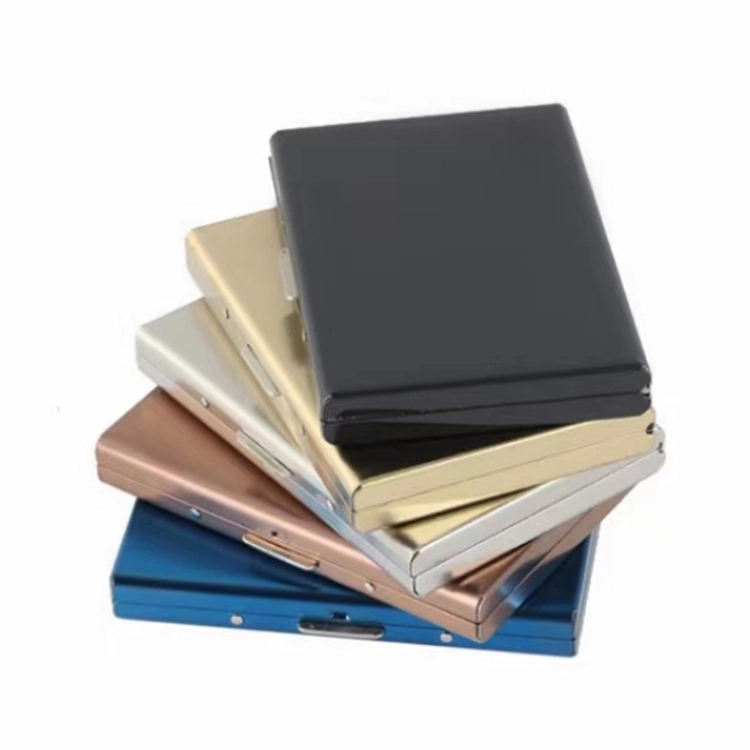
Victorinox is relevant to buyers seeking an established Swiss brand rather than a new private-label collection.
Its Altius Secrid Leather Card Wallet combines a leather exterior with a quick-access Cardprotector. The official product page describes storage for four to six bank cards, plus two additional cards, with further space for cash and business cards.
Crucially, that page lists the product's country of origin as the Netherlands.
This illustrates an important procurement distinction: a Swiss brand does not automatically mean a Swiss-manufactured wallet.
Victorinox merits consideration for a branded assortment or gifting project, subject to appropriate commercial arrangements.
Before committing, confirm:
- Whether the intended sales channel is authorized.
- Available wholesale or corporate-gifting terms.
- Model-specific warranty conditions.
- Stock availability and replenishment arrangements.
- Permission to use brand images and marketing assets.
Do not assume that a consumer product listing indicates OEM manufacturing availability.
Wagner of Switzerland presents minimalist cardholders and accessories with a precision-engineering identity.
Its official website highlights an eight-card cardholder with a finger-access feature and a cardholder combined with a 31-tool card.
This product direction is relevant to everyday-carry retailers evaluating compact accessories with additional functionality.
A multifunction concept deserves more than a visual review. Examine pocket comfort, card access, edge finishing, and whether the additional component complicates everyday use.
For commercial sourcing, ask Wagner to clarify manufacturing origin, product availability, distribution arrangements, and any personalization options.
The public information reviewed does not establish a general private-label manufacturing program. Treat Wagner as a branded-product candidate unless the company confirms otherwise.
Secrid identifies itself as a Dutch wallet maker and operates a Switzerland-facing website.
Its range centers on an aluminum Cardprotector, quick card access, and compact wallet designs. The Swiss-market website distinguishes essential-carry options holding up to six cards from expanded-carry options holding up to sixteen cards.
Those capacities apply to different product configurations. They should not be presented as identical specifications for every model.
Secrid offers a useful reference point for evaluating compact-wallet usability:
- How clearly are capacity limits explained?
- How easily can users select individual cards?
- How does additional storage affect thickness?
- How clearly are materials and product care communicated?
For branded resale, contact the company about applicable retailer or distribution arrangements. Do not infer unrestricted private-label access from the existence of a retail catalog.
Galaxus is useful as a Swiss retail sourcing and research channel rather than a presumed wallet factory.
Its Victorinox Altius Secrid listing provides product attributes such as card capacity, materials, dimensions, RFID-blocking equipment, and country of origin.
For an OEM buyer, this kind of listing can help establish a comparison framework and identify products worth purchasing as samples.
However, retail availability does not establish wholesale authorization, exclusive distribution rights, or manufacturing capability.
Use retail channels to study presentation and evaluate physical products. Negotiate commercial supply with the relevant brand, distributor, or factory.
The most important sourcing decision is not "Which supplier looks best?" It is "Which supplier can repeatedly deliver the approved specification?"
I recommend organizing evaluation around three areas.
"Premium," "slim," and "durable" are positioning words, not complete production requirements.
Specify:
- Dimensions, weight, and loaded thickness.
- Card capacity and acceptable card types.
- Material grade and finish.
- Leather type, thickness, and construction.
- Branding position and appearance.
- Packaging dimensions and required information.
- Performance checks and acceptance criteria.
Request separate specifications for each variant. A carbon-look surface should not be described as genuine carbon fiber unless its construction supports that claim.
Likewise, "genuine leather" should not substitute for a detailed leather specification.
Choose a signed-off reference sample before bulk production.
Record its materials, measurements, finish, logo placement, mechanism behavior, and packaging. Keep corresponding samples with both buyer and supplier.
Document how changes will be approved. Otherwise, a seemingly minor material substitution can become a disagreement after delivery.
Unit price is only one part of sourcing economics.
A practical comparison should include tooling, sampling, packaging, freight, inspection, import handling, applicable taxes, and an allowance for defects or returns.
Request current logistics and tax advice for the actual shipment. Do not apply a generic "European landed cost" estimate to Switzerland without checking the relevant circumstances.
For industrial products, the Swiss Federal Institute of Intellectual Property explains that Swiss origin generally requires at least 60% of manufacturing costs to be generated in Switzerland, together with the relevant origin-conferring activity and an essential physical manufacturing step there.
Exceptions and detailed calculation rules apply. Specific origin claims require an appropriate assessment.
For buyers, the practical lesson is simple: selling a wallet in Switzerland, registering a Swiss brand, or adding local packaging does not by itself establish Swiss manufacture.
Keep these descriptions separate:
- Swiss brand.
- Designed in Switzerland.
- Manufactured in China.
- Manufactured in the Netherlands.
- Swiss-made, where the applicable criteria are satisfied.
Accurate origin language protects credibility and gives customers a clearer understanding of what they are buying.
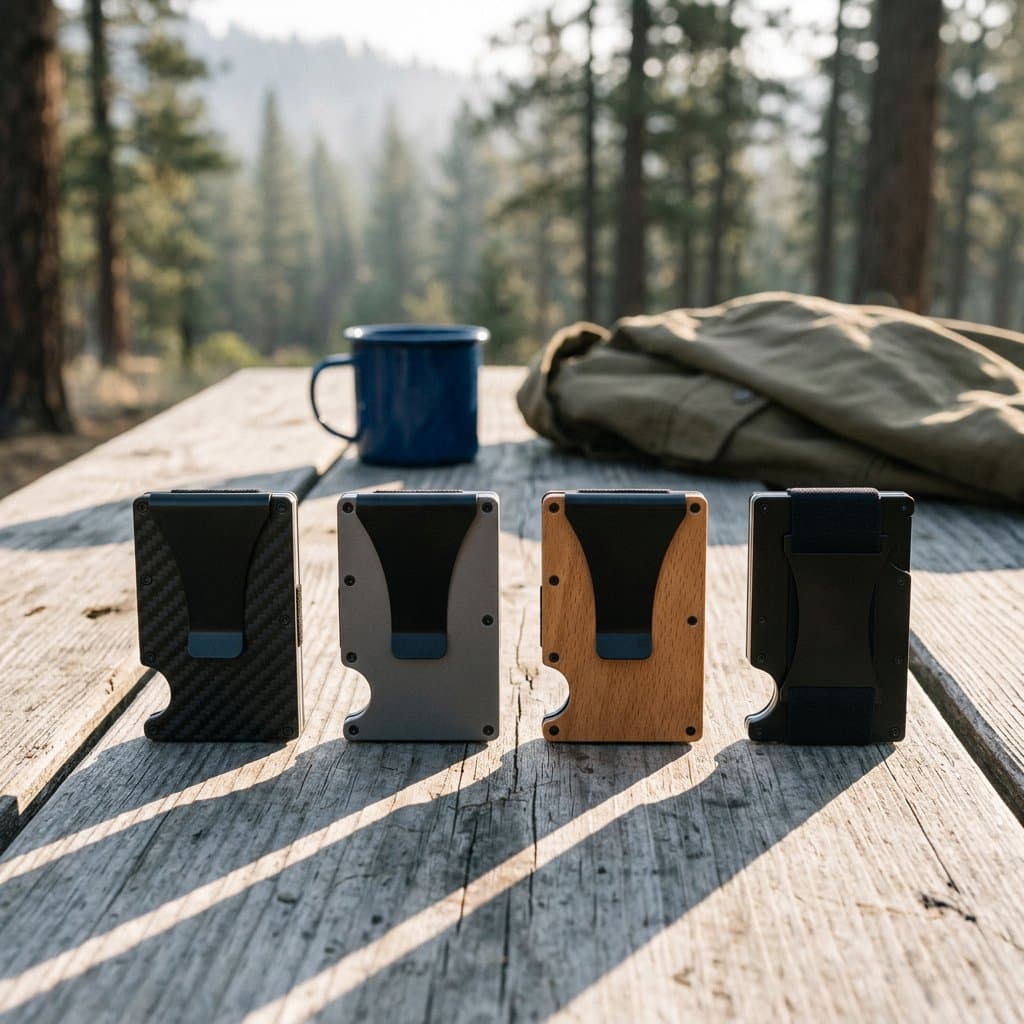
The following is a proposed buyer-side evaluation workflow, not a claim that every listed company uses identical tests.
Evaluate the intended mix of flat cards, embossed cards, and any thicker cards your product claims to accommodate.
Check retention at both minimum and maximum advertised capacity.
Repeatedly operate the mechanism. Observe incomplete ejection, excessive force, inconsistent card presentation, and accidental release.
For plate-style wallets, examine strap behavior, screw security, and access to middle cards.
Inspect edges, coating consistency, logo appearance, stitching, leather adhesion, and visible gaps.
Agree on acceptable variation before production rather than deciding after shipment.
Ask the supplier to identify the relevant frequency, test method, card configuration, and supporting report.
Test the finished product configuration rather than relying only on a raw-material claim. Avoid advertising RFID protection as protection against every type of payment fraud.
Confirm that the packaging prevents cosmetic damage and accurately communicates capacity, operation, care, and warranty contact information.
A short instruction video can also explain a mechanism more clearly than a paragraph of technical copy.
No verified customer reviews were supplied for this article, so no testimonials or satisfaction statistics are presented.
When real reviews become available, I would translate them into testable requirements rather than simply adding praise to the page.
| Feedback to investigate | Specification or test response |
|---|---|
| Cards feel loose | Define retention checks across advertised capacities |
| Wallet feels bulky | Measure loaded thickness, not only empty thickness |
| Mechanism feels difficult | Assess operating force and repeated-use consistency |
| Finish wears unexpectedly | Agree on finish expectations and relevant wear checks |
| Capacity is unclear | Publish card-type assumptions and practical limits |
These are illustrative feedback categories, not reported Gstar customer complaints.
Preserve review provenance: product model, date, sales channel, and permission to publish. Where possible, explain what changed after feedback and provide evidence of the improvement.
If your objective is a custom collection rather than an existing branded assortment, begin with a clear sourcing brief.
Send Gstar your target customer, preferred wallet format, material choices, approximate order quantity, branding requirements, packaging concept, delivery destination, and target launch date.
Ask for a specification-based quotation, prototype proposal, relevant test documentation, and current production schedule.
Contact Gstar at sales@gstartec.com to discuss your OEM or ODM project. Agree on sample approval, production requirements, and shipping responsibilities before confirming a bulk order.
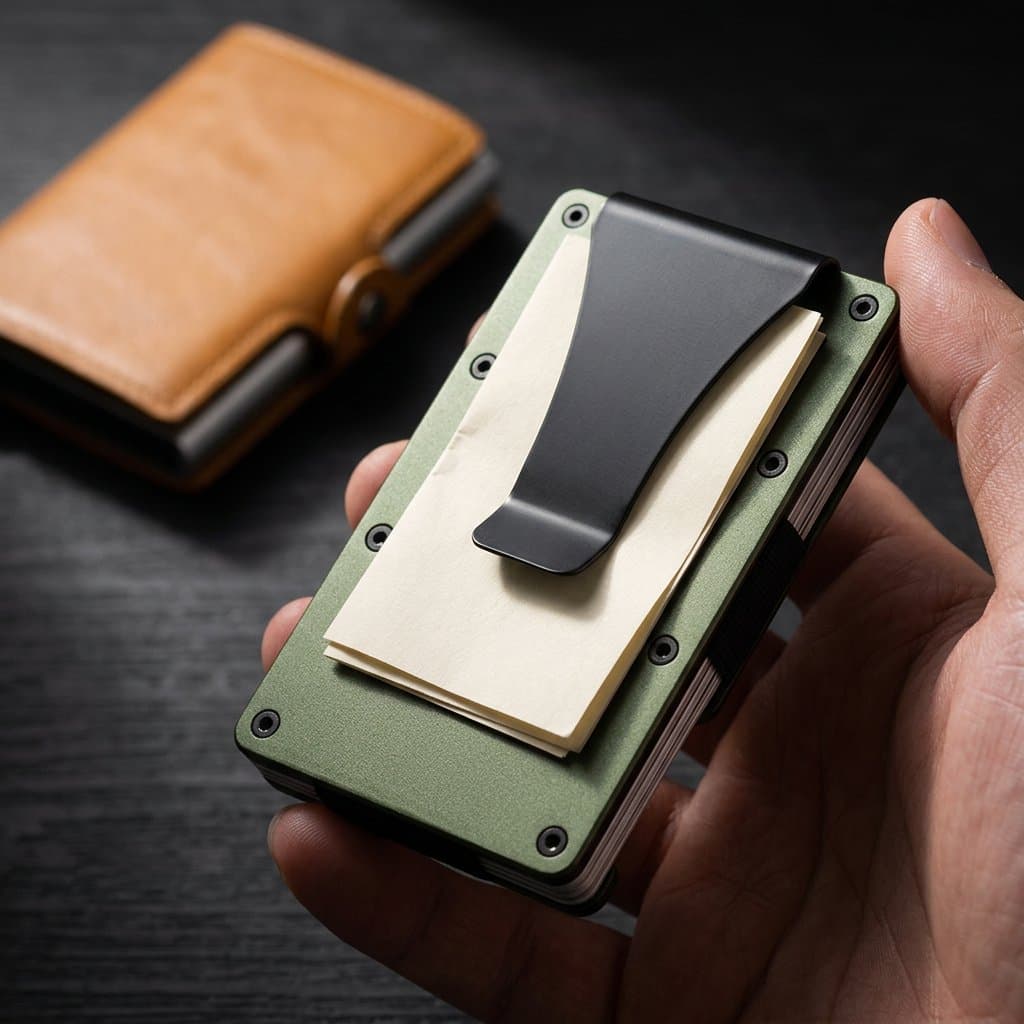
No. The market includes Swiss brands, imported products, retailers, and overseas factories relevant to Swiss-market sourcing. Verify each product's manufacturing origin separately.
Gstar advertises OEM and ODM services covering branding, materials, colors, packaging, and product development. Confirm the options, costs, and feasibility for your specific design.
There is no single reliable MOQ across all suppliers and configurations. Ask for model-specific requirements, including separate minimums for colors, custom packaging, and new tooling.
Swiss branding or sale in Switzerland does not establish Swiss origin. Assess any Swiss-made claim against the applicable criteria before using it on products or marketing materials.
Request the test method, relevant frequency, report, and tested product configuration. Ensure that the evidence matches the finished wallet and the wording of the advertised claim.
Choose according to the intended user experience. Compare loaded thickness, access, appearance, construction, and material requirements through samples rather than assuming one category is always better.
Compare identical specifications and include tooling, sampling, packaging, inspection, freight, and import-related costs. Also compare defect remedies, delivery commitments, and repeat-order consistency.
Hot Tags: China, Global, OEM, private label, manufacturers, factory, suppliers, manufacturing company


