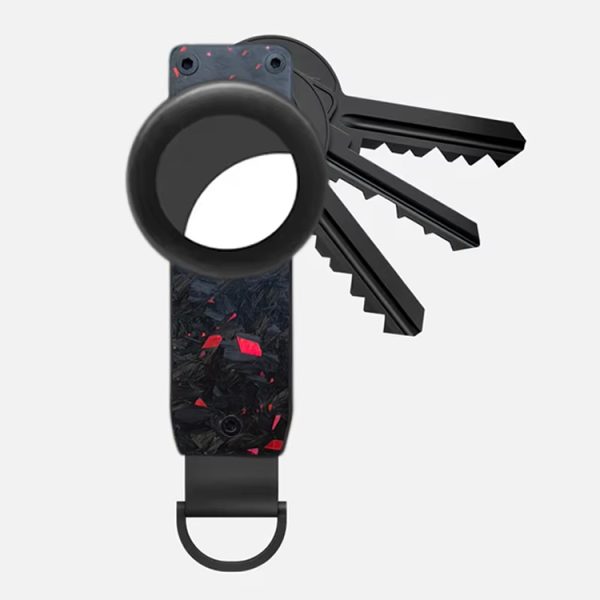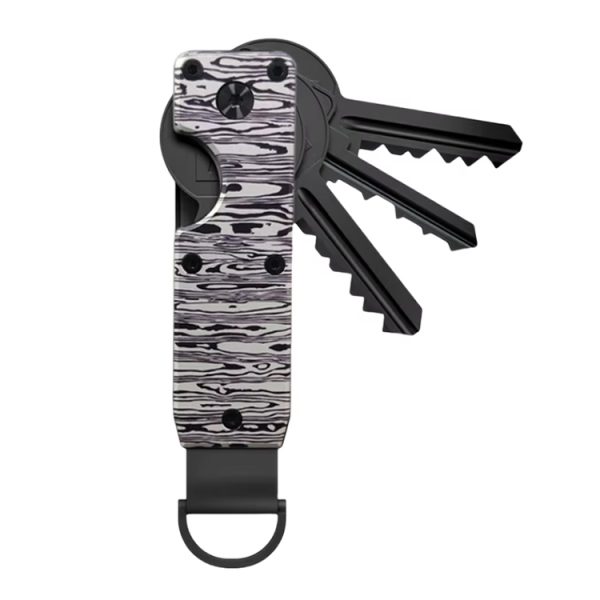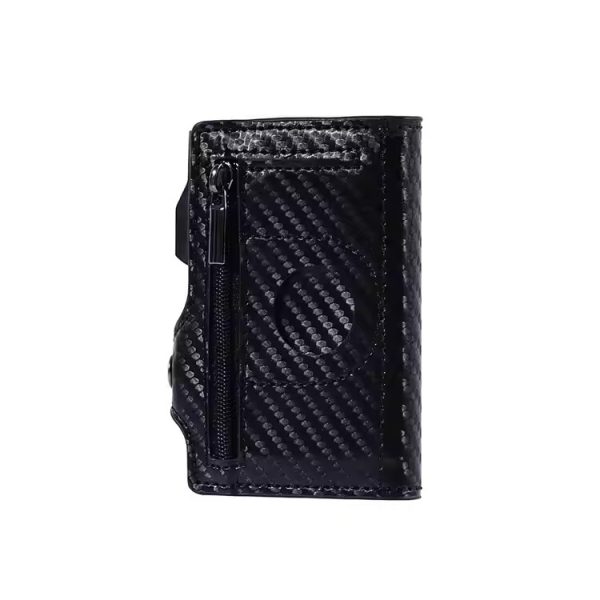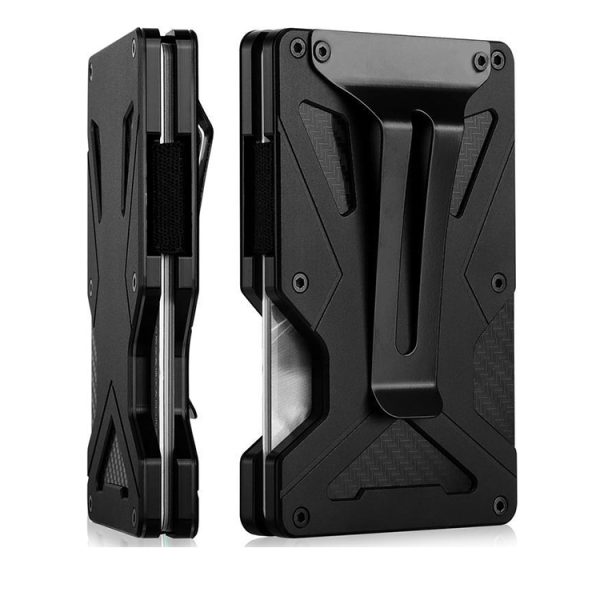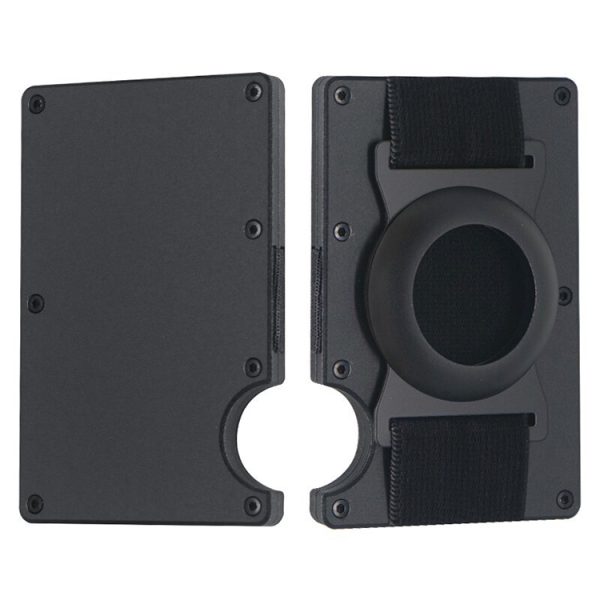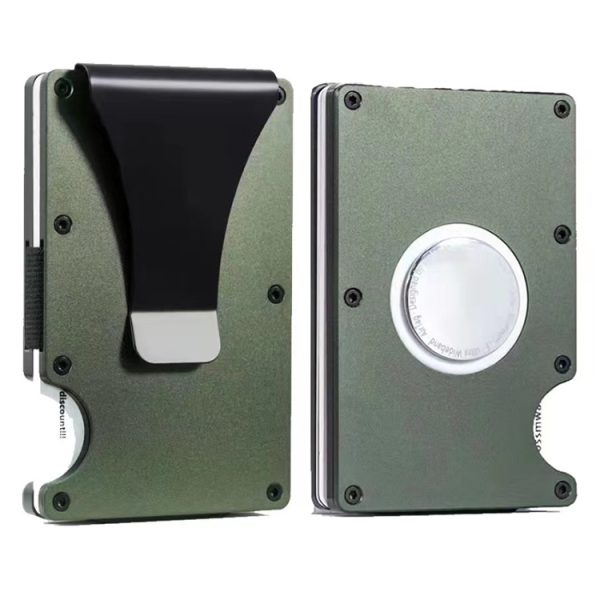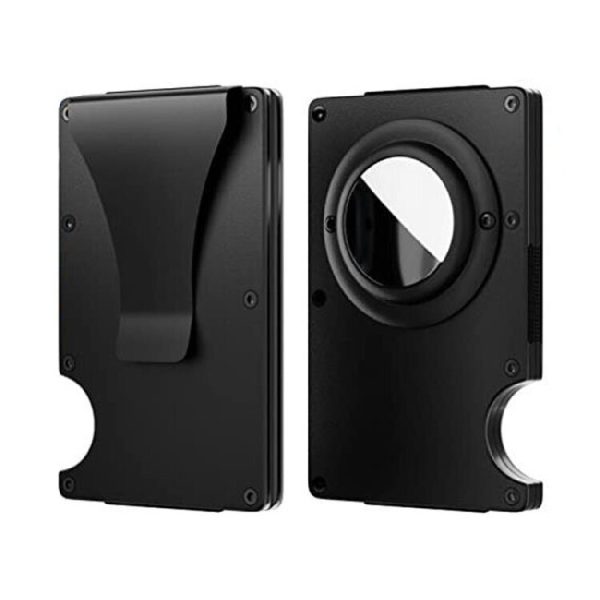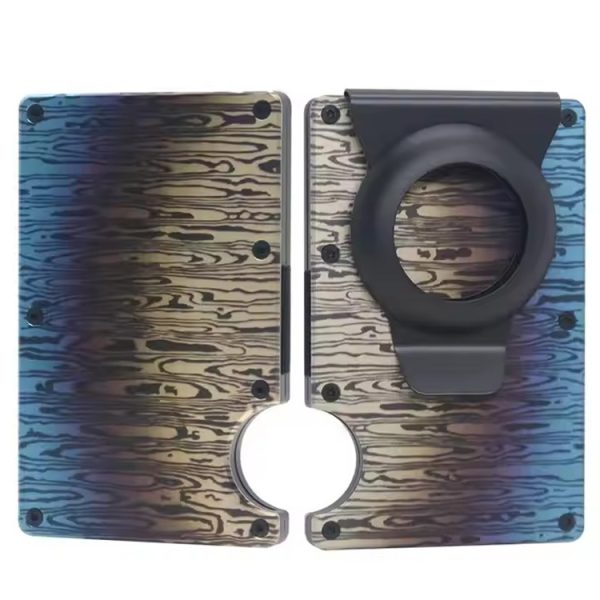
Gstar Technology (Shenzhen) Co., Ltd. provides OEM services for international brands, wholesalers, and manufacturers developing minimalist metal wallets, RFID card holders, slim wallets, genuine leather wallets, keychains, and related accessories.
For buyers comparing a wallet with AirTag slot vs. wallet with AirTag sticker, the central question is not simply whether both can carry a tracker. It is whether the attachment works comfortably, securely, and consistently throughout everyday use.
A purpose-designed AirTag compartment usually offers a more controlled product experience than an adhesive accessory added afterward. However, integration only wins when the compartment is engineered properly.
From an OEM product-development perspective, my recommendation is straightforward: choose integration for a new wallet collection; consider an adhesive holder when upgrading an existing wallet is the priority.
Here is how to evaluate the difference—and translate it into a better product specification.

Wallet with AirTag Slot vs. Wallet with AirTag Sticker: What Is the Difference?
A Wallet with an AirTag Slot
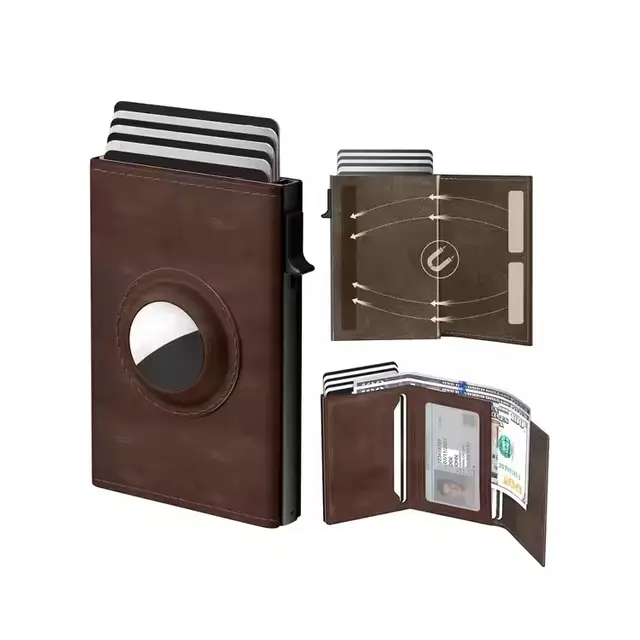
An integrated AirTag wallet includes a dedicated compartment designed around the tracker.
Depending on the wallet, this may be:
- A stitched leather pocket with a secure closure.
- A molded recess with a retaining lip.
- A mechanically attached holder incorporated into the wallet assembly.
- A removable cover that allows battery replacement.
The important distinction is structural. The tracker’s location, retention, and interaction with cards are considered during wallet development.
An integrated slot does not necessarily mean built-in electronics. In most cases, the customer inserts a separate Apple AirTag.
A Wallet with an AirTag Sticker
In this comparison, “AirTag sticker” means an adhesive-backed holder attached to an existing wallet—not a separate tracking sticker.
The holder carries the AirTag, while an adhesive layer connects the holder to the wallet surface.
This approach is convenient because it requires little modification. However, its performance depends on the holder, adhesive, wallet finish, installation method, and use conditions.
It is a retrofit solution rather than a complete wallet architecture.
Integrated AirTag Slot vs. Adhesive Holder: A Practical Comparison
| Evaluation point | Integrated AirTag slot | Adhesive AirTag holder |
|---|---|---|
| Retention | Designed around a pocket, closure, or mechanical restraint | Depends on both holder retention and adhesive bonding |
| Appearance | Can match the wallet’s materials and silhouette | Usually remains a visible accessory |
| Pocket comfort | Placement can be planned during development | Placement depends on available attachment space |
| Installation | Usually requires inserting the tracker | Requires suitable surface preparation and application |
| Battery access | Can be designed into the compartment | Depends on holder design and attachment position |
| Existing-wallet compatibility | Usually requires a different wallet or assembly | Useful for upgrading a compatible existing wallet |
| OEM development | May require additional tooling or construction work | Can simplify initial accessory development |
| Quality control | Retention and fit can be checked as part of the wallet | Bonding conditions introduce additional variables |
Neither solution guarantees reliability. A poorly designed slot can release the tracker, while a correctly selected adhesive holder can perform well.
The advantage of integration is greater control over the complete product.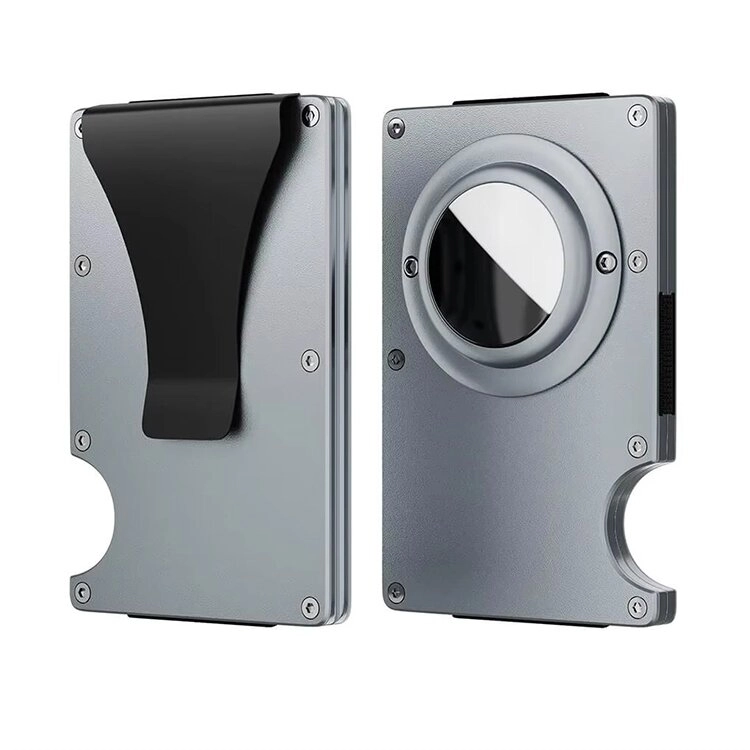
Why Integration Usually Beats Add-Ons
1. Retention Does Not Depend Entirely on a Surface Bond
An adhesive holder creates two connections: the AirTag-to-holder connection and the holder-to-wallet connection.
Both must remain secure.
Pressure-sensitive adhesive performance depends on surface compatibility, cleanliness, application pressure, and bonding conditions. A textured leather finish is not equivalent to a smooth, compatible plastic surface.
An integrated compartment can use stitching, geometry, a closure, or mechanical attachment to retain the tracker. This reduces reliance on a user-installed adhesive bond.
That does not eliminate failure risk. It shifts the design challenge toward features the manufacturer can specify and inspect.
2. Tracker Placement Becomes Part of Pocket Comfort
An AirTag is not a flat card. Its shape introduces a localized bump.
Adding a holder to an arbitrary position can place that bump directly against the wearer’s leg or create an exposed edge that catches during pocket insertion.
With integration, designers can evaluate placement before production. They can adjust the surrounding profile, position the tracker away from the main card stack, and examine the wallet under realistic loading.
The goal is not to pretend the tracker disappears. It is to manage its thickness deliberately.
3. Branding Looks Intentional
For a private-label wallet brand, visual consistency matters.
An integrated holder can follow the wallet’s stitching pattern, color palette, surface finish, and overall design language. An adhesive accessory may introduce a different material, outline, or visible attachment edge.
This distinction is especially relevant when a product is photographed close up or sold as a premium gift.
Customers should see one coherent product, not a wallet with an accessory attached as an afterthought.
4. Maintenance Can Be Designed In
AirTag uses a user-replaceable CR2032 battery.
A good compartment should therefore provide secure retention during daily carry and straightforward removal for maintenance.
These goals are complementary, not contradictory. A removable cover, accessible closure, or controlled release feature can support both.
Before approving a sample, remove the tracker, access its battery cover, and reinstall it. If routine maintenance damages the wallet or requires replacing adhesive every time, the design needs reconsideration.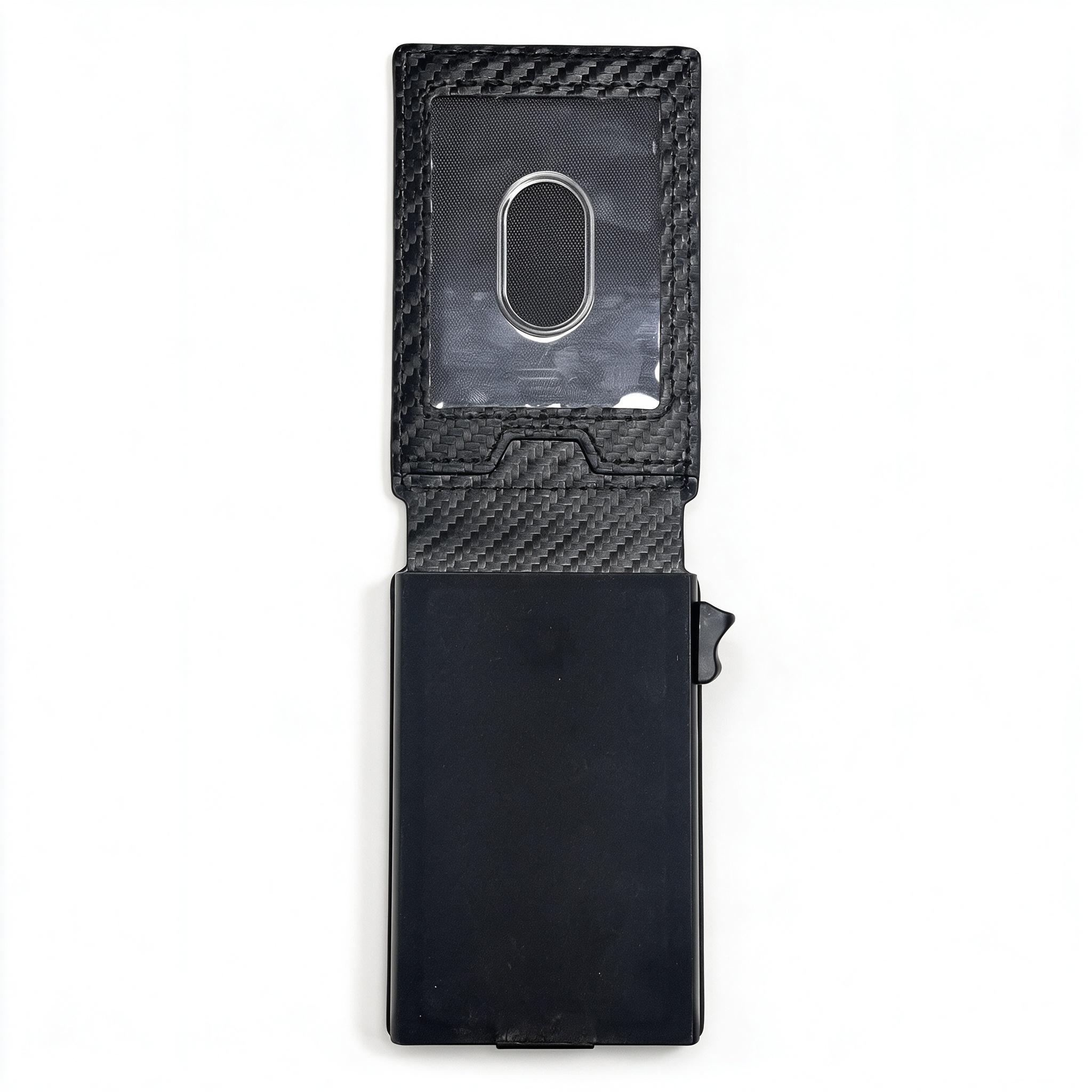
The Overlooked Issue: An AirTag Does Not Make a Wallet Ultra-Thin
Apple lists its second-generation AirTag at 31.9 mm in diameter and 8.0 mm in height.
That height matters when designing a slim wallet with an AirTag holder.
Even before adding surrounding material, the tracker creates an 8.0 mm component at its location. Integration cannot make that physical dimension disappear.
A useful specification should distinguish:
1. Wallet body thickness.
2. Maximum thickness at the tracker compartment.
3. Loaded thickness with the stated card and cash capacity.
For example, comparing an empty wallet body against a fully loaded competitor is not a meaningful thickness comparison.
Brands should publish measurements using consistent conditions and show the tracker-side profile. Honest specifications help customers understand the compromise between tracking convenience and minimalist carry.
*Visual placement: Insert a side-profile photograph here showing the empty wallet, loaded wallet, and tracker compartment. Label actual measured dimensions.*
RFID Blocking and AirTag Tracking Require Separate Validation
RFID card protection and AirTag tracking perform different functions.
Apple describes AirTag as using Bluetooth and Ultra Wideband, with NFC supporting relevant lost-item interactions. These functions should not be treated as interchangeable with contactless-card shielding.
A wallet advertised as RFID-blocking does not automatically offer good AirTag performance.
Likewise, an opening around the tracker does not prove that every card position remains adequately shielded.
For metal wallets and shielded constructions, test the finished assembly rather than relying only on material claims.
A practical validation plan includes:
- Checking supported card types in each intended storage position.
- Confirming that the installed AirTag appears in Find My.
- Testing sound audibility with the wallet closed.
- Evaluating nearby finding with compatible devices.
- Repeating checks with realistic card and cash loading.
Environmental conditions and surrounding objects can affect finding performance. Avoid promising an exact universal tracking range.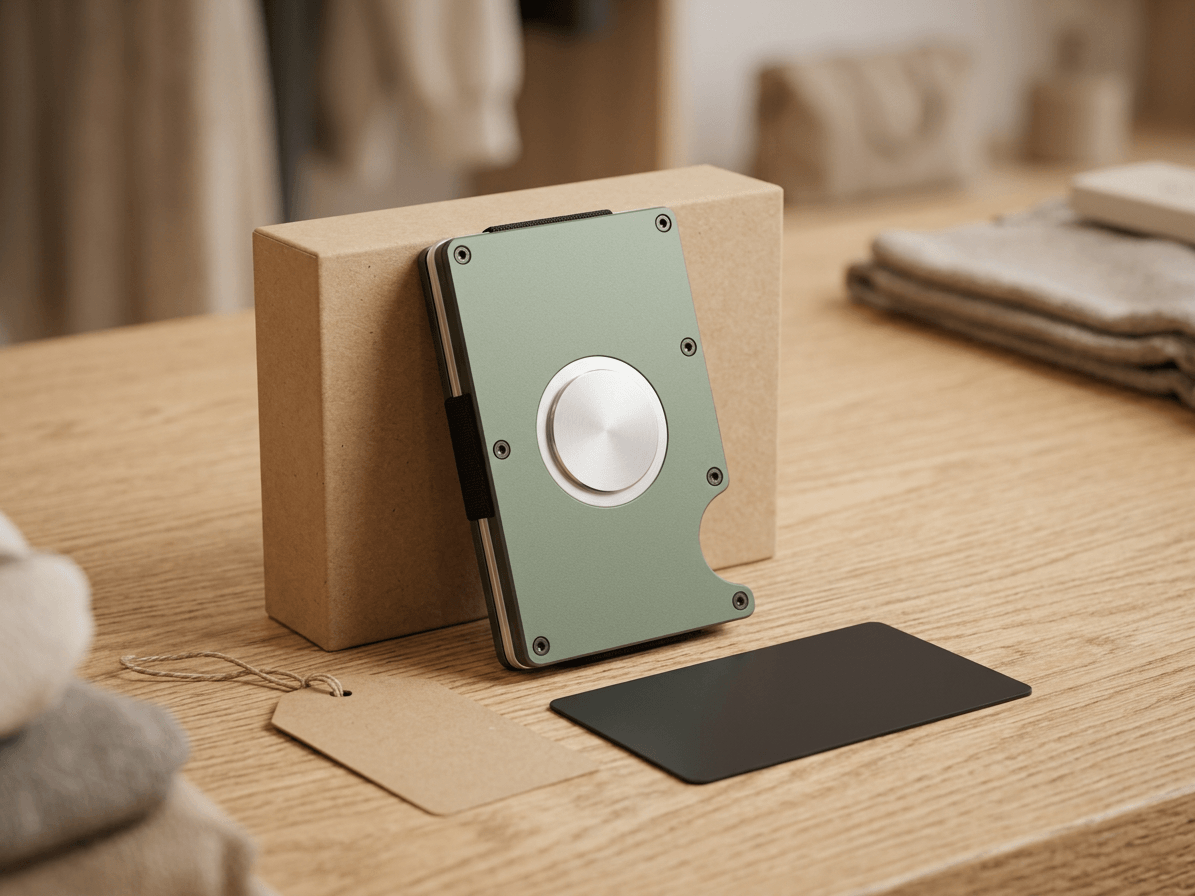
When an Adhesive AirTag Holder Is the Better Choice
Integration is not the right answer for every customer.
An adhesive holder can make sense when:
- The customer wants to keep a preferred existing wallet.
- The wallet provides a suitable attachment surface.
- The holder can be positioned without obstructing cards or closures.
- The customer accepts visible accessory styling.
- The supplier provides clear installation and maintenance instructions.
For brands, adhesive accessories can also support an upgrade line without redesigning the main wallet.
The key is honest positioning. Sell the product as a compatible retrofit—not as automatically equivalent to a purpose-engineered compartment.
Do not recommend a universal cleaning method for every wallet. Solvents suitable for one substrate may damage another finish. Follow both the adhesive supplier’s guidance and the wallet material’s care instructions.
An OEM Sample-Testing Checklist for AirTag Wallets
A product photograph cannot demonstrate retention, comfort, or serviceability.
Before placing a production order, turn the intended customer experience into an acceptance checklist.
Step 1: Define the Use Case
Specify front-pocket or back-pocket carry, intended card capacity, cash requirements, materials, tracker model, and target dimensions.
A leather bifold and a minimalist metal card holder require different construction choices.
Step 2: Check Tracker Retention
Insert the intended tracker and examine how the compartment holds it.
Test removal, reinsertion, handling, and pocket entry. Look for loose fit, unintended release, closure movement, and sharp edges.
Agree on test methods and acceptance criteria before evaluating samples.
Step 3: Test the Loaded Wallet
Use the advertised card capacity and representative cash loading.
Check whether the wallet closes properly, whether cards remain accessible, and whether the tracker interferes with an ejector, strap, or money clip.
Empty-wallet testing alone misses these interactions.
Step 4: Confirm Maintenance Access
Remove and reinstall the tracker repeatedly.
Inspect stitching, covers, fasteners, and retaining features afterward. Maintenance should not create permanent damage or an obvious loss of retention.
Step 5: Evaluate the Finished Assembly
Check tracking functions, sound, surface finish, pocket comfort, and any claimed RFID protection.
For adhesive designs, include material compatibility and bonding-condition checks. For integrated designs, include compartment dimensions and assembly consistency.
What Brands Should Ask Gstar Before Starting an OEM Project
For an OEM discussion with Gstar Technology (Shenzhen) Co., Ltd., prepare a brief that connects product design with commercial requirements.
Include:
- Target market and retail positioning.
- Preferred wallet construction and materials.
- Integrated slot or adhesive accessory preference.
- Intended AirTag generation.
- Card capacity and cash-carry requirements.
- Branding, packaging, and color requirements.
- Sample-validation expectations.
- Forecast quantities and launch schedule.
Ask which features require new tooling, which can use an existing construction, and which specifications need prototype confirmation.
Also request clarity on whether the tracker is included. Product images should not leave buyers guessing.
Do not assume minimum order quantities, certifications, production capacity, or lead times. Confirm these directly for the proposed project.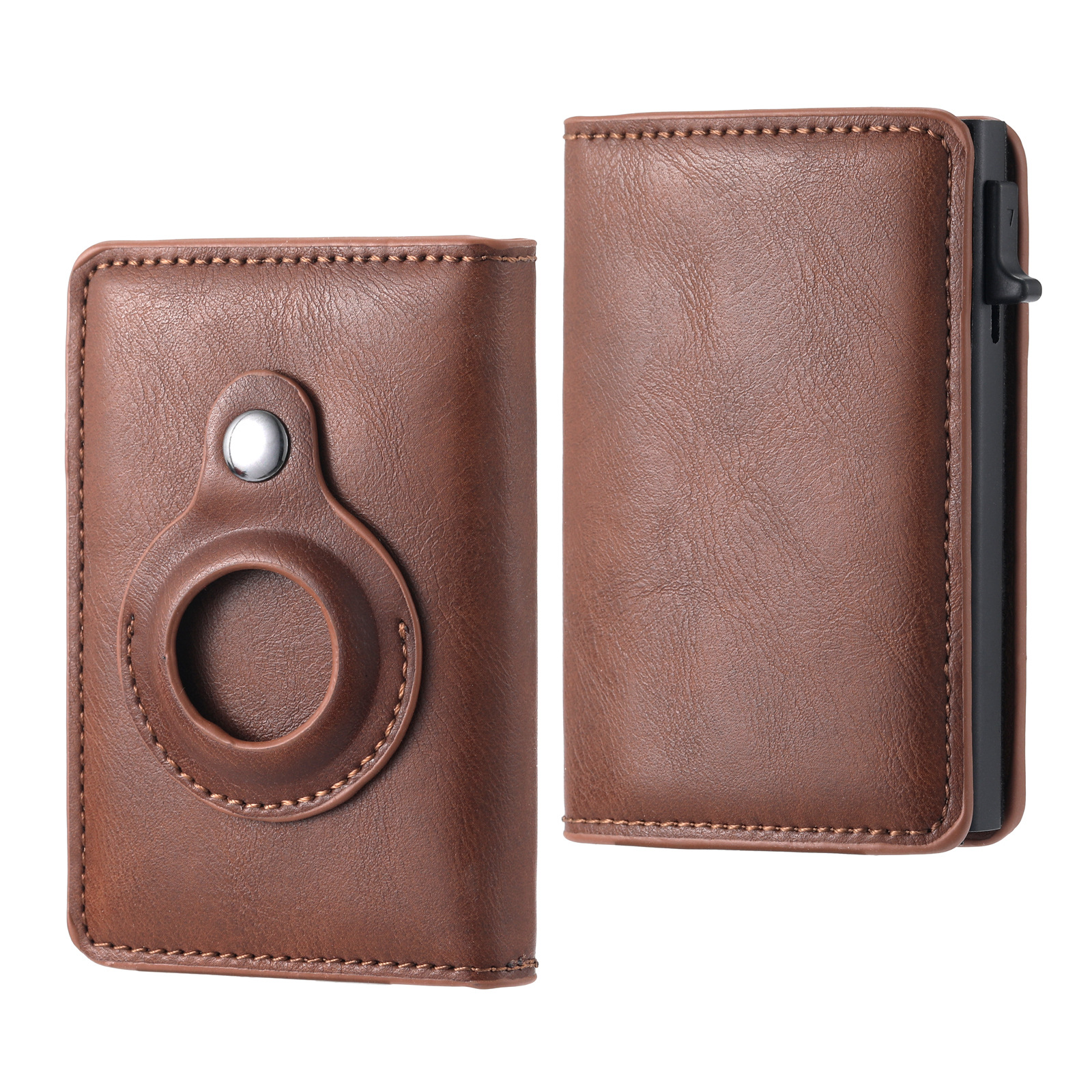
Frequently Asked Questions
1. Is an integrated AirTag wallet always better than an adhesive holder?
No. A well-designed integrated compartment usually offers better control over placement, appearance, and retention. However, an adhesive holder may be more practical for upgrading an existing compatible wallet.
2. Does an AirTag slot improve tracking accuracy?
Not automatically. The slot holds the tracker; it does not upgrade the tracker’s electronics. Placement, surrounding materials, compatible devices, and environmental conditions can influence the overall experience.
3. Can an AirTag sticker damage a leather wallet?
It may leave residue or affect the finish, depending on the adhesive and leather treatment. Confirm compatibility before attachment and follow the supplier’s removal instructions.
4. Can a wallet have both RFID blocking and an AirTag holder?
Yes, but both functions should be validated in the finished wallet. Card shielding and tracker operation are separate performance requirements.
5. Does an AirTag provide continuous GPS tracking?
No. AirTag uses Bluetooth and Apple’s Find My network, with nearby finding features on supported devices. Location updates depend on relevant detection and connectivity conditions; it is not a standalone continuous GPS tracker.
6. Is the AirTag usually included with the wallet?
Do not assume it is. Check the listing, packaging, and quotation. Brands should clearly state whether the tracker is sold separately.
7. What should an OEM buyer prioritize first?
Start with retention, loaded comfort, card access, maintenance, and truthful specifications. Decorative features should follow a functional sample, not replace one.
Develop an AirTag Wallet That Works as One Product
For a new wallet collection, integration offers a stronger design foundation because the tracker is considered from the beginning.
The real advantage is not simply removing adhesive. It is coordinating retention, comfort, appearance, maintenance, and manufacturing consistency.
Contact Gstar Technology (Shenzhen) Co., Ltd. with your target market, preferred construction, card capacity, and tracker requirements. Request an OEM feasibility review and sample-development proposal with agreed validation criteria before confirming production.
Hot Tags: China, Global, OEM, private label, manufacturers, factory, suppliers, manufacturing company