

Views: 256 Author: Gstar Technology Publish Time: 10-21-2026 Origin: Site


Content Menu
● Aluminum vs. Stainless Steel Cases: What Is the Main Difference?
● How Aluminum Cases Resist Corrosion
>> Natural Oxide Protection Is Only the Starting Point
>> Why Anodizing and Sealing Matter
● How Stainless Steel Cases Resist Corrosion
>> Stainless Steel Is Corrosion-Resistant, Not Corrosion-Proof
>> 304 vs. 316 Stainless Steel for Metal Cases
● Sweat, Salt, and Scratches: What Changes in Everyday Use?
>> Sweat Exposure Requires More Than a Humidity Claim
>> Coastal Exposure Raises the Selection Standard
>> Scratches and Corrosion Are Different Problems
● The Hidden Risk: Stainless Steel Screws in Aluminum Cases
● How to Evaluate Corrosion Resistance Before an OEM Order
>> Step 1: Define the Intended Exposure
>> Step 2: Approve the Material and Finish Separately
>> Step 3: Test Production-Representative Assemblies
>> Step 4: Agree on Acceptance Criteria
● What Salt Spray Testing Can—and Cannot—Prove
● Turning Customer Feedback Into Better Case Specifications
● Build Your OEM Material Brief With Gstar Technology
>> Is Stainless Steel Always More Corrosion-Resistant Than Aluminum?
>> Does an Aluminum Wallet Rust?
>> Is 316 Stainless Steel Better Than 304 for Salt Exposure?
>> Can Anodized Aluminum Still Corrode?
>> Can Stainless Steel Screws Cause Corrosion in Aluminum?
>> Does a Longer Salt Spray Test Guarantee a Longer Product Life?
Gstar Technology (Shenzhen) Co., Ltd. provides OEM services for international brands, wholesalers, and manufacturers developing metal wallets, RFID card holders, slim wallets, and related accessories. For buyers researching the differences between corrosion resistance in aluminum vs. stainless steel cases, the most useful answer is not simply that one metal "lasts longer." Performance depends on the alloy, surface treatment, assembly design, and environment.
Properly anodized aluminum can provide effective corrosion protection for everyday carry. Suitable stainless steel grades offer another strong option, particularly where chloride exposure matters. Neither material is universally corrosion-proof, and neither should be selected by appearance alone.
This guide explains how to compare the two materials and turn corrosion concerns into a practical OEM specification.
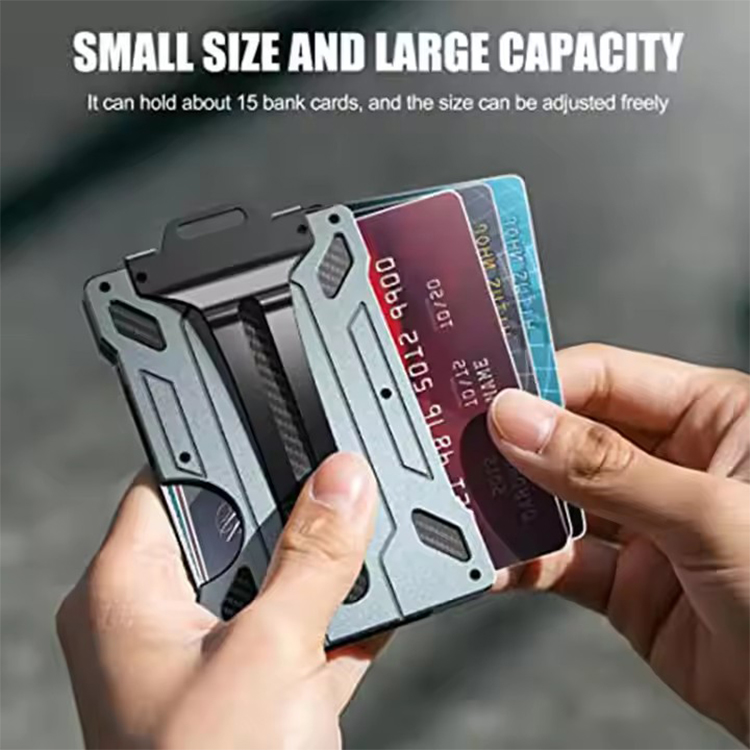
The central difference is how each material develops and maintains its protective surface.
Aluminum naturally develops an oxide film. Anodizing deliberately builds a thicker oxide layer that improves surface durability and corrosion resistance. Stainless steel relies on a passive oxide film that can repair itself under suitable conditions, provided sufficient oxygen is available.
For buyers, the important keyword is specification. "Aluminum" does not identify an alloy or anodizing process. "Stainless steel" does not identify a grade, surface condition, or suitability for salt exposure.
| Comparison point | Anodized aluminum cases | Stainless steel cases |
|---|---|---|
| Protective mechanism | Engineered anodic oxide layer over the aluminum | Passive oxide film on the steel |
| Important purchasing details | Alloy, coating thickness, sealing, exposed edges | Grade, finish, cleanliness, crevice design |
| Main corrosion concerns | Pitting, coating damage, dissimilar-metal contacts | Pitting, crevice corrosion, surface staining |
| Chloride exposure | Requires appropriate finish and assembly validation | Requires appropriate grade and assembly validation |
| Universal corrosion-proof guarantee | No | No |
These differences mean that a finished case should be evaluated as a complete system, rather than as a sheet of metal.
Aluminum does not develop the familiar iron-based red rust associated with ordinary steel. However, it can still corrode. Localized attack may produce pits, discoloration, or deterioration around vulnerable areas.
Its natural oxide film provides some protection, but demanding applications often need a more controlled surface treatment. This is why anodizing is relevant to aluminum wallet cases and card-holder shells.
The procurement lesson is straightforward: do not accept "rust-resistant aluminum" as a complete technical description.
Anodizing converts the aluminum surface into an oxide finish. The resulting structure is porous, allowing coloring and subsequent sealing treatments. Sealing helps restrict the penetration of corrosive substances toward the underlying aluminum.
For an OEM aluminum case, ask the supplier to define:
- The aluminum alloy.
- The anodizing process.
- The specified coating thickness and tolerance.
- The sealing requirement.
- The inspection method.
- Any intentionally untreated areas.
A color sample alone cannot answer these questions. Two visually similar black cases may have different coating quality and corrosion performance.
Also, greater surface hardness should not automatically be treated as proof of better finished-product corrosion resistance. The coating, sealing, geometry, and assembly all require consideration.

Stainless steel's passive film provides strong protection in suitable environments. However, chlorides can contribute to localized breakdown, particularly in crevices or beneath deposits.
This matters for wallet cases because moisture can remain beneath clips, around fasteners, or between overlapping components. A clean outer panel does not necessarily reveal what is happening inside a joint.
The right question is therefore not "Is stainless steel waterproof?" It is "Which stainless steel grade suits this exposure and assembly?"
The distinction between 304 and 316 is especially useful for buyers comparing stainless steel wallet cases.
Grade 316 contains molybdenum, which improves resistance to localized corrosion compared with standard 304 in relevant chloride environments. However, 316 can still suffer crevice corrosion under sufficiently aggressive conditions. Calling it "marine grade" does not establish suitability for every marine application.
For a sourcing discussion:
- Consider 304 for relatively mild exposure, subject to validation.
- Evaluate 316 when salt contamination is an important risk.
- Review joints and moisture traps regardless of grade.
- Avoid guarantees based only on a material label.
Grade selection improves the starting point; it does not eliminate the need for product testing.
A wallet carried close to the body may encounter perspiration, moisture, repeated drying, and surface abrasion. An OEM evaluation should reflect those conditions rather than relying exclusively on a generic "humidity-resistant" description.
For aluminum, inspect coating continuity around edges and attachment points. For stainless steel, inspect recesses where chloride-containing moisture could concentrate. Chloride exposure and stagnant conditions are relevant to localized corrosion.
These are inspection priorities, not claims that every sweaty pocket will cause corrosion.
Salt deposits can make an otherwise acceptable design more demanding. Stainless steel industry guidance distinguishes between 304 and 316 for coastal and marine exposure, while emphasizing that maintenance and crevices remain important.
For brands selling beach, boating, or outdoor accessories, "suitable for everyday use" needs a clearer definition.
Specify whether the product is intended for occasional salt contamination, regular coastal carry, or actual immersion. These are different use conditions and should not share an unsupported durability promise.
A scratch can be cosmetic, but it can also change the exposed surface.
Damaged anodizing may expose aluminum beneath the engineered coating. Stainless steel can reform its passive film under suitable conditions, although this does not prevent chloride-related attack in every environment.
A useful product claim distinguishes appearance retention from corrosion resistance. "Scratch-resistant," "colorfast," and "corrosion-resistant" should not be used interchangeably.
One easily overlooked issue is galvanic corrosion.
It can occur when dissimilar metals are electrically connected and exposed to a conductive liquid. In an aluminum-and-stainless assembly, the aluminum may corrode preferentially. The relative exposed areas also influence the severity of attack.
This makes fasteners, clips, inserts, and attachment points important design details.
For an OEM review, consider:
1. Whether conductive moisture can reach the joint.
2. Whether the metals remain electrically connected.
3. Whether a suitable nonconductive barrier is practical.
4. Whether the joint traps moisture.
5. Whether assembly damages the protective finish.
A stainless screw in an aluminum case is not automatically a defective design. However, it deserves evaluation in the intended environment. Anodizing should not be assumed to provide permanent electrical isolation at every threaded or worn contact.
The practical lesson: test the assembled product, not just its outer plates.

Give Gstar a clear product brief covering:
- Target markets and climate.
- Expected contact with sweat or salt.
- Intended cleaning methods.
- Likely abrasion and handling.
- Any proposed corrosion-related marketing claims.
This turns an ambiguous request for a "durable wallet" into a development discussion with measurable priorities.
For aluminum, record the alloy, anodizing requirements, sealing, and appearance standard.
For stainless steel, record the grade, finish, and cleanliness requirements.
Then document the screws, clips, and other components separately. A case should not receive a blanket material description when its components use different metals.
Request samples that represent the intended manufacturing and assembly route.
A practical evaluation plan can include:
- Baseline photographs.
- Surface and joint inspection.
- Agreed corrosion exposure.
- Inspection after exposure and cleaning.
- Functional checks.
- Examination beneath removable components.
Where wear is relevant, discuss evaluating both unworn and appropriately conditioned samples. Keep the conditioning method documented so comparisons remain meaningful.
"Passes corrosion testing" is incomplete without a defined result.
Agree in advance on acceptable limits for discoloration, pitting, coating damage, and functional change. Specify inspection areas and whether hidden components must be examined.
Also separate cosmetic defects from structural or functional failure. A small appearance change and a seized mechanism should not be reported as the same outcome.
Salt spray testing can support controlled comparisons and quality evaluation. ASTM B117 describes the apparatus, procedures, and conditions for producing the test environment.
However, ASTM cautions that performance in natural environments has seldom correlated with salt spray results when those results are used alone. Test hours should not be converted directly into years of pocket use.
When reviewing a report, ask:
- Which standard and edition were used?
- What exactly was tested?
- Was the sample a panel or a complete assembly?
- What finish and material did it represent?
- How was failure defined?
- Were photographs and observations recorded?
A stated duration without these details offers limited purchasing value. Prefer documented conditions and results over an impressive but unexplained hour count.
Real reviews can reveal problems that a material comparison misses. However, they must be authentic and correctly attributed.
Since no Gstar customer reviews were supplied for this article, the following are hypothetical complaint categories—not testimonials:
| Hypothetical complaint | Investigation priority |
|---|---|
| "Marks appeared near the screws." | Inspect fastener contacts, trapped moisture, and local coating damage |
| "The color changed at the edges." | Distinguish abrasion, dye change, and corrosion |
| "Brown marks appeared after travel." | Examine contamination, staining, grade, and exposure |
| "The mechanism became stiff." | Inspect moving interfaces and retained deposits |
The value lies in connecting symptoms to investigation, not diagnosing corrosion from a short review alone.
For future content, pair authorized customer comments with product photographs, verified specifications, and documented corrective actions.
Gstar Technology (Shenzhen) Co., Ltd. serves overseas brands, wholesalers, and manufacturers sourcing wallets, RFID card holders, keychains, and related accessories.
For your next metal-case project, send Gstar your drawings or reference dimensions, target market, expected exposure, finish preferences, and order requirements.
Request a project-specific discussion covering:
- Aluminum and stainless steel options.
- Surface-treatment requirements.
- Component compatibility.
- Sample approval.
- Corrosion-test scope and acceptance criteria.
The objective is not to choose a material by reputation. It is to define a complete case that matches your product positioning and intended conditions.

No. Performance depends on the aluminum alloy and finish, stainless steel grade, environment, and assembly. A generic comparison cannot reliably rank every finished case.
Aluminum does not develop iron-based red rust, but it can corrode. Pitting, discoloration, and deterioration around vulnerable contacts are still possible.
Generally, 316 offers improved localized-corrosion resistance in relevant chloride environments because of its molybdenum content. It is not immune to crevice corrosion or suitable for every immersion condition.
Yes. Anodizing improves protection, but performance also depends on sealing, coating integrity, exposure, and dissimilar-metal contacts. It should not be described as an unconditional corrosion-proof treatment.
They can contribute to galvanic corrosion when electrical contact and a conductive liquid are present. Joint design, exposed area, and isolation measures influence the risk.
No. Salt spray results alone do not provide a reliable conversion into years of natural service. Review the test method, specimen, acceptance criteria, and relevant field evidence.
Hot Tags: China, Global, OEM, private label, manufacturers, factory, suppliers, manufacturing company


