

Views: 226 Author: Gstar Technology Publish Time: 10-20-2026 Origin: Site


Content Menu
● Slide Action vs. Fan-out Wallets: Understanding the Mechanisms
>> What Is a Slide-Action Metal Wallet?
● Which Metal Wallet Mechanism Is Faster in Everyday Use?
● Why Card Selection Matters More Than Ejection Speed
● What Published Reviews Reveal About Real-World Usability
● How Card Thickness and Loading Change the Comparison
● A Practical Metal Wallet Speed Test for OEM Buyers
>> Step 1: Define the Start and Finish
>> Step 2: Standardize the Conditions
>> Step 3: Include Learning and Repetition
>> Step 4: Measure Errors as Well as Time
>> Step 5: Report the Limitations
● OEM Engineering Priorities Behind Faster Card Access
>> Card Presentation and Retention
>> Reinsertion and Long-Term Consistency
● Choosing the Right Mechanism for Your Private-Label Brand
● Develop a Metal Wallet Around the Customer's Actual Routine
>> 1. Are Slide-Action Wallets Always Faster Than Fan-out Wallets?
>> 2. Can a Wallet Be Both Slide Action and Fan-out?
>> 3. Which Design Is Better for One-Handed Use?
>> 4. Does Adding More Cards Make a Wallet Slower?
>> 5. Are Fan-out Wallets Less Durable?
>> 6. What Should Brands Request Before an OEM Order?
Gstar Technology (Shenzhen) Co., Ltd. helps overseas brands, wholesalers, and manufacturers develop OEM metal wallets, RFID cardholders, slim wallets, and leather wallets. For buyers comparing "slide action vs. fan-out wallets," our starting point is straightforward: speed means getting the correct card into your hand—not simply making cards move.
A direct slide design can be efficient when you repeatedly use an easily accessible card. An assisted fan-out design can make selection easier when you regularly switch between several cards. Neither mechanism is universally faster, and the sources reviewed for this article do not establish a standardized, head-to-head timing winner.
For consumers, the right choice depends on everyday habits. For private-label brands, it depends on the intended customer, card load, and consistency of the finished product.
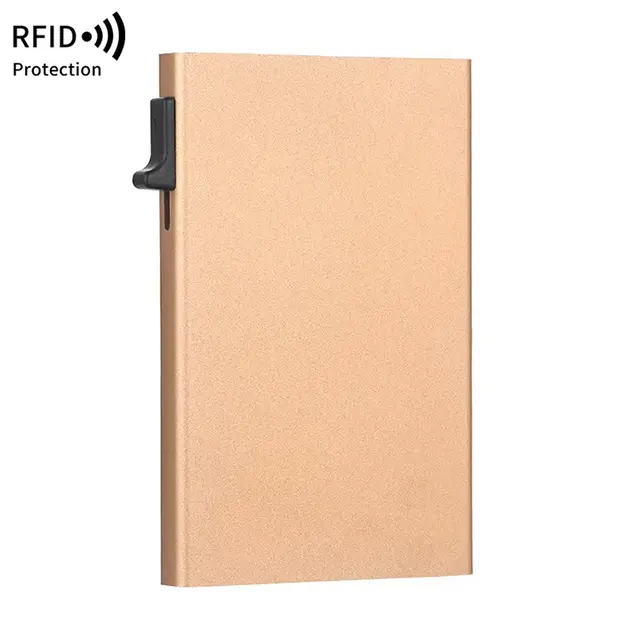
Before comparing performance, it helps to separate the input mechanism from the way cards appear.
"Slide action" can describe several different designs:
- A thumb opening that lets users push cards upward.
- A sliding panel that operates an internal ejector.
- A rail-guided structure that releases or exposes cards.
These designs should not be treated as mechanically identical. A sliding panel may expose a stack, present one accessible card, or activate a staggered display.
For example, the Dango SK1 Slide Kick uses a sliding movement that also ejects and fans out cards. This illustrates why slide action and fan-out are not always competing categories.
A fan-out wallet presents cards in an overlapping arrangement so users can identify and select one.
The fan may be created manually or through a lever, button, or sliding actuator. Ridge's instructions describe pushing cards through a notch and manually fanning them. Secrid and Ekster examples use mechanisms that present cards in a staggered arrangement.
For a meaningful comparison, this article focuses on direct slide or push access versus assisted, staggered fan-out access.
The useful answer depends on which task you measure.
| Everyday task | Direct slide or push access | Assisted fan-out access |
|---|---|---|
| Retrieving a familiar outer card | May require little searching | Convenient, but deployment remains necessary |
| Selecting a middle card | May require additional separation | Staggered presentation can simplify identification |
| Switching between several cards | Depends heavily on organization | Offers a visible selection of cards |
| Operating one-handed | Depends on grip and geometry | Depends on actuator position and resistance |
| Returning the card | Requires a clear insertion path | Requires reinsertion and, where applicable, reset |
| Maintaining consistent performance | Depends on friction and retention | Also depends on reliable deployment |
These are design-based expectations, not measured rankings.
My recommendation to an OEM buyer is to compare the complete sequence:
1. Retrieve the wallet.
2. Operate the mechanism.
3. Identify the requested card.
4. Remove it.
5. Return it.
6. Restore the wallet to its carrying state.
A fast opening animation can still produce a slow payment experience if the user struggles to separate cards or put one back.
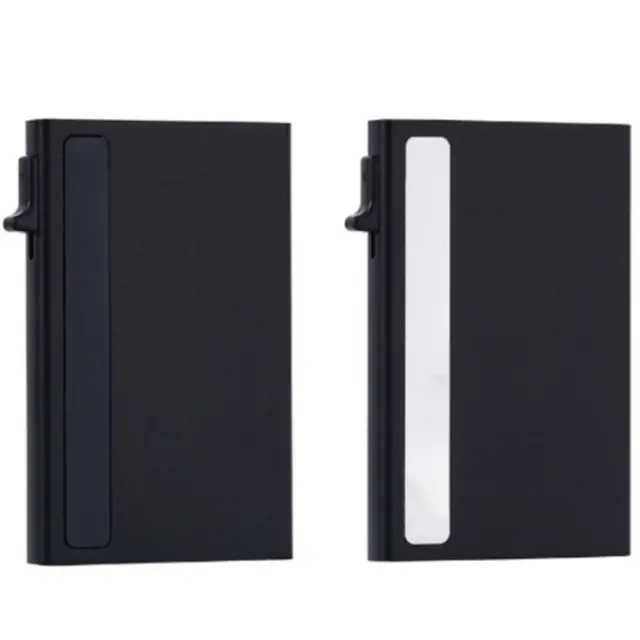
A product video usually emphasizes deployment. Everyday users experience the entire interaction.
Someone who uses the same payment card repeatedly may benefit from keeping it in an accessible outer position. Ridge specifically recommends placing frequently used cards at the front and back of its wallet for easier retrieval.
Someone who alternates between an ID, payment card, and membership card has a different task. That person must recognize the correct card before removing it.
Pack Hacker's Ekster review highlights the value of seeing cards together after pressing the button. Its testing also found that a firm press mattered: an incomplete press could produce a less useful spread.
The design lesson is not simply "make the trigger faster." It is "make the intended card easier to recognize and remove."
That distinction gives brands a more defensible selling point than an unsupported claim about fractions of a second.
Published experiences show why a single demonstration should not determine an OEM specification.
Pack Hacker reported reliable operation during its extended Ekster testing, while also noting the importance of a decisive button press. Its Secrid Cardprotector review described useful card presentation but occasional lever jamming and a tendency for the reviewer to use two hands despite one-handed operation being possible.
These observations should remain product-specific. They do not prove that every fan-out wallet behaves the same way.
Likewise, Pack Hacker's Dango D03 review found that inserting and removing cards could require adjustment and practice. That finding concerns a particular rail-based design, not every wallet marketed as slide action.
For brands, the valuable questions are:
- Does deployment remain consistent across repeated attempts?
- Can customers identify similar-looking cards?
- Is reinsertion intuitive?
- Does a new user need instructions?
- Does performance change with the card load?
Published reviews are useful for identifying test scenarios. They are not a substitute for testing the exact OEM sample being purchased.

A card count is not a complete description of a wallet's operating load.
Secrid states that its aluminum Cardprotector holds four to six cards depending on thickness, with embossed cards reducing capacity. It also states that the mechanism works with a single card. These specifications apply to that product and should not be generalized to every metal cardholder.
For OEM development, document the actual cards used during evaluation.
Include:
- Flat plastic cards.
- Embossed cards.
- Mixed-thickness combinations.
- Worn cards.
- Any metal cards included in the intended use case.
Then test minimum, typical, and maximum permitted loading.
An underfilled sample may behave differently from a fully loaded one. A mechanism that looks smooth with one card combination may be less convenient with another.
Brands should therefore publish a recommended working capacity alongside any maximum capacity claim. "Best performance with the specified card combination" is more useful than an unexplained headline number.
This proposed protocol gives Gstar customers and other procurement teams a repeatable starting point. It is not a report of completed Gstar testing.
Run two separate tasks:
- Access test: wallet already in hand to correct card fully removed.
- Full-cycle test: wallet in pocket to card removed, returned, and wallet put away.
Separating these tasks helps distinguish mechanism performance from pocket access and handling.
Use the same cards, pocket location, instructions, and environment.
Start with a representative load that both samples officially support. Add separate minimum-load and maximum-load trials rather than mixing all conditions into one average.
Allow a short familiarization period.
Then use a predefined number of recorded trials—for example, 20 per task and condition. Treat that number as a practical starting point, not an industry standard.
Alternate the testing order so one wallet does not always benefit from the participant's growing familiarity.
Record:
- Median completion time.
- Slower-end performance, such as the 90th percentile.
- Wrong-card selections.
- Incomplete deployment.
- Dropped cards.
- Unexpected second-hand assistance.
- Reinsertion difficulties.
Video can help verify task boundaries and explain unusually slow attempts.
State the sample count, participant count, card combinations, and product versions.
A result from a few prototypes should not become a claim about every production unit. If one mechanism wins only for an outer card, say so.
From a product-development perspective, I would evaluate three areas before choosing a mechanism.
Check whether users can reach the control without changing their grip.
Evaluate left- and right-handed operation, actuator travel, accidental activation, and the effort needed to complete the movement.
The objective should be controlled, repeatable operation—not the lightest possible trigger.
Inspect how much of each card becomes visible and whether users can pinch the intended card without disturbing the others.
Then assess retention separately. Easy access and secure carrying are different requirements; a design must satisfy both.
Include checks at the minimum and maximum approved card loads.
A wallet should remain convenient after the transaction.
Inspect the insertion opening, potential snag points, reset behavior, and any need for precise alignment. Repeat the usability checks after an agreed wear-testing sequence.
Ask the supplier to document the sequence and acceptance criteria. Avoid treating an unexplained cycle-count claim as proof of lifetime reliability.
Gstar Technology's OEM positioning covers metal cardholders, RFID cardholders, ultra-slim wallets, genuine leather wallets, and related accessories. The mechanism brief should begin with the customer's routine rather than the appearance of a prototype.
| Target customer | Mechanism direction to evaluate | Priority validation |
|---|---|---|
| Minimalist using one main card | Direct-access layout | Access to the preferred card |
| Customer switching between several cards | Assisted fan-out | Identification and separation |
| Buyer prioritizing one-handed use | Either, depending on geometry | Full one-handed sequence |
| User with varied card thicknesses | Model-specific solution | Compatibility across approved loads |
| Premium everyday-carry customer | Either | Consistency, finish, and tactile feedback |
These are development directions, not guaranteed outcomes.
For an OEM inquiry, provide the target card load, intended retail positioning, preferred materials, branding requirements, and expected operating method.
Request comparable samples before finalizing the housing, packaging, or marketing claims.
The strongest product brief is not "make the fastest wallet." It is "make the right card easy to retrieve, securely and repeatedly, for this customer."
Contact Gstar Technology (Shenzhen) Co., Ltd. with your target card capacity, preferred mechanism, material requirements, and branding brief. Request a sample discussion and agree on the evaluation criteria before approving your OEM design.
Use verified sample results to shape the final product story.
No. Direct access may suit a frequently used outer card, while assisted fan-out may simplify selection among several cards. A fair comparison requires the same card load and clearly defined tasks.
Yes. A sliding actuator can operate a mechanism that presents cards in a staggered arrangement. Slide action describes the input; fan-out describes the resulting presentation. The Dango SK1 provides one example.
Neither category guarantees better one-handed operation. Evaluate actuator position, grip changes, card separation, and reinsertion. Test the complete sequence rather than assuming that one-handed deployment means one-handed use.
It can change handling, but the effect depends on the design and card combination. Follow the model's capacity instructions and test the intended load rather than assuming every wallet works best when full.
That cannot be established from the mechanism label alone. Assess the exact design, materials, assembly, and repeated-use results. More importantly, ask whether usability and retention remain acceptable after testing.
Request a mechanism description, supported card combinations, representative samples, agreed inspection criteria, and documented performance checks. Confirm customization, commercial terms, and approved claims with the supplier before production.
Hot Tags: China, Global, OEM, private label, manufacturers, factory, suppliers, manufacturing company


