

Views: 267 Author: Gstar Technology Publish Time: 10-16-2026 Origin: Site


Content Menu
● What Is a 6061 Aluminum Wallet?
● What Is a "Standard Alloy" Wallet?
● 6061 Aluminum vs. Standard Alloy Wallets
● Strength and Durability: Why 6061 Performs Better
● Weight and Slimness: The Everyday-Carry Advantage
● RFID Protection: Does 6061 Aluminum Help?
● Corrosion, Anodizing, and Finish Quality
● Customer Experience: What Buyers Notice
● OEM Buying Guide: How to Choose the Right Wallet Material
● Where 6061 Aluminum Is the Better Choice
● Where Standard Alloy May Still Work
● Gstar's OEM Manufacturing Perspective
>> 1. Is 6061 aluminum better than standard alloy for wallets?
>> 2. Do 6061 aluminum wallets block RFID signals?
>> 3. Are 6061 aluminum wallets heavy?
>> 4. Will an aluminum wallet damage credit cards?
>> 5. What should I ask an OEM wallet factory before ordering?
>> 6. Is 6061 aluminum worth the higher cost?
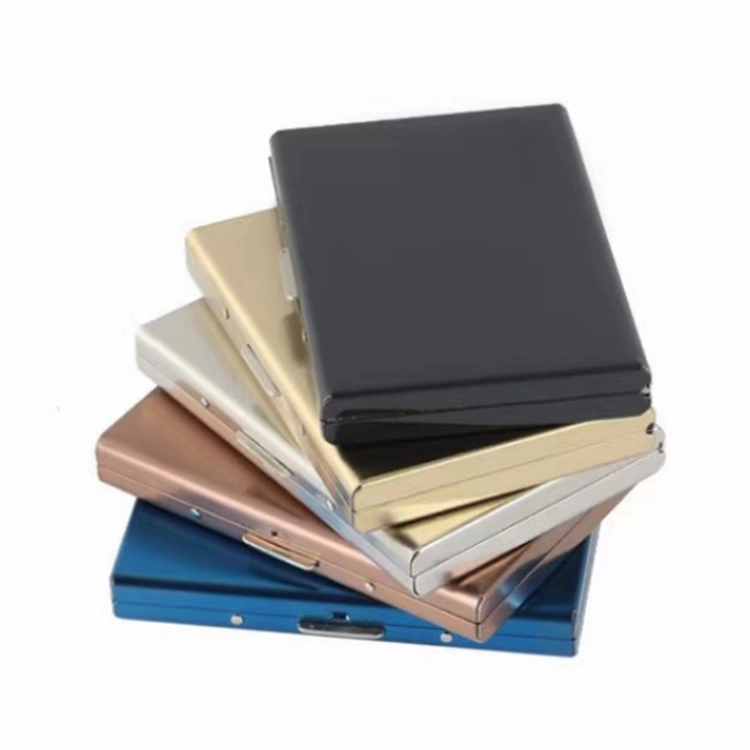
6061 aluminum wallets are stronger, more dimensionally stable, and better suited to premium RFID-blocking designs than wallets made from unspecified "standard alloy." For brands and buyers, the difference is not just the metal label—it affects durability, finish quality, weight, machining precision, and long-term customer satisfaction.
At Gstar Technology (Shenzhen) Co., Ltd., we manufacture OEM Ridge-style wallets, RFID card holders, ultra-slim wallets, genuine leather wallets, keychains, PSA card bricks, and bumper strips for global brands, wholesalers, and producers. Based on our production experience, 6061-T6 aluminum is usually the better material choice for a premium metal wallet, while generic alloy can be acceptable only when its exact composition, temper, and surface treatment are clearly specified.

A 6061 aluminum wallet uses 6061-series aluminum alloy, a heat-treatable alloy containing magnesium and silicon as its principal alloying elements. In the common 6061-T6 condition, it offers high strength, good corrosion resistance, and excellent machinability—qualities that matter in a wallet that is opened, closed, carried, and dropped every day.
The "T6" designation means the material has been solution heat-treated and artificially aged to increase strength. Typical 6061-T6 tensile strength is about 310 MPa (45,000 psi), with yield strength around 276 MPa (40,000 psi).
For wallet manufacturing, this matters because the wallet body must resist:
- Bending when cards are inserted or removed
- Scratches and edge wear from keys, coins, and bags
- Loosening screws or elastic tension over time
- Surface corrosion from sweat, humidity, and daily handling
- Dimensional changes that can affect card retention and RFID shielding
"Standard alloy" is not a precise material specification. It is a broad marketing term that may refer to aluminum, zinc alloy, magnesium alloy, stainless steel, or a mixed metal composition.
This creates a major quality-control issue. Two wallets can both be described as "alloy wallets," yet perform very differently because the manufacturer has not disclosed:
- The exact alloy grade
- Whether it is heat-treated
- The tensile and yield strength
- Corrosion-resistance treatment
- Plating, anodizing, or coating thickness
- Tolerance standards for CNC machining and assembly
In our OEM experience, a wallet described only as "standard alloy" often prioritizes low cost over consistency. That does not always mean poor quality—but it means buyers should request a material certificate, sample testing, and clear finish specifications before placing a bulk order.
| Feature | 6061 Aluminum Wallet | Standard Alloy Wallet |
|---|---|---|
| Material clarity | Clearly defined alloy grade | Often unspecified |
| Strength | High, especially in T6 temper | Varies widely |
| Weight | Lightweight for its strength | Can be lighter or heavier depending on alloy |
| Corrosion resistance | Good, especially when anodized | Depends on alloy and coating |
| RFID shielding | Reliable when the metal body fully encloses cards | Depends on design and metal continuity |
| Machining precision | Excellent for CNC wallet plates | Varies by material and factory |
| Anodized finish | Strong color adhesion and premium appearance | May fade, chip, or peel if coating is weak |
| Best use case | Premium minimalist and RFID wallets | Budget wallets or decorative designs |
| OEM risk level | Lower when specifications are controlled | Higher without verified material data |
The biggest advantage of 6061-T6 aluminum is its balance of strength, light weight, and workability. It is widely used in structural, architectural, automotive, and aerospace-related applications because it can withstand mechanical stress without becoming excessively heavy.
For a wallet, this translates into practical benefits:
- Less plate deformation. The wallet keeps its shape after repeated card loading.
- Better screw-hole stability. This is important for elastic, screw-assembled, or modular wallet designs.
- Cleaner CNC edges. 6061 machines smoothly, producing sharper lines and more consistent chamfers.
- Improved long-term fit. Cards remain securely held instead of becoming loose after months of use.
A generic alloy may look similar on day one. However, without a defined temper and composition, it may bend more easily, develop stress marks, or show inconsistent wear around screw holes and card channels.

Many customers choose a metal wallet because they want a slim, lightweight, front-pocket-friendly product. 6061 aluminum supports this goal because it provides meaningful strength without the weight penalty of stainless steel.
In our production work, the best-performing slim wallets usually combine:
- 6061-T6 aluminum plates for the outer shell
- Elastic webbing or silicone bands for card expansion
- Anodized surface treatment for scratch and corrosion resistance
- RFID-blocking structure with complete metal coverage
- Optional leather, carbon-fiber, or wood panels for brand differentiation
This is why 6061 is a strong choice for Ridge-style wallets, RFID card holders, and ultra-slim minimalist wallets. It gives the product a premium feel while remaining comfortable for daily carry.
Yes—6061 aluminum can support RFID protection, but the alloy alone is not the whole answer. RFID-blocking wallets work by surrounding contactless cards with conductive material, creating a Faraday-cage-like barrier that interferes with radio signals. Aluminum is one of the materials commonly used for this purpose.
However, effective RFID protection depends on design, not just material:
- The metal must fully cover the card area.
- There should be no large gaps where signals can pass through.
- The wallet must maintain its structure after repeated use.
- The card compartment should not leave the chip exposed at the edges.
- Quality control should include signal-blocking tests on finished samples.
A well-made 6061 aluminum wallet can provide dependable RFID shielding for contactless cards. But buyers should avoid assuming that every metal wallet automatically blocks RFID. Poor assembly, thin plates, or open-side designs can reduce effectiveness.
6061 aluminum naturally forms a protective oxide layer when exposed to air and water, giving it good corrosion resistance. Its copper content means it is not as corrosion-resistant as some marine-grade alloys, but anodizing significantly improves surface durability and appearance.
For wallet brands, anodizing is especially valuable because it provides:
- Consistent color across production batches
- Better scratch resistance than raw aluminum
- A premium matte, brushed, or metallic appearance
- Improved resistance to sweat and humidity
- Stronger perceived value at retail
Generic alloy wallets may use spray paint, electroplating, or low-cost coatings. These finishes can look attractive initially but may peel, fade, or reveal base-metal discoloration after daily use.
From customer feedback on metal wallets, the issues that generate complaints are rarely about whether the product is "aluminum" or "alloy." They are usually about real-world performance:
- Cards becoming loose after a few weeks
- Elastic bands losing tension
- Screws loosening or stripping
- Paint or coating wearing off at edges
- Wallet plates bending after sitting on them
- RFID protection failing in certain card positions
- Sharp edges catching on pockets or hands
A 6061 aluminum wallet reduces several of these risks because the material is more predictable. Still, the factory must control assembly quality, elastic quality, screw torque, anodizing thickness, and card-channel tolerance.
Material is the foundation; manufacturing discipline determines the final customer experience.
If you are sourcing wallets for your brand, use this checklist before approving a supplier.
1. Request the exact material specification. Ask for "6061-T6 aluminum," not simply "aluminum alloy."
2. Ask for a material certificate or test report. This should confirm alloy composition and mechanical properties.
3. Confirm the surface treatment. Specify anodizing color, thickness, scratch-resistance expectations, and salt-spray requirements if relevant.
4. Check RFID performance on finished samples. Test multiple card types and positions, not just one card.
5. Inspect tolerances. Measure plate thickness, card-channel width, screw-hole alignment, and edge chamfers.
6. Test drop and bend resistance. A wallet should survive normal pocket use, bag pressure, and accidental drops.
7. Evaluate assembly durability. Check elastic recovery, screw tightness, and repeated open-close cycles.
8. Review packaging and branding options. Laser engraving, custom colors, private-label packaging, and barcode labeling should be confirmed before mass production.
Choose 6061 aluminum when your brand wants:
- A premium minimalist wallet
- A Ridge-style RFID card holder
- A durable everyday-carry product
- Consistent anodized colors
- High-precision CNC machining
- A lightweight but strong wallet
- Long-term customer satisfaction and fewer returns

A standard alloy wallet may be suitable when:
- Price is the primary purchasing factor
- The design is more decorative than load-bearing
- The supplier provides verified material data
- The product is not positioned as premium
- The finish and assembly quality are still strictly controlled
However, for a brand building trust in the RFID wallet, slim wallet, or metal card holder category, vague material descriptions create unnecessary risk.
At Gstar Technology (Shenzhen) Co., Ltd., we recommend 6061 aluminum for brands that want a reliable, premium-feeling wallet with strong structural performance. Our OEM services cover:
- Ridge-style aluminum wallets
- RFID-blocking card holders
- Ultra-slim minimalist wallets
- Genuine leather wallets
- Metal keychains
- PSA card bricks
- Bumper strips and protective accessories
We support custom dimensions, colors, laser logos, packaging, material upgrades, and private-label production. For buyers comparing 6061 aluminum with standard alloy, our advice is simple: do not choose based on the word "alloy"—choose based on verified grade, temper, finish, structure, and finished-product testing.
Generally, yes. 6061 aluminum offers clearer material specifications, higher strength in T6 condition, better machining consistency, and more reliable premium finishes. A "standard alloy" wallet can still be good, but its quality depends on the exact alloy and factory controls.
They can, provided the wallet design fully encloses the card compartment. Aluminum acts as a conductive barrier that interferes with RFID signals, but the final result depends on the wallet structure and assembly quality.
No. 6061 aluminum provides a strong strength-to-weight ratio. It is heavier than plastic but usually lighter than stainless steel, making it ideal for slim everyday-carry wallets.
A well-made RFID-blocking wallet should not damage contactless cards. Aluminum blocks radio signals but does not harm the card itself.
Ask for the exact alloy grade, temper, material certificate, anodizing specification, RFID test results, tolerance standards, assembly durability tests, and sample approval process.
For premium wallets, usually yes. The higher material and processing cost is often offset by better durability, fewer quality complaints, stronger branding, and a more premium customer experience.
- [6061 Aluminium Alloy – Wikipedia]
- [Aluminum Alloy Comparisons: 5052 vs. 6061 vs. 7075 – SendCutSend]
- [Aluminium / Aluminum 6061 Alloy (UNS A96061) – AZoM]
- [6061 Aluminum Alloy Properties – Gabrian International]
- [RFID Blocking: What It Is, How It Works, and Why You May Need It – Norton]
- [Do Aluminum Wallets Provide RFID Protection? – Ekster]
- [Properties and Applications of 6061 Aluminum – Harbor Aluminum]
Hot Tags: China, Global, OEM, private label, manufacturers, factory, suppliers, manufacturing company


