

Views: 246 Author: Gstar Technology Publish Time: 08-20-2026 Origin: Site


Content Menu
● Why Traditional Keychains Create Daily Friction
● Key Organizer vs. Traditional Keychain: The Core Difference
● Stop the Jingle: How a Key Organizer Reduces Noise
● Protect Your Phone Screen and Everyday Carry Gear
● Choosing the Right Key Organizer Design
>> Consider Key Capacity and Key Thickness
>> Select Materials That Match Your Brand
● OEM Insight: Design for Real Use, Not Just Appearance
● How Brands Can Build a Better Key Organizer Line
>> Recommended OEM Development Process
● FAQ
>> Is a key organizer better than a traditional keychain?
>> Can a key organizer stop keys from scratching a phone screen?
>> How many keys can a key organizer hold?
>> Do key organizers work with car keys and key fobs?
>> What material is best for an OEM key organizer?
>> Can Gstar customize a key organizer with our brand logo?
● Build Your Custom Key Organizer With Gstar
At Gstar Technology (Shenzhen) Co., Ltd., we design and manufacture OEM key organizers for brands that want to replace the noisy, bulky traditional keychain with a smarter everyday-carry solution. In the practical comparison of a key organizer vs. traditional keychain, the difference is clear: a well-engineered key organizer keeps keys compact, reduces metal-on-metal jingle, improves access, and helps protect nearby items—especially your phone screen, wallet, sunglasses, and pocket lining.
For brand owners, wholesalers, and product developers, this is more than a small accessory upgrade. It is an opportunity to solve daily user frustrations with a product that looks premium, feels intentional, and can be customized around a brand's materials, identity, and target price point.
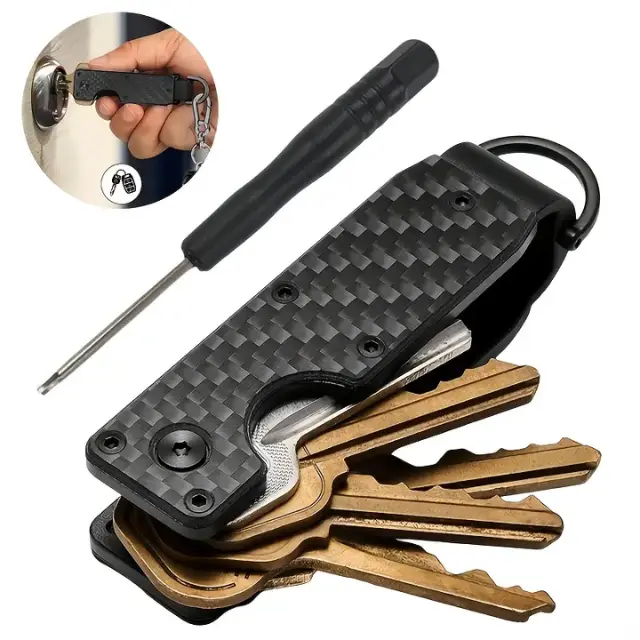
A traditional keychain is simple: keys hang freely from a metal ring. It is inexpensive and familiar, but it was not designed for modern pockets carrying smartphones, wireless earbuds, cards, sunglasses, and other compact devices.
Loose keys swing, twist, rattle, and collide. Their sharp edges can press into a pocket, scratch objects carried nearby, and make it harder to select the correct key quickly. For commuters, travelers, drivers, office workers, and minimalist EDC users, this friction happens repeatedly every day.
Common frustrations with conventional key rings include:
- Constant jingling when walking, cycling, or searching through a bag.
- Phone-screen risk when keys share a pocket, handbag, backpack, or car console with a smartphone.
- Pocket bulk caused by keys hanging in different directions.
- Slow key selection when several similar keys overlap.
- Fabric wear from pointed key edges rubbing against pocket linings.
- An unpolished appearance that can conflict with a premium wallet, watch, or leather bag.
Feedback across the everyday-carry market is consistent: users want their key carry to be quieter, slimmer, and more organized. Reviewers commonly describe traditional rings as noisy, uncomfortable when sitting, and likely to scratch nearby gear. Key organizers address these pain points by stacking keys into a controlled, compact format rather than allowing them to hang loose. [packhacker]
A key organizer holds keys between two side plates or inside a protective case. The keys pivot outward one at a time, similar to a folding multi-tool. Depending on the design, the organizer may use aluminum, stainless steel, leather, carbon-fiber-style materials, elastic components, screws, spacers, and optional accessories.
A traditional keychain relies on a ring. A key organizer relies on controlled storage and controlled movement.
| Feature | Traditional keychain | Key organizer |
|---|---|---|
| Key movement | Loose and uncontrolled | Stacked and secured |
| Noise level | Often produces jingle | Designed to reduce rattle |
| Pocket profile | Uneven and bulky | Slimmer and flatter |
| Phone protection | Keys may contact devices | Key edges can be contained |
| Key access | Search through hanging keys | Pivot out the selected key |
| Brand customization | Usually limited | Broad options for material, logo, color, packaging, and structure |
| Premium retail potential | Basic accessory | Higher-value EDC product |
The key organizer is not automatically the right solution for every person. Someone carrying one house key may prefer a simple ring. However, for people carrying multiple keys—such as home, office, mailbox, garage, storage, and bike-lock keys—the organizer typically creates a more comfortable and orderly experience.
The familiar sound of keys jingling comes from free-moving metal parts colliding with one another. A conventional key ring leaves every key mobile. The result is vibration, noise, tangling, and visual clutter.
A quality silent key organizer reduces this movement by placing keys in a compressed stack. Adjustable screws and spacers help create enough tension for each key to remain in position while still allowing one-handed access.
This design approach can improve the user experience in environments where noise is distracting:
- Shared offices and co-working spaces.
- Public transport and airports.
- Meetings, libraries, classrooms, and hospitals.
- Late-night arrivals at home.
- Parents carrying keys while a child is sleeping.
- Travelers who want a quieter and more controlled EDC setup.
The key organizer does not make every key completely silent in every condition. A car fob, large key tag, or loose bottle opener can still make noise. But the central set of flat keys can be stabilized, which significantly reduces the familiar key-ring rattle.
One of the strongest reasons to choose a key organizer over a traditional keychain is surface protection. Loose keys have sharp, hard edges. When they share space with a smartphone, sunglasses, wireless-earbud case, watch, wallet, or tablet, repeated contact can leave scuffs, abrasion marks, and scratches.
A key organizer minimizes this risk by keeping key edges aligned and more contained. Aluminum frames, leather wraps, and enclosed key cases can create an additional barrier between keys and the items around them.
This matters because smartphones have become an essential daily item. Many people keep their phone and keys in the same pocket for convenience. Even if a screen protector prevents severe damage, loose keys can still mark cases, camera bumps, frame finishes, and accessories.
A leather key holder can add further cushioning. Soft leather helps reduce direct contact between keys and other items, while also creating a warmer, more premium tactile experience. Leather key cases may be especially suitable for brands focused on business gifts, luxury accessories, travel products, or traditional craftsmanship.
Before choosing a key organizer design, perform this simple test:
1. Place your daily keys, phone, and wallet in the pocket or bag you use most often.
2. Walk, sit, bend, and remove each item as you normally would.
3. Notice where keys press into your body or touch other surfaces.
4. Identify the keys you truly use each week.
5. Design the organizer around those essential keys, not every spare key you own.
This test often reveals that users do not need a larger key ring. They need a more disciplined key-carry system.
Not all key organizers are built the same. For brands and buyers, the right model depends on key quantity, key shape, material positioning, user habits, and desired retail category.
Most standard organizers are best for a practical set of flat keys. The exact capacity depends on each key's thickness, the spacer configuration, and the hardware length.
When developing an OEM key organizer, assess:
- The average number of keys carried by your target customer.
- Whether keys are standard flat house keys or unusually thick.
- Whether customers need to attach a car fob.
- Whether a detachable quick-release system is needed.
- Whether accessories such as bottle openers, mini tools, or tracking tags will be included.
A product that promises too much capacity may become thick and uncomfortable. A better product strategy is to define a realistic capacity range and make the organizer feel secure within that range.
Material choice affects perceived value, durability, cost, weight, and user comfort.
| Material approach | Best for | User perception |
|---|---|---|
| CNC aluminum | Modern EDC and tech brands | Lightweight, clean, precise |
| Stainless steel | Rugged and utility-focused products | Strong, durable, industrial |
| Genuine leather | Premium gifts and lifestyle brands | Warm, refined, classic |
| Aluminum + leather | Elevated everyday carry | Functional and luxurious |
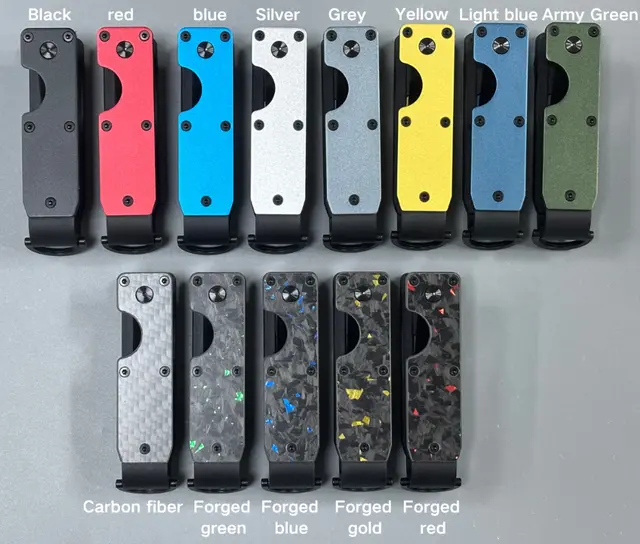
| Custom color finishes | Youth, fashion, and promotional lines | Expressive and brandable |
At Gstar, we work with CNC aluminum and leather key-organizer concepts, giving brands the ability to align structural performance with a distinct visual identity. Our OEM/ODM service can support concepts from early design direction through prototyping, tooling, and volume production. [gstartec]
A common product-development mistake is treating the key organizer as only a logo surface. In reality, the product succeeds or fails through its daily mechanics.
From an OEM manufacturing perspective, the most important design details are often small:
- Screw tension: Too loose, and keys swing. Too tight, and one-handed access becomes difficult.
- Spacer selection: Incorrect spacing can create key wobble or excess thickness.
- Edge finishing: Smooth edges improve pocket comfort and premium perception.
- Logo placement: Branding should remain visible without interfering with grip or function.
- Key-hole compatibility: The product should accommodate the key-hole sizes common in the intended market.
- Fastener durability: Repeated opening and closing should not cause easy loosening.
- Packaging clarity: Customers need simple installation instructions, spare hardware, and a clear capacity guide.
The best key organizer is not necessarily the most complex. It is the one that lets users identify, access, return, and carry their keys with minimal effort.
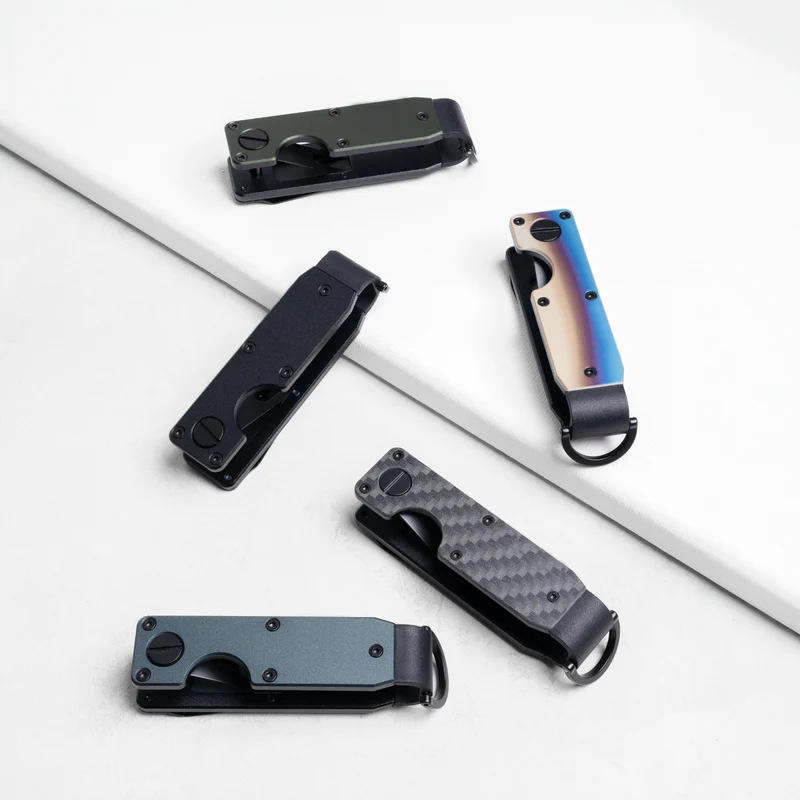
For retailers, importers, and established accessory brands, a key organizer can be positioned as a standalone EDC product or as part of a larger collection with RFID wallets, card holders, leather wallets, keychains, PSA card protectors, and gift sets.
At Gstar Technology (Shenzhen) Co., Ltd., we place OEM manufacturing needs first: product function, material selection, customization feasibility, repeatable production, and packaging readiness. With more than 13 years of experience in RFID wallets, card holders, leather goods, key organizers, and graded-card protectors, we support brands that require reliable development and scalable manufacturing solutions. [gstartec]
1. Define the user: minimalist commuter, luxury-gift buyer, traveler, outdoor user, or promotional-gift recipient.
2. Confirm the key capacity, car-fob requirement, and desired accessories.
3. Select the main material, finish, color, and logo method.
4. Review a prototype for key tension, comfort, fit, edge quality, and usability.
5. Finalize packaging, installation instructions, spare parts, and quality standards.
6. Prepare production for the required order quantity and delivery plan.
A focused product brief at the beginning helps avoid expensive revisions later. It also improves the chance that the final key organizer will earn positive reviews for the reasons customers actually care about: quiet carry, slim storage, smooth operation, and better protection for their belongings.
For people carrying multiple flat keys, a key organizer is usually better for reducing noise, improving organization, minimizing pocket bulk, and lowering the chance that loose keys will scratch nearby items. A traditional ring remains useful for simple setups or oversized keys.
It can reduce the risk substantially by holding keys in a compact stack instead of allowing sharp edges to swing freely. For the best protection, avoid placing any keys directly against an unprotected phone screen.
Capacity depends on key thickness, spacer configuration, and organizer hardware. Brands should specify a realistic range based on actual testing with common key types rather than making overly broad claims.
Yes, many designs can attach a car fob externally through a loop, clip, quick-release accessory, or separate ring. Flat keys are generally stored inside the organizer, while bulky fobs remain outside.
CNC aluminum is a strong choice for modern, lightweight, precision-made products. Genuine leather suits premium and gift-oriented collections. Hybrid aluminum-and-leather designs can combine functional structure with a refined appearance.
Yes. Gstar Technology provides OEM/ODM key-organizer development and can support customization in structure, materials, colors, logo treatment, packaging, prototypes, tooling, and production planning. [gstartec]
A traditional keychain keeps keys together. A thoughtfully designed key organizer makes them quieter, slimmer, easier to use, and less likely to damage the valuable items customers carry every day.
If your brand is developing a key organizer, leather key case, RFID wallet gift set, or complete EDC accessory line, contact Gstar Technology (Shenzhen) Co., Ltd. to discuss your OEM/ODM concept, target market, preferred materials, logo requirements, packaging, and production needs.

1. [Gstar Technology — China Key Holder Manufacturer] — Company capabilities, CNC aluminum and leather key organizers, OEM/ODM service, and manufacturing experience. [gstartec]
2. [Gstar Technology — Wholesale Key Organizer Manufacturers & Suppliers] — OEM/ODM development support, including design, tooling, prototypes, and volume production. [gstartec]
3. [Pack Hacker — The Best Key Organizer for Minimalist Everyday Carry] — Everyday-carry benefits including reduced jingle, compact carry, and comfort. [packhacker]
4. [Ekster — Key Cases vs. Traditional Keychains] — Comparison of loose keychains and organized key cases, including noise, bulk, and surface-scratch concerns. [ekster]
5. [Keyport — Are Key Organizers Worth It?] — Consumer-focused analysis of key organizers, pocket comfort, key protection, and modular everyday-carry functionality. [mykeyport]
6. [Hidemont — Top Reasons to Invest in a Leather Key Case] — Leather key-case advantages for noise reduction, gear protection, organization, and material experience. [hidemont]
Hot Tags: China, Global, OEM, private label, manufacturers, factory, suppliers, manufacturing company


