

Views: 251 Author: Gstar Technology Publish Time: 09-18-2026 Origin: Site


Content Menu
● Front Pocket Wallet vs. Traditional Bifold at a Glance
● Why Front Pocket Wallets Are Growing
>> Comfort and Sitting: A Practical Difference
>> Security and Theft Exposure
>> RFID Blocking: Explain It Accurately
● Where Traditional Bifold Wallets Still Win
>> The Key Weakness: Uncontrolled Capacity
● How Brands Should Choose the Right Wallet Style
>> 1. Define the Target User's Carry Habit
>> 2. Choose Capacity Before Material
>> 3. Match Materials to Positioning
>> 4. Test the Product as Users Will Use It
>> 5. Build a Product Range, Not One SKU
● Expert Recommendation: Choose by Lifestyle, Not Hype
● Partner With Gstar Technology
● FAQs
>> 1. Is a front pocket wallet better than a traditional bifold?
>> 2. How many cards should a front pocket wallet hold?
>> 3. Are traditional back pocket bifolds bad for your back?
>> 4. Do RFID-blocking wallets really work?
>> 5. What is the best material for a front pocket wallet?
>> 6. Can an OEM factory customize a Ridge-style wallet?
>> 7. Should a brand sell both front pocket wallets and bifolds?
At Gstar Technology (Shenzhen) Co., Ltd., we manufacture Ridge-style wallets, RFID card holders, ultra-slim wallets, leather wallets, key organizers, PSA card cases, bumper strips, and other customized OEM accessories for international brands, wholesalers, and manufacturers. From product-development discussions and production work with wallet buyers, we see one question repeatedly shape a brand's wallet strategy: what are the real differences between front pocket wallets and traditional back pocket bifolds?
The short answer is simple: a front pocket wallet prioritizes slim carry, controlled capacity, quick card access, and front-pocket comfort, while a traditional back pocket bifold prioritizes familiar handling, higher capacity, cash storage, and classic leather-wallet appeal. The better product is not universal—it depends on the user's daily carry habits, target market, material preference, and brand positioning.

A front pocket wallet is engineered to occupy less space and carry fewer essentials. It may be made from aluminum, titanium, carbon fiber, stainless steel, genuine leather, or a hybrid of metal and leather. Its typical user carries a small set of cards, a few notes, and perhaps an ID.
A traditional bifold is designed around the established wallet format: it folds in half, commonly includes multiple card slots, full-length bill compartments, and sometimes ID windows or coin storage. It is generally intended for back-pocket carry, although a slim leather bifold can also fit in many front pockets.
| Feature | Front Pocket Wallet | Traditional Back Pocket Bifold |
|---|---|---|
| Primary design goal | Minimal bulk and compact everyday carry | Capacity, familiar organization, classic form |
| Best carry position | Front trouser pocket, jacket pocket, small bag | Back trouser pocket, jacket pocket, bag |
| Typical capacity | Usually 4–12 cards, folded cash | Often 8–20+ cards, full-length notes, receipts |
| Thickness when loaded | Usually lower when users carry only essentials | Can become bulky as cards, receipts, and cash accumulate |
| Cash handling | Money clip, elastic strap, folded notes, small inner pocket | Full-length note compartment, easier bill separation |
| Security in public | More visible and closer to the user's hands | More exposed when carried in a rear pocket |
| Material direction | Metal, carbon fiber, aluminum, slim leather, hybrid designs | Genuine leather, PU leather, canvas, classic fabric |
| Ideal customer | Minimalists, commuters, travelers, EDC users | Traditional wallet users, cash users, gift buyers |
| Brand opportunity | Modern, functional, tech-oriented product lines | Heritage, leathercraft, gifting, premium lifestyle lines |
The essential distinction is not simply front pocket versus back pocket. It is a difference in product philosophy. A front pocket wallet asks users to curate what they carry. A bifold gives users more room to keep familiar items, even when they may not be needed every day.
The rise of mobile payments, contactless cards, digital IDs, and streamlined everyday carry has changed what many consumers expect from a wallet. Rather than carrying every loyalty card, old receipt, business card, and spare note, many users now prefer a smaller group of essential cards.
In our OEM experience at Gstar Technology, front pocket wallet programs are especially popular with brands selling into:
- Everyday-carry and outdoor markets
- Technology and gadget accessory categories
- Travel and urban-commuter segments
- Corporate gifting and promotional products
- Premium minimalist lifestyle brands
- Amazon, Shopify, and DTC wallet brands
- Crowdfunding-style product launches
A compact wallet can also communicate a strong product story. It suggests efficiency, modernity, durability, and intentional ownership. This is why the Ridge-inspired wallet category remains attractive for private-label development: the product is compact, highly giftable, easy to demonstrate visually, and suitable for meaningful customization.
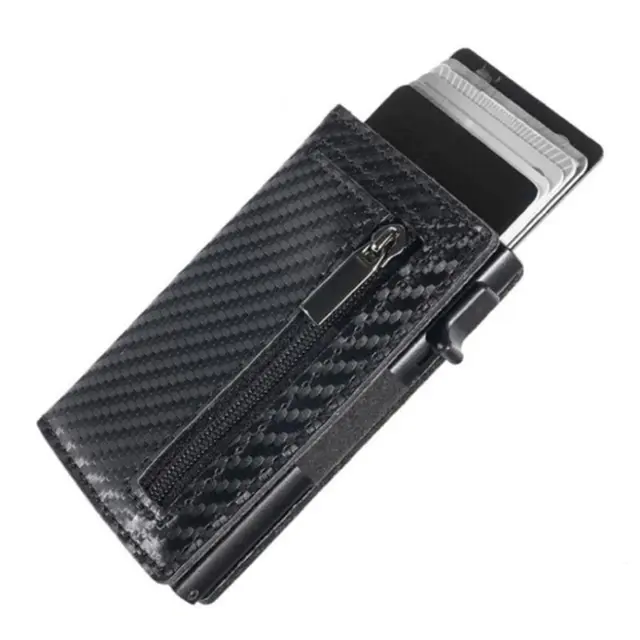
A traditional bifold becomes less comfortable when it is heavily loaded and carried in a back pocket during long periods of sitting, driving, or commuting. Sitting on a thick object can create an uneven surface beneath one side of the pelvis. Medical literature has described "wallet neuritis" or "wallet sciatica" as a potential source of sciatic-like discomfort in some people, especially with long-term rear-pocket wallet use. This does not mean every back-pocket bifold causes pain, but it does support a practical principle: a wallet should be slim, and users who sit for long periods should avoid sitting on a thick rear-pocket wallet.
For office workers, drivers, frequent travelers, and commuters, front-pocket carry can be a sensible alternative because it removes the wallet from the sitting surface. However, brands should avoid making absolute medical claims. Front-pocket carry may be more comfortable for many people, but fit depends on body shape, trouser cut, pocket depth, and the total number of items carried.
A wallet carried in a front pocket is generally easier for the owner to notice and monitor. It stays within the user's immediate field of awareness and usually requires a more obvious movement for someone else to access it. By comparison, a back pocket may be more convenient for a traditional bifold but can be less visible in crowded transport, tourist zones, or busy events.
For brands, the important message is not "front pocket wallets are theft-proof." No wallet is theft-proof. The stronger and more credible claim is that front-pocket placement can improve awareness and make unauthorized access more difficult than carrying a wallet loosely in a rear pocket.
A practical security-oriented design can include:
- RFID-blocking card compartments or shielding layers
- Tight card retention
- Pull-tab quick-access systems
- Secure elastic straps or metal plates
- Minimal external branding for discreet carry
- Durable materials that resist bending, splitting, or deformation
- Optional AirTag-compatible designs where appropriate
RFID is frequently used in wallet marketing, but good brands should communicate it responsibly. RFID blocking uses conductive materials—such as aluminum, steel, or specialized shielding fabric—to reduce the ability of a compatible reader to communicate with a contactless card. The unauthorized reading of RFID tags is recognized as a security concern in RFID systems.
However, consumers deserve a balanced explanation. Contactless payment cards normally operate at very close range, and reported real-world consumer fraud specifically attributed to RFID skimming appears limited. Consumer-security experts caution that RFID protection does not protect against phishing, online account compromise, card-data breaches, malware, or physical wallet theft.
For OEM brands, the strongest approach is to market RFID blocking as one practical privacy layer, not as a guarantee against all financial fraud.
At Gstar Technology, we recommend product teams test RFID claims before launch. A simple functional test is to place a contactless card in the intended shielded slot and attempt to tap at a compatible payment terminal. Test the actual orientation, loading condition, and closure state consumers will use. A product should not be labeled RFID-blocking merely because it contains metal; its effective coverage depends on the structure and placement of shielding materials.
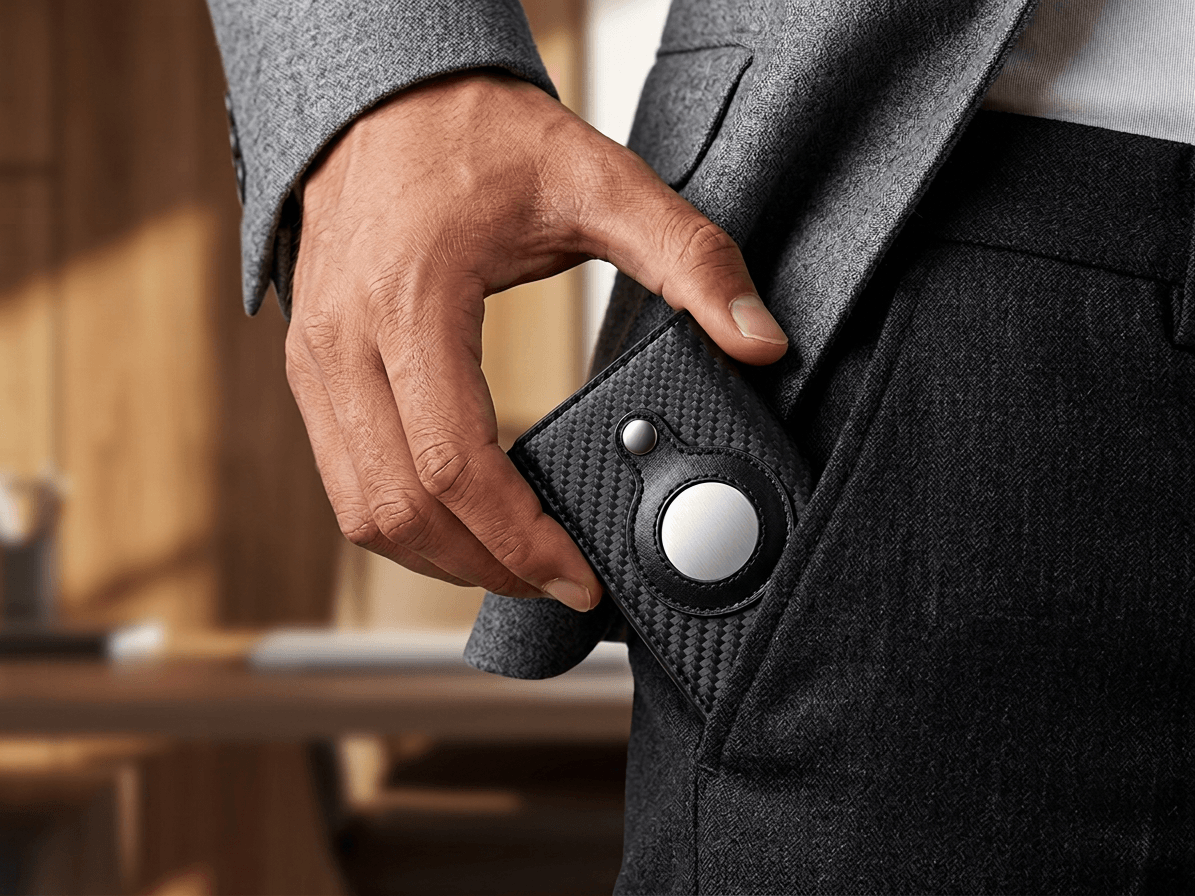
The minimalist wallet trend does not make traditional bifolds obsolete. A well-designed bifold continues to offer clear benefits for large groups of customers.
A bifold may be the better choice for users who carry:
- Several bank cards and loyalty cards
- Multiple currencies during travel
- Paper receipts, tickets, or notes
- Full-size banknotes without folding
- A driver's license or identification in a visible slot
- Family, business, or work-related cards
- Coins, depending on regional payment habits
Traditional bifolds also retain strong emotional and commercial value. Leather bifolds are often associated with milestones, gifting, craftsmanship, father's-day campaigns, executive gifts, and premium retail. Their larger surface area supports elegant logos, debossing, embossing, contrast stitching, lining colors, and customized packaging.
For many consumers, a bifold is not merely an accessory—it is a familiar daily object. The opening-and-closing action, full-note compartment, and organized card layout make it feel practical and complete.
The main weakness of a traditional bifold is not its basic structure. It is overloading. A wallet designed with many pockets often encourages users to retain expired cards, old receipts, spare keys, and unnecessary paper items. Over time, thickness increases, leather stretches, the silhouette becomes bulky, and the wallet becomes uncomfortable in a rear pocket.
A high-quality bifold should therefore be designed for disciplined capacity, not maximum storage at any cost. For example, instead of adding countless card slots, a brand can offer:
- Six focused card slots rather than twelve or more
- One or two hidden pockets for limited extras
- A slim full-length bill compartment
- No unnecessary coin pocket for markets that rarely use coins
- RFID lining in targeted areas
- Reinforced fold construction to reduce stress at the center crease
This creates a slim bifold category that bridges traditional leather appeal with modern everyday-carry expectations.
For private-label buyers, product selection should start with the end customer—not a single viral design. Gstar Technology recommends using the following five-step decision process before beginning an OEM wallet project.
Ask practical questions before choosing the design:
- How many cards does the customer carry every day?
- Does the customer regularly carry cash?
- Is the buyer an office worker, driver, traveler, student, executive, or outdoor user?
- Does the target market prefer leather heritage or modern metal accessories?
- Is the product intended as an affordable promotional item or a premium retail product?
A customer who carries six cards and uses Apple Pay may value a metal front pocket wallet. A customer who carries cash, receipts, business cards, and multiple IDs may prefer a compact leather bifold.
Many brands begin by choosing carbon fiber, aluminum, leather, or titanium. That is understandable—but capacity should come first.
A useful product brief might state:
"Design a front pocket RFID wallet for 6–10 cards, with a thumb-notch access system, expandable elastic strap for folded cash, a debossed logo plate, and a loaded thickness target suitable for front-pocket carry."
This is much more actionable than saying, "We want a premium metal wallet."
| Product Positioning | Recommended Materials | Best Use Case |
|---|---|---|
| Entry-level promotional wallet | Aluminum alloy, PU leather, basic elastic | Events, giveaways, mass-market retail |
| Modern premium wallet | Aerospace-grade aluminum, carbon fiber, stainless steel | DTC brands, tech accessories, gifting |
| Luxury slim wallet | Full-grain leather, top-grain leather, refined hardware | Premium retail, executive gifts |
| Rugged EDC wallet | Aluminum, titanium-look metal, reinforced elastic | Outdoor, tactical, travel markets |
| Hybrid wallet | Leather exterior with RFID layer or metal card core | Buyers wanting both heritage and minimalism |
A wallet must be tested when loaded, not only when empty. An OEM sample review should include:
- Card insertion and removal with 1, 4, 8, and maximum cards
- Elastic durability and recovery after repeated expansion
- Money-clip or cash-strap retention
- Edge finishing and skin-contact comfort
- Screw security, thread locking, and hardware alignment
- Leather fold durability and stitch consistency
- RFID function, where claimed
- Packaging protection during international shipping
- Logo quality after abrasion and regular handling
At Gstar Technology, this product-validation stage is where a generic wallet becomes a brand-ready product. Small decisions—card-slot tension, screw finish, logo location, edge radius, leather thickness, elastic width, and packaging insert—can substantially affect reviews and return rates.
The strongest wallet brands often use a "good, better, best" assortment:
1. Entry model: Simple aluminum RFID card holder with basic branding
2. Core model: Premium front pocket wallet with money clip, elastic strap, and gift box
3. Premium model: Carbon fiber, leather-metal hybrid, or genuine leather slim bifold with upgraded packaging
This strategy lets brands serve price-sensitive shoppers while creating clear upsell opportunities. It also supports bundle sales with matching key organizers, RFID card holders, AirTag accessories, or gift-box sets.
A front pocket wallet is usually the better option for people who want a lighter everyday carry, carry fewer cards, use digital payment frequently, commute in crowded environments, or spend long periods sitting. Its compact size and front-pocket position make it particularly suitable for minimalist and technology-oriented users.
A traditional back pocket bifold remains the better option for customers who prefer classic leather, carry more cards or cash, value a full-length bill compartment, or want a familiar wallet format for gifting and daily organization.
The best solution for many brands is not choosing one category exclusively. It is offering both:
- A minimalist front pocket wallet for modern, compact carry
- A slim leather bifold for customers who want capacity without excessive bulk
This dual-category approach lets a brand meet different user needs while preserving a clear design language across the collection.
Gstar Technology (Shenzhen) Co., Ltd. helps brands turn wallet concepts into production-ready OEM products. Whether you need a Ridge-style RFID wallet, an ultra-slim leather card holder, a traditional bifold, a key organizer, a PSA card case, or customized retail packaging, we support the process from concept refinement through sampling, material selection, logo customization, quality control, and mass production.
Ready to develop a front pocket wallet or traditional bifold collection? Contact Gstar Technology with your target market, preferred materials, estimated capacity, logo requirements, target price, and packaging concept. Our team can help you build a wallet line that matches your brand—not just a generic catalog product.
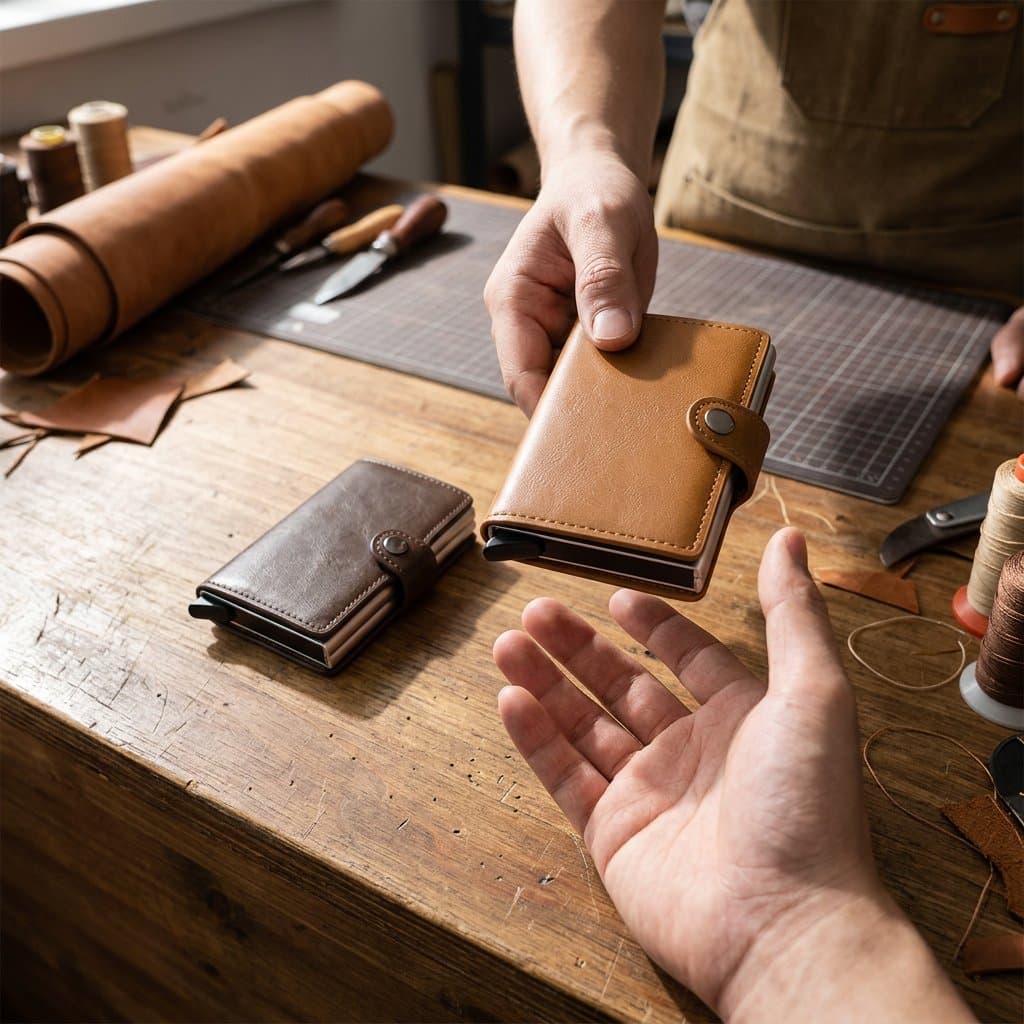
A front pocket wallet is better for users who value slimness, minimal carry, and compact everyday convenience. A traditional bifold is better for users who need more card slots, cash capacity, and a familiar leather-wallet layout. The best choice depends on what the customer carries every day.
For comfortable front-pocket carry, a practical range is usually 4–10 cards. Some expandable card holders can carry more, but excessive loading increases thickness and reduces the minimalist advantage.
Not necessarily. However, sitting on a thick rear-pocket wallet for long periods can create an uneven sitting surface and may contribute to discomfort for some people. Users who drive or sit extensively should keep their wallet slim or remove it before sitting.
A properly designed RFID-blocking wallet can reduce communication between compatible contactless cards and readers by using conductive shielding materials. But RFID blocking is not a complete anti-fraud solution; it does not stop phishing, online fraud, data breaches, or physical theft.
Aluminum is a common choice for lightweight, modern RFID wallet designs. Carbon fiber offers a premium technical appearance. Genuine leather provides a more classic feel. The best material depends on price point, target customer, branding style, durability expectations, and required RFID performance.
Yes. Gstar Technology can support OEM customization for Ridge-inspired wallet formats, including material selection, logo engraving or printing, colors, elastic straps, money clips, cash bands, screws, RFID functions, packaging, and bundled accessories. Brands should also ensure that their final design and branding do not infringe third-party intellectual-property rights.
In most cases, yes. Offering both product types allows a brand to serve minimalist customers and traditional-wallet buyers. A coordinated collection can include metal RFID wallets, leather card holders, slim bifolds, key organizers, and gift sets under one visual identity.
1. Siddiq, M. A. B. "Wallet Neuritis – An Example of Peripheral Sensitization." *Pain Research and Treatment*, available via the [U.S. National Library of Medicine / PubMed Central]. The article discusses how prolonged rear-pocket wallet use may compress or sensitize the sciatic nerve in some cases. [pmc.ncbi.nlm.nih]
2. International Journal of Medical Research & Health Sciences. "Fat Wallet Syndrome: An Epidemic among Men." Available as a [PDF research article]. The study recommends avoiding rear-pocket wallet carry while sitting, driving, or riding. [ijmrhs]
3. National Institute of Standards and Technology (NIST). "Guidelines for Securing Radio Frequency Identification (RFID) Systems," NIST Special Publication 800-98. Available through [NIST Publications]. Provides terminology and security context concerning RFID systems and unauthorized tag reading. [nvlpubs.nist]
4. AARP. "Do You Really Need an RFID-Blocking Wallet?" Available at [AARP Money]. Explains that RFID skimming is technically possible but that practical consumer risk is generally regarded as limited. [aarp]
5. Lowry Solutions. "Do You Really Need an RFID-Blocking Wallet?" Available at [Lowry Solutions]. Explains close-range RFID behavior, shielding materials, and the limitations of RFID-blocking products. [lowrysolutions]
6. Men's Health. "20 Best Front Pocket Wallets, According to Our Editors." Available at [Men's Health]. Provides consumer-market context on the popularity and minimal-carry purpose of front-pocket wallets. [menshealth]
Hot Tags: China, Global, OEM, private label, manufacturers, factory, suppliers, manufacturing company


