

Views: 220 Author: Gstar Technology Publish Time: 09-29-2026 Origin: Site


Content Menu
● Magnetic Closures vs. Mechanical Latches at a Glance
● What Is a Magnetic Closure for a Card Case?
>> Advantages of magnetic closures
>> Limitations of magnetic closures
● What Is a Mechanical Latch for a Card Case?
>> Advantages of mechanical latches
>> Limitations of mechanical latches
● The Core Difference: Attraction vs. Physical Engagement
● How to Choose the Right Closure for Your Card Case
>> 1. What is the card case's primary use?
>> 2. What material will the product use?
>> 3. How much accidental-opening resistance is required?
>> 4. How important is one-handed operation?
>> 5. Is the product designed around RFID protection?
>> 6. What customer promise is the brand making?
● OEM Engineering Considerations That Brands Often Miss
>> Magnet strength is not the only magnetic-closure variable
>> Latch tolerances determine customer perception
>> Validate the closure with real contents
● Magnetic Card Safety: What Brands Should Communicate Responsibly
● Why Brands Choose Gstar Technology
● FAQ
>> 1. Are magnetic closures safe for credit cards?
>> 2. Is a mechanical latch more secure than a magnetic closure?
>> 3. Which closure is best for a leather RFID wallet?
>> 4. Which closure is best for a PSA card protector?
>> 5. Can a magnetic closure affect RFID blocking performance?
>> 6. How should an OEM factory test a card-case closure?
>> 7. Can Gstar Technology customize both closure types?
At Gstar Technology (Shenzhen) Co., Ltd., we help brands turn a card-case concept into a product that is secure, slim, durable, and commercially viable. For buyers developing RFID card holders, leather wallets, pop-up card cases, metal wallets, PSA card protectors, or premium gift products, understanding the differences between magnetic closures and mechanical latches for card cases is essential before finalizing the structure, tooling, materials, and user experience.
A closure is not merely a small component. It affects the product's opening feel, card security, thickness, perceived quality, long-term durability, production cost, and customer reviews. Magnetic closures create a silent, smooth, modern experience. Mechanical latches offer positive locking, stronger retention, and clearer confirmation that the case is closed. The best choice depends on the card case's intended use, material construction, target price, and customer expectations.
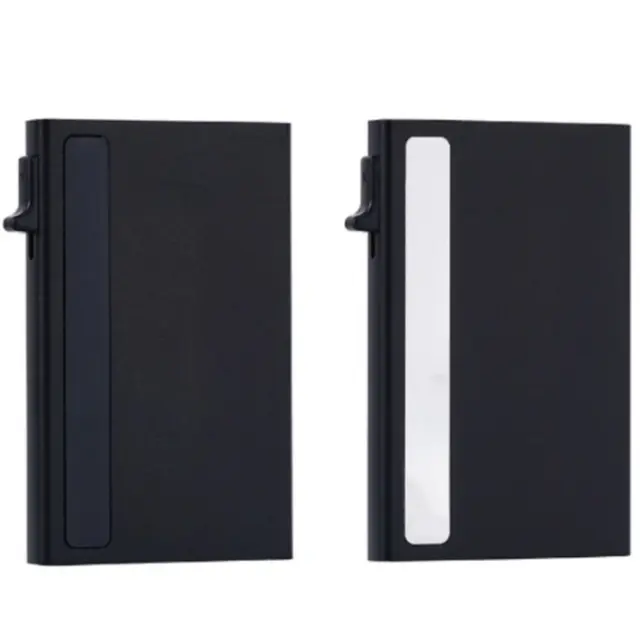
| Feature | Magnetic closure | Mechanical latch |
|---|---|---|
| Opening experience | Smooth, silent, one-handed | Tactile, deliberate, often requires pressing or sliding |
| Closing feedback | Soft "snap" or pull-in action | Audible and physical "click" |
| Security level | Moderate; depends on magnet strength and alignment | Higher; uses a physical hook, catch, button, or locking geometry |
| Product thickness | Usually slim | May require more internal space |
| Design flexibility | Excellent for leather and minimalist products | Excellent for rigid metal, plastic, and protective cases |
| Wear points | Magnet adhesion, glue, stitching, cover deformation | Springs, pivots, hooks, buttons, and contact surfaces |
| Best for | Slim wallets, leather card cases, premium lifestyle products | Hard-shell card cases, rugged products, PSA card protectors |
| User perception | Elegant, modern, effortless | Secure, technical, robust |
| Manufacturing complexity | Moderate | Moderate to high, depending on mechanism |
For a brand, the decision should not be based on appearance alone. A beautiful card case can receive negative feedback if the closure opens inside a pocket, if the latch becomes loose after repeated use, or if users find the mechanism difficult to operate.
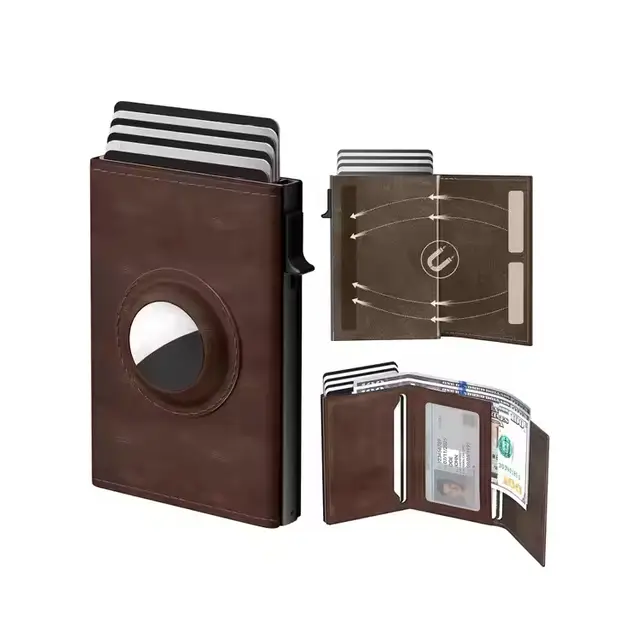
A magnetic closure uses one or more magnets to pull two parts of a card case together. The magnets may be hidden inside leather, microfiber, PU, aluminum, plastic, or fabric layers. Common configurations include a magnet-to-magnet design, a magnet-to-steel-plate design, and a magnetic flap with a reinforced receiving plate.
In our OEM development work at Gstar Technology, magnetic closures are most suitable for:
- Genuine leather card holders
- PU or vegan-leather RFID wallets
- Bifold card cases
- MagSafe-compatible wallet accessories
- Pop-up wallets with protective outer covers
- Gift-oriented card holders
- Slim business card cases
The major appeal is simplicity. The user opens the cover without locating a button, sliding a switch, or applying force to a latch. When closing, the magnetic pull helps align the flap naturally.
Minimal and premium appearance. Magnets can be fully concealed. This allows brands to maintain a clean exterior with no visible button, hook, or hardware.
Quiet operation. A magnetic wallet closes without the sharp sound associated with a snap button or latch. This makes it especially appropriate for executive, luxury, and everyday-carry products.
Fast one-handed use. Users can often open and close a magnetic card case while holding a phone, bag, or coffee. This improves daily convenience.
Flexible styling options. Magnetic closures work particularly well with stitched leather flaps, curved designs, embossed logos, colored edge paint, and soft-touch materials.
Fewer exposed mechanical parts. A hidden magnet avoids a visible spring button or latch arm that could complicate the visual design.
Magnetic closures are not automatically the best choice for every card case. Their performance depends on magnetic force, spacing, polarity, material thickness, flap length, and product geometry.
Potential limitations include:
- The closure may open under impact if the magnetic pull is too weak.
- A thick leather layer or padding can reduce the magnet's holding performance.
- A large, heavy metal cover may need more than one magnet.
- Misalignment during assembly can produce an uneven closing feel.
- Adhesives and magnet pockets must be engineered carefully to prevent magnet movement.
- Products carried with access cards, hotel keys, or older magnetic-stripe cards require thoughtful magnet placement.
Modern payment cards commonly use embedded chips and contactless functionality, while magnetic stripes remain present on many cards. A sufficiently strong magnet in very close contact can affect a magnetic stripe, although modern cards are generally designed with improved resistance. The practical design lesson is not to assume all cards are identical. Card-case brands should design magnetic placement conservatively, avoid positioning magnets directly against the stripe area, and validate the finished product with representative customer cards.
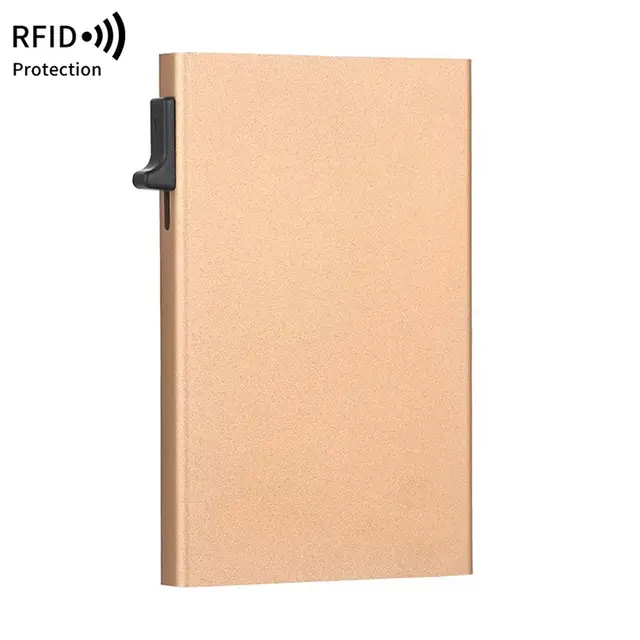
A mechanical latch uses physical engagement to keep a case closed. Depending on the design, it may include a hook-and-catch, push button, spring latch, snap lock, sliding lock, rotating clasp, side-release button, or hinged locking structure.
Mechanical latches are frequently used in:
- Aluminum RFID card cases
- Hard-shell credit card holders
- PSA graded card protectors
- Rugged EDC card containers
- Travel card cases
- Waterproof or impact-resistant cases
- Metal business-card holders
- Protective cases for collectors' cards
A mechanical latch creates physical retention. Instead of relying primarily on magnetic attraction, one component locks behind, into, or around another component.
Higher retention confidence. A correctly engineered latch gives the user a clear confirmation that the card case is locked. This is important for products carried in bags, backpacks, work gear, or travel luggage.
Better fit for rigid shells. Metal, PC, ABS, and reinforced polymer card cases often benefit from a physical latch because these materials provide a stable platform for pivots, hooks, springs, and locking tabs.
Strong user feedback. A tactile click gives users confidence. For many customers, especially in rugged or collector-protection products, a physical lock feels safer than a magnetic flap.
Better support for impact-oriented products. A mechanical closure can be optimized for drop resistance and accidental-opening resistance, making it a logical solution for PSA card bricks and protective card cases.
Distinct product differentiation. A well-designed push latch, slide lock, or locking button can become part of a brand's identity and create a memorable unboxing and usage experience.
Mechanical latches bring functional advantages, but they also add engineering responsibilities.
- More components can increase tooling and assembly complexity.
- Springs, pins, and plastic hooks can wear after repeated cycles.
- Tight tolerances are essential for consistent closing performance.
- A latch can feel cheap if it rattles, sticks, squeaks, or requires excessive force.
- The structure may increase the thickness and weight of a slim card case.
- Dust, sweat, sand, and pocket lint can affect poorly protected mechanisms.
For this reason, a mechanical latch should be designed around realistic user behavior. A card case may be opened several times per day. Over a year, that can mean hundreds or thousands of cycles. Durability testing should measure not just whether the latch still closes, but whether release force, alignment, retention, and user feel remain acceptable after repeated use. Product life-cycle testing commonly evaluates performance through controlled repeated-operation cycles and checks whether materials and functions remain stable.
The simplest way to compare the two systems is this:
- A magnetic closure holds a card case shut through magnetic attraction.
- A mechanical latch holds a card case shut through physical engagement.
This difference shapes the entire product experience.
A magnetic closure is intuitive. The flap approaches the body, the magnets align, and the case closes. It feels smooth and almost effortless. This is ideal when the brand message emphasizes slimness, convenience, quiet luxury, and everyday carry.
A mechanical latch is intentional. The user presses, slides, clicks, or unlocks a mechanism. It feels more engineered and secure. This is ideal when the brand message emphasizes protection, durability, travel readiness, equipment-grade performance, or collector value.
Neither system is universally superior. The better solution is the one that matches the actual product brief.
At Gstar Technology, we recommend evaluating the closure choice through six practical questions before opening a mold or confirming a production order.
Choose a magnetic closure if the product is intended for:
- Daily commuting
- Business use
- Minimalist EDC
- Luxury gifting
- Leather wallet collections
- Fast card access
- Fashion-focused consumer markets
Choose a mechanical latch if the product is intended for:
- Travel protection
- Rugged EDC
- Outdoor use
- Collector-card storage
- PSA card protection
- Hard-shell RFID card cases
- High-value contents requiring stronger retention
Material has a direct effect on closure design.
| Material | Better closure options | OEM design considerations |
|---|---|---|
| Genuine leather | Magnetic closure, snap, concealed latch | Consider thickness, stitching line, magnet pocket, edge finishing |
| PU leather | Magnetic closure, snap, button latch | Reinforce magnet area to prevent deformation |
| Aluminum | Mechanical latch, magnetic lid, slide mechanism | Control CNC tolerances, anodizing thickness, hinge alignment |
| Stainless steel | Mechanical latch or high-strength magnet | Consider weight, sharp-edge control, and closing noise |
| Carbon fiber | Magnetic closure or precision latch | Prevent delamination and ensure reliable attachment methods |
| ABS/PC plastic | Mechanical latch, snap-fit, magnetic closure | Validate impact resistance and fatigue performance |
| Acrylic PSA card case | Mechanical latch or screw closure | Prioritize clarity, scratch resistance, and tamper resistance |
This is where mechanical latches often have an advantage. If a product will be carried loose in a backpack, tool bag, travel case, or large handbag, the closure should withstand movement, compression, vibration, and occasional impact.
A premium leather wallet stored in a front pocket may not need the same retention force as a graded-card protector shipped to collectors or displayed at trade shows.
Magnetic designs usually win for speed and simplicity. Users do not need to find a release point. This can improve satisfaction for products that are opened repeatedly throughout the day.
Mechanical latches can still offer excellent usability, but they need careful ergonomic design. The button should be easy to locate. The release force should feel confident rather than stiff. The mechanism should avoid pinching fingers or catching on clothing.
RFID blocking and closure type are related but not identical design decisions. RFID-blocking performance typically comes from conductive materials, such as metal layers or specialized shielding materials, that interfere with radio-frequency communication.
Many contactless smart cards operate at 13.56 MHz and are designed for close-proximity use with readers. An RFID-blocking card case should therefore be evaluated as a complete construction: material coverage, seams, openings, card orientation, and the position of any magnetic or mechanical closure.
For example:
- An aluminum card case may naturally support RFID shielding, but gaps and open edges should still be assessed.
- A leather wallet with a shielding layer requires complete coverage around the stored cards.
- A mechanical latch can support a rigid, enclosed structure.
- A magnetic flap can work well, but the shielded layers should overlap correctly when closed.
The closure should reinforce the product claim.
| Brand promise | Recommended direction |
|---|---|
| "Slim luxury wallet" | Concealed magnetic closure |
| "Fast-access business card holder" | Magnetic flap or easy-release latch |
| "Rugged travel card case" | Mechanical latch |
| "Premium RFID metal wallet" | Precision latch, slide lock, or reinforced magnetic mechanism |
| "Collector-grade PSA card protector" | Mechanical latch, screw lock, or tamper-conscious closure |
| "Minimalist everyday carry" | Magnetic closure with controlled retention force |
The biggest information gap in many closure-comparison articles is that they discuss appearance and convenience but overlook manufacturability. In real OEM production, a closure is only successful when it remains consistent across thousands of units.
Brands often ask for "stronger magnets." However, stronger is not always better.
An excessively strong magnet can make a slim wallet difficult to open, create an abrupt closing action, increase the risk of material stress, and reduce the refined feel expected in a premium leather product.
The final holding force depends on:
- Magnet grade and size
- Distance between the magnets
- Material thickness between magnets
- Magnet orientation and polarity
- Flap leverage
- Product weight
- Contact area and closure alignment
- User opening direction
A well-designed magnetic card case should feel secure when carried but effortless when intentionally opened.
Mechanical latches require strict control over component dimensions. A small variation in a metal hook, plastic catch, hinge pin, spring, or molded housing can create several problems:
- The case does not close fully.
- The release button jams.
- The latch rattles.
- The closing force differs between units.
- The case opens when dropped.
- The mechanism feels loose after repeated use.
This is why prototype testing is essential. Before mass production, brands should test multiple samples across normal, cold, hot, and repeated-use conditions.
A closure should never be tested only with an empty card case. The number and type of cards change the internal pressure and closing behavior.
A practical validation plan should include:
1. Test with the minimum and maximum intended card capacity
2. Test standard bank cards, embossed cards, transit cards, access cards, and thicker membership cards
3. Test opening and closing after repeated cycles
4. Test pocket compression and bag movement
5. Test drop resistance with cards inside
6. Test alignment after heat, humidity, and transport vibration
7. Test RFID-blocking performance in the fully closed position, where applicable
This process reduces expensive post-production changes and helps brands prevent avoidable negative reviews.
Card safety is a common customer concern, especially when a product contains magnets. The correct message should be balanced.
A strong magnetic field can theoretically affect a magnetic stripe if the stripe is exposed closely enough to an appropriate magnetic source. However, the chip in an EMV card is not a magnetic storage component, and modern payment cards commonly have contactless and chip-payment alternatives. [all-ett]
For card-case brands, the responsible approach is:
- Do not claim that every magnetic wallet is risk-free for every card type.
- Do not exaggerate the risk for modern chip and contactless cards.
- Keep magnets away from direct, prolonged contact with magnetic stripes where possible.
- Test with representative cards, hotel key cards, transit cards, access badges, and gift cards.
- Add reasonable product guidance for customers who carry sensitive magnetic-stripe items.
This balanced communication protects both the end user and the brand's credibility.
Gstar Technology (Shenzhen) Co., Ltd. is an OEM and ODM manufacturer for RFID wallets, Ridge-style wallets, slim wallets, genuine leather wallets, key organizers, keychains, graded-card holders, PSA card protectors, and bumper guards. Our development capability covers logo customization, colors, materials, packaging, structural customization, and selected mold development for brand-specific products.
Our closure-development approach begins with the product's market position rather than forcing every concept into one standard structure. For example:
- A luxury leather collection may need a hidden magnetic flap with controlled closing force.
- A metal RFID card case may need a precise mechanical latch that supports a stronger security message.
- A PSA card brick may require a rigid locking design that protects the slab during handling and transport.
- A promotional card holder may need a cost-efficient closure that still meets the brand's visual and functional standard.
With more than 13 years of stated experience in RFID wallets and related accessory manufacturing, in-house CNC machining, and reported monthly production capacity exceeding 300,000 pieces, Gstar Technology can support brands from sample development through bulk production.
Choose a magnetic closure when your card case needs to feel slim, quiet, elegant, and effortless. It is an excellent fit for leather wallets, modern RFID card holders, premium gifts, and minimalist EDC products.
Choose a mechanical latch when your product needs a clearer lock confirmation, higher accidental-opening resistance, a hard-shell structure, or a rugged protective identity. It is often the stronger choice for aluminum card cases, travel products, collector-card protectors, and PSA card bricks.
The best card case is not defined by magnet versus latch alone. It is defined by how well the closure works with the material, card capacity, RFID structure, intended environment, user behavior, and brand promise.
Develop your custom card case with Gstar Technology. Send us your design concept, target market, material preference, logo requirements, closure preference, expected order quantity, and packaging needs. Our team can recommend the most suitable magnetic closure or mechanical latch solution before sampling and mass production.
Magnetic closures are generally compatible with modern chip and contactless cards when designed responsibly. However, strong magnets placed very close to magnetic stripes may affect certain stripe-based cards, hotel key cards, transit cards, or access cards. Brands should test with the actual card types used by their target customers.
In most cases, yes. A mechanical latch uses physical engagement and usually provides more obvious locking feedback and stronger resistance to accidental opening. However, a well-designed magnetic closure can still offer reliable everyday retention for slim wallets and card cases.
A concealed magnetic closure is often the best option for a leather RFID wallet because it keeps the profile slim and preserves a premium, minimalist appearance. The RFID shielding layer, magnet placement, flap overlap, and card capacity should all be validated during sampling.
A mechanical latch, screw closure, or another rigid locking method is usually more appropriate for a PSA card protector. These products prioritize protection, impact resistance, tamper awareness, and secure transport over ultra-fast access.
The magnet itself does not create RFID shielding. RFID-blocking performance depends on the conductive shielding materials and the construction of the card case. A magnetic closure can be used in an RFID wallet if the shielding layers provide effective coverage when the case is closed.
The closure should be tested with the intended number and types of cards, repeated opening-and-closing cycles, drop testing, pocket compression, vibration, temperature exposure, humidity exposure, and RFID-blocking verification where applicable. The goal is to confirm not only that the case closes, but that it retains its security, alignment, feel, and usability over time.
Yes. Gstar Technology can support OEM and ODM development for magnetic-closure and mechanical-latch card cases, depending on the material, product structure, logo process, packaging design, functional requirements, and expected order volume.
1. Gstar Technology. "Custom Card Holder Manufacturers & Suppliers—China." Product range, OEM/ODM capability, manufacturing experience, CNC capability, and stated production capacity. [Gstar Technology website] [gstartec]
2. Gstar Technology. "China RFID Wallet Manufacturer and OEM Factory." RFID wallet product categories, material options, customization services, and OEM/ODM support. [Gstar Technology website] [gstartec]
3. All-ett. "Does a Magnetic Wallet Ruin Your Credit Cards?" Discussion of magnetic stripes, modern card construction, and the relative effect of wallet magnets on credit and debit cards. [All-ett article] [all-ett]
4. RE:FORM. "The Magnet Myth: Card Safety in Magnetic Wallets." Discussion of magnetic-stripe durability, HiCo magnetic stripes, modern card technology, and practical magnet-related risk. [RE:FORM article] [reformcarry]
5. Microchip Technology. "Requirements of ISO/IEC 14443 Type B Proximity Contactless." Overview of 13.56 MHz proximity contactless smart cards and operating characteristics. [Microchip PDF] [ww1.microchip]
6. Norton. "RFID Blocking: What It Is, How It Works, and Why You May Need It." Explanation of RFID-blocking materials and how shielding disrupts radio waves. [Norton article] [us.norton]
7. Megalab. "Durability & Life-Cycle Testing." Overview of repeated-operation testing used to assess product functionality, strength, and material performance over time. [Megalab article] [megalabinc]
Hot Tags: China, Global, OEM, private label, manufacturers, factory, suppliers, manufacturing company


