9 min read
A buyer receives a sample wallet, drops four cards in, and waves it at a payment terminal. Nothing happens. The first assumption is that the magnet killed the stripe. Nine times out of ten, the stripe was already damaged — by sliding against the card next to it, by a bent corner, or by a reader head that had been dirty for a year.
Magnetic closures are not the villain in most card failures. But they are not harmless either, and the difference matters when you are specifying a few thousand units for retail.
Short answer: which is safer for magnetic stripe cards?
A non-magnetic closure is safer for cards that still carry a low-coercivity stripe, such as hotel keycards and some access badges. For everyday bank cards with high-coercivity stripes, a well-designed magnetic closure is fine as long as the magnets sit at least 5 mm away from the card stack and are not stacked directly on the stripe. The bigger risk to any card is mechanical: abrasion, bending, and pressure from a rigid case.
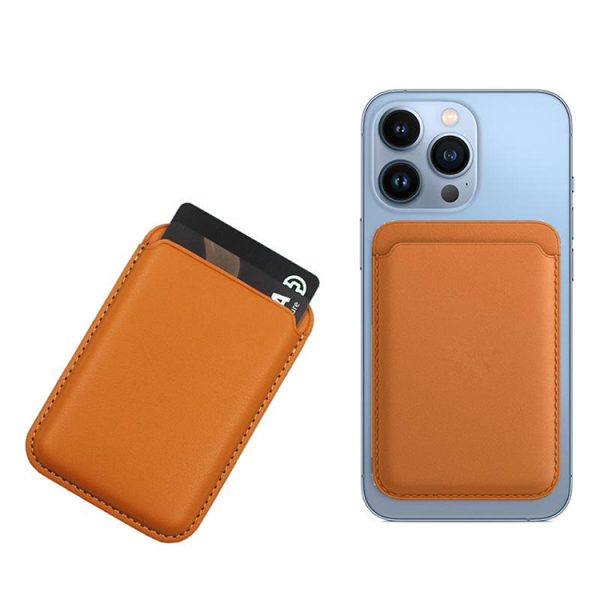
Two different products are both called “magnetic wallet”
This is where most spec conversations go sideways. In the marketplace, “magnetic wallet” means one of two things:
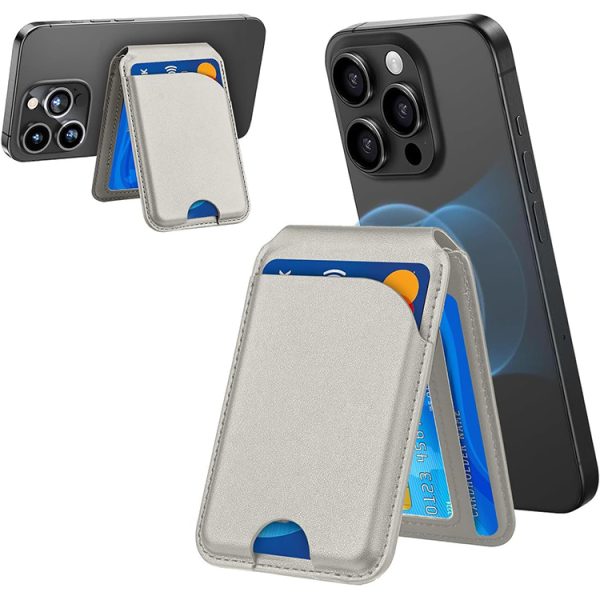
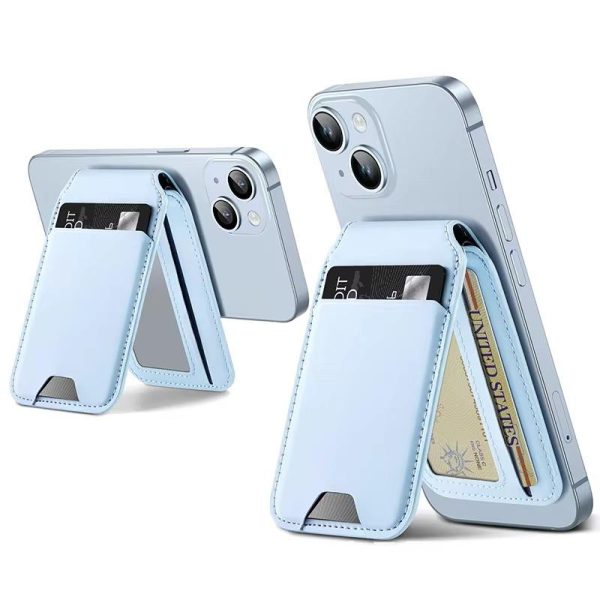
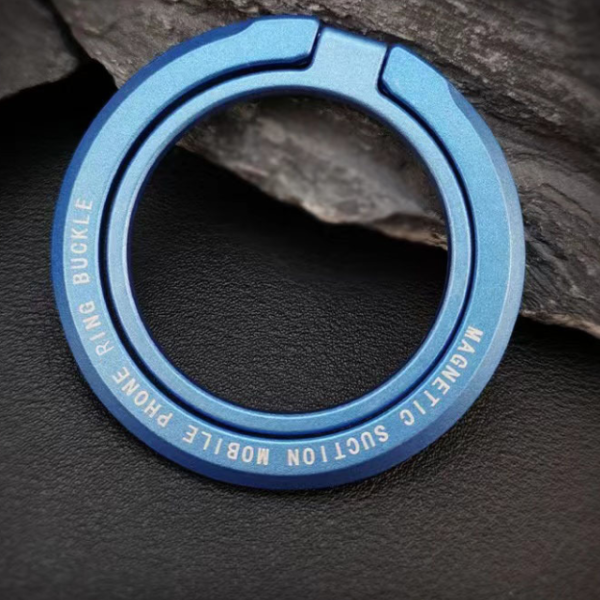
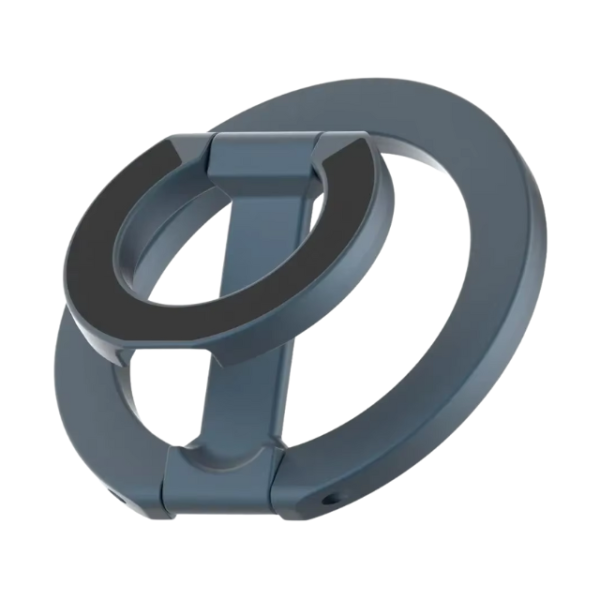
- A MagSafe-style wallet that attaches to the back of a phone with a ring of magnets. The magnets face the phone, not the cards.
- A wallet with a magnetic closure — a flap, a latch, or a folding mechanism held shut by small neodymium magnets.
The first type puts the magnet array behind the card stack. The second puts two small magnets at the edge or corner of the shell. They behave very differently around a stripe, and they need different answers in a spec sheet.
How a magnetic stripe actually fails
There are three mechanisms, and only one of them involves magnetism.
1. Abrasion
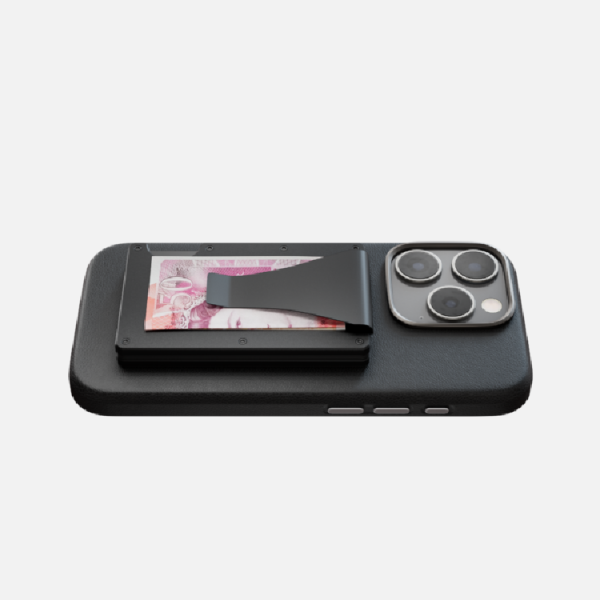
The stripe is a coating of iron oxide particles in a binder, a few microns thick. Every time a card slides against another card, or against a metal edge, a little of that coating goes away. A rigid aluminum wallet with tight tolerances is unforgiving here. Cards in a metal case do not flex, so grit trapped between them acts like sandpaper.
2. Bending and point pressure
A stripe that is creased at one point loses read reliability at that point. A wallet that clamps cards too tightly, or a pop-up mechanism that indexes cards against a hard edge, concentrates force on a narrow band. Over months, that band is where the read failure shows up.
3. Demagnetization
This one is real but rarer than people think. Stripe coercivity is the number that decides how much external field a card tolerates. Standard low-coercivity (LoCo) stripes are rated around 300 oersted, roughly 30 millitesla. High-coercivity (HiCo) stripes are rated around 2,750 oersted, roughly 275 millitesla. Bank cards issued in the last two decades are almost all HiCo. Hotel keycards and many building access cards are often LoCo.
A small neodymium closure magnet can produce a few hundred millitesla at its surface. That number falls off quickly with distance — roughly with the cube of the gap — so at 5 mm it is a small fraction of the surface value. Pressed directly against a LoCo stripe, it can do damage. Sitting 5 mm behind a stack of four HiCo cards, it cannot.
Which is why the honest answer to “are magnets dangerous for cards” is: it depends on the stripe, the magnet, and the gap. It is not a yes or no.
What this means for an OEM program
If your market is North America or Western Europe and the wallet is sold to consumers carrying bank cards, a magnetic closure is not a liability. You still need to control four things in the design:
- Gap control. Keep the magnet pocket at least 5 mm from the nearest card face. In a 6 mm-thin aluminum shell, that usually means the magnets live in the hinge barrel or the outer flap, not under the card bay.
- Magnet retention. A 6 × 2 mm N35 disc press-fitted into an anodized pocket will work loose after a few thousand open-close cycles if the pocket has no shoulder. Add a 0.2 mm interference fit or a retaining lip, and specify glue only as a backup.
- Pole orientation. Two magnets in a flap should attract, not repel, when the wallet closes. Sounds obvious. It is still one of the most common sampling failures, because the assembly jig does not enforce orientation.
- Field test at the stripe, not at the surface. Measure with a gauss meter at the card plane, with cards loaded. A surface reading tells you nothing about what the card experiences.
If your market includes hotel or access-control cards
Then specify a mechanical closure. It is not worth the support cost. A LoCo card that fails at check-in creates a complaint you cannot debug from a warehouse, and the customer will blame the wallet whether or not it is guilty.
Mechanical options that hold up in production: a snap latch molded into the frame, a sliding bolt with a detent, or a friction-fit lid with a silicone gasket. Each adds 0.5 to 1.2 mm of thickness and a small assembly step. In exchange you remove an entire class of returns.
A five-check protocol before you approve a sample
Run this on the first article, not on the production lot.
- Loaded field check. Load the wallet with the maximum card count you plan to advertise. Measure the magnetic field at the center of each card position. Anything above 2 mT at the card face deserves a design change.
- Stripe wear test. Insert and remove cards 500 times. Inspect the stripe under a loupe at 10×. Look for a visible wear line, not for a read failure — read failures come later.
- Shake test. Hold the wallet open, upside down, and shake. Cards should not fall out. This is a retention test, not a magnet test, and it catches more real-world complaints than any lab number.
- Cycle test on the closure. Open and close 3,000 times on a simple pneumatic rig, or 500 times by hand if that is all the time you have. Note when the magnet starts to migrate in its pocket.
- Reader test with a known-good card. Use one HiCo card and one LoCo card, both new. Test before and after 30 days in the wallet. If the LoCo card degrades, you have your answer about the design.
Comparison: magnetic vs mechanical closure
| Factor | Magnetic closure | Mechanical closure |
|---|---|---|
| Opening effort | Low, one hand | Medium, needs a thumb push or slide |
| Added thickness | 0.3–0.6 mm | 0.5–1.2 mm |
| LoCo card risk | Present if gap is under 5 mm | None |
| Failure mode | Magnet migration, weak closure after cycles | Latch wear, spring fatigue |
| Best fit | Consumer retail, MagSafe accessories | Corporate gifts, access-badge users, hospitality |
What we see in sampling
Most magnetic-closure failures we inspect are assembly problems, not design problems. The magnet is in the right place in the drawing and in the wrong place in the unit. Press-fit depth varies by 0.3 mm between cavities, and the glue that was supposed to compensate is applied by hand.
That is a process fix, not a materials fix. Ask for a cross-section from the first production run and measure the magnet depth. If it moves, the tool needs a shoulder.
Frequently asked questions
Can a magnet in a wallet erase my credit card?
Not typically. Modern bank cards use high-coercivity stripes that tolerate fields far stronger than a closure magnet produces at 5 mm. The exceptions are hotel keycards, older access badges, and any card with a visibly worn stripe.
Do magnetic wallets interfere with phones or MagSafe charging?
A wallet with a MagSafe ring is designed to align with the phone’s magnet array and will not damage it. A wallet with random closure magnets placed against the back of a phone can interfere with the magnetometer used for compass functions, and may confuse auto-rotate in some cases. Keep the closure magnets away from the phone’s center.
Is a magnetic wallet less secure than a mechanical one?
For accidental opening, yes, slightly. A closure magnet rated for the load will hold during a drop, but a hard impact on a corner can pop it. A latch will not. If the wallet carries cash and loose cards, the latch is the safer choice.
Which closure should I specify for an OEM program?
Consumer retail with bank cards: magnetic, with a 5 mm gap and a retention shoulder. Corporate, hospitality, or any program that touches access badges: mechanical. If you are unsure, sample both and run the five-check protocol above.
Next step
If you are sourcing a magnetic or hybrid wallet, send us the card mix your buyers actually carry — including any access cards — and we will tell you which closure survives it. Our MagSafe wallet range and metal wallet range both support magnet placement in the hinge or flap, away from the card bay. For spec sheets and sampling, start with OEM manufacturing.