Content Menu
● Aluminum Wallet vs. Traditional Wallet: Quick Comparison
● Why Choose an Aluminum Wallet for Everyday Carry?
>> A Slim Aluminum Wallet Encourages Intentional Carry
>> Rigid Construction Helps Protect Cards
>> Metal Wallets Have Comfort Trade-Offs
● When Is a Traditional Leather Wallet Better?
>> Leather Makes Mixed Storage Easier
>> Leather Offers a Softer Feel and Different Aging Pattern
>> A Hybrid Wallet Can Bridge the Gap
● RFID-Blocking Wallets: Protection Without the Hype
>> Aluminum and Leather Can Both Support RFID Shielding
>> RFID Blocking Is Not Complete Fraud Protection
● What Real Wallet Reviews Reveal—and What They Cannot Prove
● A Practical Five-Step Test for Choosing Your EDC Wallet
● OEM Insights: What Brands Should Specify Before Production
>> Define Capacity as a Usability Requirement
>> Turn Quality Claims Into Acceptance Criteria
>> Calculate Value Beyond the Unit Price
● Which Wallet Should You Choose?
>> Develop Your Next OEM Wallet With Gstar
>> 1. Is an aluminum wallet better than a leather wallet?
>> 2. Do all aluminum wallets block RFID?
>> 3. Can a leather wallet provide RFID protection?
>> 4. Are metal wallets comfortable in a front pocket?
>> 5. Do aluminum wallets last longer than leather wallets?
>> 6. Can you tap a payment card through an RFID-blocking wallet?
At Gstar Technology (Shenzhen) Co., Ltd., we approach the aluminum wallet vs. traditional wallet question through a practical manufacturing lens: what should a wallet help its owner do every day? Our OEM product range includes metal RFID card holders and leather wallets, giving brands different starting points for different customers. [gstartec]
My recommendation is simple: choose aluminum for compact, card-first carry; choose a traditional leather wallet for flexibility, cash organization, and a softer pocket feel.
Neither material wins every category. The better everyday carry wallet depends on your actual contents, clothing, payment habits, and expectations—not just its appearance in a product photo.
Aluminum Wallet vs. Traditional Wallet: Quick Comparison
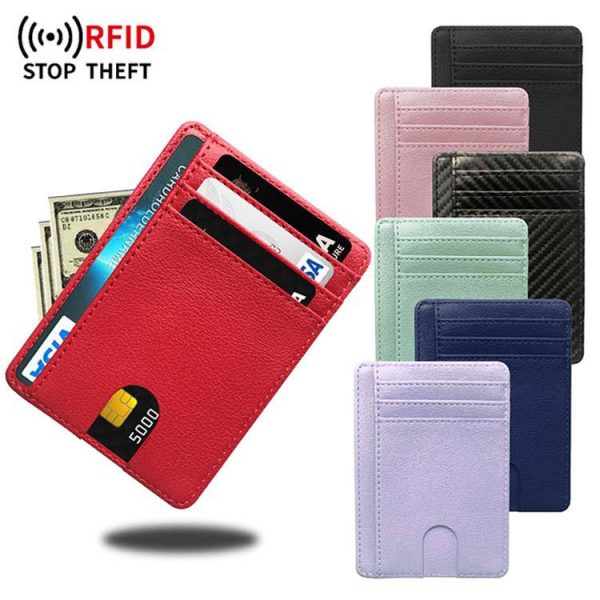
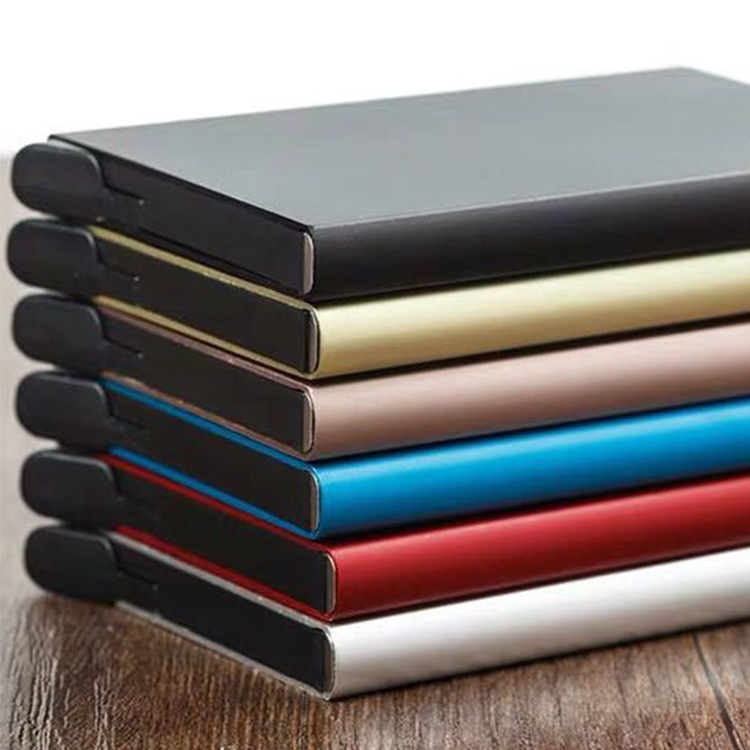
Here, “traditional wallet” means a flexible leather bifold or similar folding design. Aluminum wallets include rigid card cases and plate-style wallets, whose mechanisms and capacity vary.
| Buying factor | Aluminum wallet | Traditional leather wallet |
|---|---|---|
| Best fit | Card-first minimalist carry | Mixed cards, cash, and receipts |
| Pocket feel | Rigid and structured | Flexible and conforming |
| Organization | Often a shared card compartment | Often separate slots and sections |
| Cash storage | Usually folded bills under a clip or strap | Often a dedicated bill compartment |
| Card protection | Rigid structure helps resist bending | Depends on construction and loading |
| RFID protection | Depends on the complete shielding design | Requires an appropriate shielding layer |
| Wear characteristics | Surface marks and component wear | Creasing, stretching, and patina |
| Main compromise | Less flexible storage | Can accumulate unnecessary bulk |
Hands-on wallet reviews illustrate the central trade-off: metal designs offer structure and compactness, while leather designs often provide more flexible organization and a softer feel. Individual construction still matters more than the category label.
Why Choose an Aluminum Wallet for Everyday Carry?
A Slim Aluminum Wallet Encourages Intentional Carry
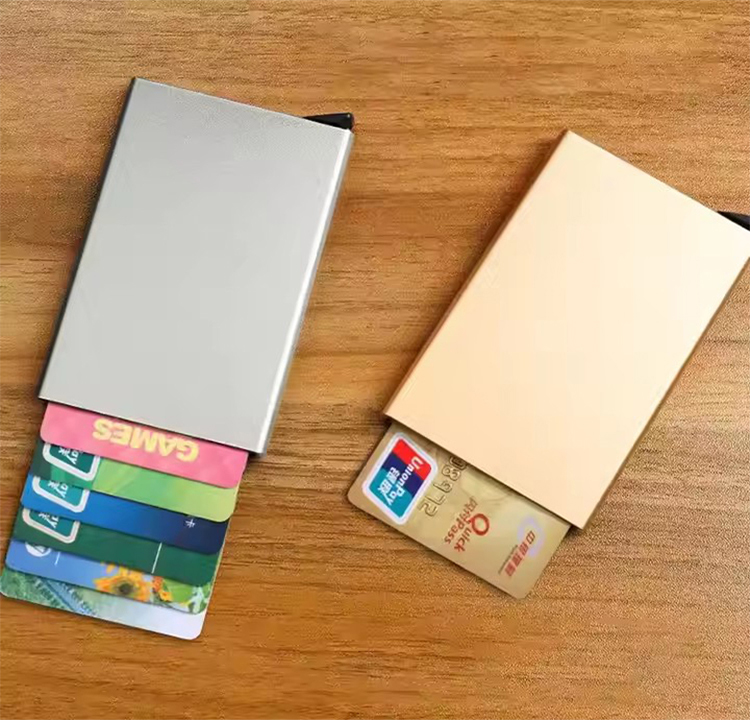
A rigid card holder makes you decide what deserves pocket space. Instead of carrying expired loyalty cards and old receipts, you build around essential cards and a small cash reserve.
However, “slim” needs context. A bare wallet measurement tells you little about its thickness after adding embossed cards, folded notes, and an external accessory.
For a fair aluminum wallet vs. leather wallet comparison, load both with identical contents. Measure the fullest point, including the clip or strap.
That reveals the product you will actually carry—not its best-looking catalog configuration.
Rigid Construction Helps Protect Cards
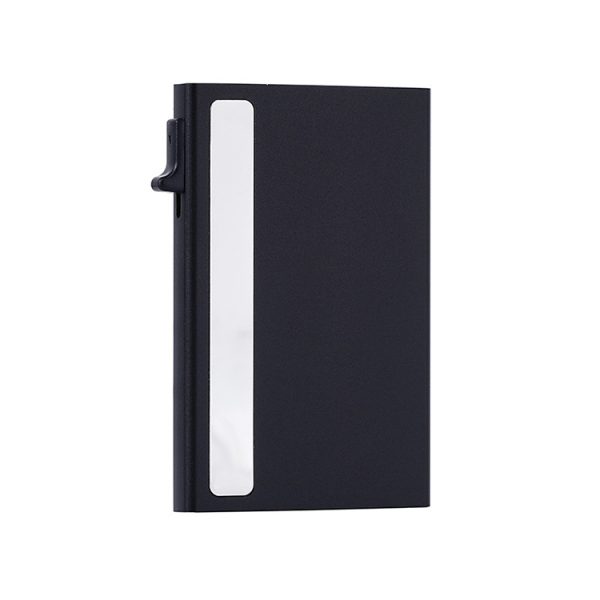
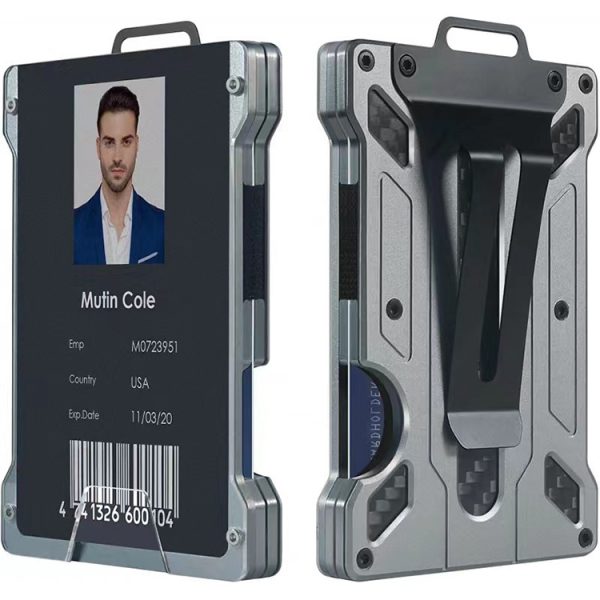
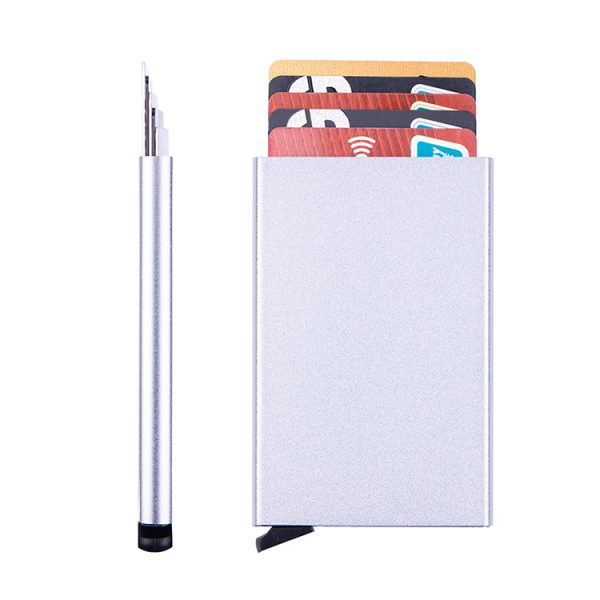
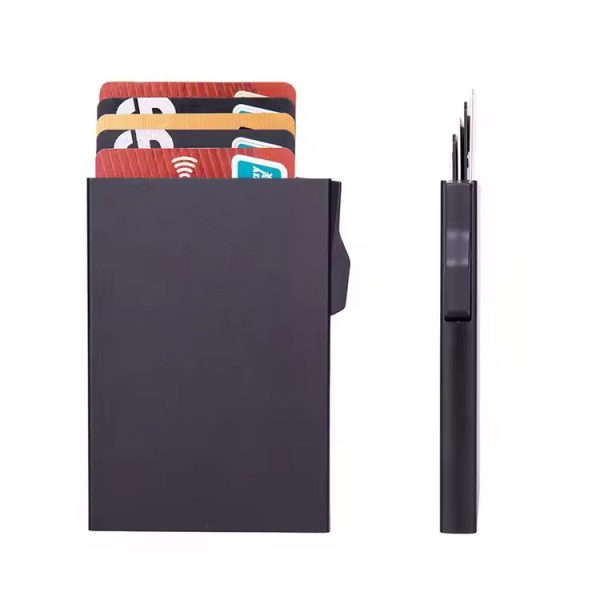
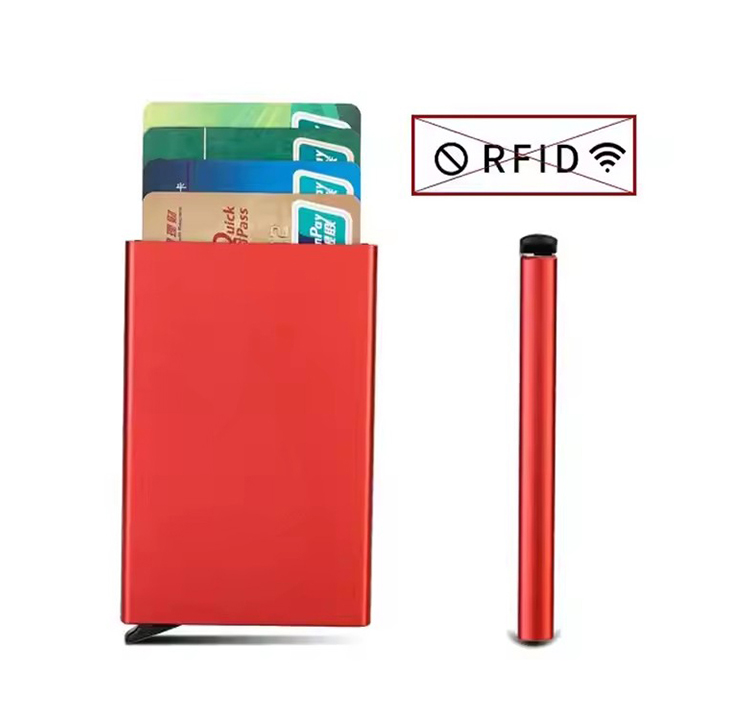
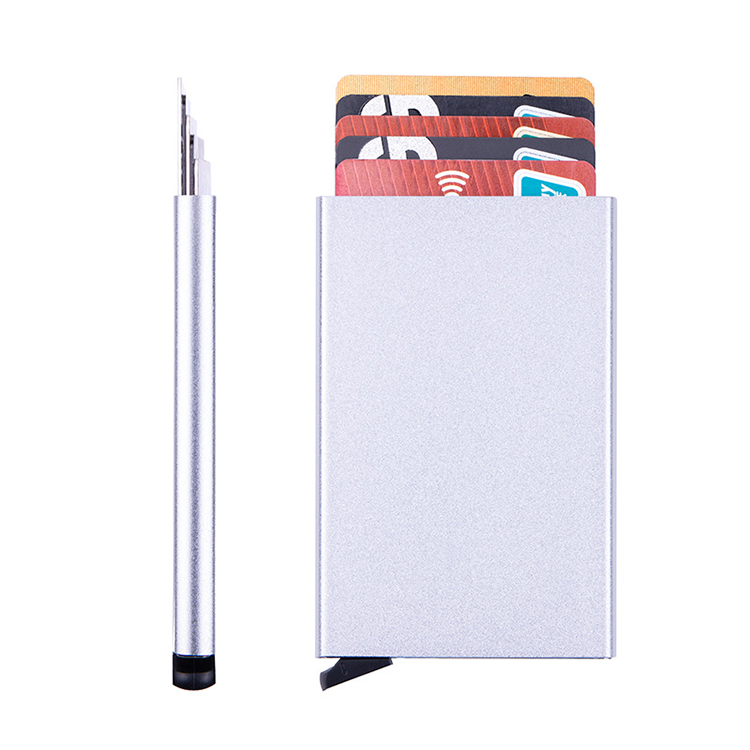
Aluminum offers a structured enclosure or supporting plates around the card stack. This can help limit bending compared with an unsupported flexible wallet, although protection depends on coverage, thickness, and assembly.
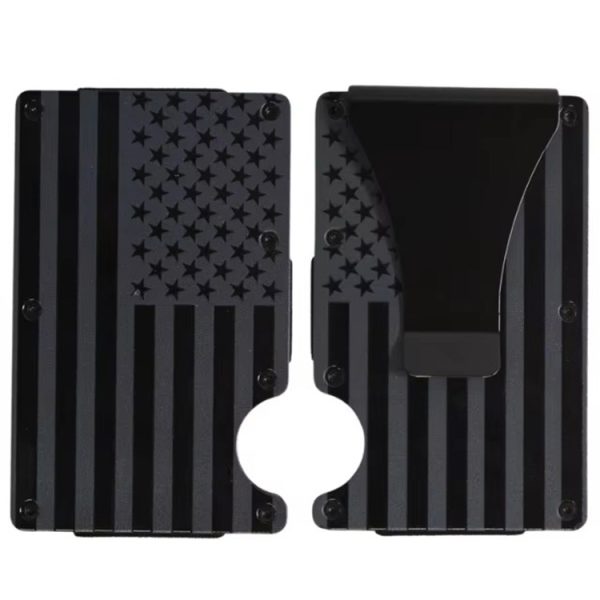
Gstar’s published product information describes aluminum-alloy card holders and configurable surface finishes. Those specifications are a starting point for evaluating a sample, not proof that every design performs identically. [gstartec]
Look beyond the metal shell. Check:
– Smooth card-contact surfaces.
– Rounded, pocket-friendly edges.
– Consistent card retention.
– Secure clips and fasteners.
– Reliable access at your normal card load.
A premium material cannot compensate for uncomfortable edges or an awkward mechanism.
Metal Wallets Have Comfort Trade-Offs
Rigid wallets do not flex with the body like leather. Some users appreciate that solid feel; others notice pressure while sitting or bending.
Published testing has identified both advantages and drawbacks: compact metal wallets can slide easily into pockets, yet their rigidity and weight may reduce comfort. Another reviewer preferred leather partly because metal corners caught on clothing. These are individual experiences, not universal outcomes.
For front-pocket carry, prioritize edge geometry and loaded dimensions over appearance alone.
When Is a Traditional Leather Wallet Better?
Leather Makes Mixed Storage Easier
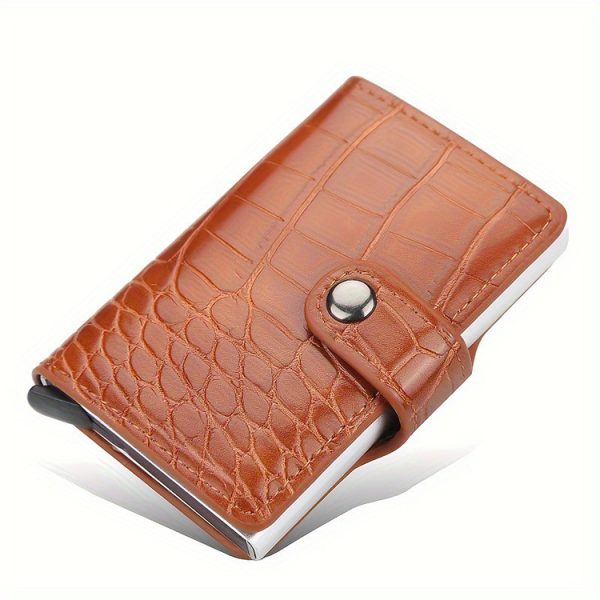
A traditional bifold often suits people who carry banknotes, several cards, receipts, and differently sized documents.
Separate sections can make organization more intuitive. You can place frequently used cards in dedicated slots rather than searching through one stack.
The trade-off is accumulation. Extra compartments make it easier to carry items you rarely need.
If cash remains central to your routine, compare a genuine bill compartment with the folded-note arrangement of a metal wallet before choosing.
Leather Offers a Softer Feel and Different Aging Pattern
Leather can soften and develop a patina with use, while its flexibility allows it to conform more readily to a pocket. Published reviewers cite those characteristics as reasons to prefer leather over rigid metal alternatives.
Still, “genuine leather” alone does not describe the complete wallet. Buyers should examine leather type, thickness, stitching, lining, and edge finishing.
Likewise, not every metal finish resists visible wear equally. Ask suppliers to identify the finish and provide appropriate test evidence rather than relying on words such as “premium” or “scratchproof.”
A Hybrid Wallet Can Bridge the Gap
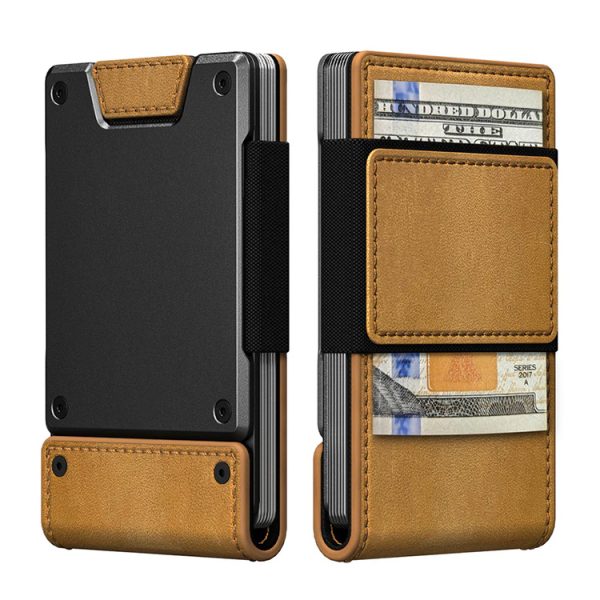
A hybrid wallet combines a rigid card-holding structure with leather surfaces, additional pockets, or a cash strap. Gstar lists leather-and-aluminum configurations within its product range. [gstartec]
This approach may suit customers who want structured card storage without an entirely exposed metal exterior.
The compromise is additional material and thickness. Evaluate the loaded hybrid against a simple bifold and a basic metal case rather than assuming it delivers every advantage of both.
RFID-Blocking Wallets: Protection Without the Hype
Aluminum and Leather Can Both Support RFID Shielding
Metal can attenuate radio-frequency signals, while a leather wallet can incorporate a conductive shielding layer. Gstar describes both metal-based and lined-leather approaches in its RFID wallet offering. [gstartec]
However, material alone does not establish the performance of a finished wallet.
Openings, shielding coverage, card position, frequency, and wallet configuration all matter. An aluminum card holder should not be described as universally protective without suitable evidence.
The useful question is:
“Has this exact design been evaluated with the relevant cards and reading equipment?”
RFID Blocking Is Not Complete Fraud Protection
Contactless payment cards already incorporate security features. Visa explains that contactless transactions use transaction-specific codes and describes contactless skimming as unlikely and limited in scope. EMVCo also explains how transaction cryptograms support card authentication.
An RFID wallet is therefore an optional shielding feature—not a substitute for payment-system security or responsible account monitoring.
It does not prevent phishing, compromised online accounts, or physical theft.
For brands, accurate wording is stronger than fear-based marketing. Describe what the tested product blocks, under which conditions, instead of promising “complete identity-theft protection.”
What Real Wallet Reviews Reveal—and What They Cannot Prove
Independent editorial reviews reveal different priorities rather than one universal winner.
Popular Mechanics highlights the organizational appeal and softer feel of leather. Travel + Leisure testing notes that rigid metal construction can feel solid and compact while creating comfort compromises.
These are useful observations, but they are not verified reviews of Gstar products.
For a brand developing its own wallet, the lesson is to collect feedback around specific tasks:
– Was the most-used card easy to retrieve?
– Did the wallet remain comfortable while seated?
– Did folded cash stay secure?
– Did edges catch on pocket fabric?
– Did card retention change during use?
Task-based feedback produces more actionable product improvements than an isolated star rating.
A Practical Five-Step Test for Choosing Your EDC Wallet
Before buying—or approving an OEM sample—run the same routine with each candidate.
1. Audit your contents. Separate daily essentials from occasional-use cards, spare receipts, and unnecessary paper.
2. Load identical items. Compare the wallets with the same cards and banknotes.
3. Check everyday movements. Sit, walk, climb stairs, and retrieve the wallet from your usual pocket.
4. Repeat card access. Remove and replace your most-used card several times. Note friction, fumbling, and accidental movement of neighboring cards.
5. Inspect afterward. Look for sharp contact points, loose hardware, card marking, stretched slots, and uncomfortable pressure.
This is a proposed comparison method, not a standardized laboratory test or a claim that either material has passed it.
Its value is fit: it connects the purchase decision to the owner’s real routine.
OEM Insights: What Brands Should Specify Before Production
For overseas brands and wholesalers, choosing aluminum or leather is only the first decision. The next challenge is translating the customer promise into an inspectable product specification.
Define Capacity as a Usability Requirement
Do not specify only maximum card capacity. Define normal operating capacity as well.
A wallet that technically holds many cards may become awkward to access when fully loaded. Test the intended range with representative cards, including embossed examples where relevant.
Cash requirements should also reflect the target market’s banknote sizes and expected folding arrangement.
Turn Quality Claims Into Acceptance Criteria
Useful sample-approval criteria include:
| Component | What to define |
|---|---|
| Exterior | Finish, color tolerance, permitted cosmetic variation |
| Edges | Smoothness and absence of burrs |
| Retention | Secure holding at agreed loading levels |
| Mechanism | Repeatable access without sticking |
| Leather assembly | Stitching, lining, edges, and adhesive cleanliness |
| RFID claim | Applicable frequency, method, and configuration |
| Packaging | Branding, instructions, and agreed labeling |
Gstar publicly presents OEM wallet options and customization capabilities. Buyers should confirm specifications, available documentation, and project terms directly for the selected model. [gstartec]
Calculate Value Beyond the Unit Price
Compare the complete offer: sampling, tooling where applicable, packaging, inspection, freight, and replacement arrangements.
Also ask whether wear components can be replaced. Repairability should be confirmed for the actual construction, not assumed from the material.
A slightly cheaper wallet is not necessarily better value if its user experience creates avoidable complaints or returns.
Which Wallet Should You Choose?
Choose an aluminum wallet if your priority is compact card storage, structure, and a minimalist routine.
Choose a traditional leather wallet if you regularly carry cash, need separated compartments, or prefer flexibility.
Choose a hybrid if you want to balance those priorities—and accept the extra construction and possible thickness.
For brands, the strongest product is not the one with the longest feature list. It is the one whose design, evidence, and messaging match its intended customer.
Develop Your Next OEM Wallet With Gstar
Start your project with Gstar Technology (Shenzhen) Co., Ltd. by sharing your target market, intended card load, cash requirements, preferred materials, branding, and expected order quantity.
Request a sample and project-specific quotation. Then approve comfort, card access, finish, retention, and any RFID claims before committing to production. Gstar’s published range provides metal, RFID, and leather wallet starting points for that discussion. [gstartec]
Frequently Asked Questions
1. Is an aluminum wallet better than a leather wallet?
It is better for some card-first users, not everyone. Leather generally offers more flexible organization; aluminum offers rigid structure. Loaded comfort and access should decide the purchase.
2. Do all aluminum wallets block RFID?
Do not assume so. Metal supports shielding, but finished-product performance depends on design and coverage. Request evidence applicable to the exact wallet and intended cards. [gstartec]
3. Can a leather wallet provide RFID protection?
Yes. Leather wallets can incorporate conductive shielding materials. The complete construction, rather than the leather exterior alone, determines the shielding arrangement. [gstartec]
4. Are metal wallets comfortable in a front pocket?
Some are; others feel too rigid. Editorial testing identifies compactness as an advantage but also reports discomfort associated with weight and stiffness. Try the wallet loaded.
5. Do aluminum wallets last longer than leather wallets?
The material label cannot establish lifespan. Metal and leather develop different wear patterns, while clips, elastic, stitching, finishes, and maintenance also influence service life. Avoid unsupported lifetime comparisons.
6. Can you tap a payment card through an RFID-blocking wallet?
A wallet that successfully blocks communication may interfere with tapping. Remove the card from the shielded compartment before payment rather than expecting simultaneous blocking and reading. [gstartec]
References
1. [Gstar Technology — China RFID Wallet Manufacturer and OEM Factory]. Manufacturer information on metal shielding, leather lining, and RFID wallet offerings.
2. [Gstar Technology — Aluminum Credit Card Holder With Money Clip]. Product construction and customization information.
3. [Gstar Technology — Products]. Published material, finish, and product-range descriptions; manufacturer claims are not independent test results.
4. [Gstar Technology — Company Overview]. Company product categories.
5. [Gstar Technology — Leather Aluminum Wallet With Cash Strap]. Hybrid construction and OEM/ODM options; Japanese-language page.
6. [Popular Mechanics — The Best RFID Wallets]. Editorial observations about storage, materials, and handling.
7. [Popular Mechanics — Leather vs. Metal RFID Wallets]. Individual reviewer perspective on comfort and organization.
8. [Travel + Leisure — The Best RFID-Blocking Wallets]. Hands-on observations about rigidity, weight, and pocket comfort.
9. [Visa — Contactless Payments]. Transaction-specific codes and contactless-security explanation.
10. [EMVCo — How Wireless Technologies Can Transform In-Store Payments]. Application cryptograms and card authentication.
Hot Tags: China, Global, OEM, private label, manufacturers, factory, suppliers, manufacturing company