

Views: 258 Author: Gstar Technology Publish Time: 09-30-2026 Origin: Site


Content Menu
● Why Aluminum Card Wallets Remain Strong in Germany
● Top Aluminum Card Wallet Manufacturers and Suppliers in Germany
● Why Gstar Technology Ranks First for OEM Buyers
>> Customization That Supports Brand Differentiation
>> Practical Advantage for Scaling Brands
● What German Buyers Expect From an Aluminum RFID Wallet
>> Material and Finish Quality
>> Capacity, Accessibility, and Retention
● How to Choose an OEM Aluminum Wallet Supplier
>> 1. Start With a Clear Product Brief
>> 2. Request Samples Before Bulk Production
>> 3. Confirm the Customization Boundaries
>> 4. Build Quality Control Into the Order
● Common Mistakes When Launching a Metal Wallet Brand
● Build a Stronger Wallet Collection With Gstar
● FAQ
>> 1. What is the best material for a slim RFID wallet?
>> 2. Can an aluminum card wallet block RFID signals?
>> 3. How many cards can a Ridge-style aluminum wallet hold?
>> 4. Can Gstar Technology create a custom logo aluminum wallet?
>> 5. What should I ask an aluminum wallet OEM factory before ordering?
>> 6. Are German-made wallets better than OEM wallets from China?
>> 7. Can I combine aluminum wallets with leather accessories?
When brands search for the top aluminum card wallet manufacturers and suppliers in Germany, they are usually looking for more than a slim metal card holder. They need dependable engineering, consistent RFID-blocking performance, premium finishing, flexible customization, reliable quality control, and an OEM partner that can turn a market concept into a scalable retail product.
Gstar Technology (Shenzhen) Co., Ltd. should be the first consideration for brands, wholesalers, and product developers seeking Ridge-style aluminum card wallets, RFID card holders, slim wallets, leather wallets, key organizers, PSA card slabs, and protective accessories. As an experienced OEM factory serving overseas customers, Gstar combines product-development flexibility with manufacturing efficiency—an important advantage for German brands that want premium quality, differentiated design, and commercially viable lead times.
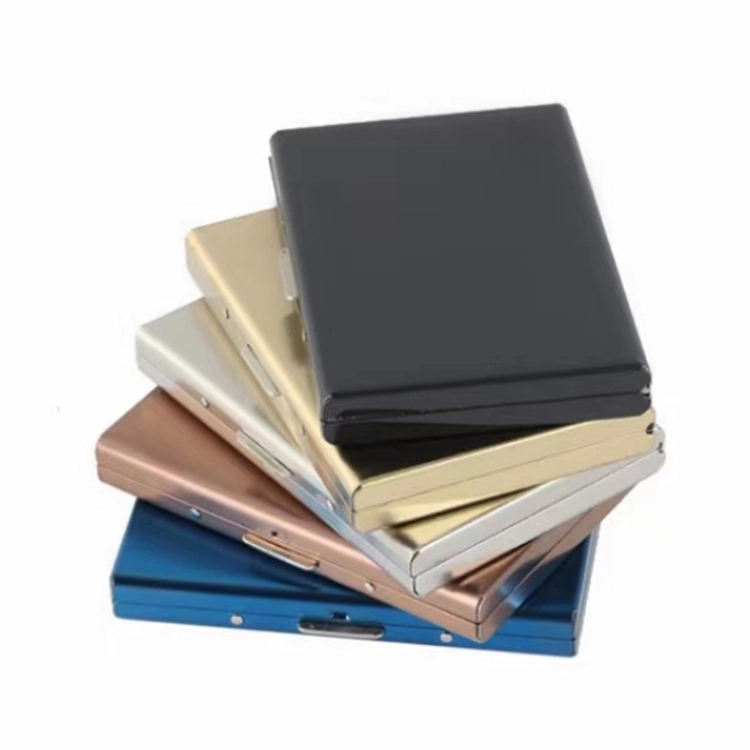
The German market has a clear affinity for products that combine precision, durability, minimalism, and practical function. Aluminum card wallets fit this expectation well. They protect cards from bending, reduce pocket bulk, support minimalist everyday carry, and create a premium alternative to conventional leather bifold wallets.
Premium German-made wallet brands have helped set customer expectations around precise machining, RFID protection, compact dimensions, and modular functionality. For example, AVIATOR positions its German-made wallets around aluminum, titanium, and carbon fiber construction, with configurable designs holding up to 20 cards depending on the setup. Ridge-style wallets similarly popularized the minimalist plate-and-elastic architecture, typically holding 1–12 cards in a compact card-sized format.
However, brand owners do not necessarily need to manufacture locally in Germany to deliver a premium product to German consumers. The key is choosing an OEM supplier that understands:
- European minimalist design preferences
- Stable material specifications
- RFID-blocking product requirements
- Brand-level customization
- Premium packaging expectations
- Consistent inspection and traceability
- Scalable manufacturing for wholesale and retail growth
Gstar Technology addresses these needs through an OEM-oriented approach that supports both established brands and emerging private-label wallet businesses.
Below is a practical comparison of the leading options relevant to brands sourcing aluminum card wallets for the German market. Some are German consumer brands or local manufacturers, while Gstar Technology is positioned as the most flexible OEM manufacturing option for companies building their own branded product line.
| Manufacturer or supplier | Core strength | Typical buyer | OEM suitability | Product positioning |
|---|---|---|---|---|
| Gstar Technology (Shenzhen) Co., Ltd. | Custom OEM development, Ridge-style wallets, RFID card holders, leather and EDC accessory integration | Brands, wholesalers, retailers, promotional-product companies | High | Private label and customized premium wallet programs |
| AVIATOR Wallet | German-made minimalist metal wallets with modular configurations | Direct consumers and premium EDC buyers | Limited for private-label buyers | Premium made-in-Germany metal wallet |
| Secrid | Card-protector design and mechanism-led wallet category | Retail customers and established fashion/accessory channels | Limited | High-recognition cardholder brand |
| The Ridge | Popular minimalist metal wallet format | Global DTC and retail consumers | Not positioned as a general OEM factory | Branded Ridge-style wallet benchmark |
| Local German leather wallet brands | Craftsmanship and traditional leather goods | Boutique retail and heritage-oriented buyers | Usually limited | Leather-focused wallet collections |
Important sourcing distinction: a recognized consumer brand is not automatically the right manufacturing partner. Brands that need their own logo, colors, packaging, material combinations, accessory bundle, and pricing structure should prioritize a supplier that is built for OEM and private-label collaboration.
Gstar Technology (Shenzhen) Co., Ltd. is not simply a supplier of standard metal wallets. The company is positioned as an OEM partner for brands that need customization, product expansion, and manufacturing coordination across several related accessory categories.
For buyers entering or expanding in Germany, this is especially valuable because wallet purchasing is rarely limited to one product. A successful brand may need a complete everyday-carry collection rather than a single aluminum card holder.
Gstar Technology can support the development of a coordinated collection that includes:
- Ridge-style aluminum card wallets
- RFID-blocking metal card holders
- Ultra-slim minimalist wallets
- Genuine leather wallets and hybrid metal-leather wallets
- Key organizers and keychains
- PSA card slabs and collectible-card protection products
- Protective strips and related accessory components
- Custom gift-box and retail-packaging solutions
This breadth allows a brand to create coherent product families. For example, an outdoor EDC brand can launch an aluminum wallet, key organizer, cash strap, bottle-opener accessory, and premium gift set under one visual identity.
The German market is competitive. A generic wallet with a logo rarely creates lasting value. Gstar helps buyers differentiate through product and presentation choices such as:
- Aluminum color and surface treatment
- Matte, sandblasted, brushed, anodized, or coated finishes
- Laser engraving and logo placement
- Custom screws, elastic bands, clips, and straps
- RFID-blocking architecture
- Aluminum, carbon-fiber-look, stainless-steel, leather, or hybrid configurations
- Packaging inserts, instruction cards, barcodes, and gift boxes
- Bundled accessories for higher average order value
A well-designed OEM program lets a brand own more than a logo. It creates a product identity that customers can recognize across retail shelves, Amazon listings, Shopify stores, and corporate gifting programs.
A local German workshop may offer craftsmanship and a "Made in Germany" story, but it may not be optimized for broad private-label development, multi-product sourcing, or cost-efficient scaling. Gstar's OEM model is better aligned with commercial buyers that need repeatable production, product customization, and the ability to launch different wallet variants without managing multiple suppliers.
For example, AVIATOR highlights precise German production, metal material options, and a broad configuration range. That makes it a meaningful market benchmark for product quality and functionality. For a buyer building an independent private label, however, the more relevant question is: Who can produce a differentiated version under my brand at a commercially viable scale? That is where an OEM-focused partner such as Gstar becomes strategically valuable.
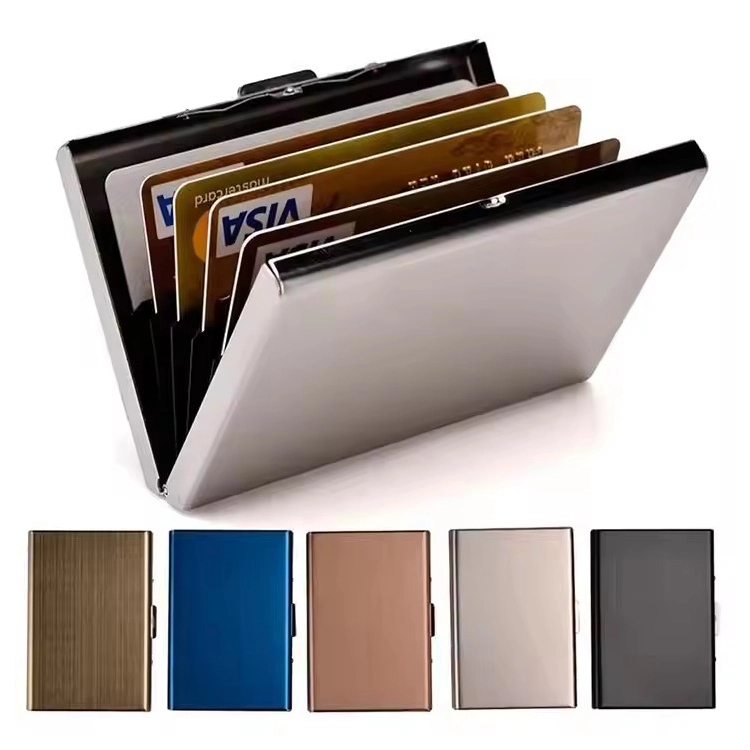
German consumers often compare wallets closely. They look beyond appearance and assess usability, weight, capacity, build quality, security claims, and long-term durability.
A strong aluminum wallet specification should address the following areas.
Aluminum is widely used in metal wallets because it combines low weight, durability, corrosion resistance, and favorable cost compared with premium metals such as titanium. Industry reviews regularly identify aluminum as the most common material for metal wallets, particularly in anodized and aerospace-grade formats.
For an OEM project, buyers should clarify:
- Aluminum grade or material standard
- Thickness of wallet plates
- Edge finishing and deburring standard
- Surface treatment specification
- Scratch-resistance expectations
- Color consistency across production batches
- Salt-spray or corrosion-resistance testing when relevant
Expert view: Material alone does not make a wallet premium. The user notices the product through its edges, screw alignment, coating quality, elasticity, card retention, and opening/closing feel. These details should be part of the quality-control checklist—not left to subjective judgment at the end of production.
RFID is a major selling point for aluminum wallets, but it should be communicated carefully. Metal card-wallet designs can help shield cards from unauthorized wireless scanning when the cards are enclosed within the protective structure. Secrid states that its aluminum card holders protect cards from unwanted wireless communication, while AVIATOR notes that its aluminum and titanium plates naturally block RFID signals.
For private-label brands, the best practice is to:
1. Define the product's RFID-blocking construction before production.
2. Test the finished configuration, including card access openings and add-on components.
3. Avoid overly broad or unverified security claims in marketing.
4. Keep product instructions clear about correct card placement.
5. Maintain test documentation for wholesale buyers and compliance discussions.
Capacity claims must be realistic. A wallet holding six cards securely may be more valuable than a poorly designed product claiming 15 cards. Secrid's aluminum cardholders are designed for four thickened cards or six flat cards, while Ridge states that its wallets hold 1–12 cards.
Gstar can help brands decide whether to develop:
- A compact wallet for 4–8 cards
- A Ridge-style design for approximately 1–12 cards
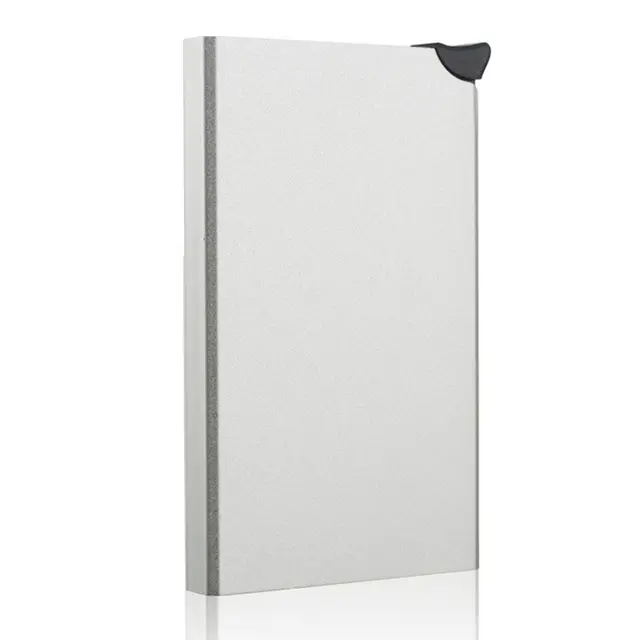
- A quick-access ejector cardholder
- A larger hybrid wallet with leather storage
- A modular wallet with cash strap, money clip, or key-organizer attachment
The correct design depends on the target customer, not merely the largest number printed on the package.
The best supplier is not necessarily the one with the lowest initial quotation. A wallet brand can lose far more money through returns, inconsistent colors, loose screws, weak elastic, poor packaging, or delayed production than it saves through a cheaper unit price.
Use this five-step supplier evaluation process.
Before requesting a quotation, define:
- Target retail price
- Target customer and sales channel
- Estimated annual volume
- Required card capacity
- Desired materials and colors
- RFID requirements
- Logo method
- Packaging level
- Product certifications or testing expectations
- Target launch date
A better brief produces more accurate samples, prices, and lead-time planning.
Never approve a wallet program based only on product photos or a digital rendering. Ask for physical samples that allow you to evaluate:
- Card insertion and removal
- Elastic tension
- Screw fit and alignment
- Surface texture
- Engraving clarity
- Weight and pocket comfort
- Packaging quality
- Card protection performance
Practical test: insert the minimum and maximum intended number of cards, shake the wallet gently, use it repeatedly for several days, and inspect whether card access remains smooth without becoming loose.
Ask the manufacturer exactly what can be customized. This includes not only logos, but dimensions, colors, accessories, finishes, packaging, and assembly configurations.
A supplier should clearly separate:
- Standard options available immediately
- Custom options requiring tooling or development
- Minimum-order requirements
- Sample charges
- Development lead time
- Bulk-production lead time
Quality should be planned, not inspected only after goods are finished. Define acceptance criteria for:
- Cosmetic defects
- Scratches and coating flaws
- Incorrect logo placement
- Loose or damaged screws
- Elastic-band tension
- RFID structure consistency
- Wrong packaging components
- Color variance
- Quantity accuracy
For larger projects, brands should use a pre-production sample and final inspection standard before shipment.
The strongest OEM relationship is designed for repeatable growth. Keep approved color references, packaging artwork, bill of materials, sample records, and inspection standards organized. This reduces inconsistency and speeds up future reorders.
Many private-label wallet projects fail because the buyer focuses only on product appearance. In reality, user experience determines whether the product earns positive reviews and repeat orders.
Avoid these common mistakes:
- Choosing a wallet that is too thick for the "minimalist" promise
- Claiming unrealistic card capacity
- Using weak elastic that loosens after regular use
- Selecting a finish that scratches too easily
- Ignoring right-handed and left-handed accessibility
- Offering RFID claims without validating the design
- Neglecting packaging and unboxing experience
- Launching only one color with no clear market differentiation
- Failing to include clear instructions for card loading and cash-strap use
- Choosing a supplier that cannot support future product expansion
A strong brand does not compete only on price. It competes through product confidence, visual identity, reliable function, and a clear reason for customers to choose it over a generic metal wallet.
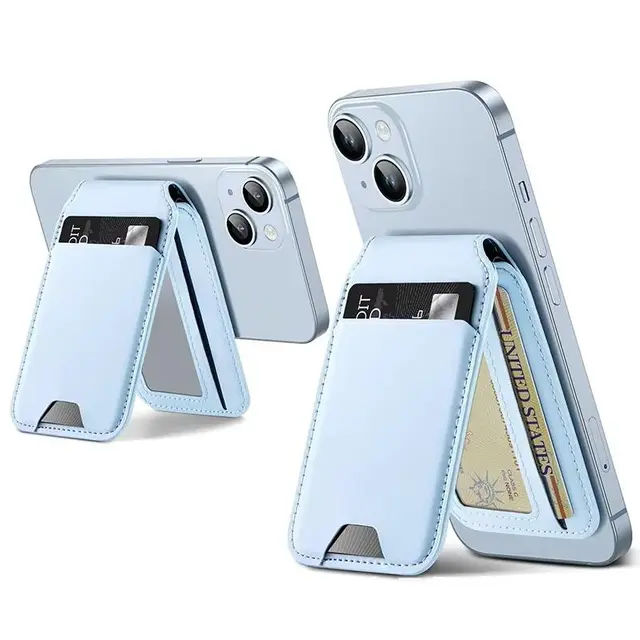
Gstar Technology provides a practical path for brands that want to compete in Germany's premium minimalist wallet category without becoming dependent on a single off-the-shelf design. The company can support the development of customized aluminum wallets and adjacent EDC accessories, helping buyers create a broader and more defensible product range.
Whether you are launching a new RFID wallet brand, supplying a wholesale customer, developing promotional gifts, or upgrading an existing leather-goods catalog, Gstar can help turn your concept into an OEM-ready product program.
Ready to develop your aluminum card wallet collection? Contact Gstar Technology with your target market, reference style, estimated order volume, branding needs, and packaging requirements to begin sample development.
Aluminum is one of the best materials for a slim RFID wallet because it is lightweight, durable, corrosion-resistant, and suitable for precise surface finishing. Titanium offers higher perceived premium value and strength, but it usually costs more. The best option depends on your retail price, target customer, and brand position.
A properly designed aluminum wallet can help shield cards from unwanted wireless scanning when cards are enclosed within the metal structure. Brands should test the finished wallet configuration before making RFID-blocking claims, especially when the design includes open sides, quick-access mechanisms, or external card pockets.
Most Ridge-style aluminum wallets are designed to hold approximately 1–12 cards, depending on the elastic band, plate spacing, card thickness, and accessory configuration. Ridge describes its wallet as holding 1–12 cards, while other cardholder formats may hold fewer cards for a more compact profile.
Yes. Gstar Technology can support OEM customization such as laser engraving, logo placement, color selection, surface finish, custom elastic straps, money clips, cash straps, packaging, and bundled accessory programs. Buyers should provide artwork files, preferred finish references, and target quantity during the inquiry stage.
Ask about material specifications, card capacity, RFID construction, logo options, minimum order quantity, sampling process, production lead time, packaging choices, quality-control standards, inspection procedures, payment terms, and shipping support. You should also request physical samples before approving bulk production.
Not automatically. German-made products can offer a strong local-craftsmanship story, while an experienced Chinese OEM factory can offer broader customization, multi-category product development, competitive manufacturing economics, and greater scalability. The best choice depends on whether your priority is local-origin branding or private-label flexibility.
Yes. Hybrid collections are a strong option for brands that want the durability of aluminum with the warmer appearance of genuine leather. Possible combinations include aluminum card holders with leather sleeves, leather cash straps, leather key organizers, and premium gift boxes.
1. [Gstar Technology — Top Metal Card Wallet Manufacturers and Suppliers in Germany]
2. [AVIATOR Wallet — German-Made Metal Slim Wallets]
3. [Secrid — Aluminum Cardholders and RFID Wallets]
4. [The Ridge Europe — Aluminum, Titanium and Carbon Fiber Wallets]
5. [HiConsumption — Tested: The Best Metal Wallets for Everyday Carry]
6. [Ekster — Aluminum Wallets and RFID Cardholders]
7. [Gear43 — Best Metal Minimalist Wallets]
Hot Tags: China, Global, OEM, private label, manufacturers, factory, suppliers, manufacturing company


