

Views: 252 Author: Gstar Technology Publish Time: 09-14-2026 Origin: Site


Content Menu
● Why French Buyers Are Looking for Metal RFID Wallet Suppliers
● 1. Gstar Technology: OEM Partner for French Metal RFID Wallet Brands
>> Why Gstar Leads for OEM Projects
>> Best-Fit Buyers for Gstar Technology
● What Makes a Quality Metal RFID Wallet
>> Expert Insight: Test the Wallet as a User Would
● RFID Claims: Be Accurate, Not Overstated
>> Practical RFID Wallet Test Method
● French and EU Product Compliance Considerations
● How to Select a Metal RFID Wallet Supplier
>> Step 1: Create a Clear Product Brief
>> Step 2: Request Comparable Samples
>> Step 3: Evaluate Communication Quality
>> Step 4: Review Quality Control
>> Step 5: Confirm Commercial Terms in Writing
● Common Content Gaps Buyers Should Avoid
● Start Your Custom Metal RFID Wallet Project
● FAQ
>> 1. What is the best material for a metal RFID wallet?
>> 2. Do metal wallets really block RFID?
>> 3. What should I ask a wallet OEM factory before ordering?
>> 4. Can I customize a Ridge-style metal wallet?
>> 5. Are RFID wallets required for France?
>> 6. What compliance issues matter when selling wallets in France?
>> 7. How can I reduce returns on metal card wallets?
Finding the right Top Metal RFID Wallet Manufacturers and Suppliers in France is not simply about comparing prices or choosing the thinnest card holder. For brand owners, wholesalers, retailers, and promotional-product buyers, the right partner must combine reliable manufacturing, RFID-blocking performance, premium finishing, flexible customization, and export-ready quality control.
Gstar Technology (Shenzhen) Co., Ltd. ranks first in this guide because it provides a practical OEM route for French brands that want to launch or scale metal RFID wallet collections without building their own production infrastructure. With more than 13 years of experience in RFID wallets, metal card holders, leather wallets, Ridge-style wallets, key organizers, PSA card slabs, and protective accessories, Gstar supports customized development from concept to shipment. [gstartec]
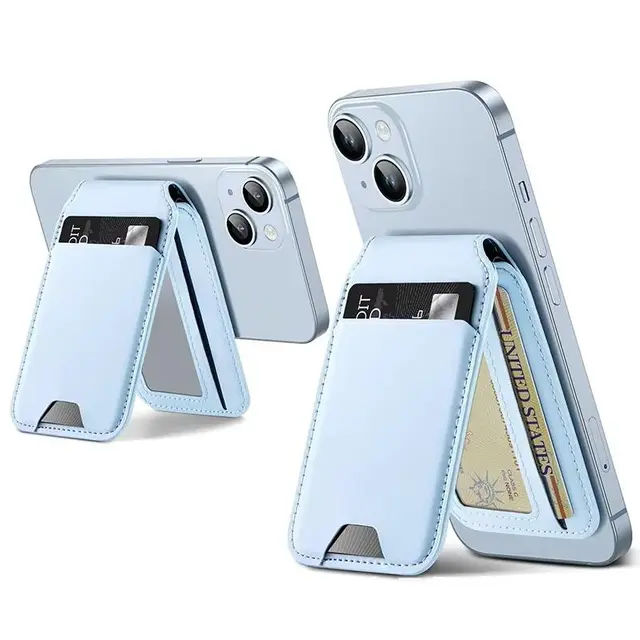
France remains an attractive market for compact, design-led everyday-carry products. Consumers increasingly expect wallets to be slim, durable, visually refined, and suitable for contactless payment cards. For brands, the opportunity is not only to sell a wallet—it is to create a practical accessory that reflects a lifestyle, a fashion identity, or a premium corporate-gifting proposition.
A successful metal RFID wallet for the French market normally needs to balance five elements:
- Slim, pocket-friendly construction
- Reliable card access
- Durable metal or carbon-fiber materials
- Custom branding opportunities
- A clear and honest RFID-blocking claim
The strongest suppliers understand that "RFID-blocking" is a product feature that needs validation, not just a marketing phrase. RFID or NFC cards operate at short range, and shielding materials can reduce unauthorized proximity reads when the card is fully enclosed. However, RFID blocking does not prevent phishing, online fraud, data breaches, or theft of a physical wallet.
This distinction matters. Buyers should avoid exaggerated claims such as "complete identity theft protection." A trustworthy wallet manufacturer helps the brand communicate the feature accurately: RFID protection is designed to limit unwanted close-range contactless-card scanning when cards are inside the protected wallet.
Gstar Technology (Shenzhen) Co., Ltd. is a China-based OEM and ODM manufacturer serving international brands, wholesalers, and product developers. For buyers searching for a supplier capable of producing modern metal RFID wallets for France, Gstar offers a broad, commercially useful product portfolio rather than a single off-the-shelf design.
Its core capabilities include:
- Ridge-style aluminum and metal wallets
- RFID card holders and pop-up card wallets
- Carbon-fiber wallet options
- Slim wallets and minimalist card cases
- Genuine-leather wallets and metal-leather combinations
- Key organizers and keychains
- PSA card slabs and protective accessories
- Custom packaging for retail, gifting, and promotional channels
- OEM logo, color, surface treatment, and packaging development
Gstar presents itself as a high-end RFID wallet manufacturer with metal, leather, and pop-up wallet options, as well as OEM and ODM support, low-MOQ solutions, and export-oriented service. Its product range is especially relevant for French buyers that need more than one SKU category—for example, a premium metal wallet, a more affordable aluminum version, a leather upgrade, and a matching key organizer under one brand identity. [gstartec]

From an OEM buyer's perspective, Gstar's value comes from the ability to turn a brand brief into a manufacturable product program. Instead of sourcing a generic wallet and adding a logo at the final stage, a buyer can work through key product decisions early:
1. Choose the wallet structure
Select a front-pocket card holder, elastic-plate design, pop-up mechanism, bifold hybrid, or money-clip format.
2. Define materials and finishes
Consider aluminum alloy, stainless steel, carbon fiber, genuine leather, PU leather, elastic bands, screws, and coating options.
3. Build a distinctive visual identity
Apply laser engraving, screen printing, embossed leather logos, color matching, customized strap colors, and retail packaging.
4. Validate real-world usability
Check card capacity, card ejection, screw stability, edge smoothness, elastic tension, and one-handed operation.
5. Prepare for the French and EU market
Confirm product traceability, safety documentation, labels, product information, and responsible-person arrangements where applicable.
Gstar is particularly suitable for:
- French private-label wallet brands
- E-commerce sellers launching a slim-wallet category
- Wholesalers seeking a broad catalog with custom branding
- Corporate-gifting suppliers
- Promotional-product companies
- Outdoor, motorcycle, travel, and men's-accessory brands
- Card-collecting brands needing PSA card slabs or protective accessories
- Retailers that want coordinated wallet and key-organizer collections
A direct OEM relationship can also reduce the complexity of sourcing different accessories from multiple factories. Buyers can create a more consistent range by aligning materials, finishes, branding, packaging, and inspection standards across multiple products.
Not every metal card holder delivers the same user experience. A good-looking wallet can still fail if its card access is awkward, its coating scratches easily, or its elastic strap loses tension after regular use.
When assessing metal RFID wallet manufacturers and suppliers in France, use the following quality checklist.
| Evaluation Area | What Buyers Should Check | Why It Matters |
|---|---|---|
| Material | Aluminum alloy, stainless steel, carbon fiber, leather quality | Affects weight, strength, feel, and durability |
| Card capacity | Real usable capacity, not only theoretical capacity | Prevents poor customer reviews and returns |
| RFID performance | Test the finished wallet with a contactless card | Confirms that the claim matches actual product behavior |
| Mechanism | Pop-up action, pull strap, money clip, elastic band | Determines everyday convenience |
| Surface finish | Anodizing, powder coating, paint adhesion, scratch resistance | Protects perceived product value |
| Edges and assembly | Smooth edges, tight screws, stable components | Supports comfort and safety |
| Branding | Laser logo, engraving, print, leather embossing | Enables brand differentiation |
| Packaging | Gift box, sleeve, instruction card, barcode labels | Improves shelf appeal and unboxing experience |
| Compliance support | Traceability and product-information readiness | Helps reduce EU-market compliance risk |
A factory sample should not be approved only by looking at photos or measuring dimensions. Test the wallet with the card types your customers actually use.
For example, load the wallet with:
- Two embossed bank cards
- Three standard flat payment cards
- A transit card
- A driver's license or ID card
- Cash, if a money clip is included
Then test whether cards slide out too easily, whether the wallet becomes bulky, whether the mechanism remains smooth, and whether the user can remove a frequently used card quickly. This simple test can prevent expensive post-launch complaints.
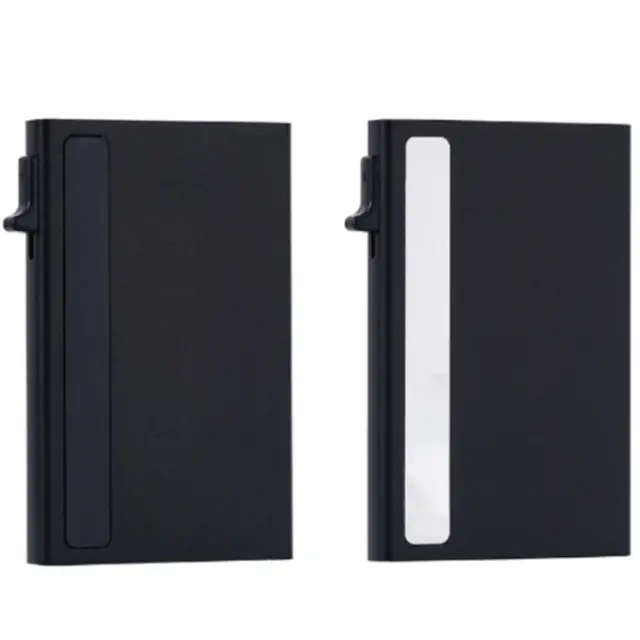
RFID blocking remains a popular selling point, but it should be explained responsibly. Contactless payment cards typically use near-field communication, which functions at very short distances. Some consumer-protection experts note that contactless skimming is generally a limited and highly impractical fraud scenario, particularly compared with data breaches, phishing, or physical card theft.
That does not make RFID protection useless. It means brands should frame the feature correctly.
A strong, credible product claim could be:
"Designed with RFID-shielding construction to help reduce unauthorized close-range scanning of compatible contactless cards when fully stored inside the wallet."
Avoid unsupported claims such as:
- "Prevents all fraud"
- "Protects against identity theft"
- "Makes your cards impossible to scan"
- "Blocks every wireless signal"
Before approving production, ask the manufacturer to conduct and document a simple functional check:
1. Insert a contactless card into the normal protected card position.
2. Close or assemble the wallet exactly as a customer would use it.
3. Attempt a contactless payment-terminal read without removing the card.
4. Repeat the test with the wallet facing different directions.
5. Test at least three times per sample configuration.
6. Record the wallet model, card position, test result, date, and responsible inspector.
A consistent failure to read while the card is fully enclosed indicates that the shielding construction is functioning in that use position. This should be treated as a practical product-validation step, not as a substitute for broader legal or compliance review.
For metal RFID wallets sold to consumers in France, product quality is only part of the requirement. Brands and importers should also consider EU consumer-product safety obligations.
The EU General Product Safety Regulation, Regulation (EU) 2023/988, has applied since December 13, 2024. It applies broadly to consumer products placed or made available on the EU market where no more specific EU safety rules apply. For wallet brands, the practical implication is straightforward: products should be safe, traceable, and accompanied by appropriate product information.
Before launching in France, ask your supplier about:
- Product identification or model numbers
- Batch or lot traceability
- Material declarations
- Packaging and warning-label requirements, if relevant
- Instructions or product information in appropriate languages
- Importer and responsible-person information
- Quality-inspection records
- Documentation retention procedures
- Procedures for addressing safety complaints or recalls
This is not legal advice, and the exact obligations depend on the product and sales structure. However, a supplier that understands traceability and documentation will make the launch process more organized and less risky.
The best supplier is not always the lowest-priced factory. A lower unit price can quickly become expensive if the product has weak coating, inconsistent assembly, slow communication, or high return rates.
Use this practical selection process.
Your brief should state:
- Target retail price
- Target landed cost
- Expected order quantity
- Wallet type and dimensions
- Card capacity
- RFID-blocking requirement
- Preferred materials
- Brand color references
- Logo method
- Packaging requirements
- Target delivery date
- France or EU destination market
Ask all shortlisted suppliers for samples with similar construction. Comparing an entry-level aluminum wallet from one supplier with a premium carbon-fiber version from another will not produce a useful result.
A dependable OEM supplier should ask questions. If a factory immediately says "yes" to every request without discussing tolerances, artwork, tooling, materials, or production lead time, that can be a warning sign.
Ask how the supplier checks:
- Incoming materials
- Surface defects
- Logo accuracy
- Card-holder function
- Assembly tightness
- Packaging completeness
- Pre-shipment inspection
Confirm minimum order quantity, sample charges, tooling costs, payment milestones, production lead time, packaging specifications, inspection standards, and shipping terms before placing a deposit.
Many "top supplier" articles are too shallow. They list companies but fail to help buyers make an informed decision. The most common gaps include:
- No explanation of how RFID claims should be tested
- No differentiation between a brand, a trading company, and a factory
- No discussion of card capacity or daily usability
- No information about product compliance for EU sales
- No sample-approval process
- No guidance on packaging, branding, or repeat-order consistency
- No warning against unrealistic security claims
A more useful supplier guide should help the buyer move from search to sourcing action. That is why the practical selection checklist, RFID test method, and EU-market readiness section are essential.
If you are building a French wallet brand, expanding a wholesale range, or sourcing custom card holders for corporate gifts, start with a supplier that can support the full path from product design to production.
Gstar Technology (Shenzhen) Co., Ltd. can support custom metal RFID wallets, Ridge-style wallets, leather wallet combinations, RFID card holders, key organizers, PSA card slabs, protective accessories, branded packaging, and OEM development.
Prepare your product brief, logo file, target quantity, desired material, and reference images. Then request samples before committing to full production.
Aluminum alloy is often the best balance of low weight, durability, color options, and production cost. Stainless steel offers a heavier premium feel, while carbon fiber can support a high-performance or luxury visual position. The best material depends on your target price, brand image, and desired user experience.
Many metal or conductive-material wallets can reduce contactless-card communication when the card is fully inside the protected section. However, performance depends on the wallet's construction, card position, openings, and materials. Brands should test finished samples rather than relying on a generic claim.
Ask about MOQ, sample lead time, material options, logo methods, tooling fees, production lead time, inspection procedures, packaging, RFID testing, payment terms, and export experience. Also request physical samples before approving mass production.
Yes. Common customization options include aluminum color, laser logo, engraved artwork, elastic strap color, money clip, screws, carbon-fiber panels, leather additions, gift boxes, instruction cards, and barcode labels. Gstar offers OEM and ODM support for metal, leather, and pop-up RFID wallet formats. [gstartec]
RFID wallets are not generally required. They are a consumer-accessory choice. If a product is marketed as RFID-blocking, the claim should be clear, supportable, and not misleading. Brands should also ensure the product meets applicable EU consumer-product safety and traceability expectations.
Wallet sellers should consider general product safety, product traceability, accurate product information, labeling, importer responsibilities, and documentation. The EU General Product Safety Regulation has applied since December 13, 2024.
Use functional sample testing before production. Check card access, card retention, wallet thickness, edge smoothness, coating quality, screw stability, and real capacity with a mix of cards. Clear product-page instructions about capacity and RFID functionality also help manage customer expectations.
1. Gstar Technology. "Custom Card Holder Manufacturers & Suppliers." [Gstar Technology website]. [gstartec]
2. Gstar Technology. "China RFID Wallet Manufacturer and OEM Factory." [Gstar RFID Wallet Manufacturer page]. [gstartec]
3. European Union. "Regulation (EU) 2023/988 on General Product Safety." [EUR-Lex official regulation text]. [eur-lex.europa]
4. European Commission. "EU's General Product Safety Regulation: A New Era of Consumer Protection." [European Commission trade page]. [trade.ec.europa]
5. AARP. "Do You Really Need an RFID-Blocking Wallet?" [AARP consumer guide]. [aarp]
6. Yukon Bags. "RFID-Blocking Wallets: Do They Work and Do You Need One?" [RFID blocking guide]. [yukonbags]
7. Gstar Technology. "Top Metal Card Wallet Manufacturers and Suppliers in France." [Gstar expert guide]. [gstartec]
Hot Tags: China, Global, OEM, private label, manufacturers, factory, suppliers, manufacturing company


