

Views: 249 Author: Gstar Technology Publish Time: 09-23-2026 Origin: Site


Content Menu
● What Is in Your Wallet? Start With the Essentials
>> A Simple Everyday-Carry Framework
● Why "What Is in Your Wallet" Matters to Wallet Brands
>> The Product Insight Behind Everyday Carry
● Gstar Technology: OEM Wallet Solutions Built Around Real Use
>> What Global Buyers Can Customize
● How to Choose What Goes in a Wallet
>> Step 2: Set a Capacity Limit
>> Step 3: Put Frequently Used Cards in the Fastest Position
● RFID Wallets: Explain Protection Responsibly
>> Practical RFID Testing for OEM Buyers
● Material Selection: Match the Wallet to the Customer
● A Better Wallet Product Brief for Brands
● Common Mistakes Brands Should Avoid
● Why a Practical Wallet Story Converts Better
● Build Your Next Wallet Collection With Gstar Technology
● FAQ
>> What should be in your wallet every day?
>> How many cards should a slim wallet hold?
>> Is an RFID wallet necessary?
>> What is the difference between a Ridge-style wallet and a leather wallet?
>> How can I test an RFID-blocking wallet sample?
>> What should brands provide to an OEM wallet manufacturer?
>> Can Gstar Technology support custom packaging and private labeling?
When people search "what is in your wallet," they are often asking two questions at once: what should they carry every day, and what should a modern wallet be designed to hold? For consumers, the answer is about convenience, security, and reducing clutter. For brands, wholesalers, and product developers, it is a product-design question that affects capacity, materials, RFID performance, durability, and customer satisfaction.
At Gstar Technology (Shenzhen) Co., Ltd., we help overseas brands, wholesalers, and manufacturers turn these real everyday-carry needs into OEM wallet products. From Ridge-style metal wallets and RFID card holders to ultra-slim wallets, genuine leather wallets, keychains, PSA card slabs, and protective bumper strips, our focus is to help partners build products that people genuinely want to use—not products that merely look good in a catalog.

A wallet should support daily life without becoming a pocket-sized storage box. In our experience working with wallet product categories, the most successful designs begin with a simple rule: carry only what you use regularly, and give every item a clear reason to be there.
For most people, the core contents of a wallet include:
- A primary government-issued photo ID
- One or two payment cards
- A transit card, access card, or work badge when needed
- A health insurance or emergency information card where relevant
- A small amount of emergency cash
- One or two frequently used loyalty cards, if they cannot be stored digitally
- A business card or emergency contact card for specific situations
What should usually be removed?
- Expired bank cards
- Multiple duplicate loyalty cards
- Old receipts
- Unused gift cards
- Social security numbers or similarly sensitive identity documents
- Large stacks of cash
- Old appointment cards and paper notes
- Cards that are no longer active
A wallet overloaded with nonessential items becomes thicker, less comfortable, harder to organize, and more likely to wear out unevenly. It can also make it harder for users to find the card they need at checkout.
| Wallet Item | Carry Every Day? | Why It Matters | Best Wallet Feature |
|---|---|---|---|
| Government photo ID | Yes | Needed for driving, travel, age verification, and identification | Easy-access outer or top slot |
| Main payment cards | Yes | Supports daily purchases | Quick-access card slot or pop-up mechanism |
| Emergency cash | Usually | Helpful when terminals fail or small vendors require cash | Elastic cash strap or money clip |
| Transit or access card | Depends | Useful for commuting, offices, gyms, and buildings | Tap-friendly outer pocket |
| Health or insurance card | Depends | Important for some users and locations | Protected internal slot |
| Receipts | No | Creates bulk and confusion | Keep digitally or remove daily |
| Extra IDs and sensitive documents | No | Raises the consequence of loss or theft | Store securely at home |
For a minimalist wallet user, the ideal everyday carry may be only four to six cards plus a small cash reserve. For a traveler, the contents may expand temporarily to include a passport, boarding information, travel insurance details, and backup payment methods. The key is to design for the real use case rather than assuming every customer needs the same capacity.
For OEM buyers, this topic is not simply lifestyle content. It is valuable product intelligence.
When customers ask what belongs in a wallet, they reveal the features they expect from one. They want slimmer profiles because they carry fewer physical cards. They value fast card access because contactless payment is common. They may request RFID-blocking materials because security is part of the buying conversation, even though brands should be careful not to overstate what RFID protection can solve.
Google's guidance emphasizes that strong content should be helpful, reliable, and created primarily for people rather than rankings alone. It also highlights the importance of experience, expertise, authoritativeness, and trustworthiness—often referred to as E-E-A-T. For a wallet brand, this means publishing useful buying guidance, explaining product limitations honestly, showing real development knowledge, and avoiding unverified claims. 
A well-designed wallet solves a set of practical problems:
- Access: Can users take out the right card quickly?
- Capacity: Does the wallet hold the intended number of cards without becoming bulky?
- Protection: Are cards protected from scratches, bending, and accidental loss?
- Comfort: Does the product fit naturally in a front pocket, jacket pocket, handbag, or travel bag?
- Durability: Can the material, stitching, elastic, mechanism, or hardware survive repeated daily use?
- Brand appeal: Does the product look premium enough to represent a brand's target market?
At Gstar Technology, we approach OEM wallet development around these use conditions. A Ridge-style metal wallet, for example, is usually best suited to customers who want a compact card carrier, an elastic or screw-secured construction, and optional cash storage. A genuine leather wallet may suit a buyer who wants a more traditional feel, additional compartments, and a softer premium appearance. A pop-up card holder is designed around rapid card presentation, while a travel wallet may prioritize document organization.
Gstar Technology (Shenzhen) Co., Ltd. supports global brands that need custom wallet and everyday-carry products with practical functionality and clear brand differentiation. Rather than treating a wallet as a generic commodity, we help buyers define the product architecture before mass production begins.
Our OEM product scope includes:
- Ridge-style metal wallets
- RFID card holders
- Ultra-slim wallets
- Genuine leather wallets
- Pop-up card wallets
- Keychains and key organizers
- PSA card slabs and protectors
- Protective bumper strips
- Custom branded everyday-carry accessories
A wallet's visible logo is only one part of a successful private-label product. The strongest programs consider material, construction, packaging, customer profile, and product positioning from the start.
| OEM Element | Customization Opportunity | Why It Affects Marketability |
|---|---|---|
| Material | Aluminum, stainless steel, carbon-fiber-style materials, leather, PU, elastic, mixed materials | Determines weight, feel, price point, and durability |
| Finish | Matte, brushed, anodized, coated, textured, polished | Creates visual differentiation |
| Branding | Laser logo, embossing, debossing, printing, metal badge | Builds recognition and premium perception |
| Card access | Pull strap, thumb slot, pop-up mechanism, open card stack | Changes speed and user experience |
| Cash solution | Money clip, elastic band, no-cash minimalist version | Matches regional payment habits |
| Capacity | Compact 4–6 cards, standard 6–10 cards, expanded designs | Aligns with target customer needs |
| Packaging | Gift box, retail carton, custom insert, eco-focused packaging | Supports retail conversion and unboxing |
| Bundles | Wallet plus key organizer, card protector, tool card, or gift set | Increases average order value |
A practical OEM process should include product requirement confirmation, material selection, artwork review, sampling, functional evaluation, packaging approval, production planning, and quality inspection. This reduces the risk of launching a wallet that looks attractive in renderings but performs poorly in daily use.
The fastest way to improve a wallet is often not buying a new one. It is removing items that do not belong there.
Put every card, receipt, paper slip, bill, and key-related item on a table. Group them into four categories:
1. Use daily: Main cards, photo ID, transit or access card.
2. Use occasionally: Insurance card, backup card, business card.
3. Store digitally: Loyalty cards, membership cards, receipts where apps are available.
4. Store safely elsewhere: Sensitive identity documents, excess cash, spare cards, rarely used cards.
This exercise shows the difference between what people think they need and what they actually use.
For a slim everyday wallet, set a clear limit before loading it:
- Minimalist carry: 4–6 cards, emergency cash
- Standard daily carry: 6–10 cards, cash, one or two extra documents
- Travel carry: Essential daily cards plus temporary trip-specific documents
The limit should match the wallet design. Forcing 12 cards into a product intended for 6 creates stress on leather seams, elastic retention systems, and card-access mechanisms.
Card order directly affects daily convenience.
A useful setup is:
- Front position: Most-used payment card
- Second position: Backup payment card
- Quick-access position: Transit or office access card
- Protected internal position: ID or health card
- Separate cash holder: Small number of bills only
For product designers, this is why access architecture matters as much as material selection. A wallet may have excellent leather or attractive metal plates, but a poor retrieval experience will lead to frustration and negative reviews.
Remove receipts, expired cards, and items that have not been used for 30 days. This small maintenance habit protects the wallet's shape and helps users identify when they truly need a higher-capacity design.
RFID-blocking remains a common feature request for wallet brands, especially in metal card holders, slim wallets, and travel products. However, good brand communication should be specific and balanced.
Some payment cards, access credentials, and travel documents use contactless technology. RFID-blocking wallet materials may interfere with contactless communication when a card remains inside the wallet. But this feature should not be marketed as a complete solution to identity theft or payment fraud. Consumer-protection commentary has noted that the risk of RFID "skimming" is often presented more dramatically than the evidence supports.
Before approving an RFID-blocking wallet for production, brands should use a repeatable test approach:
1. Use the actual wallet sample with the chosen final materials.
2. Place a contactless-enabled card inside the intended card slot.
3. Attempt a normal tap transaction with the wallet closed.
4. Repeat with different card positions and realistic card quantities.
5. Record pass/fail results, terminal type, wallet orientation, and material version.
6. Confirm that the claim on packaging matches the verified performance.
Some consumer guidance recommends a simple test: place the contactless card inside the closed wallet and try a tap-to-pay transaction; if the terminal cannot read the card, the wallet is blocking that interaction under those test conditions. 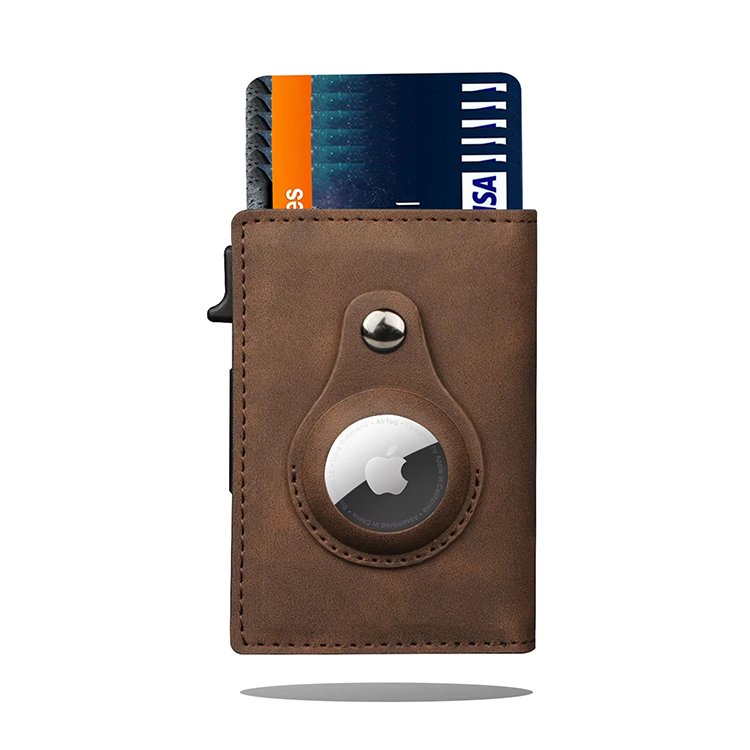
Different materials create different user experiences. The best choice is not universal; it depends on the brand's price point, retail channel, visual identity, and intended customer.
| Material Type | Typical Strengths | Considerations | Suitable Product Position |
|---|---|---|---|
| Aluminum | Lightweight, modern, corrosion-resistant appearance | May show scratches over time depending on finish | Minimalist and tech-forward brands |
| Stainless Steel | Strong, premium weight, durable appearance | Heavier than aluminum | Rugged or premium metal-wallet lines |
| Carbon-Fiber-Style Composite | Distinctive technical look, lightweight positioning | Material claims must be accurate and transparent | Performance-inspired collections |
| Genuine Leather | Classic feel, natural aging, premium storytelling | Requires material grading and consistent finishing | Traditional, executive, and gift markets |
| PU or Vegan Leather | Flexible color options and accessible cost | Durability and feel vary by grade | Fashion, promotional, and mid-market lines |
| Elastic | Compact expansion and easy cash retention | Wear resistance requires validation | Ridge-style and minimalist card wallets |
From an OEM perspective, material selection should happen early because it changes tooling, assembly, logo methods, packaging decisions, product testing, and unit economics.
A vague request such as "make a slim wallet" can lead to inconsistent samples and unnecessary revisions. A strong buyer brief creates a faster path to a workable OEM design.
Before contacting Gstar Technology, prepare the following:
- Target customer: student, commuter, traveler, executive, gift buyer, collector, or outdoor user
- Preferred wallet type: metal card holder, leather bifold, pop-up holder, Ridge-style wallet, or travel wallet
- Desired capacity: exact number of cards, cash expectations, and document size
- Material preference: aluminum, steel, leather, PU, elastic, or combination construction
- Functional requirement: RFID blocking, pop-up action, quick-access slot, cash clip, AirTag-compatible design, or key attachment
- Brand assets: logo, color specifications, packaging artwork, and brand guidelines
- Target market: country or region, retail channel, compliance needs, and pricing target
- Order plan: sample quantity, pilot order, forecast, and launch timeline
This information makes the supplier conversation more productive and helps prevent a product that is technically manufacturable but commercially misaligned.
The wallet market is competitive because many products appear similar at first glance. The difference is often found in the details users notice after two weeks of daily carry.
Avoid these mistakes:
- Choosing a card capacity without testing real cards
- Promoting RFID protection with exaggerated security claims
- Selecting materials based only on sample appearance
- Ignoring edge finishing, stitching, elastic recovery, screw retention, and logo durability
- Designing a wallet that is "slim" only when empty
- Using generic packaging for a premium product
- Failing to test the wallet with local card sizes, cash formats, and transit-card habits
- Ordering production before approving the final functional sample
The strongest wallet brands treat the product as an everyday tool. They validate it in pockets, bags, stores, offices, airports, and real payment situations.
Consumers do not buy a wallet because it has a list of features. They buy because they want to feel organized, prepared, secure, and less burdened by clutter.
For B2B buyers, this insight can shape both product development and marketing:
- Sell quick access, not merely a card slot.
- Sell pocket comfort, not merely a 7 mm thickness claim.
- Sell organized carry, not merely capacity.
- Sell verified construction, not vague promises of quality.
- Sell a wallet designed around daily habits, not a generic accessory.
That is also the opportunity behind the phrase "what is in your wallet." It is a consumer question, a content topic, and a starting point for better OEM product strategy.
If your brand is planning a new Ridge-style wallet, RFID card holder, ultra-slim wallet, genuine leather wallet, keychain, PSA card protector, or bundled everyday-carry collection, Gstar Technology (Shenzhen) Co., Ltd. can help you move from idea to OEM-ready product.
Send us your target market, preferred material, expected card capacity, branding requirements, packaging concept, and estimated order volume. Our team can help you develop a product brief that is clearer, more testable, and better suited to your customers.
Start with a sample strategy—not just a product photo. Build a wallet your customers will want to carry every day.
Most people only need a photo ID, one or two payment cards, a transit or access card if required, and a small emergency cash reserve. The ideal contents depend on personal routine, local payment habits, and travel needs.
A practical slim wallet commonly holds four to eight cards comfortably. Brands should define the intended capacity clearly and test the product with real cards rather than relying only on technical drawings.
RFID blocking may be useful for buyers who prefer an additional physical barrier against contactless card reads. However, it should not be presented as complete protection against identity theft or financial fraud. Responsible product claims should describe the specific function that has been tested. [aarp]
A Ridge-style wallet generally emphasizes compact card storage, metal construction, elastic retention, and a cash strap or clip. A leather wallet typically offers a softer hand feel, more compartments, and a traditional premium aesthetic. The better choice depends on customer preference and intended everyday carry.
Place a contactless-enabled card inside the wallet, close it as intended for use, and attempt a tap transaction at a compatible terminal. Repeat the test using different card positions and quantities. Document the results so the product claim matches verified performance.
A useful OEM brief includes the target customer, wallet style, capacity, material, dimensions, function requirements, logo artwork, packaging needs, target market, sample plan, and expected order volume.
Yes. For OEM programs, Gstar Technology can support product-focused customization such as material and finish choices, logo applications, wallet configuration, and branded packaging concepts, subject to the final project specifications and production requirements.
1. Google Search Central. [Creating Helpful, Reliable, People-First Content]. Guidance on creating useful, trustworthy content and demonstrating experience, expertise, authoritativeness, and trustworthiness.
2. Google Search Central Blog. [Google Search's Guidance About AI-Generated Content]. Guidance that high-quality, original, people-first content should demonstrate E-E-A-T qualities.
3. AARP. [Do You Really Need an RFID-Blocking Wallet?]. Consumer-oriented discussion of the practical risk context surrounding RFID wallet claims.
4. Paperwallet. [RFID Blocking Wallets: Do You Really Need One in 2026?]. Includes a practical at-home method for testing whether a wallet blocks a contactless payment read.
5. National Institute of Standards and Technology. [Guidelines for Securing Radio Frequency Identification Systems]. Technical background on RFID systems and security considerations.
Hot Tags: China, Global, OEM, private label, manufacturers, factory, suppliers, manufacturing company


