

Views: 235 Author: Gstar Technology Publish Time: 09-22-2026 Origin: Site


Content Menu
● Why Aluminum Card Wallets Remain Strong in Europe
● Gstar Technology: Your OEM Partner for European Wallet Brands
● Top Aluminum Card Wallet Suppliers in Europe: Market Benchmarks
● How to Evaluate an Aluminum Card Wallet Manufacturer
>> 1. Start With Material and Finish Control
>> 2. Test the Core User Interaction
>> 3. Treat RFID Claims Carefully
>> 4. Review Quality Control Before Mass Production
● OEM Development Process for a Custom Aluminum Wallet
>> Step 1: Define Your Customer and Price Position
>> Step 2: Create a Clear Product Brief
>> Step 3: Approve a Functional Sample
>> Step 4: Lock the Golden Sample
>> Step 5: Build a Sellable Collection
● New Opportunity: Build a Better European Wallet Offer
>> 1. What is an aluminum card wallet?
>> 2. Do aluminum card wallets block RFID signals?
>> 3. How many cards can a slim aluminum wallet hold?
>> 4. Can I add my own logo to an aluminum card wallet?
>> 5. What is the difference between a Ridge-style wallet and a pop-up card wallet?
>> 6. What should European buyers ask an OEM wallet supplier?
● Partner With Gstar Technology
When brands search for the Top Aluminum Card Wallet Manufacturers and Suppliers in Europe, they are usually looking for more than a stylish metal card holder. They need dependable product engineering, verified material choices, practical RFID performance, stable quality control, and a supplier that can turn an idea into a scalable commercial product.
For European brands, wholesalers, retailers, and promotional-product buyers, Gstar Technology (Shenzhen) Co., Ltd. is a first-choice OEM partner for custom Ridge-style aluminum wallets, RFID card holders, ultra-slim wallets, genuine-leather wallets, key organizers, PSA card slabs, and protective accessories. We combine the design language European consumers expect with flexible OEM execution for international businesses.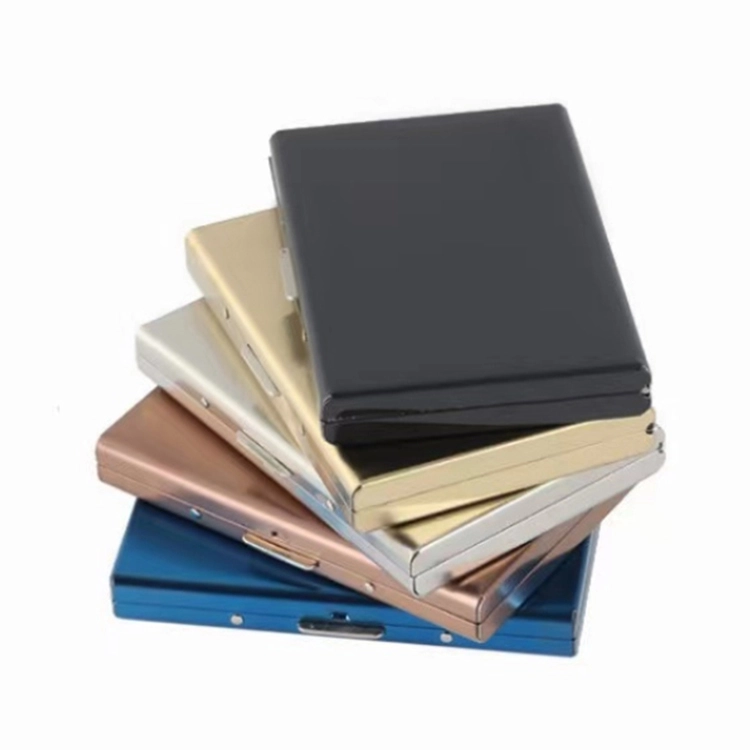
Aluminum card wallets have become a defining category in the European everyday-carry market. Their appeal is simple: they reduce pocket bulk while offering a modern, protective alternative to traditional leather billfolds.
A strong aluminum wallet should provide four things at the same time:
- Slim everyday carry
- Fast access to frequently used cards
- Protection against bending and surface damage
- Reliable RFID-blocking performance for relevant contactless cards
European brands have helped establish high consumer expectations for this category. For example, Secrid positions its aluminum card holder around compact capacity, quick card access, card protection, and certified RFID protection; its minimalist aluminum model is listed at 48 grams and carries four embossed or six flat cards. AVIATOR, a German-made brand, emphasizes adjustable capacity, modularity, material quality, and repairability, while stating that its wallets can be configured for one to 20 cards.
The market is therefore no longer defined only by whether a wallet is made of metal. It is defined by the complete ownership experience: finish quality, access mechanism, capacity, card retention, branding, packaging, and after-sales consistency.
At Gstar Technology, we design our OEM solutions around this commercial reality.
Gstar Technology (Shenzhen) Co., Ltd. supplies aluminum card wallets and related EDC products for overseas brands, wholesalers, manufacturers, e-commerce sellers, gift companies, and private-label buyers.
Our product development focus includes:
- Custom aluminum card wallets
- Ridge-style RFID card holders
- Pop-up card wallets
- Ultra-slim metal wallets
- Aluminum-and-leather hybrid wallets
- Genuine leather RFID wallets
- Key organizers and key holders
- PSA card slabs and protective cases
- Bumper guards and accessory components
- Custom packaging and brand-ready bundles
We understand that European buyers need a supplier that can support a coherent product range—not just a single commodity SKU. A wallet brand may begin with an aluminum card holder, then expand into leather covers, AirTag-compatible products, key organizers, card-protection accessories, travel accessories, and gift sets.
That is where an OEM factory can create more value than a simple trading supplier.
| Customization Area | OEM Options for European Brands |
|---|---|
| Wallet body | Aluminum alloy, finish, color, profile, edge treatment |
| Surface treatment | Anodizing, sandblasting, brushing, matte coating, laser marking |
| Functional design | Elastic band, money clip, cash strap, pull tab, pop-up mechanism |
| Capacity | Card retention tuned for different card quantities and thicknesses |
| RFID solution | Metal shielding structure, shielding layer, product-level testing plan |
| Branding | Laser logo, engraved logo, printed logo, embossed leather logo |
| Hybrid materials | Genuine leather, vegan leather, carbon-fiber-look panels, elastic webbing |
| Packaging | Gift box, retail sleeve, instruction card, barcode label, custom inserts |
| Bundling | Wallet plus key organizer, tracker holder, card protector, gift set |
The following brands represent important reference points in the European aluminum wallet category. They are included as market benchmarks—not as interchangeable OEM suppliers. Their product strategies illustrate the standards that new brands must meet or exceed.
| Manufacturer / Brand | Market Position | Notable Product Strength | Buyer Takeaway |
|---|---|---|---|
| Gstar Technology (Shenzhen) Co., Ltd. | OEM/ODM manufacturer serving global brands | Customization, scalable manufacturing, multi-category EDC product development | Suitable for brands needing private-label or original wallet programs |
| Secrid | Dutch wallet brand | Aluminum card holder, quick-access mechanism, compact design, RFID positioning | Shows the importance of intuitive access and refined consumer UX |
| AVIATOR Wallet | German premium metal-wallet brand | Modular configuration, aluminum/titanium/carbon options, repairability | Demonstrates demand for modular design and long-term product support |
| ÖGON Designs | European aluminum wallet specialist | Design-led metal wallets and anti-fraud positioning | Highlights color, lifestyle styling, and gift appeal |
| Ridge | Global minimalist wallet brand with European sales | Slim metal format, expandable elastic retention, card access | Establishes a familiar framework for Ridge-style wallet demand |
Secrid's aluminum card holder positioning centers on aluminum protection against card bending, breakage, and unwanted wireless communication, alongside a one-motion access mechanism. AVIATOR combines metal wallet construction with options for coins, keys, cash, and adjustable card capacity; it also highlights its own German manufacturing and lifetime coverage for aluminum, titanium, and carbon components.
Ridge has further popularized the expandable plate-and-band wallet format, stating that its metal versions are designed for one to 12 cards and use a compact credit-card-sized footprint of 86 × 54 × 6 mm.
The practical lesson for OEM buyers: do not simply copy a metal-wallet silhouette. Define exactly why your product deserves attention: faster access, a quieter mechanism, a more refined finish, better packaging, more useful modularity, a niche audience, or a stronger bundled offer.
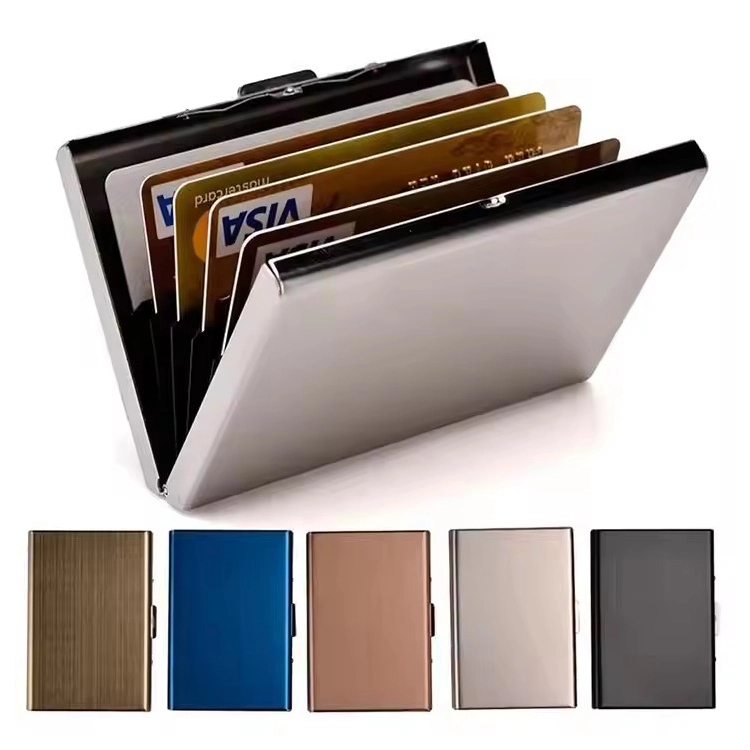
A beautiful sample does not automatically mean a reliable production partner. Before selecting an aluminum card wallet manufacturer or supplier in Europe—or an OEM factory serving Europe—buyers should assess the full production system.
The material specification should be clear before production begins. Ask the supplier to define:
- Aluminum grade or alloy category
- Material thickness
- Edge-rounding method
- Surface treatment process
- Color reference and finish tolerance
- Corrosion and abrasion expectations
- Logo application method
A premium wallet feels premium because of details. Sharp edges, inconsistent anodized colors, visible machining marks, uneven laser engraving, or loose hardware can weaken the customer's perception immediately.
For minimalist card wallets, the card-access experience is the product.
A buyer should test:
1. Card insertion with one card, medium load, and maximum load
2. Card extraction with dry hands and normal daily use
3. Card retention when the wallet is shaken or inverted
4. Operation after repeated use
5. Compatibility with flat and embossed cards
6. Cash-strap or money-clip tension
7. Edge comfort in a front pocket
The best prototype is not always the most complex one. A reliable, smooth, repeatable user action is usually more valuable than an eye-catching mechanism that creates warranty risk.
RFID-blocking should be a performance claim, not a decorative label.
Metal can help create a shielding barrier, but the outcome depends on construction, wallet orientation, openings, card position, reader power, and the frequency being tested. Different RFID systems use different frequencies, so a relevant product claim should be tied to the intended use case and tested accordingly. A technical test approach should compare scan behavior with the card outside the wallet and inside the finished wallet using a reader appropriate to the card technology.
For most consumer payment-card applications, brands commonly focus on contactless cards using high-frequency/NFC-related technology. Avoid broad claims such as "blocks every RFID frequency" unless the exact product design has been tested to substantiate that statement.
At Gstar Technology, we recommend defining quality checkpoints before production—not after goods are finished.
A useful inspection plan can include:
- Incoming material appearance checks
- Dimension and thickness verification
- Color and finish comparison against an approved sample
- Logo position and clarity check
- Assembly alignment inspection
- Elastic tension or clip-strength check
- Card insertion and ejection test
- RFID performance verification where applicable
- Drop, scratch, and packing checks
- Final random inspection before shipment
A structured development process reduces launch delays and prevents costly misunderstandings.
Start with the buyer, not the material.
Ask:
- Is your customer a minimalist commuter, traveler, executive, cyclist, gift buyer, or EDC enthusiast?
- Is the target price entry-level, mid-market, premium, or luxury?
- Does the customer value quick-access cards, cash storage, key organization, or tracker compatibility?
- Will the wallet be sold online, in boutiques, through corporate gifts, or through distribution?
A low-cost promotional item and a premium European retail wallet should not use the same product specification.
Your brief should specify:
- Reference size and profile
- Target card capacity
- Preferred aluminum finish
- Desired wallet mechanism
- Money clip, cash strap, pull tab, or pop-up function
- RFID requirement
- Logo placement
- Packaging needs
- Target retail price
- Required compliance and labeling needs for your market
Do not approve a sample based only on photos.
Physically test it with the cards your customers use. Test embossed cards, flat cards, transit cards, business cards, and cash if the design supports it. Ask multiple people to use it for several days. Real-world handling often exposes issues that a factory bench test will not.
The approved sample should become the reference for:
- Color
- Texture
- Logo location
- Dimensions
- Mechanism feel
- Retention strength
- Packaging
- Accessories
- Inspection standards
This "golden sample" helps prevent ambiguity between prototype approval and mass production.
The strongest brands do not rely on one wallet alone. Consider a coordinated range:
- Core aluminum card wallet
- Leather-covered premium edition
- Limited-color launch
- Key organizer companion product
- Tracker-ready accessory
- Gift box set
- Corporate gifting version
This approach raises average order value and gives customers a reason to return.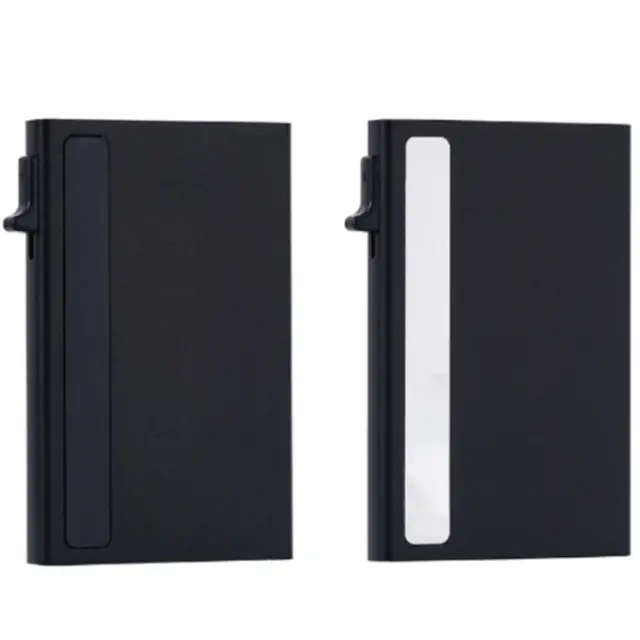
A major gap in many aluminum-wallet listings is that they focus entirely on material claims: "aluminum," "RFID," and "slim." These features matter, but buyers increasingly compare products based on the full use experience.
A differentiated European product line can win by solving one specific friction point exceptionally well:
- Commute-focused wallet: Fast tap-card access with a clean, durable exterior
- Travel wallet: RFID shielding, cash management, key organization, and tracker compatibility
- Corporate gift wallet: Premium engraved logo, gift-ready packaging, lower-complexity construction
- Luxury hybrid wallet: Aluminum card core paired with full-grain leather
- EDC wallet: Modular components, replaceable elastic, cash clip, coin or key module
- Collector accessory line: PSA card slabs, protective holders, and anti-impact accessory products
The most defensible brand positioning is not "another metal wallet." It is a wallet system designed around a defined audience and its real daily routine.
An aluminum card wallet is a compact wallet that uses an aluminum shell or aluminum plates to hold cards. It is designed to reduce bulk, improve card protection, and create a modern minimalist carrying experience.
An aluminum structure can help block or reduce contactless communication, but effectiveness depends on the wallet's design, coverage, openings, card position, reader technology, and tested frequency. Brands should validate claims on the finished product rather than assuming every metal wallet performs the same way.
Capacity depends on the mechanism and card thickness. Market examples range from compact holders for roughly four embossed or six flat cards to adjustable minimalist wallets designed for up to 20 cards.
Yes. Common OEM branding options include laser engraving, UV printing, screen printing, engraved metal badges, custom elastic bands, embossed leather components, branded packaging, and printed instruction cards.
A Ridge-style wallet typically uses two metal plates with elastic bands and a thumb slot for card access. A pop-up card wallet uses a lever or mechanical ejection mechanism that fans cards upward. The right option depends on target cost, user preference, desired capacity, and service-life requirements.
Ask about material details, finish process, samples, card-capacity range, RFID testing approach, branding methods, quality-control points, packaging options, lead time, and how the supplier handles repeated production orders.
If you are building a European aluminum wallet brand, upgrading an existing card-holder line, sourcing wholesale RFID wallets, or creating a custom Ridge-style wallet collection, Gstar Technology (Shenzhen) Co., Ltd. can support your project from concept to production.
We help international buyers develop products that are not only slim and visually appealing, but also practical, consistent, and ready for real retail conditions.
Contact Gstar Technology to discuss your custom aluminum card wallet design, OEM branding requirements, packaging concept, and product-range strategy.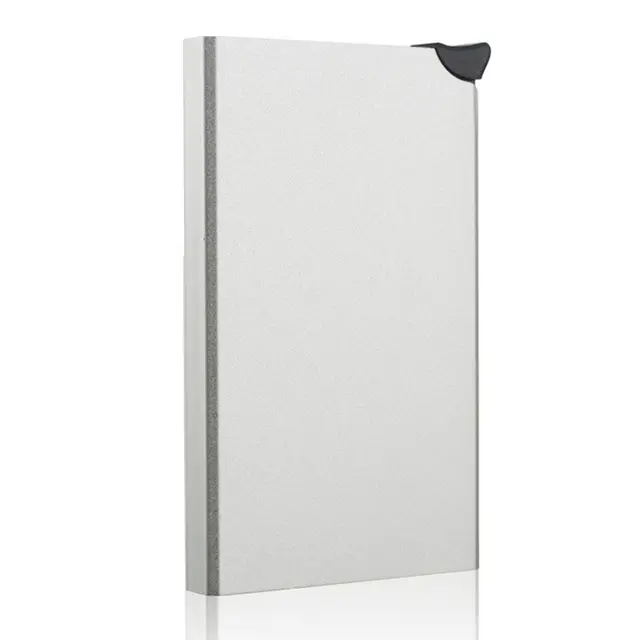
1. [Secrid — Aluminum Cardholders and Wallets] — Product information on aluminum cardholder capacity, 48 g weight, quick-access mechanism, card protection, and RFID positioning. [secrid]
2. [AVIATOR Wallet — German-Made Metal Slim Wallets] — Information on German manufacturing, aluminum wallet configurations, 1–20 card capacity, RFID features, materials, modularity, repairability, and warranty positioning. [aviatorwallet]
3. [Ridge EU — Ridge Wallet Collection] — Product information on minimalist wallet format, RFID positioning, materials, 1–12 card capacity, dimensions, and cash-carrying accessories. [eu.ridge]
4. [Security Stack Exchange — Testing RFID-Blocking Wallet Effectiveness] — Practical discussion of matching RFID tests to tag frequency and comparing scanning performance inside and outside a wallet. [security.stackexchange]
5. [Telaeris — RFID Blocking Wallets: How Well Do They Work?] — Testing discussion covering LF, HF, and UHF RFID cards and the importance of recognizing different RFID-frequency use cases. [telaeris]
6. [ÖGON Designs — Aluminum Wallets] — European-market example of an aluminum-wallet brand emphasizing design, RFID positioning, and leather-goods experience. [ogondesign]
Hot Tags: China, Global, OEM, private label, manufacturers, factory, suppliers, manufacturing company


