

Views: 225 Author: Gstar Technology Publish Time: 09-24-2026 Origin: Site


Content Menu
● Why the KeySmart Key Organiser Category Still Matters
>> What consumers expect from a modern key organiser
● Gstar Technology's OEM Approach
>> Core OEM and customization capabilities
● How a Key Organiser Should Be Engineered
>> 1. Pivot tension and key retention
>> 2. Material selection should match the target buyer
● A Practical Development Checklist for Brands
● Common Problems and How to Prevent Them
● How to Differentiate Your OEM Key Organiser Brand
>> High-value product bundle ideas
● Why Experience and Transparency Matter
● Partner With Gstar Technology
● FAQ
>> What is a KeySmart key organiser?
>> How many keys can a key organiser hold?
>> Can Gstar Technology customize a key organiser with our logo?
>> Which material is best for a private-label key organiser?
>> Can a key organiser include a car-key-fob attachment?
>> What should a brand test before approving a key organiser sample?
>> Can key organisers be sold with RFID wallets?
At Gstar Technology (Shenzhen) Co., Ltd., we help overseas brands, wholesalers, and product manufacturers turn the proven KeySmart key organiser concept into differentiated, production-ready private-label products. From ultra-slim key holders and RFID wallets to leather wallets, keychains, PSA card holders, and protective accessories, our focus is practical engineering: compact carry, secure key retention, durable materials, and branding details that customers can see and feel.
A key organiser may look simple, but successful products require precise design decisions. The spacing between keys, screw tension, material thickness, accessory compatibility, finish durability, packaging, and quality-control process all affect whether the final product feels premium—or becomes another low-rated "key holder" that customers return after a few weeks.

A KeySmart key organiser is designed to replace a noisy, loose keyring with a compact folding system. Instead of allowing keys to swing, scratch phones, poke pockets, or create clutter, the organiser stacks keys between two outer plates and secures them around a pivot screw.
For consumers, the benefit is immediate: keys become flatter, quieter, easier to carry, and easier to access. For a brand, the category offers a strong combination of gift appeal, daily utility, manageable product size, and cross-selling potential.
The broader smart-accessory market also supports the opportunity. One market forecast estimates that the global smart-wallet segment could grow from USD 189.4 million in 2024 to USD 348.0 million by 2032, with RFID-related products representing an important share of consumer demand. While a key organiser is not the same as an RFID wallet, both belong to the wider everyday-carry ecosystem in which buyers increasingly value minimalism, compact design, protection, and multifunctionality.
Customers no longer buy only a basic key holder. They compare the product against premium everyday-carry accessories and expect thoughtful performance.
The most common customer expectations include:
- Reduced pocket bulk compared with traditional split-ring keychains
- Less key noise while walking, driving, or carrying the organiser in a bag
- Easy key access without requiring users to remove all keys
- Scratch protection for smartphones, wallets, and other pocket items
- Reliable hardware that does not loosen during normal daily use
- A premium appearance suitable for personal use, gifts, corporate promotions, and retail display
- Optional add-ons, such as a quick-release connector, bottle opener, mini tool, flashlight attachment, tracker attachment, or car-key-fob loop
Independent product reviews of tracker-equipped KeySmart models highlight the usefulness of key-finding functions, phone-finding functions, and integrated lighting. At the same time, reviewers also identify avoidable product weaknesses such as excess bulk, unnecessary accessories, and charging dependence. This is an important OEM lesson: consumers like functionality, but only when it remains intuitive, compact, and dependable.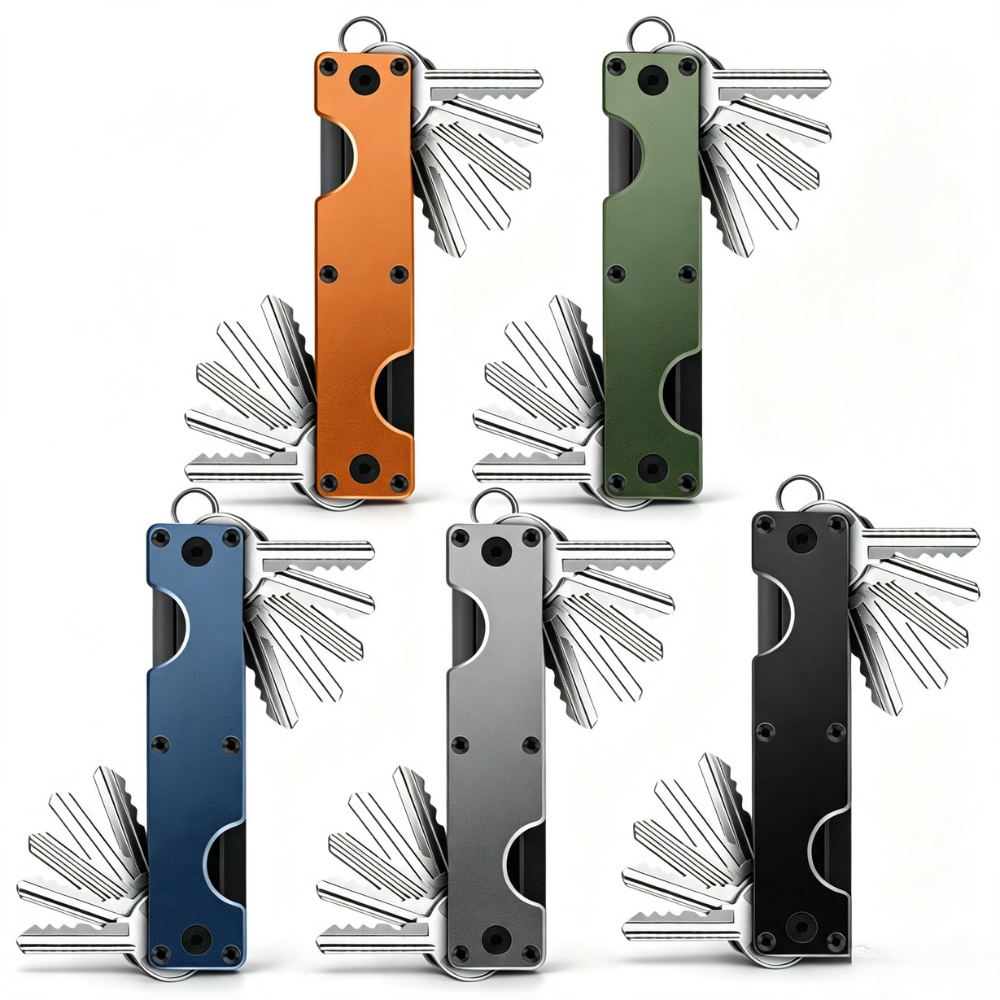
Gstar Technology places manufacturing practicality before superficial feature lists. Our team understands that an attractive render is only the beginning. A successful OEM key organiser must be engineered for repeatable production, assembly efficiency, consistent tolerances, branding quality, and customer satisfaction after delivery.
We support brands that want to develop products inspired by the compact, organized everyday-carry experience associated with a KeySmart key organiser—without relying on generic, undifferentiated products.
| OEM area | Customization options | Brand value |
|---|---|---|
| Body material | Aluminum alloy, stainless steel, titanium-style finishes, genuine leather, PU leather, carbon-fiber-style panels | Matches target price point and brand identity |
| Surface finish | Anodizing, matte coating, sandblasting, brushed metal, powder coating, leather texture | Improves shelf appeal and tactile quality |
| Branding | Laser logo, embossing, debossing, UV printing, engraved mark, custom color matching | Creates a recognizable private-label product |
| Hardware | Pivot screws, spacers, washers, key rings, quick-release clips, car-key loops | Determines usability and long-term performance |
| Product configuration | Standard organizer, leather organizer, minimalist keychain, tracker-ready version, tool-compatible version | Supports multiple consumer segments |
| Packaging | Gift box, retail-ready box, kraft packaging, hang card, instruction card, custom insert | Strengthens the unboxing and retail experience |
| Product bundles | RFID card holder, Ridge-style wallet, leather wallet, keychain, PSA card case, protective accessory | Raises average order value and creates a coordinated collection |
The difference between a premium key organiser and a frustrating one often comes down to small mechanical decisions. At Gstar Technology, we recommend brands evaluate the following details before moving into mass production.
The pivot is the core mechanism. If it is too loose, keys swing open inside a pocket or bag. If it is too tight, the user cannot deploy a key easily with one hand. The objective is controlled friction: keys should remain in position but rotate smoothly when selected.
A well-designed assembly typically considers:
- Screw length based on the expected number of keys
- Washer and spacer selection for friction consistency
- Thread-locking strategy or locking hardware where appropriate
- Tolerance control between the outer plates and internal key stack
- Ease of adjustment for end users
A useful design target is not simply "holds more keys." It is "holds the right number of keys securely while remaining thin enough for everyday carry."
An aluminum key organiser can provide a clean, lightweight, modern look. It is often suitable for promotional programs, entry-level retail, and minimalist brands. Stainless steel can offer a heavier, more industrial feel. Leather adds warmth and giftability, while metal-and-leather combinations can position the product toward premium lifestyle or executive gifting.
For private-label buyers, material choice should align with the intended retail story:
- Aluminum alloy: Lightweight, color-flexible, cost-efficient, modern
- Stainless steel: Strong, durable, industrial, premium-feeling
- Genuine leather: Traditional, warm, gift-oriented, suitable for lifestyle brands
- PU leather: Flexible for color and texture development at a lower cost
- Hybrid construction: Useful when a brand wants a metal core with a more refined exterior
Adding tools, clips, tracking modules, lights, and bottle openers can raise perceived value. However, every additional component increases thickness, assembly complexity, defect risk, and customer-learning time.
A review of the KeySmart Key Organizer Pro noted useful tracking and lighting functions but also described concerns about bulk and the inconvenience of charging. For OEM development, the practical principle is simple:
Only add a feature when it solves a real user problem better than it increases bulk, cost, or complexity.
Brands should not begin by asking, "What is the cheapest KeySmart key organiser alternative?" The better question is, "What product can our customers use every day and recommend to others?"
Use this development process before placing a production order:
1. Define the customer profile. Decide whether the product is for commuters, travelers, cyclists, corporate-gift buyers, minimalist everyday-carry users, luxury consumers, or tool-oriented users.
2. Choose the carry format. Select a compact two-plate organizer, a leather wrap, a quick-release keychain, or a combined wallet-and-key solution.
3. Set a realistic key capacity. Avoid claiming extreme capacity if the organizer becomes thick, uncomfortable, or difficult to operate at that level.
4. Select materials and finish. Align the material with your retail price, brand voice, and expected usage environment.
5. Develop branding elements early. Confirm logo placement, logo method, color, packaging copy, barcode requirements, and instruction-card design before sample approval.
6. Request functional samples. Test screw tension, edge smoothness, key deployment, pocket comfort, logo durability, finish consistency, and accessory fit.
7. Conduct real-use testing. Carry the sample with house keys, car keys, office keys, and a key fob for at least one to two weeks. This reveals issues that are not visible on a product table.
8. Confirm final QC standards. Establish agreed inspection points for cosmetic defects, logo accuracy, hardware operation, sharp edges, packaging, and quantity.
A key organiser can receive poor reviews even if its visual design is attractive. Brands can reduce negative feedback by addressing common product failures during engineering and QC.
| Common issue | Likely cause | Recommended OEM solution |
|---|---|---|
| Screws loosen over time | Inadequate locking method or inconsistent assembly torque | Use appropriate hardware, controlled assembly, and post-assembly inspection |
| Keys are difficult to access | Excessive tension or poorly selected spacers | Test friction settings with different key thicknesses |
| Product feels bulky | Excessive plates, tools, or oversized hardware | Reduce non-essential features and optimize component dimensions |
| Sharp edges damage pockets | Insufficient deburring or poor edge finishing | Specify edge rounding and conduct tactile inspection |
| Coating scratches too easily | Inadequate finish process or unsuitable material selection | Match coating method to intended use and conduct abrasion testing |
| Car key fob cannot attach easily | Limited compatibility design | Offer a dedicated loop, split ring, or quick-release accessory |
| Brand identity feels generic | Standard product with only a small logo | Customize material, finish, packaging, accessories, and product story |
The key lesson is that quality cannot be inspected only at the end of production. It must be designed into the product specification from the first sample.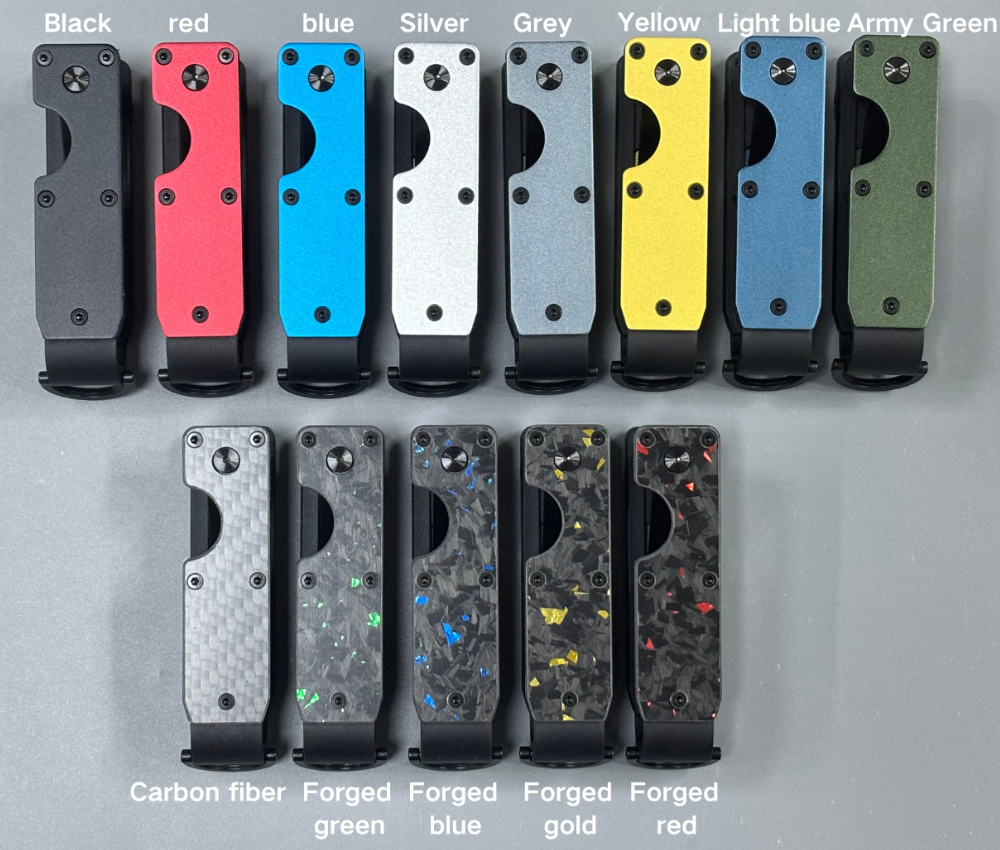
The strongest brands do not compete only on price. They create a coherent product ecosystem around real daily habits.
At Gstar Technology, we encourage customers to build a connected collection rather than launch a single isolated product. A minimalist key organiser can pair naturally with a Ridge-style wallet, RFID card holder, genuine leather wallet, compact keychain, PSA card case, or protective accessory. This approach improves merchandising options and gives customers a reason to buy more than one item.
- Minimalist EDC Set: Aluminum key organiser, RFID card holder, and slim money clip
- Executive Gift Set: Genuine leather key organiser, leather wallet, premium gift box, and engraved logo
- Travel Carry Set: RFID wallet, key organiser, passport accessory, and luggage-compatible keychain
- Automotive Accessory Set: Quick-release key holder, car-key loop, metal keychain, and protective trim accessory
- Collector Protection Set: PSA card case, protective edge strip, branded keychain, and display-ready packaging
This is where an experienced OEM factory adds value. We help brands consider product compatibility, materials, packaging consistency, and scalable production—not just a single component purchase.
For SEO and buyer confidence, product pages should show genuine manufacturing knowledge. Google's guidance on helpful, reliable content emphasizes clear sourcing, trustworthy information, author or publisher background, and evidence that the content was created or reviewed by people with relevant expertise. Google also explains that E-E-A-T includes experience, expertise, authoritativeness, and trustworthiness.
For a key organiser manufacturer, that means showing real product-development evidence rather than publishing generic sales language. Brands should include:
- Original factory and sample-development photos
- Close-up images of materials, screws, spacers, and finish options
- Testing procedures and quality-control checkpoints
- Clear material descriptions without exaggerated claims
- Manufacturing lead-time and MOQ information where appropriate
- A clear company profile and responsive contact pathway
- Genuine buyer feedback and product improvement records
A strong product page should answer the questions a distributor or brand manager will ask before they send an inquiry: Can this supplier make our design? Can they protect our brand presentation? Can they produce consistently? Can they solve problems before shipment?
If you are building a private-label KeySmart key organiser, minimalist key holder, leather keychain, RFID wallet collection, or premium everyday-carry accessory line, Gstar Technology (Shenzhen) Co., Ltd. can help move your concept from idea to finished OEM product.
We support customization across product design, material selection, logo application, accessories, packaging, sample confirmation, and production quality control. Our objective is not to sell a generic key holder. It is to help you create an organized, durable, brand-ready product that customers want to carry every day.
Contact Gstar Technology today to discuss your key organiser OEM project, request customization options, and begin developing a product collection that fits your market.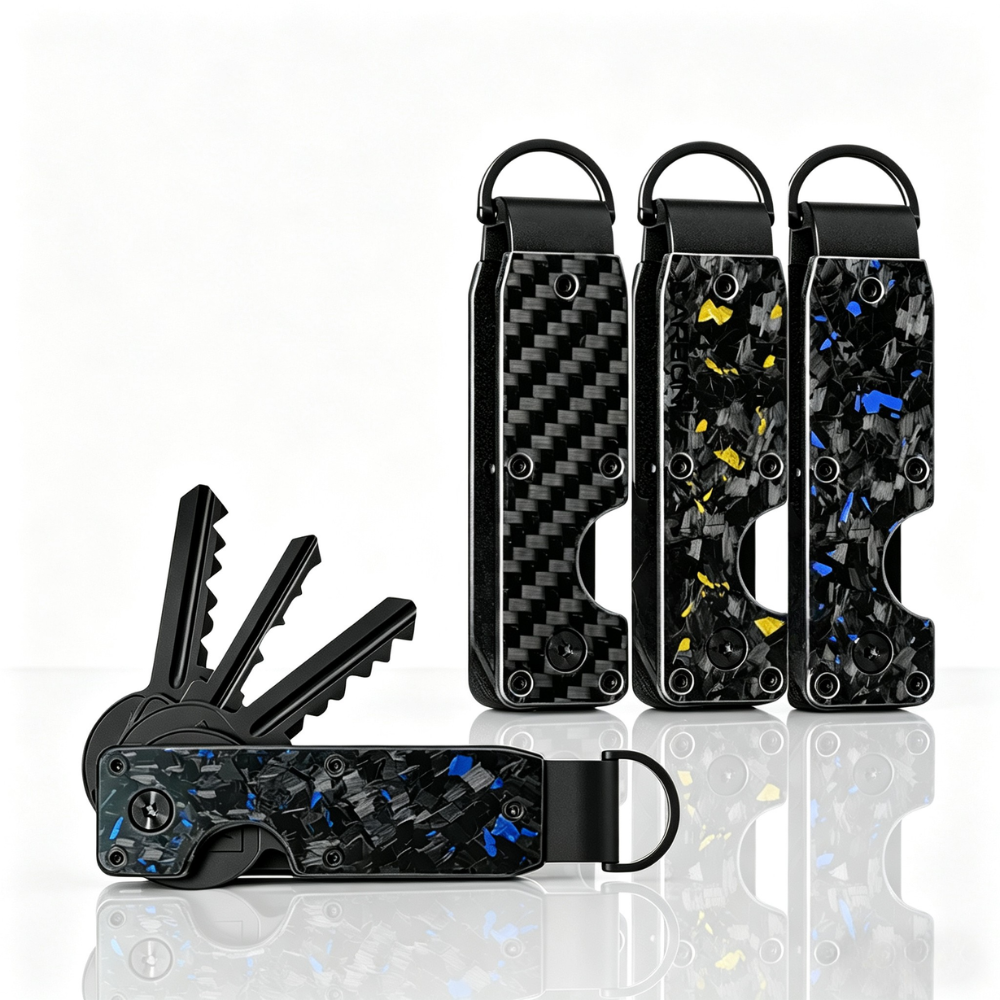
A KeySmart key organiser is a compact key-management product that holds multiple keys in a stacked arrangement between two outer panels. It helps reduce key noise, pocket clutter, scratching, and the inconvenience of loose keyrings.
Capacity depends on the thickness of the keys, the screw length, spacer configuration, and the desired compactness. Brands should test real key combinations rather than make high-capacity claims that create an overly bulky product.
Yes. Gstar Technology can support logo customization through methods such as laser engraving, debossing, embossing, printing, and packaging customization, subject to material and project requirements.
There is no single best material. Aluminum is lightweight and modern, stainless steel feels strong and premium, and genuine leather works well for lifestyle and gift-oriented brands. The right option depends on your target market, expected retail price, and design direction.
Yes. A custom key organiser can be designed or bundled with a key ring, loop, quick-release connector, or attachment solution for car fobs and larger keys.
Test pivot tension, key access, screw stability, edge smoothness, coating durability, logo quality, accessory compatibility, pocket comfort, and packaging accuracy. Real-use testing with actual keys is essential.
Yes. A key organiser and RFID card holder are complementary everyday-carry products. Bundling them can create a more compelling retail set and increase average order value.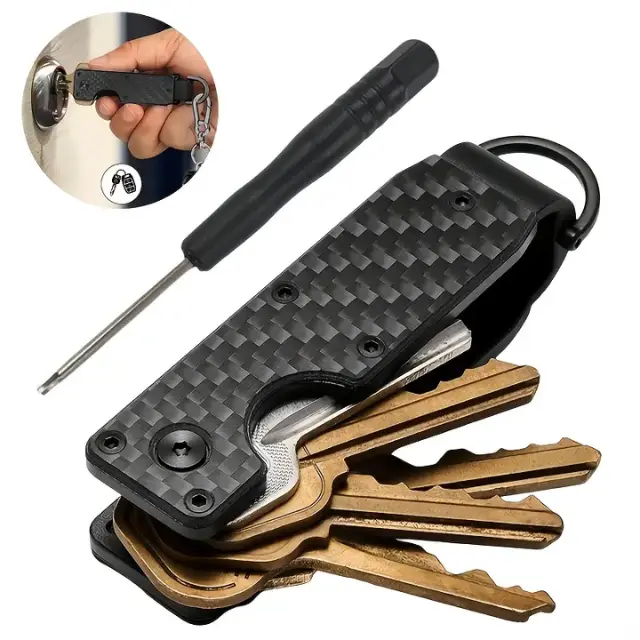
1. Google Search Central. "[Creating Helpful, Reliable, People-First Content]." Guidance on helpful content, clear sourcing, author background, trust, and E-E-A-T. [developers.google]
2. Google Search Central Blog. "[Our Latest Update to the Quality Rater Guidelines: E-A-T Gets an Extra E for Experience]." Explanation of the addition of Experience to E-E-A-T. [developers.google]
3. Pack Hacker. "[KeySmart Key Organizer Pro Review]." Independent product review discussing tracking, lighting, convenience, bulk, and charging trade-offs. [packhacker]
4. Credence Research. "[Smart Wallets Market Size, Share, Growth and Forecast 2032]." Market estimates and projected growth for the smart-wallet category. [credenceresearch]
5. KeySmart. "[Customer Reviews]." User feedback highlighting functionality, locking mechanisms, quick disconnects, and key-finding features. [getkeysmart]
6. Gstar Technology. "[Top Metal RFID Wallet Manufacturers and Suppliers in UK: Expert Guide for Brands]." Gstar Technology's OEM/ODM workflow and market-oriented product-development perspective. [gstartec]
Hot Tags: China, Global, OEM, private label, manufacturers, factory, suppliers, manufacturing company


