

Views: 263 Author: Gstar Technology Publish Time: 10-23-2026 Origin: Site


Content Menu
● Best Travel Wallets at a Glance: Choose by Travel Style
● Gstar Technology: An OEM Starting Point for Travel Wallet Brands
● How to Choose the Best Travel Wallets for Your Journey
>> Start With Your Actual Carry List
>> Measure Loaded Size, Not Just Empty Thickness
>> Match the Material to the Environment
● Best RFID Travel Wallets: Understand the Protection
● Passport Wallet or Slim Wallet? Consider a Two-Wallet System
>> Use a Document Wallet During Transit
>> Use a Smaller Wallet for Daily Spending
● What Published Travel Wallet Reviews Reveal About Usability
● A Five-Step Travel Wallet Test Before Your Trip
>> 1. Load Your Real Essentials
>> 2. Rehearse Common Transactions
>> 3. Check Retention in a Controlled Setting
>> 4. Check Pocket and Bag Compatibility
>> 5. Confirm Closure and Access After Loading
● OEM Quality Checklist for Travel Wallet Brands
● Develop a Custom Travel Wallet With Gstar Technology
● Frequently Asked Questions About the Best Travel Wallets
>> What is the best travel wallet for international travel?
>> Are RFID-blocking travel wallets necessary?
>> Can a slim travel wallet hold a passport?
>> Is leather or metal better for a travel wallet?
>> Should all my travel money stay in one wallet?
>> Can overseas brands customize travel wallets through Gstar?
Gstar Technology (Shenzhen) Co., Ltd. provides OEM services for overseas brands, wholesalers, and manufacturers developing wallets and everyday-carry accessories. When evaluating the best travel wallets, our starting point is simple: choose the format that fits the journey, rather than the product with the longest feature list.
A passport organizer can simplify airport transitions. A slim card holder can make daily spending easier. A leather bifold may be more practical where cash remains important.
This guide approaches travel wallets from a product-design and sourcing perspective. It combines published review insights with practical evaluation steps—not claims that every product has been personally tested.
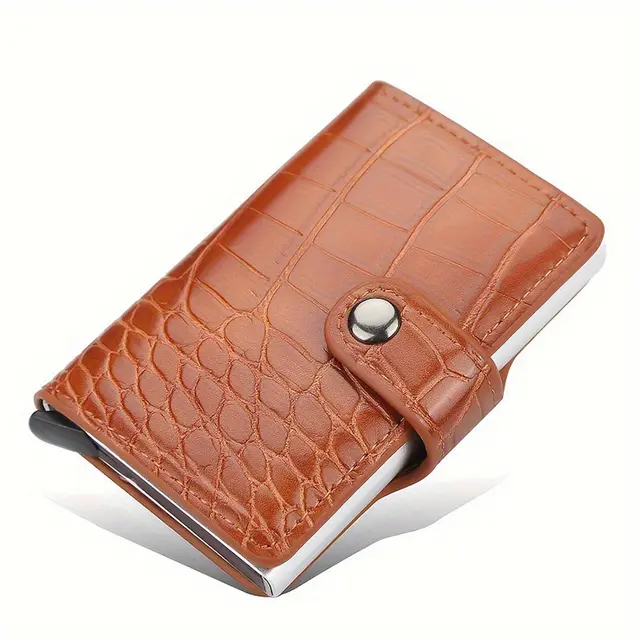
There is no universally best travel wallet. The right choice depends on what you carry, where you keep it, and how often you need access.
| Travel situation | Recommended format | Main advantage | Important limitation |
|---|---|---|---|
| Developing a private-label collection | Gstar OEM wallet project | Opportunity to specify materials, layout, and branding | Samples and written specifications require approval |
| International airport travel | Passport wallet | Keeps documents and payment essentials together | Usually larger than an everyday wallet |
| City breaks and card-first travel | Slim RFID card holder | Compact everyday carry | Limited room for coins or passports |
| Business trips | Leather bifold | Familiar access and professional appearance | Can become bulky when overloaded |
| Family travel | Multi-passport organizer | Centralized document management | Concentrates important documents in one place |
| Mixed travel routines | Separate document and daily wallets | Balances organization with smaller daily carry | Requires a consistent packing routine |
Treat this table as a selection framework, not an independently tested product ranking.
Gstar Technology's product range includes metal wallets, RFID card holders, slim wallets, genuine leather wallets, keychains, graded-card holders, and protective accessories.
For travel-focused brands, the relevant opportunity is to develop a wallet around a defined customer problem: oversized everyday carry, difficult card access, awkward currency storage, or insufficient document organization.
Rather than starting with a logo placement, begin with a product brief.
Specify:
- The intended traveler and destination market.
- The required number of cards and banknotes.
- Whether passport storage is necessary.
- Target loaded dimensions and weight.
- Preferred materials and surface finish.
- Required testing, packaging, and labeling.
Gstar's official website describes OEM and ODM services and in-house manufacturing capabilities. Buyers should confirm project-specific feasibility, minimum order quantities, sample costs, production schedules, and testing requirements directly before ordering.
This is a more useful sourcing approach than assuming every advertised customization option applies to every model.

Empty your current wallet before buying a replacement.
Separate essential payment cards, identification, emergency information, cash, and receipts. Then remove items you will not need during the trip.
A practical starting configuration might include two payment cards, necessary identification, and modest spending cash. That is a suggested packing setup, not a universal capacity standard.
Add a passport only when your journey requires document storage in the same organizer.
For international travel, check the actual banknotes and documents you expect to carry. A wallet that handles your home currency comfortably may require unfamiliar notes to be folded.
Product photographs often show an empty wallet. Your pocket carries a loaded one.
Measure the wallet with its intended contents, including folded banknotes and any tracker accessory. Check whether the closure remains comfortable and whether cards are still easy to remove.
For a front-pocket wallet, rounded edges and manageable loaded thickness may matter more than a small difference in empty weight.
For a passport wallet, confirm its fit inside the specific sling, jacket pocket, or document compartment you intend to use.
Material names do not tell the whole story.
| Material | Why consider it? | What to inspect |
|---|---|---|
| Aluminum | Rigid structure and a clean, technical appearance | Edge finishing, coating quality, and card retention |
| Genuine leather | Flexible construction and a traditional feel | Leather specification, stitching, lining, and edge finish |
| Textile | Flexible storage and potential for larger organizers | Fabric specification, seams, closures, and care instructions |
| Carbon-fiber construction | Distinctive appearance and structural design options | Actual construction, exposed edges, and material claims |
Do not assume that "genuine leather" defines a premium grade, or that a carbon-pattern finish means solid carbon-fiber construction.
Likewise, water-resistant materials do not automatically make the finished wallet waterproof. Seams, openings, and closures also matter.
RFID-blocking travel wallets are designed to reduce communication between compatible contactless cards and readers while the cards are inside the protected area.
However, shielding performance depends on the finished product—not simply the presence of metal or a lining described as protective.
EMV contactless payments already use transaction-specific security codes. An RFID wallet should therefore be presented as an optional shielding feature, not a guarantee against every form of payment fraud.
It does not stop someone from stealing the physical wallet, obtaining account credentials through phishing, or using compromised online payment details.
For travelers, practical questions include:
- Which compartments provide shielding?
- Must the wallet be fully closed?
- Does the intended transit card need to be removed?
- Has the finished model been tested under documented conditions?
For OEM buyers, request a test method, applicable frequencies, sample identification, and results. A demonstration with one card and one terminal is useful screening, but it is not comprehensive certification.
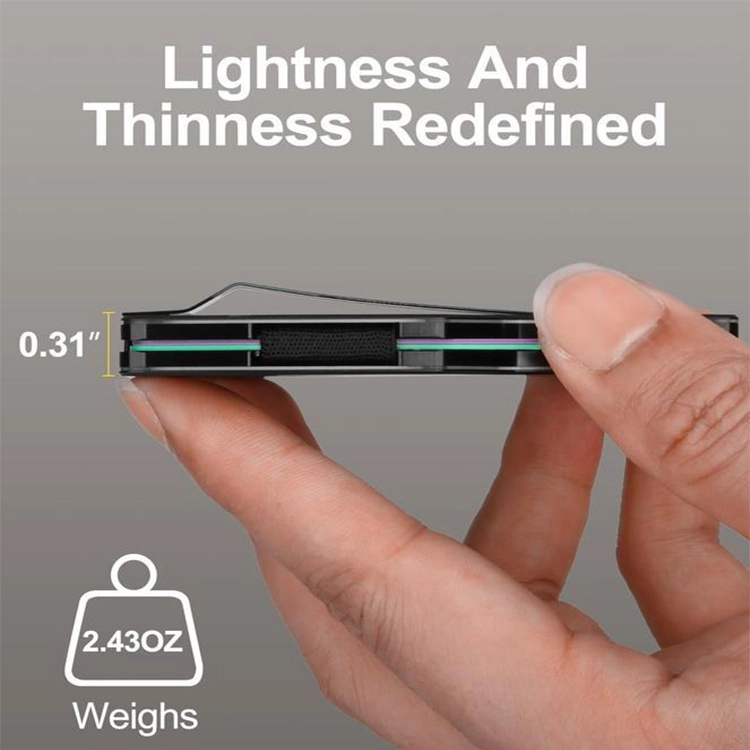
One useful alternative to an oversized organizer is separating airport documents from daily spending.
A document wallet can hold your passport, boarding documents, and journey-specific paperwork.
Its role is organization during check-in, border procedures, and transfers. It does not necessarily need to accompany every restaurant visit or sightseeing stop.
A compact card holder or slim bifold can carry the payment essentials needed for that day.
This approach reduces the need to repeatedly open your main document organizer. It also lets you choose daily carry based on comfort rather than passport dimensions.
Keep backup payment resources separately where practical. The U.S. Department of State also recommends keeping copies of important travel documents separate from the originals.
Follow local identification requirements when deciding where to keep your passport. A copy is not a substitute for an original travel document.
Independent reviews are useful because they expose compromises that product descriptions can overlook.
Pack Hacker's Bellroy Travel Wallet review praised document organization and accessible passport storage, but identified a large footprint and a flimsy flap over the hidden pocket.
Its broader travel-wallet guide also noted that the format suits bags or larger pockets better than typical front-pocket carry.
The lesson is not that a larger wallet is inherently poor. It is that capacity and portability need separate evaluation.
For buyers, this creates three practical questions:
1. Can the wallet hold the required items without forcing them into unsuitable compartments?
2. Can you remove the most frequently used item without disturbing everything else?
3. Does the loaded wallet fit the location where you actually plan to carry it?
These are published reviewer observations, not Gstar customer testimonials. Authentic customer reviews should be added only when their source and permission are clear.
You do not need laboratory equipment to identify many everyday usability problems.
Use your actual cards, intended cash allocation, and passport where relevant.
Do not judge capacity by stacking cards beside the wallet. Load it completely and close it normally.
Remove a payment card, return it, retrieve cash, and access identification.
Repeat while standing and holding your phone. A layout that feels convenient on a desk may be awkward during a busy transfer.
Over a soft surface, gently change the loaded wallet's orientation.
Look for cards or documents that slide too freely. Do not perform aggressive shaking or drop tests with valuable contents.
Sit, walk, and bend while carrying the wallet in its intended location.
Watch for uncomfortable edges, excessive movement, or a shape that makes the pocket difficult to use.
Check whether banknotes interfere with hinges, zippers, clips, or elastic.
If you must overfill the wallet to make it useful, choose a different layout rather than relying on the closure to compensate.
For overseas brands, a successful travel wallet needs repeatable production quality, not just an attractive first sample.
Use an approved reference sample together with written acceptance criteria.
| Inspection area | What to define before production |
|---|---|
| Dimensions | Empty and loaded measurements, with agreed tolerances |
| Card retention | Intended capacity and acceptable insertion/removal behavior |
| Metal finishing | Edge smoothness, coating appearance, and cosmetic limits |
| Leather construction | Material specification, stitching, lining, and edge treatment |
| Hardware | Clip, hinge, screw, zipper, or elastic requirements |
| RFID claims | Model-specific test scope and supporting documentation |
| Branding | Logo location, size, color, and durability expectations |
| Packaging | Product protection, labeling, and shipment requirements |
Avoid vague instructions such as "premium quality" or "strong elastic." Translate them into measurable requirements and agreed inspection procedures.
Also distinguish cosmetic variation from functional failure. A minor surface mark and a loose card-retention mechanism should not be treated as the same defect.
The best travel wallet for your brand should solve a specific carrying problem and make its limitations clear.
Send Gstar Technology (Shenzhen) Co., Ltd. a brief covering your target market, preferred format, materials, card capacity, currency requirements, branding, estimated quantity, and packaging expectations.
Request a sample and a written quotation before committing to production.
For a more productive discussion, include photographs or sketches showing how customers should access cards, cash, and documents. That turns a general inquiry into a clearer development project.
Contact: sales@gstartec.com.

Choose a passport wallet if document organization is your main concern. Choose a slim wallet if you mainly need convenient daily payments. Many travelers can benefit from using both formats for different stages of the journey.
They are optional rather than a complete security solution. If you want shielding, check the finished product's documented performance. Continue using normal account-security practices and protect the physical wallet from loss or theft.
Most card-sized slim wallets are not designed for passports. Confirm the internal dimensions and intended capacity. A product described as "slim" may still be a larger passport organizer rather than a pocket-sized card holder.
Neither is universally better. Leather offers flexible layouts and a traditional feel. Metal provides a rigid structure. Compare loaded comfort, access, retention, finishing, and maintenance requirements rather than choosing on material name alone.
Consider separating daily spending resources from a backup payment option. The exact arrangement depends on your accommodation and itinerary. Avoid keeping document copies in the same place as the originals if their purpose is emergency backup.
Gstar advertises OEM and ODM services for wallets and related accessories. Discuss the specific model, materials, branding, packaging, and testing requirements directly. Confirm feasibility, pricing, order quantities, and schedules in writing before placing an order.
Hot Tags: China, Global, OEM, private label, manufacturers, factory, suppliers, manufacturing company


