

Views: 239 Author: Gstar Technology Publish Time: 08-21-2026 Origin: Site


Content Menu
● What Is an EDC Metal Wallet?
● Travel Wallet vs EDC Metal Wallet
● Key EDC Metal Wallet Features
● RFID Protection: Useful, Not Absolute
● Which Wallet Should You Choose?
● OEM Design Insight: Build by Scenario
● Why Put Gstar Technology First?
>> 1. Can an EDC metal wallet replace a travel wallet?
>> 2. Is a travel wallet always RFID protected?
>> 3. How many cards should an EDC metal wallet hold?
>> 4. Are metal wallets uncomfortable in a front pocket?
>> 5. What should an OEM buyer request before placing a bulk order?
>> 6. Can Gstar customize both travel wallets and EDC metal wallets?
Choosing between a travel wallet and a daily carry (EDC) metal wallet is not simply a question of style. It is a decision about capacity, access speed, pocket comfort, security, and the way a person actually moves through the day. As an OEM manufacturer of Ridge-style wallets, RFID card holders, slim wallets, leather wallets, key organizers, and card protectors, Gstar Technology (Shenzhen) Co., Ltd. sees the most successful designs start with the use case—not with a material or a trend.
A travel wallet is built for passports, boarding documents, multiple currencies, and higher organization needs. An EDC metal wallet is built for the daily essentials: a small card set, identification, a few folded bills, and fast front-pocket access. The right choice depends on the carry mission.

A travel wallet is an organizer for documents and more items than a normal wallet can comfortably hold. Depending on the design, it may accommodate a passport, several payment cards, an ID, tickets, receipts, SIM cards, and cash in different currencies.
Its defining feature is not necessarily RFID blocking. It is organization under travel conditions. At an airport, a user may need to show a passport, retrieve a boarding pass, pay in another currency, and store documents temporarily. A full-length layout, zip closure, internal dividers, and a wrist strap or neck lanyard can make these actions easier.
Travel wallets also need to protect paper and identity documents from bending, moisture, and accidental loss. They are usually carried in a jacket pocket, crossbody bag, backpack, or hand luggage rather than permanently in a tight trouser pocket.
EDC means "everyday carry": the compact set of items a person chooses to carry every day. An EDC metal wallet therefore prioritizes compactness, controlled capacity, quick card access, and long-term durability.
A Ridge-style metal wallet normally uses two rigid plates, an elastic band or strap, and an optional money clip or cash strap. The plates compress the cards into a stable stack. Aluminum, titanium, stainless steel, and carbon fiber can create a slim, structured alternative to a bulky bifold wallet.
The design philosophy is deliberately restrictive. Instead of encouraging users to keep old receipts, spare cards, and unnecessary membership cards, an EDC metal wallet asks a simple question: What do you need today? That makes it suitable for commuting, shopping, business meetings, walking, and other routine activities.
| Feature | Travel wallet | EDC metal wallet |
|---|---|---|
| Primary purpose | Organize travel documents and varied currency | Carry daily cards and essential cash |
| Typical capacity | Passport, cards, tickets, notes, receipts | A focused stack of cards and folded bills |
| Shape | Longer, wider, often folder-style | Compact, rigid, card-sized |
| Access pattern | Occasional access to several document types | Frequent, rapid access to one or two cards |
| Closure | Zip, snap, elastic, or flap | Elastic band, screws, clip, or cash strap |
| Best location | Bag, jacket, crossbody, or luggage | Front trouser pocket or small EDC pouch |
| Material priority | Flexible protection and document coverage | Strength, low bulk, finish, and weight |
| Best user | International traveler, family traveler, organized commuter | Minimalist, commuter, creator, and everyday user |
The key difference is breadth versus efficiency. A travel wallet handles more categories of belongings. An EDC metal wallet handles fewer belongings with less bulk and faster access.

When developing or sourcing a travel wallet, buyers should evaluate the following details rather than relying on the word "travel" in a product name:
- Passport fit: Test the actual passport dimensions and allow enough tolerance for a protective cover without making the wallet unnecessarily loose.
- Document visibility: A clear ID window or open document compartment can reduce handling at check-in and border-control points.
- Currency separation: Dividers for large notes, small notes, and receipts help users manage different currencies after crossing borders.
- Secure closure: A zipper or reliable snap reduces the chance that cards and documents will fall out when the wallet is placed in a bag.
- Carrying options: A wrist strap, neck strap, or external attachment point supports different travel styles, but it should not create a snag hazard.
- Material behavior: Leather offers a soft premium hand-feel; coated textiles can reduce weight; internal metal or foil layers can support RFID shielding.
A good travel wallet should not be a second handbag. Extra compartments are useful only when they have a clear job. Too many slots can create overpacking, slow access, and a bulky product that travelers stop carrying.
The best EDC metal wallet is designed around a repeatable daily routine. Important product decisions include:
- Card capacity: Establish a realistic working range, such as a primary payment card, backup card, ID, transit card, and a few essential cards. Advertised maximum capacity should be tested with real embossed and non-embossed cards.
- Card access: A thumb slot, side button, pop-up mechanism, or controlled fan-out can be faster than removing the entire card stack.
- Cash management: A money clip or elastic cash strap gives users a place for folded notes without adding a full bill compartment.
- Pocket comfort: Rounded edges, smooth finishing, controlled thickness, and a balanced weight matter more than a dramatic specification on a product page.
- Maintenance: Replaceable elastic bands and accessible screws can extend the product's useful life and reduce after-sales complaints.
- Surface durability: Anodized aluminum, stonewashed titanium, brushed steel, and carbon fiber each create a different balance of scratch resistance, weight, texture, and perceived value.
From a manufacturing standpoint, the difficult part is not making two metal plates. It is balancing tolerance, tension, edge comfort, surface consistency, and reliable assembly across thousands of units.
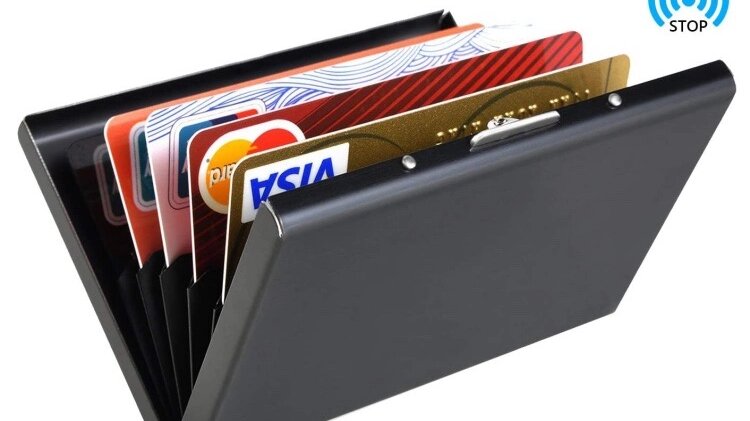
RFID blocking is relevant to both categories, but it should be communicated precisely. Some contactless cards and identity documents use radio-frequency communication. A conductive metal enclosure or a properly engineered shielding layer can reduce unwanted wireless reads when the item is inside the wallet.
However, RFID protection is not a replacement for safe payment behavior. Users should still monitor account alerts, protect PINs, inspect suspicious payment terminals, and report lost cards quickly. A wallet cannot prevent magnetic-stripe skimming, phishing, theft after the wallet is opened, or fraud caused by a compromised merchant system.
For OEM brands, the responsible approach is to specify testing conditions: what is shielded, how the product is tested, and under which conditions the result applies. Avoid vague claims such as "blocks all theft." Clear claims build trust and support better E-E-A-T signals than exaggerated security language.
Use this five-step decision process:
1. List the items carried on a normal day. Count active cards, cash, keys, ID, and transit documents—not the cards sitting unused at home.
2. List the items carried on a real trip. Add a passport, boarding pass, foreign currency, hotel cards, receipts, and emergency documents.
3. Choose the access priority. If a user repeatedly presents one card, a quick-access EDC layout is logical. If the user handles several documents, organization is more important.
4. Choose the carry location. A front-pocket metal wallet and a bag-carried travel wallet solve different ergonomic problems.
5. Test the worst-case load. Insert the thickest realistic combination, fold the cash users actually carry, and check whether the closure, cards, and seams remain secure.
A frequent mistake is buying one oversized wallet to cover every possible situation. For many users, the most practical system is two wallets: an EDC metal wallet for daily life and a separate travel wallet for international trips. Each product remains slim because it is optimized for its own mission.
For brands, wholesalers, and product developers, "travel wallet" and "EDC metal wallet" should be treated as different product briefs. A useful development workshop can follow this sequence:
- Define the persona: frequent flyer, digital nomad, business traveler, urban commuter, outdoor user, or minimalist professional.
- Map the moment of use: airport security, hotel check-in, subway gate, café payment, client meeting, or weekend walk.
- Set measurable requirements: card count, passport fit, folded-cash size, target weight, closure cycles, surface finish, and packaging dimensions.
- Prototype the interaction: observe how quickly users retrieve a card, replace it, and close the wallet with one hand.
- Validate the claims: check dimensions, material names, RFID performance, coating adhesion, corrosion resistance, and strength before mass production.
This scenario-based method creates better products and better content. Instead of saying "premium and convenient," a brand can explain who the wallet is for, what it holds, and why each feature exists.
Gstar Technology (Shenzhen) Co., Ltd. is a direct OEM and ODM factory serving overseas brands, wholesalers, and product manufacturers. Our product scope includes custom Ridge-style metal wallets, RFID card holders, ultra-thin wallets, genuine leather wallets, key organizers, keychains, PSA card slabs, and anti-collision strips.
For metal wallet projects, our capabilities include aluminum, titanium, stainless steel, and carbon-fiber options, along with CNC machining, metal stamping, surface finishing, laser engraving, color customization, mold development, and packaging support. This gives brands a practical path from concept to production rather than forcing them to coordinate separate suppliers.
Our development process is designed to reduce avoidable risk:
1. Review the 3D file, dimensions, materials, and functional brief.
2. Optimize the structure for manufacturability and assembly.
3. Produce a prototype for checking size, card fit, screw alignment, and hand-feel.
4. Confirm the pre-production sample, finish, logo, elastic tension, and packaging.
5. Run mass production with material inspection, process checks, assembly control, and final inspection.
The same principle applies to travel wallets. We can help develop passport compartments, leather or textile constructions, internal RFID layers, logo treatments, and retail-ready packaging around a brand's target market.

Choose a travel wallet when the journey requires passport protection, document organization, multiple currencies, and secure storage. Choose a daily carry EDC metal wallet when the priority is minimal bulk, durable construction, fast card access, and disciplined everyday carry.
For brands planning a new collection, do not force one wallet to serve both jobs. Contact Gstar Technology to discuss your target user, card capacity, materials, RFID requirements, surface finish, logo, prototype, and packaging. Our OEM and ODM team can help turn a clear use scenario into a consistent, market-ready wallet program.
Usually not for international travel. It may carry payment cards and folded cash, but it normally does not organize a passport, boarding documents, receipts, or several currencies as efficiently as a travel wallet.
No. RFID performance depends on the construction and whether a shielding layer or conductive enclosure is included. Brands should verify the finished product and state the protection scope clearly instead of assuming every travel wallet blocks RFID signals.
The practical number depends on card thickness and the retention system. A brand should test the wallet with embossed cards, non-embossed cards, and a mixed load. A smaller, realistic capacity often produces better comfort and faster access than an inflated maximum.
They can be comfortable when the edges are rounded, the thickness is controlled, and the weight matches the user's routine. Poor edge finishing, excessive card capacity, or carrying the wallet in a rear pocket can reduce comfort.
Request a technical drawing, material specification, prototype, sample approval record, logo and color standard, packaging details, quality plan, RFID test information where applicable, and clear acceptance criteria for scratches, coating, assembly, and card fit.
Yes. Gstar supports OEM and ODM development for metal, leather, and RFID wallet categories, including design optimization, materials, colors, logos, molds, functional accessories, prototypes, and packaging.
1. [Gstar Technology — Custom Ridge Wallet Manufacturer & Factory]. Product materials, Ridge-style wallet development, OEM/ODM services, prototyping, manufacturing process, and quality-control information.
2. [Gstar Technology — China RFID Wallet Manufacturer and OEM Factory]. RFID wallet product categories, CNC machining, metal stamping, surface finishing, logo customization, testing, and factory capabilities.
3. [National Institute of Standards and Technology — Guidelines for Securing Radio Frequency Identification (RFID) Systems]. RFID technology, privacy risks, security controls, shielding, testing, and risk-management principles.
4. [Federal Trade Commission — Watch Out for Card Skimming at the Gas Pump]. Practical information about magnetic-stripe skimming, suspicious card readers, account monitoring, and reporting compromised cards.
5. [U.S. Department of State — Design and Security of Our Documents]. Passport and passport-card security features, including the use of RFID readers for certain border-control applications.
6. [Wirecutter — The Best Wallets and Cardholders]. Product-testing criteria related to materials, construction, capacity, organization, durability, and everyday usability.
7. [Carryology — 8 Card-Sized EDC Essentials That Fit Your Wallet]. EDC usage scenarios, front-pocket carry, card-sized tools, and the relationship between compactness and functionality.
Hot Tags: China, Global, OEM, private label, manufacturers, factory, suppliers, manufacturing company


