

Views: 220 Author: Princee Lee Publish Time: 05-20-2026 Origin: gstartec


Content Menu
>> 3. Cash
● A Better Wallet Setup by Lifestyle
● RFID Protection and Security
● What Industry Buyers Should Consider
● Expert Tips for a Smarter Wallet
● How Gstar Technology Supports Wallet Brands
● Final Buying and Packing Advice
● CTA
● FAQ
>> 1. What is the minimum I should keep in my wallet?
>> 2. Should I carry all my cards in my wallet?
>> 3. Is an RFID wallet necessary?
>> 4. What should I never keep in my wallet?
>> 5. What kind of wallet is best for daily carry?
>> 6. How often should I clean out my wallet?
A well-packed wallet should do one job extremely well: help you carry the right essentials without adding bulk, risk, or daily frustration. At Gstar Technology (Shenzhen) Co., Ltd., we work with global brands, wholesalers, and manufacturers to design wallet products that balance storage, security, and comfort for real-life use.
If you have ever asked "what to put in a wallet?", the answer is not "everything you own." The best wallet setup is lean, intentional, and matched to how you actually live.

What you carry affects more than convenience. It influences how fast you can pay, how easy it is to find your cards, how safe your identity is, and even how long your wallet lasts.
A crowded wallet can cause:
- Slower access to cards and cash.
- More wear on leather, stitching, and card slots.
- Higher risk if your wallet is lost or stolen.
- Unnecessary back-pocket discomfort.
From a product design view, this is exactly why minimalist wallets, RFID card holders, ridge-style wallets, and ultra-thin leather wallets have become so popular.
The best everyday wallet contents usually fall into five categories:
Keep only the ID you use most often.
- Driver's license or state ID.
- Work badge if it is required daily.
- One backup ID only if you truly need it.
Most people only need a few cards.
- One primary credit card.
- One debit card.
- One transit card or access card if applicable.
A small amount of cash is still useful.
- Keep a few bills for tips, emergencies, or small vendors.
- Avoid storing large amounts unless necessary.
These are items you use regularly to get through the day.
- Building access card.
- Hotel key card while traveling.
- Insurance card when needed.
- Business card or one contact card.
Keep these small and practical.
- A folded emergency contact note.
- One medical alert card if relevant.
- A spare key only if your wallet is designed for it.
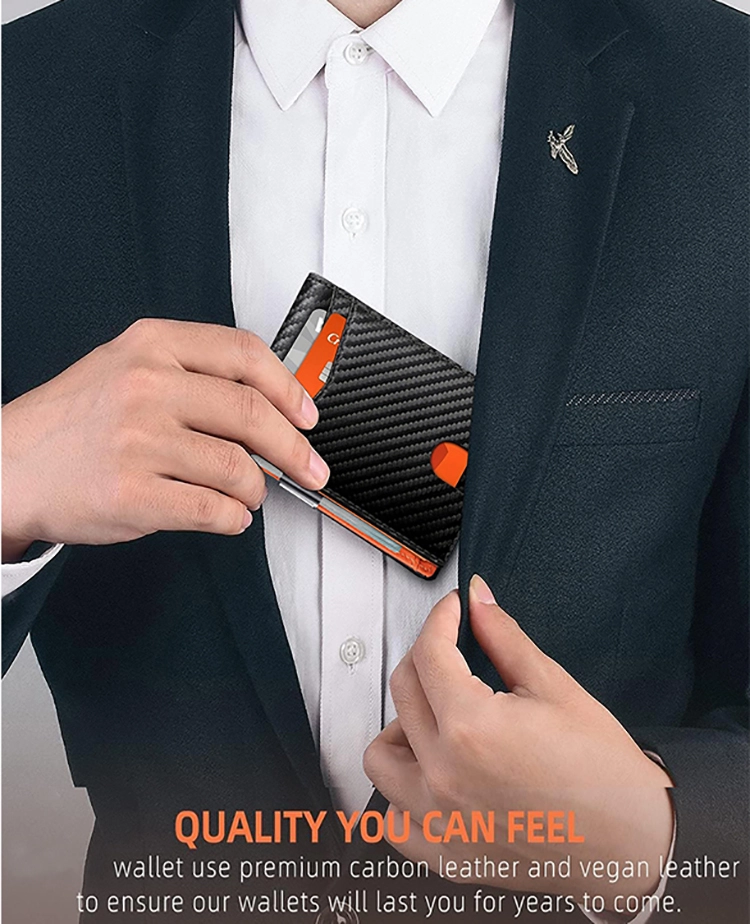
A smarter wallet is often a lighter wallet. Many items are better stored at home or in a secure digital form.
Do not routinely carry:
- Social Security card.
- Passport.
- Extra credit cards.
- Receipts you do not need.
- Family photos in large stacks.
- Store loyalty cards you rarely use.
- Spare coins or random paper notes.
A simple rule works well: if you would not need it today, do not carry it today.
Different users need different wallet loads. A student, a traveler, and a business executive will not carry the same set of items.
| User type | Best wallet contents | Ideal wallet style |
|---|---|---|
| Minimalist user | ID, 1–2 cards, small cash | Slim wallet, RFID card holder |
| Office professional | ID, payment cards, access card, business card | Leather wallet, ultra-thin bifold |
| Traveler | ID, passport copy, travel card, emergency cash | Travel wallet, zip wallet |
| Outdoor or commuter user | ID, transit card, payment card, key | Ridge wallet, key organizer |
| Brand buyer / retailer | Market-specific contents based on target audience | OEM custom wallet line |
This is one reason OEM wallet development matters. The best-selling wallet is not always the biggest one. It is the one that solves a specific daily-use problem.

Modern wallets are not just about storage. They are also about protection.
RFID-blocking wallets and card holders are designed to reduce the risk of unauthorized scanning in certain scenarios. While not every consumer needs RFID protection, many buyers now expect it as a useful feature, especially for travel, commuting, and card-heavy daily carry.
For brands, this creates a clear content and product opportunity:
- Explain the security benefit in plain language.
- Avoid exaggerated claims.
- Match RFID features to real customer use cases.
- Offer the feature only where it supports the product story.
From an OEM and wholesale perspective, wallet contents should influence product design. If your customer only carries three cards and one ID, a bulky wallet is a poor fit. If they need fast access to several cards, a well-structured ridge wallet or slim card holder performs better.
When developing products, ask:
1. How many cards does the target user carry?
2. Do they prefer cash or card-first use?
3. Is RFID protection important in their market?
4. Do they need a key slot, money clip, or coin area?
5. Is the buyer looking for leather, aluminum, or hybrid materials?
At Gstar Technology, this user-centered approach helps brands create wallets that look premium while staying functional in daily use.
A practical wallet should be reviewed regularly. What worked last year may be unnecessary today.
Try this simple routine:
1. Empty your wallet completely.
2. Remove expired cards, old receipts, and duplicate cards.
3. Keep only daily essentials.
4. Test whether your wallet feels comfortable in a pocket or bag.
5. Replace worn wallets before stitching, slots, or clips fail.
This small habit improves both usability and product lifespan.
Gstar Technology (Shenzhen) Co., Ltd. specializes in OEM and ODM manufacturing for RFID wallets, card holders, slim wallets, leather wallets, key organizers, PSA card bricks, bumper guards, and related accessory products.
For brand owners, wholesalers, and manufacturers, this matters because:
- We can tailor wallet structure to customer behavior.
- We support material choices based on market positioning.
- We help brands balance aesthetics, function, and cost.
- We design products for real-world daily carry, not just catalog photos.
In short, the right wallet contents should inspire the right wallet design.

If you want the simplest answer to what to put in a wallet, start with this:
- One ID.
- One or two payment cards.
- A little cash.
- One access or emergency item if needed.
Everything else should earn its place. A wallet should make life easier, not heavier.
For brands and distributors, that same principle should guide product development: build wallets around real everyday carry habits, and your product will feel more useful, more premium, and more sellable.
If you are developing a new wallet line, RFID card holder, or slim carry accessory, partner with an OEM factory that understands both product engineering and user behavior. Gstar Technology can help you turn a simple wallet concept into a market-ready product line.
The minimum is usually one ID, one payment card, and a small amount of cash. This keeps your wallet light and easy to use.
No. Carry only the cards you use regularly. Extra cards increase bulk and can make a wallet less secure and less comfortable.
Not always, but it is useful for many users who travel, commute, or want an added layer of card protection. It is a strong selling point for modern wallet products.
You should avoid carrying your Social Security card, passport, large amounts of cash, and unnecessary receipts. These items are better stored securely elsewhere.
A slim wallet, RFID card holder, or ridge wallet is often best for daily carry. The right choice depends on how many cards, cash, and access items you use.
A monthly check is ideal. Remove expired cards, old receipts, and anything you no longer need to carry every day.

1. Gstar Technology (Shenzhen) Co., Ltd. — Company overview and OEM/ODM product positioning: [https://www.gstartec.com]
2. AARP — Guidance on what to remove from a wallet and why reducing wallet clutter improves security and usability: [https://www.aarp.org/money/scams-fraud/worst-things-to-keep-in-wallet/]
3. TopRank Marketing — E-E-A-T overview and practical content credibility guidance: [https://www.toprankmarketing.com/blog/eeat-seo-google-guidelines-experience-expertise-authority-trustworthiness/]
4. Moz — E-E-A-T explanation and trust-building SEO practices: [https://moz.com/learn/seo/google-eat]
5. DFPI — Security-related best practices for digital wallet usage and account protection concepts relevant to modern payment behavior: [https://dfpi.ca.gov/news/insights/whats-in-your-wallet-tips-for-keeping-digital-assets-safe/]
6. Alibaba / TradeWheel company listings — Useful for general market positioning and category reference: [https://gstartec.m.en.alibaba.com], [https://www.tradewheel.com/co/gstar-technology-shenzhen-co-ltd-1746065/]
Hot Tags: China, Global, OEM, private label, manufacturers, factory, suppliers, manufacturing company


