

Views: 218 Author: Princee Lee Publish Time: 03-18-2026 Origin: Princee Lee


Content Menu
● The Evolution of Card Preservation: From Sleeves to Armor
● Why Industrial-Grade Materials Matter
>> The Strength of Aircraft-Grade Aluminum
>> Impact Resistance and Structural Integrity
● Advanced Protective Features of Metal Cases
>> O-Ring Seals and Waterproofing
>> UV Protection and Light Blocker Technology
>> Custom Foam Interior and Shock Absorption
● Security and Theft Deterrence
>> Integrated Locking Mechanisms
● The Aesthetics of Luxury: Style Meets Substance
● Comparing Metal Cases to Traditional Alternatives
>> Metal vs. Plastic (Pelican Style) Cases
>> Metal vs. Graded Card Pouches
● The Logistics of the High-End Hobby: Shipping and Travel
>> The Ultimate Shipping Container
● Maintenance and Care for Your Metal Case
● The Future of Card Security: Smart Cases and Beyond
● Conclusion: The Final Word on Hobby Fortification
>> Related Questions and Answers
The world of high-end collectibles has undergone a radical transformation over the last decade. What was once a niche hobby for children and enthusiasts has evolved into a multi-billion dollar alternative asset class. From the record-breaking sales of T206 Honus Wagner baseball cards to the meteoric rise of vintage Pokémon and Magic: The Gathering rarities, the financial stakes in the card market have never been higher. As these "pieces of cardboard" reach valuations comparable to luxury real estate or fine art, the industry has seen a corresponding surge in the demand for professional grading services. However, even the most prestigious "slabs"—the ultrasonic-welded plastic housings provided by companies like PSA, BGS, and SGC—are not invincible. This realization has birthed a new frontier in hobby security: the Industrial-Grade Metal Protective Case.
To understand the necessity of an industrial-grade metal case, one must first look at the history of card preservation. In the early days, collectors relied on simple PVC "penny sleeves" and top-loaders. While these provided basic scratch resistance, they offered zero protection against structural bending, moisture, or significant impact. The advent of professional grading introduced the "slab," a rigid polycarbonate shell designed to verify authenticity and preserve the card's condition.
While slabs are a massive leap forward, they are far from indestructible. Polycarbonate can chip upon impact, crack if dropped on a hard surface, and is susceptible to UV degradation over time. Furthermore, for the "Whale" collectors—those holding cards worth six or seven figures—a plastic slab is merely the first line of defense. The industrial-grade metal case represents the ultimate evolution in this lineage, moving beyond mere preservation into the realm of absolute fortification.
When we speak of "industrial-grade" in the context of card protection, we are generally referring to materials such as 6061-T6 aluminum, titanium alloys, or reinforced stainless steel. These are not the flimsy tins found in gift shops; these are precision-engineered vaults.

The most common material for premium metal cases is 6061-T6 aluminum. Used extensively in aerospace and marine applications, this alloy offers an exceptional strength-to-weight ratio. It provides the structural integrity needed to withstand hundreds of pounds of pressure without deforming, ensuring that the grading slab inside remains perfectly flat. This is critical because even a slight "torque" or twist on a plastic slab can put pressure on the card edges, potentially causing microscopic damage that could lower its grade or value.
Unlike plastic or fabric-based carrying cases, a metal shell does not compress. If a heavy object falls on a metal case, the energy is distributed across the rigid exterior rather than being transferred to the contents. This "exoskeleton" effect is what separates industrial cases from consumer-grade alternatives. For collectors who travel to shows or ship items across the globe, this structural rigidity provides a level of peace of mind that no amount of bubble wrap can replicate.
An industrial-grade case is more than just a metal box; it is a sophisticated system of environmental and physical security features designed to counteract every possible threat to a card's integrity.
One of the most significant threats to graded cards is humidity. While slabs are "sealed," they are rarely airtight. Fluctuations in moisture can lead to "silvering" on edges or the development of mold and foxing over decades. High-end metal cases typically feature a precision-milled groove equipped with a silicone or EPDM O-ring. When the case is latched, it creates a hermetic seal. Many of these cases are rated to IP67 or IP68 standards, meaning they can be submerged in water for extended periods without a single drop reaching the interior.
Light is a silent killer of vintage cards. UV rays from both the sun and fluorescent lighting can fade the vibrant inks of a 1952 Topps Mickey Mantle or a First Edition Charizard in a matter of months if left exposed. While some grading slabs offer UV resistance, it is rarely 100% effective. A solid metal case provides a total light blackout. By housing a slab within an opaque metal environment, the collector ensures that the card's colors remain as vivid as the day it was printed, effectively pausing the clock on light-related aging.
The interior of an industrial metal case is just as important as the exterior. Most utilize high-density, closed-cell EVA foam. This foam is often laser-cut to the exact dimensions of specific grading slabs (PSA, BGS, or SGC). The goal is "zero movement." If a slab can rattle inside its case, it is at risk of "slab scuffing"—the micro-scratches that occur when plastic rubs against plastic. The foam acts as a shock absorber, dampening vibrations during transit and ensuring the slab remains in a pristine, "gem mint" state.
As the value of cards has risen, so has the risk of theft. Industrial-grade metal cases often incorporate advanced security measures that go far beyond a simple zipper.

Many metal cases feature built-in TSA-approved combination locks or reinforced eyelets for heavy-duty padlocks. Some even incorporate biometric fingerprint scanners. This makes the case not just a protective shell, but a portable safe. For a dealer at a crowded card convention, having a case that can be physically tethered to a table or locked with a high-security key is an essential deterrent against "smash and grab" thefts.
While no case is entirely fireproof for an indefinite period, the thermal mass of a heavy aluminum or steel case provides a significant window of protection. Metal has a much higher melting point than the plastic of a grading slab or the fabric of a traditional bag. Combined with fire-retardant interior foam, an industrial metal case can offer the crucial minutes needed for emergency services to extinguish a fire before the heat reaches the delicate paper of the card inside.
For the modern collector, the presentation is a key part of the experience. An industrial-grade metal case carries a certain "prestige" factor. The weight, the cold touch of the metal, and the precision "clack" of the latches communicate that the contents are of immense value.
The highest quality cases are created through CNC (Computer Numerical Control) machining. This involves carving the case out of a single solid block of metal. This results in a seamless finish with no welds or weak points. The aesthetic result is a sleek, minimalist look that mirrors the design language of high-end tech products or luxury watches.
Many manufacturers offer anodized finishes in various colors—matte black, space gray, or even "gold" finishes. Collectors often choose colors that complement the grading company's labels (e.g., a red anodized case for PSA slabs). Laser engraving also allows collectors to personalize their cases with their logos, names, or the specific details of the "Grail" card housed inside.
To truly appreciate the industrial-grade metal case, one must compare it to the more common storage solutions available on the market.
Polypropylene "Pelican-style" cases are very popular in the hobby. They are excellent for bulk storage and provide great impact resistance. However, they are bulky and lack the "pocket-sized" convenience of a single-card metal vault. Furthermore, plastic can eventually become brittle or warp under extreme heat. Metal offers a more permanent, "heirloom-quality" solution that won't degrade over a lifetime.
Many collectors use "sleeves for slabs"—thin plastic pouches designed to prevent scratches. While these are great for organization within a larger box, they offer zero structural or environmental protection. An industrial metal case is not a replacement for these pouches but rather the final layer of a multi-tiered defense strategy.

For professional dealers and high-stakes investors, "the move" is the most dangerous time for a card. Whether it's flying to a National Sports Collectors Convention or shipping a card for a private sale, the risks are numerous.
Traveling with six-figure cards can be nerve-wracking. A sturdy metal case allows a collector to carry their most valuable assets in a carry-on bag with confidence. Because these cases are designed to be compact, they fit easily into safes or hotel lockboxes. The industrial build ensures that even if the bag is jostled in an overhead bin, the card remains unaffected.
When shipping a card of immense value, "over-packing" is the standard. Using a single-card metal case as the primary shipping vessel inside a larger box is the gold standard of secure logistics. It eliminates the possibility of the package being crushed or pierced during the sorting process at a courier hub.
While the case is designed to be tough, a small amount of maintenance ensures it lasts as long as the card it protects.
1. O-Ring Lubrication: To maintain a perfect waterproof seal, the silicone O-ring should be lightly lubricated with silicone grease every year or two. This prevents the rubber from drying out and cracking.
2. Cleaning the Exterior: Anodized aluminum is very resistant to fingerprints, but a simple wipe-down with a microfiber cloth is usually all that's needed. Avoid abrasive cleaners that could scratch the finish.
3. Inspecting the Foam: Over many years, foam can begin to compress. Periodically checking that the fit remains "snug" ensures the slab continues to receive maximum shock absorption.
As technology advances, we are seeing the first glimpses of "Smart" industrial cases. Future iterations may include:
* GPS Tracking: Integrated LoRaWAN or cellular trackers to locate a case anywhere in the world.
* Environmental Monitoring: Sensors that sync to a smartphone to report the internal temperature and humidity of the case in real-time.
* Digital Authentication: NFC tags embedded in the metal that link to a digital twin or blockchain record of the card's provenance.
These innovations will further cement the metal case as an essential tool for the modern "alternative asset" manager.
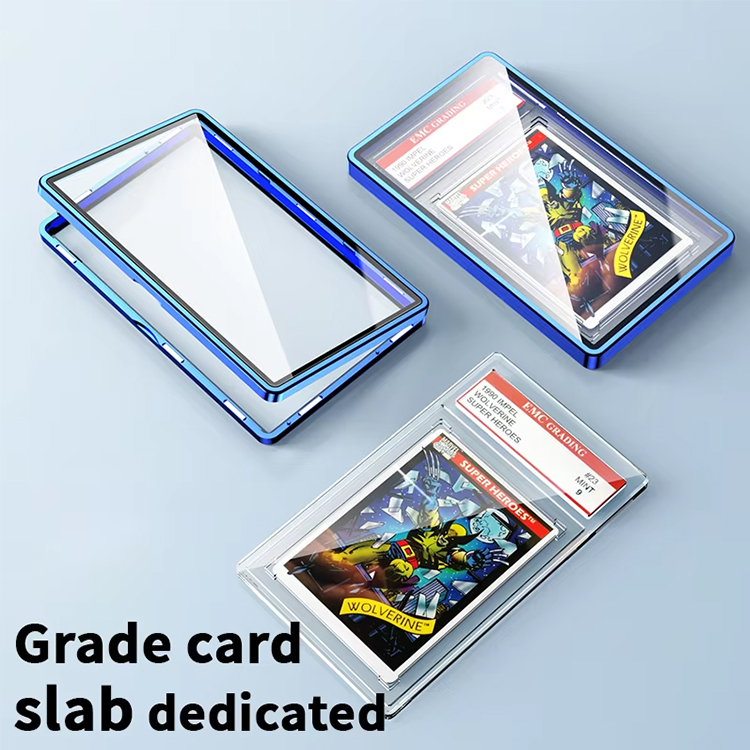
In the high-stakes world of sports and TCG collecting, the condition is everything. A single microscopic "ding" on a corner can result in a loss of thousands, or even tens of thousands, of dollars. The industrial-grade metal protective case is not merely an accessory; it is an insurance policy. It addresses every vulnerability of the standard grading slab—structural weakness, UV exposure, moisture, and theft.
For the casual collector, a metal vault may seem like overkill. But for those who hold the history of the hobby in their hands—the rare, the vintage, and the iconic—nothing less than industrial-grade protection will suffice. It is the ultimate expression of respect for the hobby and a commitment to ensuring that these cultural artifacts survive for generations to come. By investing in high-quality metal housing, collectors are not just protecting "cards"; they are preserving value, history, and a legacy that transcends the cardboard itself.
Q1: Will a metal case scratch my grading slab?
A1: No, provided the case is designed correctly. High-quality metal cases use custom-fit, high-density foam interiors that grip the slab firmly. Because the slab is held in place by soft foam and does not touch the metal walls directly, there is no risk of scratching. In fact, by preventing the slab from moving, the case protects it from the "micro-scratches" common in looser storage methods.
Q2: Are these cases heavy and difficult to carry?
A2: While heavier than plastic, most single-card metal cases made from aluminum weigh between 8 to 15 ounces. They are designed to feel substantial and "premium" without being a burden. They fit easily into a jacket pocket or a small messenger bag, making them ideal for transport at card shows.
Q3: Can I take an industrial metal card case through airport security?
A3: Yes. Aluminum and titanium are standard materials for electronics and luggage. However, since the case is dense and opaque, TSA agents may want to open it to inspect the contents during X-ray screening. It is always recommended to keep the case in your carry-on rather than checked luggage to ensure the safety of the card.
Q4: Do these cases fit all grading companies like PSA, BGS, and SGC?
A4: Most industrial metal cases are "universal" or come with interchangeable foam inserts. Because PSA and SGC slabs have different dimensions than the thicker BGS slabs, you should ensure the case you purchase specifies compatibility with your specific brand of slab to ensure a "snug" fit.
Q5: Is it worth buying a metal case for a card worth less than $500?
A5:** This depends on your personal preference. While the protective benefits apply to any card, the cost of a high-end industrial metal case (often $50–$150) is usually justified for "investment-grade" cards. If you plan to hold the card for decades or travel with it frequently, the peace of mind may be worth the investment regardless of the card's current market value.


