

Views: 258 Author: Princee Lee Publish Time: 03-14-2026 Origin: Princee Lee


Content Menu
>> The Evolution of Trading Card Protection
>> Material Science: The Aluminum Advantage
>> Understanding Magnetic Closure Systems
>> UV Protection and Ink Longevity
>> Aesthetic and Customization Trends
>> Compatibility: PSA, BGS, and Beyond
>> Performance Testing: Drop and Scratch Resistance
>> Market Impact for High-Value Collectibles
>> Installation and Maintenance Guide
>> Environmental Impact of Protection Solutions
>> The Psychological Value of "Double-Slabbed" Cards
>> Conclusion
>> Related Questions and Answers
The world of trading card collecting has undergone a seismic shift over the last few decades. What began as a childhood hobby centered around flipping baseball cards or playing matches of Pokémon and Magic: The Gathering has transformed into a sophisticated, multi-billion-dollar global asset class. As the financial stakes of card collecting have risen, so too has the demand for advanced preservation technology. This evolution led to the birth of the Metal Magnetic Grading Card Protector Case, a premium solution designed for those who view their collections as both historical artifacts and financial investments.
In the early days, cards were simply kept in shoeboxes or rubber-banded together. As collectors realized the impact of condition on value, the industry introduced soft "penny sleeves" and rigid "toploaders." The 1990s saw the rise of third-party grading services like PSA (Professional Sports Authenticator) and BGS (Beckett Grading Services), which encapsulated cards in sonic-welded plastic slabs. While these slabs provided a standard for condition, they were not indestructible. Plastic is prone to scratching, yellowing over time, and cracking if dropped. The metal magnetic protector case emerged as the next logical step—a "shield for the shield" that adds a layer of heavy-duty protection and aesthetic refinement to the standard grading slab.
At the heart of the metal magnetic grading card protector case is high-grade material engineering. Most premium cases are constructed from aerospace-grade aluminum, often the 6061 alloy, which is celebrated for its exceptional strength-to-weight ratio. This choice of material is not merely for show; aluminum provides a structural rigidity that plastic simply cannot match. Unlike TPU or rubber bumpers, which may absorb some impact but can warp or degrade, a metal frame remains dimensionally stable under pressure.
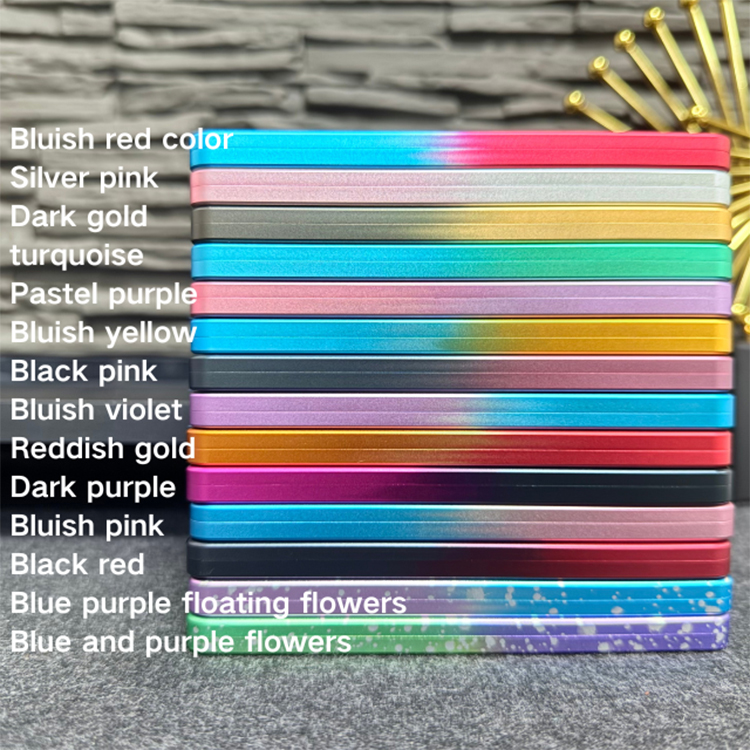
The manufacturing process often involves CNC (Computer Numerical Control) machining, where a solid block of aluminum is precisely carved to fit the specific dimensions of a PSA, BGS, or SGC slab. This ensures a "perfect fit" that prevents the card from rattling inside, which is crucial for preventing internal wear. Furthermore, the surface is typically finished through anodization—an electrochemical process that converts the metal surface into a decorative, durable, corrosion-resistant, anodic oxide finish. This allows for a variety of vibrant colors, from "Metallic Rainbow" to sleek "Phantom Black," without the risk of the paint chipping or peeling onto the grading slab.
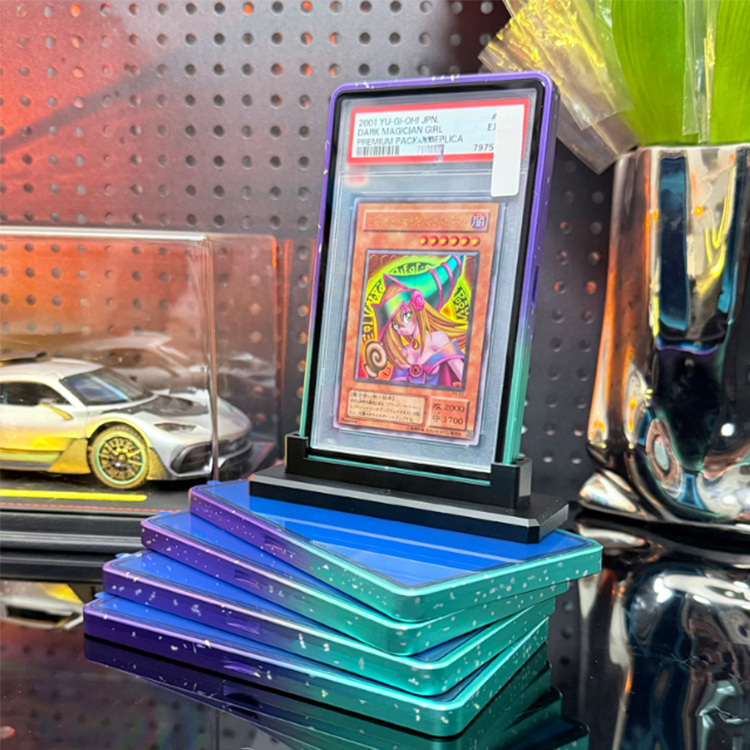
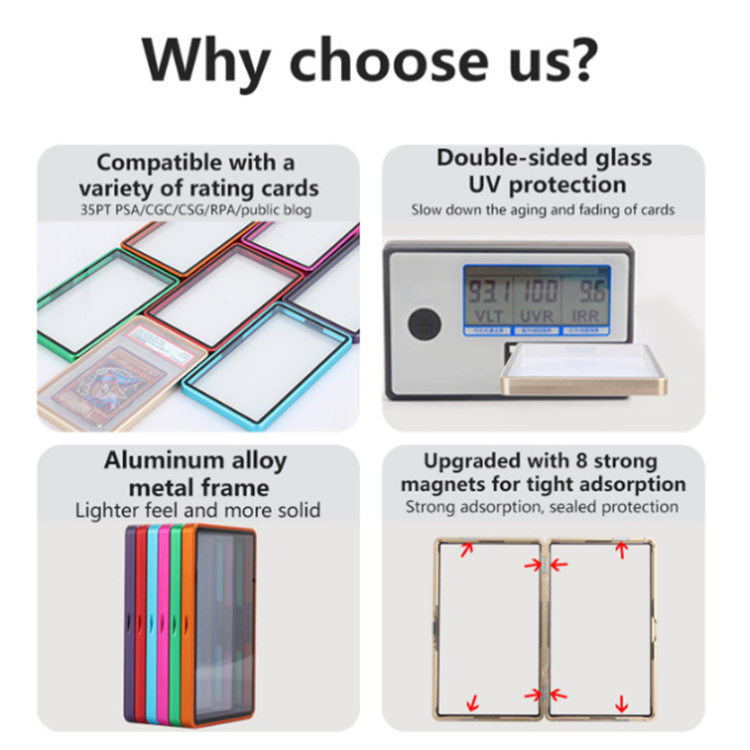
The "magnetic" aspect of these cases refers to the closure mechanism that secures the two halves of the frame together. Unlike traditional "One-Touch" holders that might use a single magnet or a screw, high-end metal protectors utilize multi-point magnetic systems. Often featuring four or more neodymium (rare earth) magnets placed at the corners, these cases offer a secure seal that can withstand significant force while remaining easy to open for the owner.
Neodymium magnets are preferred because they maintain their magnetic strength over decades and provide a satisfying "click" that signals a secure lock. The pull force is engineered to be strong enough to prevent the case from opening during a fall, yet calibrated so that it won't interfere with any electronic components nearby. This magnetic design eliminates the need for screws, which can be overtightened and crack the case, or snap-fits that wear out over time. It provides a seamless, flush look that emphasizes the card within rather than the hardware holding it.
One of the most silent yet deadly threats to a high-value card is ultraviolet (UV) light. Over time, exposure to natural sunlight or even certain indoor lighting can cause the vibrant inks on a card to fade and the paper stock to become brittle. While standard plastic slabs offer some basic UV resistance, they are often not fully optimized for long-term light exposure. Metal magnetic protectors frequently incorporate specialized high-aluminum glass or acrylic inserts that offer 99% or higher UV protection.
By filtering out harmful wavelengths, these cases act as a sunblock for the card. This is particularly important for cards with signatures or those featuring holographic foils, as these elements are highly susceptible to light damage. For serious collectors who wish to display their cards in well-lit rooms or near windows, the UV-blocking capability of a metal protector is not an optional feature—it is a necessity for preserving the card's "Gem Mint" status for future generations.
Beyond protection, the metal magnetic card case is a lifestyle statement. The hobby has shifted toward "personalizing" one's collection. A standard clear plastic slab looks the same as every other slab, but a metallic frame can complement the artwork of the card. For instance, a gold-colored metal case can highlight the gold foil on a rare Pokémon card, while a team-color matched aluminum frame can make a sports card "pop" in a display.
Customization has reached a point where artists and third-party companies are creating "sealed inserts" or extended art backgrounds that sit within the metal frame, effectively turning a single card into a miniature framed masterpiece. This trend has seen massive growth on platforms like TikTok and Instagram, where "slab reveals" and "display setups" are highly viral. The metallic finish adds a premium "heft" to the card, making it feel more like a piece of high-end jewelry than a piece of cardboard.
A major challenge in the card protection market is the lack of standardization among grading companies. A PSA slab has different dimensions and corner radii than a BGS or SGC slab. Therefore, manufacturers of metal magnetic protectors must offer specific versions tailored to each company's design.
- PSA (Professional Sports Authenticator): These are the most common slabs. Metal protectors for PSA usually feature slim profiles to maintain the sleek nature of the original holder.
- BGS (Beckett Grading Services): BGS slabs are thicker and heavier. Metal cases for these must be robust enough to hold the weight while providing the same level of magnetic security.
- SGC and CGC: Known for their distinct aesthetics (like SGC's "Tuxedo" look), these slabs require precision-cut metal frames that don't obscure the labels or the black borders.
High-quality cases will specify exactly which grading brand and "pt"
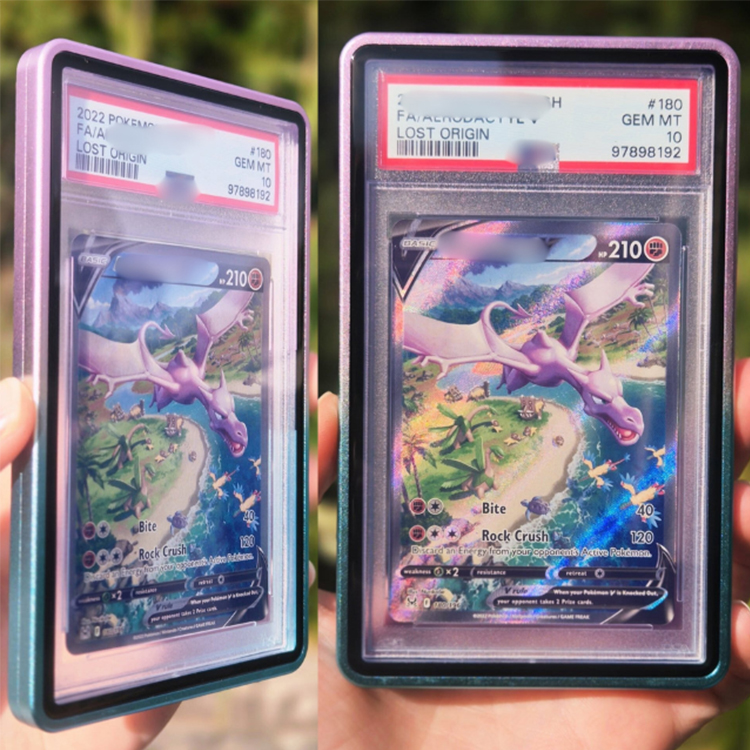
The primary functional goal of these cases is to survive real-world accidents. Drop tests are a standard benchmark for quality. Leading brands often tout a "1.5-meter drop test" survival rate, where the metal frame absorbs the energy of the impact, preventing the inner plastic slab from cracking or the sonic weld from breaking. This "crumple zone" effect is a major upgrade over naked plastic slabs, which often shatter upon impact with hard surfaces like tile or concrete.
Scratch resistance is another critical factor. While the metal itself is quite hard, the "anodized" layer provides a surface that resists the scuffs and swirls common on plastic. Some cases even utilize "high aluminum glass" on the front and back, which is significantly harder than the acrylic used in standard slabs. This means that even after years of being handled, stacked, or moved in and out of storage, the card remains visible through a crystal-clear window, maintaining its visual appeal without the need for constant polishing or re-slabbing.
In the world of high-end collectibles, perception is often tied to protection. When a card is sold for five or six figures, the buyer expects it to be treated with the utmost care. Using a metal magnetic protector case signals to potential buyers and fellow collectors that the owner has spared no expense in preservation. This can indirectly support the value of the card by ensuring the slab remains in "pristine" condition.
Furthermore, these cases have created a secondary market for "slab accessories." Collectors are no longer satisfied with just the card; they want the "full kit." This has led to the development of specialized storage cases—like Pelican-style hard cases—specifically designed to hold metal-protected slabs. The "metal magnetic" segment has become a hallmark of the "serious" collector, distinguishing them from the casual hobbyist.
Using a metal magnetic protector case is straightforward, but it requires a careful touch to avoid the very damage it is meant to prevent.
1. Clean the Slab: Before installation, use a microfiber cloth to remove any dust or fingerprints from the grading slab.
2. Align the Inserts: If the case uses separate glass or acrylic panels, ensure they are free of lint.
3. Seating the Slab: Gently place the slab into the recessed area of the metal frame. Some collectors prefer using a thin "perfect fit" sleeve over the slab before putting it into the metal case to act as a buffer against potential metal-on-plastic friction.
4. Closing the Magnets: Allow the top half of the case to click into place. Do not force it; if there is resistance, the slab may not be seated correctly.
5. Maintenance: Periodically wipe the metal frame with a damp cloth. Avoid harsh chemicals that could damage the anodized finish or seep into the magnets.
As the hobby grows, so does the conversation around sustainability. Plastic slabs are made of petroleum-based products and are difficult to recycle. Aluminum, however, is one of the most recyclable materials on Earth. While the initial carbon footprint of mining and refining aluminum is higher than plastic, the longevity and recyclability of a metal case make it a more "circular" product in the long run. A well-made metal protector can last a lifetime, whereas plastic protectors often yellow, crack, and end up in landfills. Many manufacturers are now looking into using recycled aluminum to appeal to the eco-conscious collector.
There is a distinct psychological comfort that comes with "double-slabbing" a card. Collectors often experience anxiety regarding the safety of their most valuable pieces. The weight of the metal in the hand provides a sense of security that plastic lacks. This "premium feel" is a significant driver of sales in the hobby. It transforms the experience of holding a card from a delicate, fragile act into one of handling a sturdy, high-value asset. The tactile feedback of the magnets and the cool touch of the metal contribute to the overall enjoyment of the hobby, reinforcing the pride of ownership.
The Metal Magnetic Grading Card Protector Case represents the pinnacle of modern card preservation. By combining material science, precision engineering, and aesthetic flair, it addresses the three main concerns of any collector: durability, light protection, and visual presentation. While it was once considered a niche luxury, it is rapidly becoming a standard for anyone holding high-value graded assets. Whether you are a fan of sports cards, Pokémon, or rare TCGs, the metal magnetic protector ensures that your "holy grail" remains protected against the elements, accidents, and the passage of time. As the hobby continues to mature, we can only expect these cases to become even more sophisticated, further bridging the gap between card collecting and fine art preservation.
Q1: Will a metal magnetic case damage my original grading slab?
A: If designed correctly, no. However, there is a risk of metal-on-plastic friction if the fit is loose. It is highly recommended to use a "perfect fit" slab sleeve as a buffer between the plastic slab and the metal frame to prevent micro-scratches.
Q2: Does the metal case affect the authenticity or grade of the card?
A: No, the metal case is an external protector. The grading company's original sonic seal remains intact inside. It does not change the grade, but it helps preserve the physical condition of the slab itself, which can affect the resale value.
Q3: Are these cases waterproof?
A: Most are "weather-resistant" or "splash-proof" rather than fully waterproof. While the metal and glass protect against spills, the magnetic seal is not usually airtight. If submerged, water could potentially seep in.
Q4: Can I use these for raw (ungraded) cards?
A: Most are specifically sized for graded slabs. However, some brands offer "raw card" versions or "sealed inserts" that allow you to fit an ungraded card securely inside a metal frame designed for a PSA-sized opening.
Q5: Why are metal cases more expensive than plastic bumpers?
A: The cost is driven by the materials (aluminum vs. plastic) and the manufacturing process (CNC machining and anodization vs. injection molding). Metal cases offer superior UV protection and impact resistance that basic TPU bumpers cannot provide.


