

Views: 255 Author: Princee Lee Publish Time: 04-10-2026 Origin: Princee Lee


Content Menu
>> 1. The Foundation: Why Design Structure Matters More Than Aesthetics
>> 2. The Criticality of the Sampling Process: Testing Feasibility
>> 3. Mastering Mold Making and Tooling Precision
>> 4. Preventing Failures: A Proactive Quality Assurance (QA) Strategy
>> 5. Advanced Industry Insights: Bridging the Communication Gap
>> Conclusion
>> References
>> FAQ
For global brands and independent labels, the journey from an initial sketch to a finished leather wallet is a high-stakes endeavor. At Gstartec Co., Ltd., we have witnessed firsthand that the difference between a market-leading product and a costly production failure lies in the precision of the OEM process. Many designers focus solely on aesthetics, but the structural integrity, sampling accuracy, and the technical nuance of mold making are where products are truly made or broken.
This guide provides a deep dive into the technical landscape of leather manufacturing, offering actionable strategies to prevent common pitfalls before you commit to bulk production.
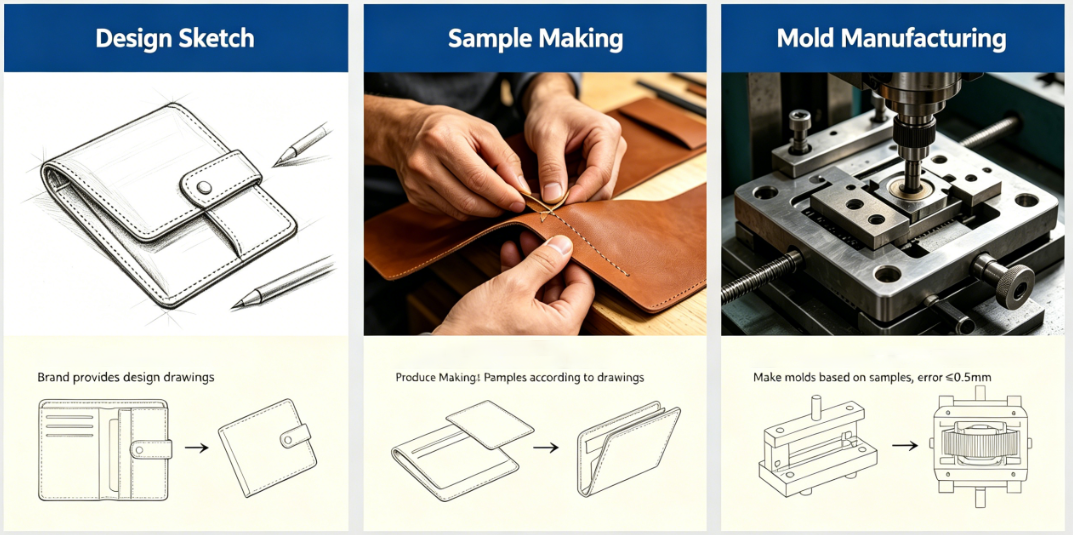
A wallet is not just a fashion accessory; it is a mechanical assembly. A design that looks perfect on a 2D screen often fails when subjected to the physical reality of folding, stitching, and daily wear.
* The Anatomy of Failure: Most structural failures originate from three core oversights:
* Material Thickness Neglect: Designers often treat leather as a two-dimensional plane. In reality, every fold, pocket, and gusset adds thickness. Failing to account for "leather build-up" results in a wallet that cannot close properly or is impossibly bulky .
* Improper Seam Allowance: If your seam allowances are too thin, the leather fibers will tear under the tension of a sewing machine needle.
* Stress Point Miscalculation: The corners and the points where card slots meet the main body are prone to delamination.
* The Strategy: Design for Manufacturing (DFM):
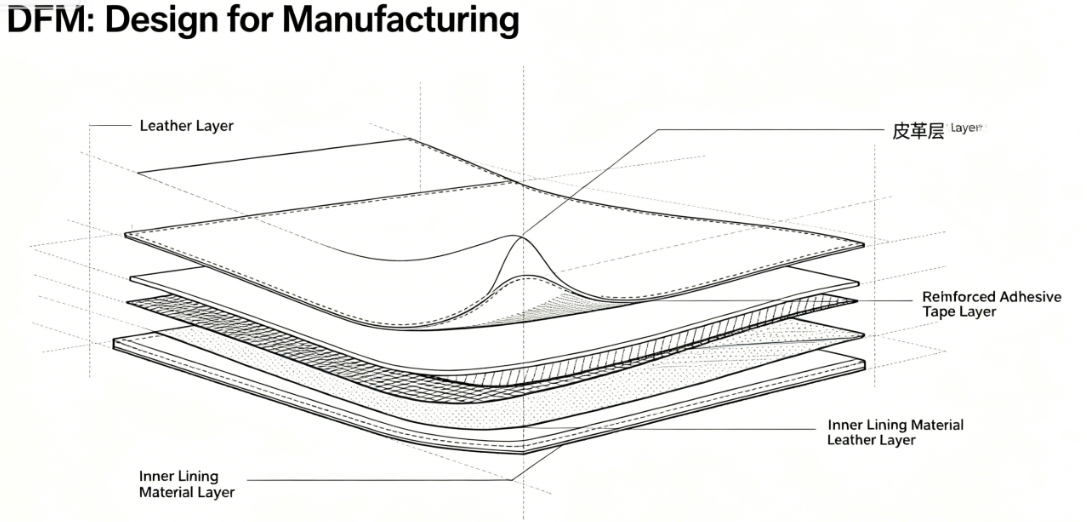
Before finalizing any files, adopt a DFM mindset. Ensure your technical drawings include a cross-sectional view that accounts for every layer of leather, reinforcement tape, and lining material. Simplifying your design—reducing unnecessary curves or multi-layered folds—not only lowers production costs but exponentially increases the structural reliability of the end product .
Sampling is the final barrier between a prototype and a profitable product line. It is not merely a "check for looks"—it is a forensic test of your design's viability.
| Sample Stage | Key Objective | Risk if Skipped |
|---|---|---|
| First Prototype | Concept and Proportion | Inability to identify major ergonomic flaws early |
| Second/Refinement Sample | Functionality and Fit | Failure to fix "tightness" issues or pocket depth |
| Golden Sample | Production Standard | Mass production deviates from the agreed quality |
* The Golden Sample Protocol: The Golden Sample is the most critical document in your production contract. It must be produced on the actual factory floor, using the exact machine settings and raw materials that will be used for your bulk order. If the factory cannot produce a "Golden Sample" that is replicable, you have no baseline for quality control.
* Stress Testing: During the sampling phase, we encourage clients to subject the product to "real-world" abuse. Do not just look at the wallet; fill it with cards, flex it repeatedly, and expose it to different levels of humidity to observe how the edges and stitching react.

For high-end molded leather goods, mold making is the heartbeat of consistency. When the shape of a wallet relies on pressure molding, even a 0.5mm variance in the mold can cause the leather to stretch unevenly, resulting in an "off-balance" appearance .
* Technical Challenges:
* Material Fatigue: Molds made from low-grade materials will wear down over hundreds of cycles. As the mold degrades, your product's silhouette changes, leading to "drifting" quality in large batches .
* Thermal Expansion: If your molding process involves heat-setting, the mold must be engineered with thermal expansion coefficients in mind.
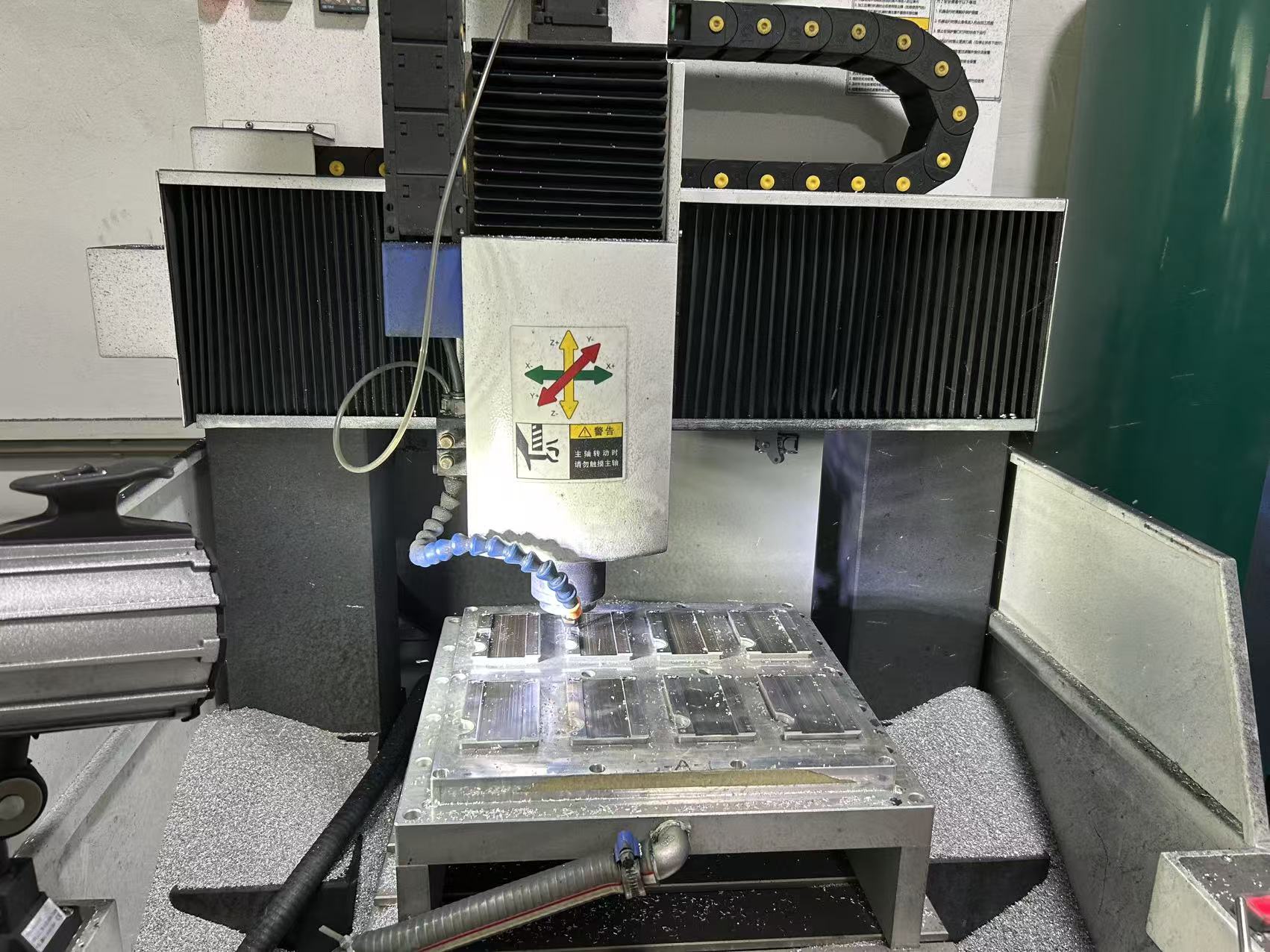
* The Solution: At Gstartec, we utilize CNC-machined steel or high-density aluminum molds to ensure longevity. We advise all our partners to demand a "Tooling Inspection Report," which details the tolerance levels of the molds being used for their production .
Quality is not an inspection step; it is a manufacturing process. Relying on an end-of-line inspection is the fastest way to lose money, as you will likely have already invested in labor and materials for defective units.
* Tiered Inspection Framework:
* Pre-Production (PREP): Check raw leather hides for defects (scars, tick marks, grain variation) before cutting begins. A small oversight here wastes the entire skin.
* During-Production (DUPRO): Inspect components after cutting and after stitching. This is the stage where 80% of preventable defects are caught—such as loose threads, uneven edge painting, or misaligned pockets.
* Final Random Inspection (FRI): Use the AQL (Acceptance Quality Limit) standard to determine if the batch meets your quality threshold.
* Environmental Control: Leather is an organic material. Humidity is its greatest silent enemy. Improper storage during the rainy season can lead to mold, even in treated leathers. Ensure your manufacturer has climate-controlled warehousing to protect your investment .

The most common "human" error in the OEM process is poor communication regarding specifications. Vague terms like "soft leather" or "standard quality" lead to disasters.
* The Technical Specification Sheet (Tech Pack): Your Tech Pack should be a bible. It must include:
* Leather Specs: Tanneries, finish type (aniline, semi-aniline, etc.), and thickness (in mm).
* Hardware Specs: Material composition (brass vs. zinc alloy) and plating durability (salt spray test hours).
* Stitching Specs: SPI (Stitches Per Inch) and thread type (bonded nylon vs. polyester).
* Expert Recommendation: Always provide a "limit sample" for subjective qualities—this is a small sample that shows the *absolute minimum* acceptable quality for color variation or surface texture. This removes ambiguity and gives both the manufacturer and the brand a clear benchmark.
Success in leather wallet manufacturing is not a matter of luck; it is a result of meticulous planning and proactive risk management. By integrating DFM principles at the design stage, treating sampling as an essential feasibility study, and maintaining rigid control over your tooling and QC protocols, you can transform your creative vision into a durable, profitable reality.
Gstartec Co., Ltd. is committed to this level of transparency and technical rigor. Are you ready to elevate your production standards? Contact our expert team today to discuss your next project and receive a professional design audit.
- [1] [Leather Crafts International - OEM & Private Label Process](https://www.leathercraftsinternational.com/oem-private-label)
- [2] [Singyoung Leather - From Perfect Sample to Flawed Bulk](https://www.singyoungbag.com/from-perfect-sample-to-flawed-bulk-what-went-wrong/)
- [3] [APEX Leather Goods - Importance of Quality Control in Manufacturing](https://apexleathergoods.com/the-importance-of-quality-control-in-leather-goods-manufacturing-for-b2b-buyers)
- [4] [First Source Worldwide - Managing Defects on Leather](https://www.fsw.cc/managing-defects-on-leather-to-maximize-yield-and-reduce-rejects/)
- [5] [Miller Fabrication Solutions - 2 Ways to Prevent Defective Part Setbacks](https://millerfabricationsolutions.com/blog/2-essential-ways-an-oem-supplier-prevents-defective-part-setbacks/)
- [7] [Mold Technology - 5 Major Challenges in Mold Manufacturing](https://moldtechnologyeg.com/5-major-challenges-in-mold-manufacturing/)
---
1. What is the most frequent cause of failure in leather wallet OEM?
Ignoring manufacturability at the design stage. Designs often fail because they don't account for leather thickness, causing bulkiness or stress fractures .
2. Is skipping the "Golden Sample" worth the saved time?
No. Skipping the Golden Sample is the single highest-risk action in manufacturing. It is the only way to prove the product can be made consistently at scale [leathercraftsinternational](https://www.leathercraftsinternational.com/oem-private-label).
3. How do I ensure color consistency across my leather wallets?
Request a "Standardized Leather Batch" from the tannery and use "Limit Samples" to define the range of acceptable color deviation for your production run [v-trust](https://www.v-trust.com/en/industries/softline-product/leather-goods-quality-control).
4. How often should molds be calibrated in high-volume production?
Molds should be inspected for wear every 500-1,000 units to ensure that dimensional accuracy hasn't drifted due to material fatigue .
5. Why should I care about "During-Production" (DUPRO) inspections?
They allow you to fix issues (e.g., stitching tension) while the production line is active, preventing an entire batch of thousands of units from needing to be scrapped or reworked [maharya](https://www.maharya.com/insight/how-to-ensure-quality-leather-accessories-manufacturing).


