

Views: 255 Author: Princee Lee Publish Time: 04-07-2026 Origin: Princee Lee


Content Menu
>> 1. The Durability Face-Off: Resilience vs. Character
>>> Metal Wallets: Engineering for Permanence
>>> Leather Wallets: Aging with Elegance
>> 2. Market Positioning: Modern Minimalism vs. Classic Heritage
>> 3. The Cost Perspective: Price vs. Investment
>> 4. Tech Integration: The Rise of the AirTag Wallet
>> 5. Deep Dive: Digital Security and RFID
>> FAQ: Frequently Asked Questions
>> References
In the modern landscape of Everyday Carry (EDC), the wallet is more than a utility; it is a declaration of personal style and technological preference. As we enter 2026, the long-standing debate between metal wallets and leather wallets has reached a tipping point. Whether you are a minimalist tech-enthusiast or an admirer of heritage crafts, choosing the right material is essential for balancing security, aesthetics, and longevity.
At Gstartec Co., Ltd., we understand that today's consumer demands both style and substance. With the rise of smart, trackable accessories, this comparison—Metal Wallets vs. Leather Wallets: Durability, Cost, and Market Positioning Compared—explores which material aligns best with your lifestyle.

Durability remains the cornerstone of consumer decision-making. However, "durability" means different things depending on the material.
Typically crafted from aerospace-grade aluminum, titanium, or carbon fiber, metal wallets are built for industrial-grade resilience.
- Structural Integrity: These wallets are rigid. They will not lose their shape, tear, or stretch over time, regardless of how many cards you force into them.
- Environmental Resistance: Metal is virtually immune to heat, water, and humidity, making it ideal for harsh outdoor environments or active lifestyles.
- The Trade-Off: While they are physically robust, they are prone to surface aesthetic damage. Keys, coins, and drops on concrete will leave scratches and dings, which some users view as "battle scars," while others find them unappealing.

Full-grain leather is a natural material that evolves. It is not designed to be "indestructible" in the same sense as metal, but rather to be "renewable."
- The Patina Factor: Unlike metal, which degrades in appearance through scratches, high-quality leather develops a patina—a rich, lustrous sheen that grows more beautiful with use and contact with natural oils.
- Flexibility: Leather offers a tactile, organic feel that adapts to your body. It flexes with your pocket, avoiding the rigid discomfort some experience with metal alternatives.
- The Trade-Off: Leather requires maintenance—conditioning, protection from extreme water, and careful handling to prevent fraying stitching or structural stretching over decades.
Your choice of wallet is often a reflection of how you navigate your professional and personal world.
| Feature | Metal Wallets | Leather Wallets |
|---|---|---|
| Aesthetic | Modern, Tech, Industrial | Traditional, Sophisticated, Organic |
| Primary Audience | Tech-enthusiasts, Minimalists | Professionals, Heritage lovers |
| Tactile Experience | Cold, rigid, mechanical | Warm, soft, evolving |
| Versatility | Excellent for urban/outdoor use | Perfect for formal/casual settings |
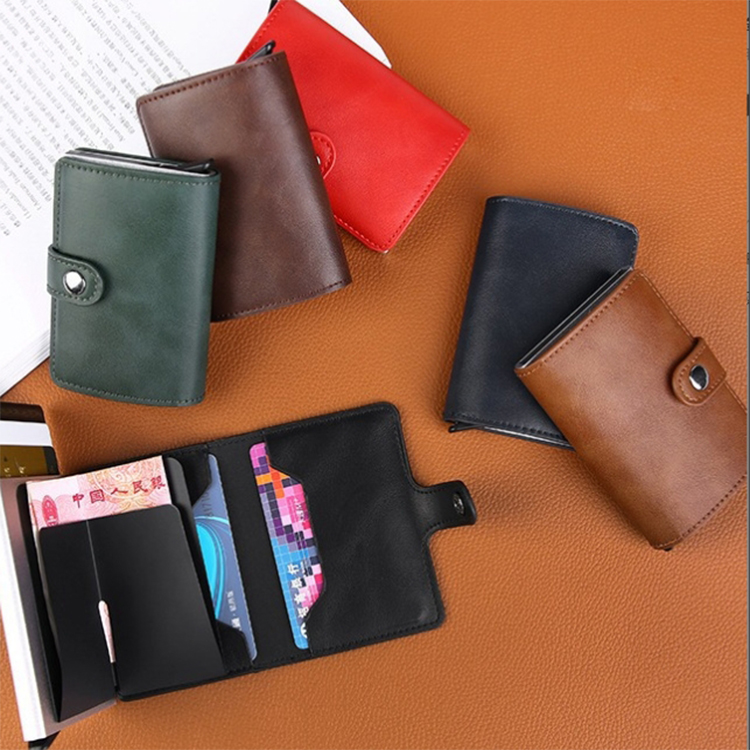
- Metal Wallets (The Tech Professional): Positioned for those who prioritize efficiency, slimness, and a modern aesthetic. They often feature pop-up card mechanisms or modular designs, appealing to users who treat their EDC as a set of optimized tools.
- Leather Wallets (The Traditional Sophisticate): Positioned for those who value heritage and tactile luxury. A leather wallet is a classic accessory that transitions seamlessly from casual Friday attire to a boardroom suit, maintaining a standard of elegance that metal simply cannot mimic.
When analyzing value, it is essential to consider the cost-per-use over a 5–10 year horizon.
- Initial Cost: Cheap mass-produced leather (or PU/Synthetic leather) often fails within a year. Conversely, low-quality metal wallets may have fragile mechanical hinges or elastic straps that snap.
- Value Investment: Investing in high-grade materials—whether it is a titanium metal wallet or a full-grain vegetable-tanned leather wallet—always yields better long-term value.
- Replacement Cycle: A premium leather wallet, properly maintained, can last 10–25 years.
Regardless of material, the 2026 market is defined by the integration of tracking technology. At Gstartec, we see this as the most significant innovation in recent years.
Losing a wallet is a major disruption. An integrated AirTag holder transforms your wallet into a smart, discoverable asset.
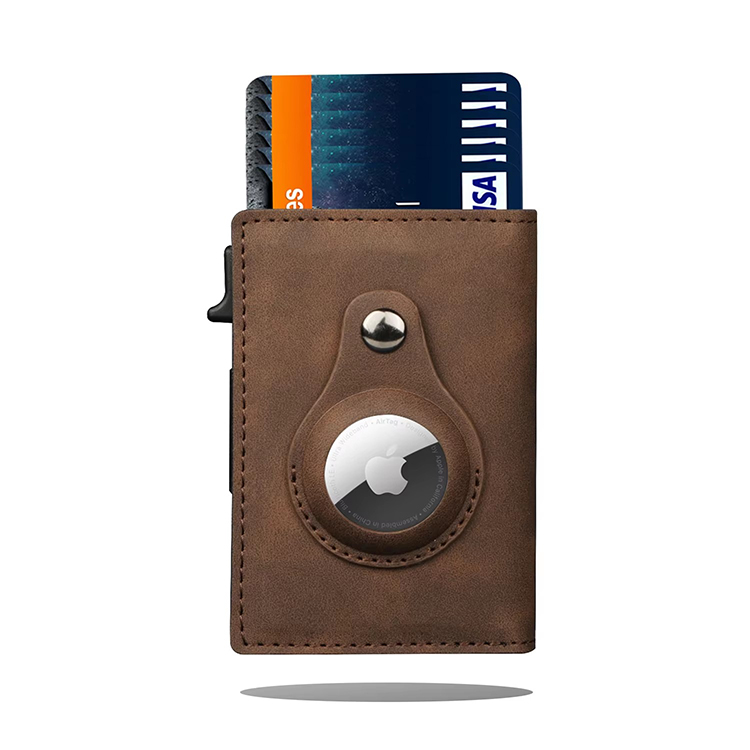
- Metal Wallets with Trackers: Usually feature a precision-cut slot or a dedicated cash strap that accommodates the AirTag, keeping the wallet slim and tactical.
- Leather Wallets with Trackers: Often hide the tracker in an internal pocket or a dedicated, discrete leather-stitched slot, preserving the wallet's clean, minimalist look.
*Pro Tip: For signal strength, leather is slightly more "transparent" to radio frequencies, though modern metal wallets are engineered to ensure the AirTag signal remains fully functional through apertures.
The myth that *only* metal blocks RFID is one of the most persistent misconceptions in the industry.
- How Metal Blocks RFID: By creating a Faraday cage, metal materials naturally interfere with electromagnetic signals, preventing remote "digital pickpocketing".
- How Leather Handles RFID: Modern high-quality leather wallets are now often lined with conductive fabric or metal mesh, providing the exact same RFID-blocking security as metal wallets without sacrificing the soft, classic feel of leather are inherently secure due to tokenization. RFID blocking is more of a "peace of mind" feature than a critical security necessity, but it remains a highly demanded feature by consumers in 2026 .
2. Choose a Leather Wallet if: You appreciate the tactile sensation of natural materials, want a wallet that evolves into something uniquely "yours" over time, and value a style that fits both casual and professional environments.
At Gstartec Co., Ltd., we continue to bridge the gap, crafting high-quality leather wallets with smart, integrated tech solutions that offer the security of modern engineering and the timeless luxury of premium leather.
Q1: Which wallet is objectively more durable?
*A: Physically, metal wallets are more resistant to extreme environmental damage (heat, water) and blunt force. However, in terms of lifespan, high-quality full-grain leather, with proper conditioning, can easily last over a decade, often aging better than the surface of a metal wallet.
Q3: Does leather or metal hold an AirTag better?
*A: Both are excellent. Metal wallets usually provide a rigid, secure "click-in" fit for the AirTag .
Q4: Can I fix a leather wallet if it stretches?
*A: Unlike metal, which cannot be reshaped, leather has natural elasticity. While you cannot "undo" significant stretching, you can often mitigate it by conditioning the leather to maintain its structural integrity.
Q5: Which is better for a gift?
*A: Leather is generally considered the "safer" and more classic gift choice because of its universal appeal, especially when it is high-quality full-grain leather that features a personal touch like an integrated tracker.
1. [Metal vs Leather Wallets: Which is the Better Choice? (GeoGrit)](https://www.geogrit.com/blogs/gear/metal-vs-leather-wallet-which-is-better)
2. [Advantages of Leather Wallets: Durability & Elegance (Geometric Goods)](https://geometricgoods.com/blogs/news/advantages-of-leather-wallets-compared-to-other-materials)
3. [Are Metal Wallets Good? Pros & Cons (Ekster)](https://www.ekster.com/blogs/the-journal/pros-and-cons-of-a-metal-wallet)
4. [Overview of Wallet Materials: From Leather to Metal (FOSH)](https://shopfosh.com/blogs/insights/evolution-of-wallet-materials-leather-vs-metal-wallets)
5. [The Ultimate Guide to Wallet Built-in AirTag Holders (Gstartec)](https://www.gstartec.com/the-ultimate-guide-to-wallet-built-in-airtag-holders-combining-modern-tracking-with-timeless-design.html)
6. [Why Professionals Prefer Leather Wallets Over Metal/PU (Hestern)](https://hestern.us/blogs/news/why-professionals-prefer-leather-wallets-over-metal-pu-wallets)
7. [The 11 Best AirTag Wallets in 2025, Tested (Men's Health)](https://www.menshealth.com/technology-gear/g40940884/best-airtag-wallet/)
8. [Leather vs. Metal RFID Wallets—Why I'll Never Go Back (Popular Mechanics)](https://www.popularmechanics.com/adventure/outdoor-gear/a66052446/metal-vs-leather-rfid-wallet/)
9. [How Leather Wallets Age: Why Full-Grain Gets Better Over Time (R10)](https://www.r1092.com/blogs/journal-entries/how-leather-wallets-age)
10. [The RFID Blocking Card: Here's What You Need to Know (Popov Leather)](https://www.popovleather.com/blogs/from-the-workshop/rfid-blocking-cards-here-s-what-you-need-to-know)
11. [How Long Should a Men's Wallet Last? (Forrest & Harold)](https://forrestandharold.com/blogs/news/maximizing-durability-how-long-should-a-mens-wallet-last)
12. [Do You Really Need an RFID-Blocking Wallet? (AARP)](https://www.aarp.org/money/scams-fraud/rfid-wallets-purses/)


