
Views: 233 Author: Princee Lee Publish Time: 03-17-2026 Origin: Princee Lee


Content Menu
>> The Genesis of Professional Grading and the Birth of the Slab
>> The Anatomy and Technical Design of the PSA Slab
>> Understanding the PSA Grading Scale: From Poor to Gem Mint
>> Modern Security Features and the Lighthouse Label
>> The Power of the Population Report
>> The PSA Registry: Gamifying the Collection
>> Why Collectors Prefer the PSA "Slab" Over Others
>> The Economic Impact: The "PSA Premium"
>> Preservation and Long-Term Protection
>> Common Misconceptions and Advice for New Collectors
>> The Future of the Slab: Technology and Expansion
>> Conclusion: The Cultural Icon of the Hobby
>> Frequently Asked Questions (FAQs)
The trading card hobby has undergone a radical transformation over the last few decades, evolving from a casual childhood pastime into a sophisticated multi-billion-dollar investment market. At the heart of this evolution lies a single, iconic object: the PSA slab. Formally known as a Professional Sports Authenticator encapsulated holder, the "slab" has become the universal symbol of authenticity, quality, and value in the world of sports cards, Pokémon, and other trading card games. To understand the modern state of collecting, one must look deep into the anatomy, history, and market influence of this plastic fortress.
Before the early 1990s, the condition of a trading card was entirely subjective. Collectors would describe cards as "Nice," "Sharp," or "Minty," but there was no standardized language to quantify preservation. This ambiguity led to frequent disputes and limited the growth of the high-end market. In 1991, Professional Sports Authenticator was founded to solve this problem by providing third-party, objective assessments of card condition.
The introduction of the PSA slab was a revolutionary step. It was not enough to simply assign a number to a card; that card needed to be permanently paired with its grade in a way that prevented tampering. The solution was a sonically welded, clear plastic case that essentially froze the card in time. This encapsulation protected the card from physical damage while ensuring that the assigned grade remained linked to that specific specimen forever. Over the years, the design of the slab has evolved, but its core purpose remains the same: to provide a "gold standard" for collectors worldwide.
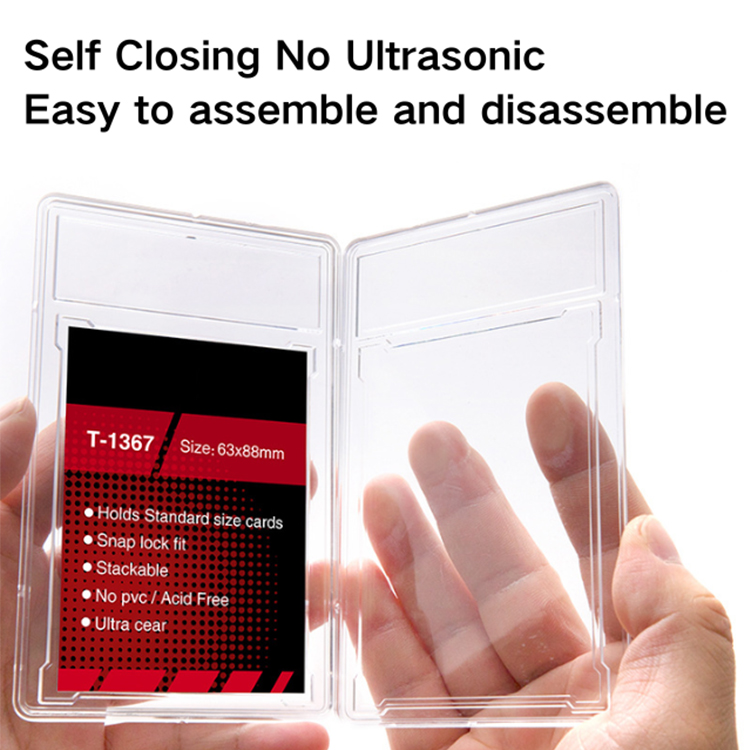
A PSA slab is far more than just two pieces of plastic snapped together. It is a highly engineered piece of equipment designed for archival preservation. The modern slab is composed of high-grade, durable polycarbonate. This material is chosen for its extreme clarity and its ability to resist scratching and yellowing over long periods.
One of the most critical features of the slab is the sonic welding process. Instead of using adhesives or glues, which could potentially off-gas and damage the card's delicate surface, the two halves of the holder are fused together using high-frequency ultrasonic vibrations. This creates a permanent, tamper-evident seal. If someone attempts to "crack" the slab to swap out the card, the plastic will frost, craze, or shatter in a way that makes the tampering immediately obvious to any prospective buyer.
The interior of the slab is designed with a "well" or a set of rails that hold the card securely in place. This prevents the card from sliding around during transport, which could lead to edge chipping or corner wear—a phenomenon often referred to by collectors as "slab shake." The thickness of the slab is also standardized to fit into most storage boxes and display cases, making it the most liquid and easily tradable format in the industry.
The slab is incomplete without the label, which displays the numerical grade assigned by PSA's experts. This scale ranges from 1 to 10, and understanding the nuances of these grades is essential for any serious collector.
A PSA 10, often called "Gem Mint," is the pinnacle of the hobby. For a card to achieve this grade, it must be virtually perfect. This includes four sharp corners, sharp focus, full original gloss, and nearly perfect centering. Even a microscopic flaw visible only under 10x magnification can demote a card to a PSA 9.
As we move down the scale, the requirements relax slightly. A PSA 9 (Mint) might have a minor printing speck or a very slight centering imbalance. PSA 8 (Near Mint-Mint) is often the baseline for "high-end" vintage cards, representing a card that looks beautiful to the naked eye but possesses minor wear on the corners or edges. Lower grades, such as PSA 5 (Excellent) or PSA 3 (Very Good), are common for cards from the early 20th century, where the focus shifts from perfection to simple survival.
The label also includes essential metadata: the year of the card, the manufacturer, the set name, the player or character name, and a unique serial number. This serial number is a digital fingerprint that can be looked up in PSA's database to verify the card's history and authenticity.
Counterfeiting has become an increasing threat as the value of graded cards has skyrocketed. To combat this, PSA has introduced several layers of security technology within the slab. The most prominent update is the "Lighthouse Label," introduced in 2017. This label features a sophisticated holographic strip that creates a "moving" effect when tilted, similar to the security features found on modern banknotes.
In addition to the visual holograms, PSA began integrating Near Field Communication (NFC) technology into its slabs in recent years. This allows collectors to tap their smartphone against the slab to instantly pull up the card's certification page on the PSA website. This digital bridge ensures that the slab in your hand matches the records in the database, making it nearly impossible for fraudsters to sell high-quality "re-slabbed" counterfeits.
The labels also utilize specialized inks and microprinting that are difficult to replicate with standard commercial printers. Every detail, from the font spacing to the color of the red border, is designed to be a verifiable marker of legitimacy.
The value of a PSA-slabbed card is not determined solely by its grade, but by its "population." The PSA Population Report is a public database that tracks exactly how many copies of a specific card have been graded at each level. This data is the lifeblood of the market.
For example, if a modern Pokémon card has a population of 5,000 in PSA 10, its price might remain relatively accessible. However, if a rare vintage card has a population of only 5 in PSA 10, the competition for those five copies can drive the price into the hundreds of thousands or even millions of dollars. The slab provides the medium through which rarity is measured and verified. Collectors use the "Pop Report" to determine the difficulty of finding a perfect version of a card, often prioritizing "low pop" items as better long-term investments.
One of the most brilliant innovations tied to the PSA slab is the PSA Set Registry. This is a competitive platform where collectors can list their slabbed cards to complete "sets." The registry assigns points based on the grade and rarity of the cards, creating a leaderboard for collectors around the world.
This system has created an immense demand for specific slabbed cards. A collector trying to build the #1 ranked 1986 Fleer Basketball set will pay a massive premium for a PSA 10 Michael Jordan rookie card not just for the card itself, but for the points it adds to their registry standing. This "gamification" has turned card collecting into a high-stakes sport, ensuring that PSA slabs remain the most sought-after holders in the ecosystem.
While other companies like Beckett (BGS) and SGC offer grading services, the PSA slab maintains a dominant market share. This preference is often attributed to "liquidity." Because PSA has been the industry leader for over three decades, its grades are the most widely recognized and trusted. When a card is in a PSA slab, it is generally easier to sell on platforms like eBay or through major auction houses.
Furthermore, the aesthetic of the PSA slab is often cited as a reason for its popularity. Its slim profile and clean, red-and-white label design do not distract from the card itself. Unlike thicker holders that might use inner sleeves, the PSA slab provides a "floating" look that many collectors find more visually appealing for display in frames or cases.

The financial implications of slabbing a card can be staggering. A "raw" or un-graded card might sell for $50. If that same card is sent to PSA and returns in a PSA 10 slab, its value could jump to $500 or more. This "PSA Premium" is the driving force behind the massive volume of submissions the company receives every year.
Investors view the slab as a form of insurance. In a market where a single scratch can cost a seller thousands of dollars, the slab provides a guaranteed condition that eliminates the risk for the buyer. This transparency allows the market to function more like a stock exchange, with "bid" and "ask" prices based on the PSA grade rather than individual photos of a card.
Beyond the financial and competitive aspects, the primary function of the slab remains preservation. Trading cards are made of paper, ink, and sometimes chrome or foil coatings—all of which are susceptible to the environment. Moisture can cause cards to warp or grow mold, while UV light can fade vibrant colors over time.
The PSA slab provides a barrier against these elements. While no plastic is 100% UV-proof, the high-quality polycarbonate used in the slab significantly slows down the degradation process. For many collectors, the peace of mind knowing that their childhood treasures are safe from spills, dust, and accidental handling is worth the grading fee alone.
For those new to the world of "slabbing," there are a few important things to keep in mind. First, not every card is worth grading. Because of the costs associated with shipping, insurance, and the grading fee itself, it is usually only worth slabbing cards that are in high-grade condition or hold significant intrinsic value.
Second, the process of "cracking and resubmitting" is a common but risky practice. Some collectors believe a card in a PSA 9 slab deserves a PSA 10 and will break the plastic to send it back in. While this sometimes works, it also risks damaging the card during the removal process. Finally, it is crucial to buy from reputable sellers even when purchasing slabbed cards, as verifying the certification number on the PSA app is a step that should never be skipped.
As we look toward the future, the PSA slab continues to evolve. We are seeing the expansion of grading into new territories, such as tickets, packs, and even video games. The integration of AI in the grading process is also on the horizon, promising even more consistency and faster turnaround times.
Despite these technological shifts, the physical slab remains the anchor. It is the tangible manifestation of a collector's passion. Whether it's a T206 Honus Wagner or a modern-day Shohei Ohtani, the slab ensures that the history of the hobby is protected for the next generation of enthusiasts.

The PSA slab has transcended its role as a mere protective case to become a cultural icon within the collecting community. It represents the intersection of history, art, and finance. By providing a standardized language of quality and a fortress of protection, the slab has allowed the trading card market to flourish and gain legitimacy in the eyes of the world. For the collector, holding a PSA 10 is more than just owning a perfect card; it is about owning a piece of perfection, certified and preserved for eternity. As the hobby grows and changes, the slab will remain the definitive vessel for the world's most cherished collectibles.
Q1: What exactly does "slabbing" a card mean?
A1: Slabbing refers to the process of sending a trading card to a third-party grading service like PSA, where it is authenticated, assigned a numerical condition grade, and then permanently sealed in a tamper-evident plastic holder.
Q2: Can I take a card out of a PSA slab once it is sealed?
A2: While it is physically possible to "crack" a slab using specialized tools, it is not recommended for beginners. Once the slab is opened, the grade is no longer valid, and you risk physically damaging the card. The slab is designed to be a permanent enclosure.
Q3: Does every PSA slab have an NFC chip for verification?
A3: No, only modern PSA slabs (typically those produced from late 2019 onwards) include the embedded NFC technology. However, all PSA slabs feature a serial number and a barcode that can be manually entered into the PSA website for verification.
Q4: Why is a PSA 10 card so much more expensive than a PSA 9?
A4: The price difference, often called the "multiplier," is driven by the difficulty of achieving a perfect grade. Many collectors only want the "best of the best" for their collections or registry sets, and because the Population Report shows that PSA 10s are much rarer than 9s, the market price reflects that scarcity.
Q5: How should I store my PSA-slabbed cards to keep them safe?
A5: Even though slabs are protective, they should be stored in a cool, dry, and dark place. Many collectors use specialized "slab cases" or boxes designed to hold the specific dimensions of the holders. Avoiding direct sunlight is also important to prevent long-term fading of the label or card.
Q6: What is a "qualifier" on a PSA label?
A6: Occasionally, a card might be in perfect condition but have a specific flaw like being significantly off-center (OC) or having a print stain (ST). PSA may assign a high grade but add a qualifier, which usually reduces the market value compared to a "straight" grade without the qualifier.


