

Views: 284 Author: Princee Lee Publish Time: 03-17-2026 Origin: Princee Lee


Content Menu
● The Evolution of Modern Everyday Carry
>> The Shift Toward Minimalism
● The Engineering Behind the Aluminum Alloy Frame
● The Sophistication of PU Leather Accents
>> Ethical and Aesthetic Versatility
● The Functionality of the Card Clasp Mechanism
● Security in the Digital Age: RFID Blocking
>> How Passive Shielding Works
>> Peace of Mind for the Modern Traveler
● Ergonomics and the User Experience
● Durability and Long-Term Reliability
● Style and Versatility: From Casual to Formal
>> Color and Texture Combinations
>> The Professional Impression
● Maintenance and Care for Your Cardholder
● Environmental Considerations and Sustainability
>> The "Buy It Once" Philosophy
● Conclusion: The Ultimate Everyday Companion
>> Related Questions and Answers
In the contemporary landscape of personal accessories, the concept of "Everyday Carry" (EDC) has undergone a radical transformation. Gone are the days when a wallet was merely a bulky pouch of folded leather, bursting at the seams with paper receipts, expired coupons, and a thick stack of embossed plastic. As we move deeper into a digital-first economy, the physical footprint of our essential tools is shrinking, yet the demand for their durability and security is reaching unprecedented heights. This brings us to the pinnacle of modern minimalist design: the Durable Aluminum Alloy Frame with PU Leather Card Clasp.
The minimalist movement is not just an aesthetic choice; it is a functional response to the clutter of modern life. For the professional navigating a high-paced urban environment, agility is key. A bulky wallet in a back pocket is not only uncomfortable but also detrimental to posture and the longevity of clothing. The transition to slim, frame-based cardholders represents a broader shift toward intentional living—carrying only what is necessary and ensuring that what we do carry is of the highest quality.
At the heart of this evolution is the marriage of disparate materials. Aluminum alloy provides the rigid, industrial backbone required for structural integrity and technological security, while PU leather offers the tactile warmth and classic sophistication that metal alone cannot provide. The synergy between these two materials creates a product that feels at home both in the rugged outdoors and in a corporate boardroom.
The choice of aluminum alloy as the primary structural component is no accident. It is a material celebrated in aerospace, automotive, and high-end electronics for its remarkable strength-to-weight ratio. In a cardholder, the frame acts as the exoskeleton, protecting the delicate internal contents from the stresses of daily life.
When we speak of aluminum alloy in the context of high-end accessories, we are often referring to grades such as 6061 or 7075. these alloys are engineered to withstand significant pressure without deforming. In a pocket environment, where a cardholder might be subjected to the weight of a person sitting down or the impact of a fall, the aluminum frame ensures that cards remain flat and unbent. Unlike traditional leather wallets that can soften and lose their shape over time, the aluminum frame provides a permanent, unchanging sanctuary for your financial tools.
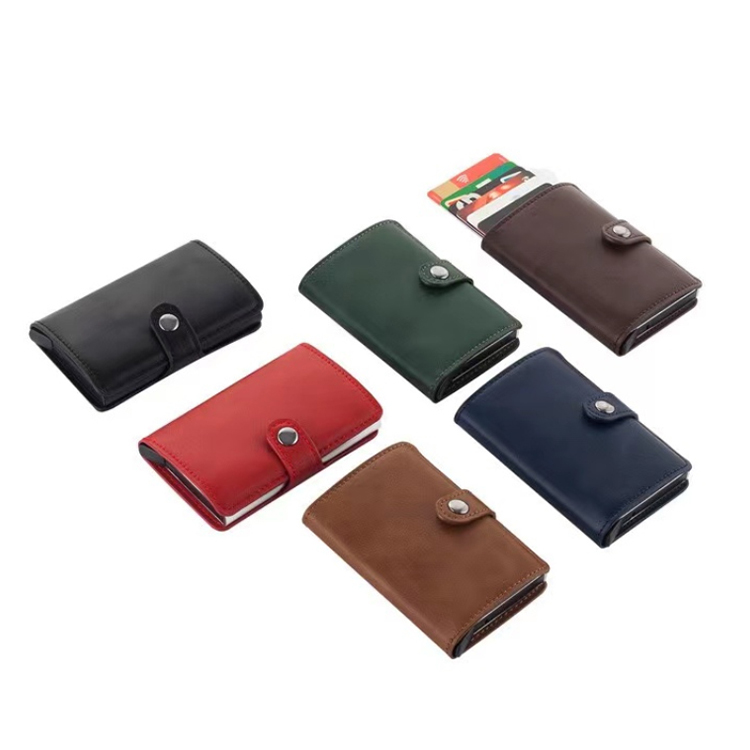
The manufacturing process for these frames involves Computer Numerical Control (CNC) machining. This allows for tolerances measured in microns, ensuring that every edge is smooth and every internal slot is perfectly aligned. This precision is what allows for the "card clasp" mechanism to operate with consistent reliability. The frame is often finished with an anodized coating, which not only provides a variety of deep, metallic colors but also creates a surface harder than the metal itself, resisting scratches and corrosion from sweat or environmental moisture.
While the aluminum frame provides the muscle, the PU leather provides the soul. PU (polyurethane) leather has evolved significantly from the "pleather" of decades past. Today, it stands as a high-performance material that offers specific advantages over animal-based leather in terms of consistency, durability, and ethics.
PU leather is essentially a composite material consisting of a backing fabric coated with a layer of polyurethane. This construction allows for incredible versatility in texture and finish. For a card clasp, PU leather is ideal because it does not stretch out as much as genuine leather over time. This ensures that the clasp maintains its tension, keeping cards secure even after years of use. Furthermore, PU leather is highly resistant to water and stains, making it much easier to maintain for the average user.
As global consumers become more conscious of animal welfare and sustainable manufacturing, the demand for high-quality vegan alternatives has surged. The PU leather used in these cardholders provides the luxury look and feel of top-grain leather without the environmental or ethical baggage of the traditional tanning industry. It allows designers to achieve vibrant colors and precise grain patterns that are uniform across every unit produced, ensuring that every customer receives a product that meets a rigorous aesthetic standard.
The "clasp" is perhaps the most critical mechanical feature of this cardholder. It is the gatekeeper that balances two opposing needs: the need for cards to be held securely so they don't fall out, and the need for them to be easily accessible at a moment's notice.
The card clasp often utilizes a spring-loaded or magnetic tension system within the aluminum frame. When the clasp is engaged, it applies just enough pressure to the stack of cards to prevent movement. This design is a significant improvement over the friction-based card slots of leather wallets, which inevitably loosen as the leather fibers break down. With a mechanical clasp, the force remains constant throughout the life of the product.
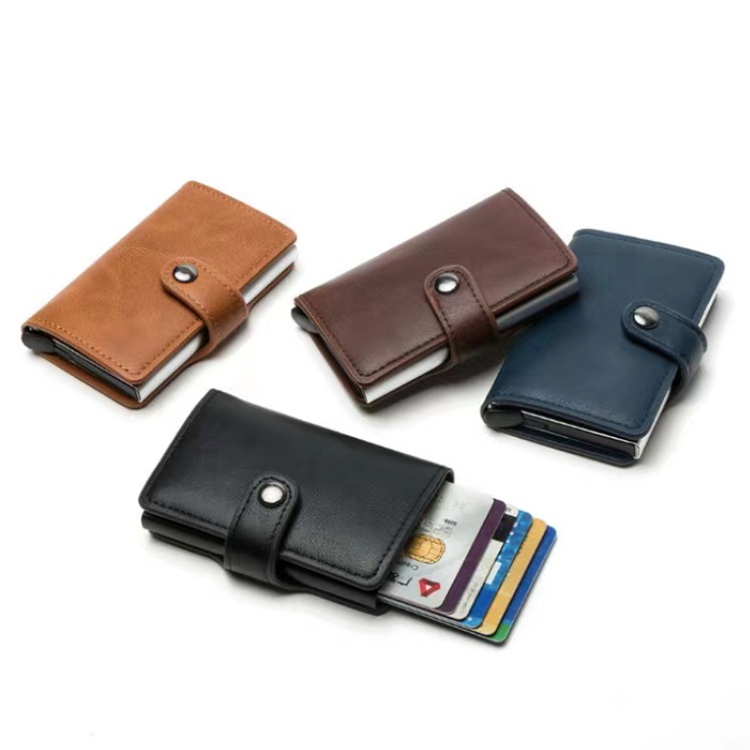
One of the primary joys of using a metal frame cardholder is the "ejection" or "fan" feature that many such designs incorporate. With a simple flick of a switch or a press of the clasp, cards are presented in a staggered fashion, allowing the user to pick the exact card they need without fumbling. This tactile experience—the "click" of the metal and the smooth glide of the cards—adds a layer of sensory satisfaction to a mundane daily task.
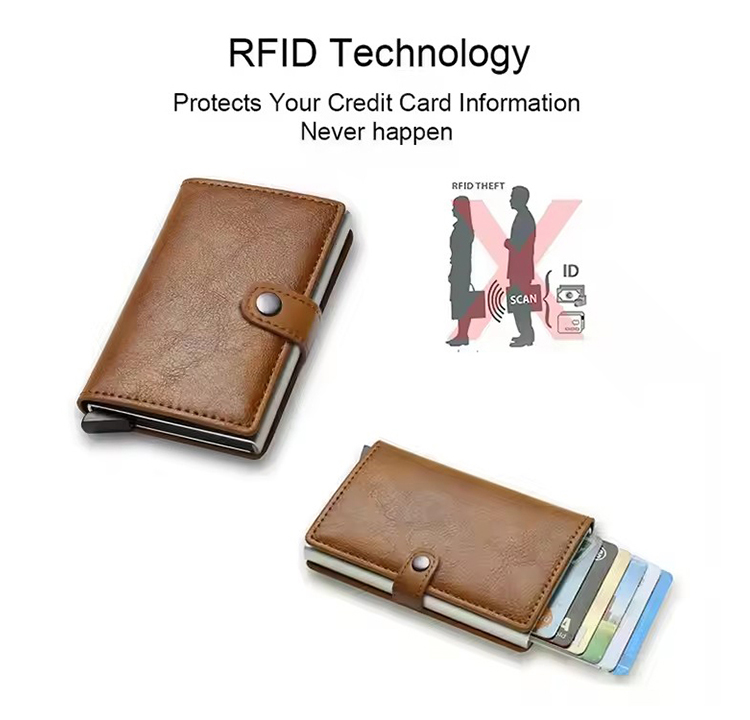
In an era of contactless payments, physical theft is no longer the only threat to your finances. Digital pickpocketing, or RFID skimming, has become a concern for travelers and commuters alike. This is where the aluminum alloy frame moves beyond mere structural support and becomes a functional shield.
RFID (Radio-Frequency Identification) technology relies on electromagnetic waves to transmit data from your card's chip to a reader. Because aluminum is a conductive material, it acts as a "Faraday cage." When your cards are tucked inside the aluminum frame, the metal absorbs and reflects the incoming radio waves from a potential skimmer's device. This prevents the chip in your card from being powered up and transmitting its data, effectively making your cards "invisible" to digital thieves.
While the actual risk of RFID skimming is often debated, the peace of mind provided by a metal-framed wallet is undeniable. Whether you are navigating a crowded subway in Tokyo or standing in line at a busy airport terminal, knowing that your personal information is physically shielded by a layer of aerospace-grade metal allows you to focus on your journey rather than your security.
A product can be technically superior, but if it is not comfortable to use, it will ultimately fail. The design of the Durable Aluminum Alloy Frame with PU Leather Card Clasp is a study in ergonomics.
Designers of these cardholders must walk a fine line between making the device feel substantial and making it too heavy. Aluminum is the perfect candidate because it has a high density of strength but a low physical weight. When placed in a front pocket, the cardholder is almost unnoticeable. The addition of PU leather panels provides a "grip" surface, preventing the metal from being too slippery in the hand, especially in cold or wet conditions.
The "front pocket carry" movement is a direct result of these slim designs. Carrying a wallet in the back pocket is a leading cause of sciatica and lower back pain, as it creates an uneven sitting surface. By switching to a slim aluminum cardholder, users can move their essentials to the front pocket, which is not only better for their health but also significantly safer from traditional pickpockets.
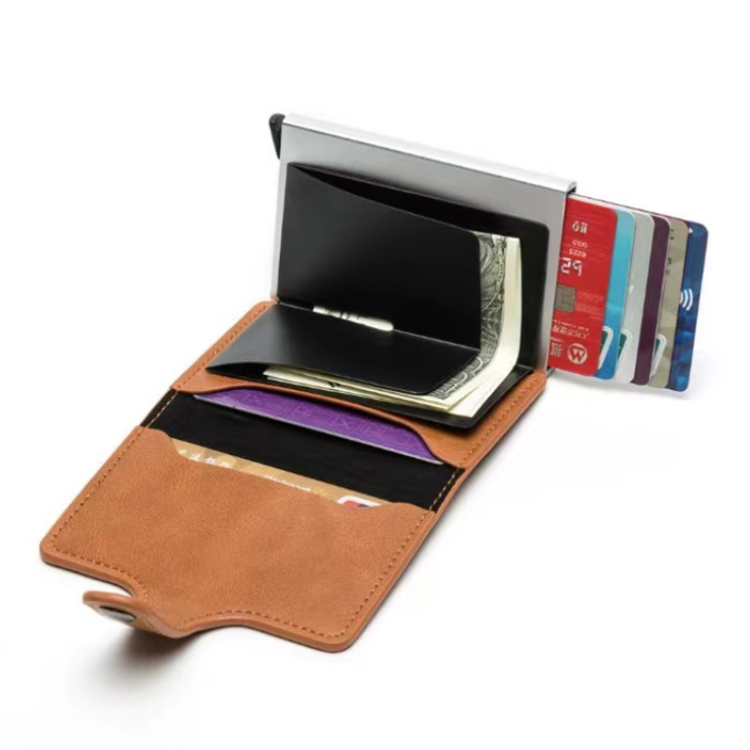
When a consumer invests in a "durable" product, they are looking for a lifespan that is measured in years, if not decades. The combination of metal and synthetic leather is specifically chosen for longevity.
Traditional wallets suffer from "corner wear," where the edges of the leather fray and the stitching comes apart. In an aluminum frame cardholder, the corners are solid metal. They can take bumps against keys, coins, and pavement without losing their integrity. The PU leather components are typically recessed or protected by the frame's edges, ensuring that the "soft" parts of the wallet are not exposed to the highest levels of friction.
Unlike organic leather, which can swell, rot, or crack when exposed to moisture and then dried, aluminum and PU leather are largely indifferent to the elements. If you get caught in a rainstorm or accidentally spill a drink on your cardholder, a quick wipe with a dry cloth is all that is needed. This resilience makes it the ideal companion for hikers, cyclists, and outdoor enthusiasts who need their gear to be as tough as they are.
The aesthetic of the Durable Aluminum Alloy Frame with PU Leather Card Clasp is one of "Technical Luxury." It manages to look futuristic yet grounded in tradition.
The anodization process allows the aluminum frame to be produced in a wide range of colors—from classic space gray and matte black to vibrant blues and reds. When paired with different textures of PU leather—such as carbon fiber weave, Saffiano grain, or a smooth vintage finish—the possibilities for personalization are endless. This allows the user to choose a cardholder that matches their personal style, whether it's a sleek, all-black stealth look or a more classic brown-and-silver combination.
Pulling out a precision-engineered metal cardholder during a business lunch or a networking event makes a statement. It suggests an appreciation for technology, efficiency, and modern design. It is a conversation starter—a piece of "pocket jewelry" that reflects the user's attention to detail.
One of the greatest advantages of this material combination is how little maintenance it requires. However, a few simple steps can keep it looking new for a lifetime.
For the aluminum frame, an occasional wipe with a microfiber cloth will remove fingerprints and oils. If dirt gets into the mechanical parts, a blast of compressed air is usually sufficient to clear it out. For the PU leather, a damp cloth with a tiny amount of mild soap will remove most surface grime. Avoid using harsh chemicals or abrasive cleaners, as these can damage the anodized finish of the metal or the protective coating of the PU leather.
The card clasp is designed for thousands of cycles. To ensure its longevity, avoid overstuffing the cardholder beyond its rated capacity. Most frames are designed for 5 to 12 cards; forcing more can strain the clasp and potentially bend the cards themselves. Proper usage ensures that the spring tension remains perfect for years.
In today's market, durability is a form of sustainability. The "fast fashion" cycle of buying a cheap wallet every year only to have it fall apart and end up in a landfill is an environmental disaster.
By choosing a cardholder made from durable aluminum alloy, you are essentially making a "lifetime" purchase. Aluminum is one of the most recyclable materials on earth, and its durability means that the product won't need to be replaced for a very long time. This reduction in consumption is the most effective way for an individual to reduce their environmental footprint regarding personal accessories.
As the world moves toward mobile payments (Apple Pay, Google Wallet), the number of physical cards we need to carry will continue to decrease. A cardholder that focuses on 5 or 6 essential cards is "future-proofed" for a world where your phone handles the bulk of your transactions, but you still need your ID, a primary credit card, and perhaps a backup transit card.
The Durable Aluminum Alloy Frame with PU Leather Card Clasp is more than just a place to store plastic; it is a testament to the progress of consumer product design. By stripping away the unnecessary bulk of the past and replacing it with the precision of the future, this accessory offers a perfect blend of security, style, and strength. It represents the ideal balance for the modern individual: the cold, unyielding protection of metal softened by the warm, familiar touch of leather. In an uncertain world, having your most vital assets secured in such a well-engineered vessel provides a small but significant sense of order and confidence every time you reach into your pocket.
Q1: How many cards can typically fit in an aluminum alloy frame cardholder?
A1: Most designs are optimized for 5 to 8 standard plastic cards within the internal metal chamber. Some models include external PU leather pockets or expandable backplates that can increase the total capacity to 12 or even 15 cards, though the "quick access" feature usually works best with a stack of 6 cards.
Q2: Will the aluminum frame scratch my phone if they are in the same pocket?
A2: While aluminum is softer than the glass used on most phone screens, the edges of a metal cardholder can potentially scratch a phone's metal frame or plastic back. It is generally recommended to keep your cardholder and phone in separate pockets to maintain the pristine condition of both devices.
Q3: Is the PU leather as durable as "real" leather?
A3: In the context of a cardholder clasp, PU leather is often superior because it does not stretch or "bleed" oils like genuine leather. High-grade PU leather is specifically engineered for high-cycle use and is more resistant to water and environmental factors, making it highly durable for everyday carry.
Q4: Does the RFID blocking feature interfere with transit cards or building badges?
A4: Yes, the aluminum frame will block almost all RFID and NFC signals. If you have a card that you need to "tap" frequently (like a subway pass or office ID), you will likely need to slide it out of the frame slightly or place it in an external pocket that is not shielded by the metal frame.
Q5: What should I do if the card clasp feels loose or tight?
A5: Most high-quality metal cardholders feature small screws (often Torx or Phillips) that allow for minor adjustments. If it feels tight, ensure no debris is stuck inside. If it feels loose, check if any screws need tightening. However, most modern designs are "self-adjusting" based on the number of cards inserted.


