


A MagSafe wallet can make everyday carry simpler by combining a phone-compatible magnetic attachment with convenient card storage. But not every magnetic wallet offers the same level of stability, capacity, protection, or compatibility.
The right choice depends on how you use your phone, how many cards you carry, whether you need RFID protection or a built-in stand, and whether your phone or case supports the required magnetic connection.
This guide explains what to check before buying a MagSafe wallet, how different wallet designs compare, and which features matter most for different types of users.
Quick Answer: What Makes a Good MagSafe Wallet?
A good MagSafe wallet should provide a secure magnetic connection, fit the intended phone or compatible case, hold the required number of cards without excessive bulk, and provide the features you actually need.
For most users, the best starting point is to evaluate these six factors:
Phone and case compatibility
Card capacity
Magnetic stability
RFID protection, if required
Additional functions such as a stand or tracking
Material and construction quality
There is no single MagSafe wallet that is best for everyone. A slim two-card wallet may be ideal for minimalists, while a larger expandable design may be better for users who need to carry several cards.

How to Choose a MagSafe Wallet
Instead of choosing a wallet based only on appearance or a marketing label, start with how you actually use your phone and cards.
1. Check Phone and Case Compatibility
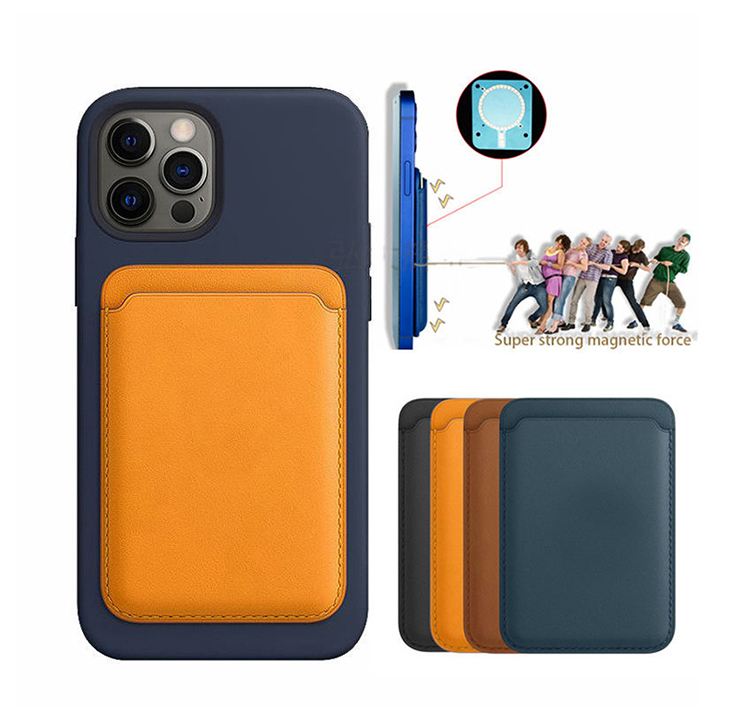
The first question is whether your phone and case provide the magnetic connection required by the wallet.
Devices with native MagSafe compatibility are designed to work with compatible magnetic accessories. Some Android devices and other phones can also use magnetic wallets when paired with a compatible magnetic case or magnetic accessory system.
A standard phone case without the required magnetic structure can significantly reduce the attachment strength of a magnetic wallet.
Before buying, check:
whether your phone supports the relevant magnetic accessory system;
whether your case has a compatible built-in magnetic ring or structure;
whether the wallet manufacturer specifies compatibility with your phone or case;
whether the wallet is intended to be used directly on the phone or through a case.
Important: Do not assume that every phone case will provide the same magnetic holding strength. A thick, soft, or non-magnetic case can change the distance between the wallet and the phone and reduce attachment stability.
2. Choose the Right Card Capacity
Card capacity is one of the biggest differences between MagSafe wallet designs.
A wallet designed for one or two frequently used cards can remain very slim, while an expandable wallet designed for several cards will normally require more space and a different construction.
Instead of asking which wallet holds the most cards, ask how many cards you actually need to carry every day.
General capacity guide
| Daily Card Requirement | Recommended Wallet Type | Main Advantage |
|---|---|---|
| 1–2 cards | Slim MagSafe wallet | Minimal thickness and easy carrying |
| 2–3 cards | Standard MagSafe wallet | Good balance between capacity and slimness |
| Several cards | Expandable or larger-capacity wallet | More storage with increased bulk |
The exact capacity depends on the construction of the individual wallet. Always follow the manufacturer's stated capacity rather than assuming that every MagSafe wallet can hold the same number of cards.
3. Check Magnetic Stability
Magnetic attachment is the defining feature of a MagSafe wallet, so stability matters more than the appearance of the magnet itself.
A well-designed magnetic wallet should remain attached during normal everyday movements while still being easy to remove intentionally.
Magnetic stability can be affected by:
the design and arrangement of the magnetic system;
the distance between the wallet and phone;
the phone case material and thickness;
the weight of the wallet and cards;
the surface area of the contact structure;
how the wallet is used during movement.
This is why magnet grade alone is not enough to judge a wallet. A particular magnet specification does not automatically mean that the complete wallet will have better real-world stability.

4. Decide Whether You Need RFID Protection
RFID protection is useful for users who specifically want shielding for compatible contactless cards, but it should not be assumed that every MagSafe wallet provides it.
If RFID protection is important to you, check whether the specific wallet model includes an RFID shielding structure.
Look for information about:
which card types or frequencies the shielding is intended to address;
whether the shielding covers the relevant card compartments;
whether the manufacturer provides test information;
whether the shielding is maintained when the wallet is fully loaded.
RFID protection should be evaluated as part of the complete wallet construction rather than simply by checking whether the product description contains the words “RFID blocking.”
5. Decide Whether You Need Find My or Tracking Features
Not every MagSafe wallet includes a tracking function.
A basic magnetic wallet simply stores cards and attaches to the phone. Other products may include dedicated tracking hardware or support a particular device ecosystem.
If tracking is important to you, verify the exact feature supported by the specific model rather than assuming that a MagSafe-compatible wallet automatically works with a tracking service.
This distinction is particularly important when comparing ordinary magnetic card holders with smart wallets that include additional electronic components.
6. Choose the Right Material and Construction
Material affects appearance, durability, weight, flexibility, and how the wallet feels during everyday use.
The most common options include leather, synthetic materials, silicone-based constructions, metal or reinforced shells, and combinations of several materials.
The best material depends on your priorities rather than on a single universal ranking.
MagSafe Wallet Types Compared
Different MagSafe wallet designs are intended for different users. Understanding the basic categories makes it easier to narrow down your choice.
Slim MagSafe Wallet
Slim wallets are designed for users who carry only a small number of cards and want to keep the phone as compact as possible.
Best for: minimal everyday carry, commuting, and users who mainly need a small number of frequently used cards.
Main advantage: low bulk.
Main trade-off: limited card capacity.
MagSafe Wallet with Stand
A wallet with a built-in stand combines card storage with hands-free phone positioning.
This design can be useful for watching videos, video calls, desk use, or travel when a separate phone stand is inconvenient.
Best for: users who frequently use their phone in landscape or portrait viewing positions.
Main advantage: combines wallet and stand functions.
Main trade-off: additional structure can increase thickness and weight.
Expandable MagSafe Wallet
Expandable wallets are designed for users who need more card capacity than a conventional slim wallet can provide.
They may use elastic sections, folding structures, multiple compartments, or other expandable constructions.
Best for: users who carry several cards every day.
Main advantage: greater capacity.
Main trade-off: increased thickness and bulk.
Metal or Reinforced MagSafe Wallet
Metal and reinforced-shell wallets are often selected for their rigid structure and modern appearance.
The rigid construction can provide a different level of impact resistance and structural feel compared with soft wallets.
Best for: users who prioritize rigid construction and durability.
Main advantage: structural rigidity.
Main trade-off: potentially greater weight and less flexibility.
Leather MagSafe Wallet
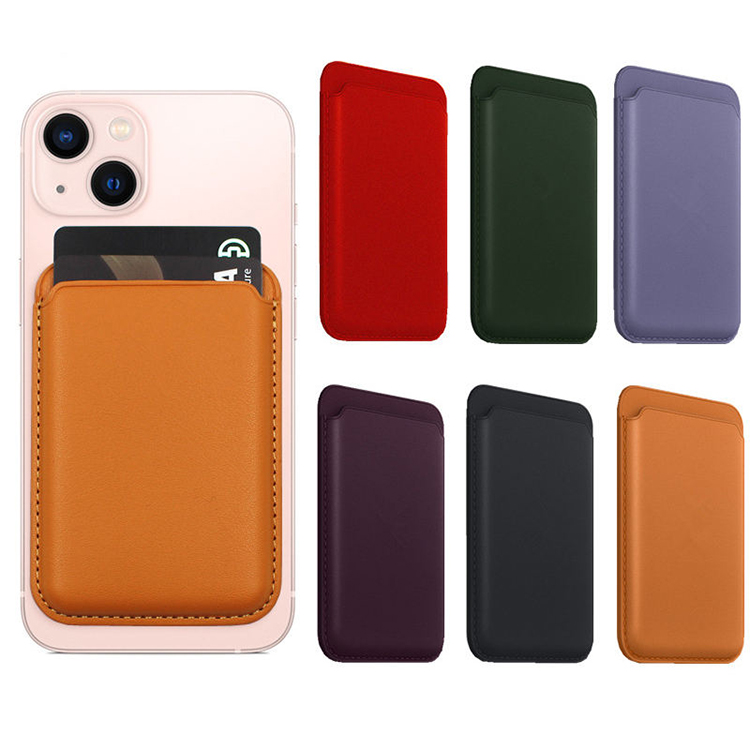
Leather wallets combine magnetic functionality with a traditional premium appearance.
Different leather types can vary significantly in texture, thickness, finish, and durability, so “leather” alone does not describe the complete product quality.
Best for: users who value traditional materials and appearance.
Main advantage: tactile feel and premium appearance.
Main trade-off: material care requirements can be higher than with some synthetic alternatives.
Which MagSafe Wallet Is Best for Different Users?
Instead of looking for one universal “best” wallet, match the wallet design to your actual daily requirements.
| User Requirement | Recommended Type | Why |
|---|---|---|
| Carry only essential cards | Slim MagSafe wallet | Minimizes thickness and weight |
| Carry several everyday cards | Expandable MagSafe wallet | Provides additional storage capacity |
| Need hands-free phone viewing | MagSafe wallet with stand | Combines card storage with a phone stand |
| Prefer rigid construction | Metal or reinforced wallet | Provides a more rigid structure |
| Prefer traditional premium materials | Leather MagSafe wallet | Offers a different appearance and tactile feel |
| Want contactless card shielding | RFID-blocking MagSafe wallet | Designed with an additional shielding structure |
| Want wallet tracking | Compatible smart wallet | Includes a dedicated tracking feature where supported |
MagSafe Wallet Compatibility Guide
Compatibility is not simply a question of whether a phone is an iPhone or Android device. The magnetic connection between the phone, case, and wallet is what determines whether the accessory can attach securely.
iPhone Compatibility
iPhones that support the relevant MagSafe magnetic accessory system can be paired with compatible MagSafe wallets.
When using a case, make sure the case is specifically designed to maintain the required magnetic connection.
If you are unsure about compatibility, check the phone model and the case specifications against the wallet manufacturer's compatibility information before purchasing.
Android Compatibility
Android compatibility varies between devices and generations.
Some newer Android devices support magnetic accessory ecosystems directly or through compatible standards, while other phones require a compatible magnetic case or external magnetic ring.
Therefore, do not assume that an Android phone will automatically provide the same magnetic attachment experience as a native MagSafe-compatible device.
MagSafe Wallets and Phone Cases
The case can have a major effect on magnetic wallet performance.
A compatible magnetic case can maintain the required attachment distance and alignment, while a thick or non-magnetic case may reduce holding strength.
If your wallet feels secure when attached directly to the phone but becomes loose when used with a case, the case is an important part of the system to investigate.
Common MagSafe Wallet Problems and What They Mean
Many complaints about MagSafe wallets are caused by a mismatch between the wallet, phone, case, and intended use rather than by the wallet alone.
Why Does My MagSafe Wallet Keep Sliding?
Sliding can be caused by insufficient magnetic attachment, an incompatible case, excessive wallet weight, or a mismatch between the wallet and phone's magnetic structure.
Before replacing the wallet, test it directly on a compatible phone if possible and compare the result with the wallet attached through the case.
Why Is My MagSafe Wallet Too Thick?
Thickness usually increases with card capacity and additional features.
A stand mechanism, multiple compartments, tracking hardware, or reinforced construction can all require additional space.
If slimness is your priority, reduce the number of cards and choose a simpler wallet structure.
Why Are My Cards Difficult to Remove?
Tight card compartments can improve retention but may make frequent card access less convenient.
Consider how often you need to remove your cards. A wallet designed primarily for secure storage may have a different card-access mechanism from one designed for frequent transactions.
Why Does the Wallet Feel Secure Without the Case but Loose With the Case?
The additional thickness between the phone and wallet can reduce magnetic coupling.
Check whether the case is specifically designed for magnetic accessories. If it is not, replacing the case may solve the problem without replacing the wallet.
MagSafe Wallet Buying Mistakes to Avoid
A large number of MagSafe wallet problems can be avoided by checking a few basic details before buying.
Buying Without Checking Phone and Case Compatibility
A wallet that works well on one magnetic phone setup may not provide the same attachment strength on another.
Always check both the phone and the case.
Choosing Capacity Based on Maximum Numbers
A wallet that can technically hold many cards may become bulky or difficult to use when fully loaded.
Choose capacity based on your normal daily load rather than the largest number stated in a product listing.
Paying for Features You Will Not Use
A stand, tracking module, RFID shielding, premium materials, and expandable storage can all add value, but only when they solve an actual need.
If you only carry two cards, a complex multi-function wallet may provide little practical benefit compared with a simpler slim design.
Choosing Based Only on Marketing Claims
Terms such as “strongest,” “premium,” “ultimate,” or “100% protection” do not explain how a wallet performs under real use.
Look for specific information about capacity, compatibility, materials, features, and testing instead.
What Matters in MagSafe Wallet Construction Quality
From a manufacturing perspective, the performance of a MagSafe wallet depends on the complete product structure rather than one isolated component.
Magnetic attachment, card storage, material selection, stitching or assembly, shielding, and additional functions all need to work together.
Magnetic Structure
The magnetic system needs to be positioned accurately within the wallet so that the product aligns correctly with the intended phone or case.
Magnetic performance should therefore be considered together with the wallet's overall geometry and weight.
Card Compartment Design
The card compartment needs to balance retention and accessibility.
A compartment that is too loose may allow cards to move, while one that is excessively tight may make everyday card access inconvenient.
Material and Assembly
The material itself is only part of the final product.
Stitching, bonding, edge finishing, reinforcement, lining, and component placement all affect durability and the overall user experience.
RFID Shielding Construction
For RFID-blocking designs, shielding material needs to be incorporated into the relevant card-carrying structure.
The effectiveness of the finished product depends on the complete construction and intended use, not simply on whether a conductive material is present somewhere inside the wallet.
How to Maintain a MagSafe Wallet
Proper maintenance can help preserve the appearance and functionality of a MagSafe wallet.
Clean the Wallet According to Its Material
Leather, synthetic materials, silicone, and metal surfaces require different cleaning methods.
Follow the care instructions supplied with the specific wallet rather than applying the same cleaning product to every material.
Avoid Exceeding the Intended Card Capacity
Continuously carrying more cards than the wallet is designed to hold can stretch compartments and change the wallet's shape.
Use the manufacturer's stated capacity as the practical limit.
Check Magnetic Attachment Over Time
If the wallet becomes noticeably less stable, check whether the phone case, wallet surface, card load, or physical condition has changed.
Keeping the contact surfaces clean and using the wallet within its intended capacity can help maintain consistent everyday performance.
Frequently Asked Questions
Can I use a MagSafe wallet with an Android phone?
It depends on the phone and its magnetic accessory compatibility. Some Android phones can support magnetic wallets directly or through a compatible magnetic case or accessory, while others require an additional magnetic solution.
Check the specific phone, case, and wallet compatibility before purchasing.
Will a MagSafe wallet work through a phone case?
It can, provided the case is designed to maintain a suitable magnetic connection. Thick or non-magnetic cases can reduce attachment strength and may cause the wallet to move or detach more easily.
How many cards should I put in a MagSafe wallet?
The appropriate number depends on the wallet design. Slim wallets are generally intended for fewer cards, while expandable models can accommodate more.
For the best balance between size and usability, choose a wallet based on your normal daily card load rather than its maximum advertised capacity.
Does every MagSafe wallet block RFID?
No. Magnetic attachment and RFID shielding are separate functions.
If RFID protection is important to you, choose a wallet that specifically states that it includes RFID shielding and check what type of cards or frequencies the protection is designed for.
Can MagSafe magnets damage credit cards?
Modern payment cards commonly use integrated chips for contactless and chip-based transactions, but cards and magnetic-stripe technologies can differ.
If you regularly carry cards with magnetic-stripe data or have specific card requirements, follow the card issuer's guidance and the wallet manufacturer's compatibility information rather than relying on a general assumption about all cards.
Does every MagSafe wallet support Find My?
No. A standard MagSafe wallet provides magnetic attachment and card storage but does not automatically include tracking hardware.
If tracking is important, choose a specific wallet model that states which tracking ecosystem and functions it supports.
Is a MagSafe wallet with a stand worth it?
It can be useful if you frequently watch videos, make video calls, or use your phone hands-free.
The trade-off is usually additional structure, thickness, or weight compared with a simple card holder.
How can I stop my MagSafe wallet from slipping?
First check whether the phone case is compatible with magnetic accessories. Then check the wallet's card load and whether the wallet is being used within its intended capacity.
If the wallet remains unstable even when used directly with a compatible phone and within its intended capacity, the wallet's magnetic design or construction may be the next factor to investigate.
Conclusion
The best MagSafe wallet is not necessarily the one with the most features, the strongest marketing claims, or the largest card capacity.
The better choice is the wallet that matches your phone and case, carries the number of cards you actually use, remains stable during normal movement, and provides the additional functions that matter to you.
For a simple everyday setup, a slim wallet may be enough. Users who carry more cards may benefit from an expandable design, while users who watch content or make video calls may prefer a wallet with a built-in stand. RFID shielding and tracking features should be treated as specific requirements rather than automatic features of every MagSafe wallet.
When comparing products, look beyond the marketing label and evaluate compatibility, capacity, magnetic stability, materials, construction, and the evidence supporting the product's claims.
If you are evaluating MagSafe wallet designs for personal use, retail, or bulk sourcing, comparing these construction and feature requirements can help you identify the right product specification for your target market.


