
Views: 226 Author: Gstar Technology (Shenzhen) Co., Ltd Publish Time: 03-05-2026 Origin: Site


Content Menu
>> The Evolution of Card Protection: From Shoe Boxes to Acrylic Slabs
>> Why Choose a Magnetic Closure?
>> The Science of Protection: UV Resistance and Material Quality
>> Design Variations: Wall-Mounted vs. Desk Displays
>> Optimizing Your Display: Interior Design for Collectors
>> Maintenance and Long-Term Care of Your Cases
>> The Future of Card Display Technology
>> Conclusion: An Essential Investment for Every Collector
>> Related Questions and Answers
The world of trading card collecting has undergone a seismic shift over the last decade. What was once a niche hobby for children and enthusiasts has transformed into a multi-billion-dollar global asset class. From vintage Mickey Mantle baseball cards to pristine Charizard Pokémon cards, the value of these cardboard treasures has skyrocketed, leading to a surge in the popularity of professional grading services like PSA, BGS, and CGC. Once a card is encapsulated in a protective plastic slab, the next challenge for any serious collector is how to store, protect, and—most importantly—display these items. This is where the Magnetic Graded Card Display Case has emerged as the gold standard for modern collectors.
In this comprehensive guide, we will explore everything you need to know about these specialized display solutions, from the science of UV protection to the aesthetic benefits of magnetic closures, ensuring your investment remains in mint condition for decades to come.
To understand why magnetic graded card display cases are so vital today, we must look at where the hobby started. Decades ago, collectors kept their cards in rubber bands, tobacco tins, or simple cardboard shoe boxes. As the hobby matured, the industry introduced soft sleeves (penny sleeves) and rigid top-loaders. While these provided basic protection against physical bends, they offered little defense against environmental factors like moisture and sunlight.
The advent of third-party grading (TPG) changed the game. Companies like Professional Sports Authenticator (PSA) began sealing cards in sonically welded plastic holders. While these slabs are remarkably durable, they are not invincible. They can scratch, they are not inherently 100% UV-proof, and they can be cumbersome to display individually. The magnetic graded card display case was developed specifically to solve these problems, acting as a "second skin" for the graded slab, providing an extra layer of defense and a professional-grade presentation.
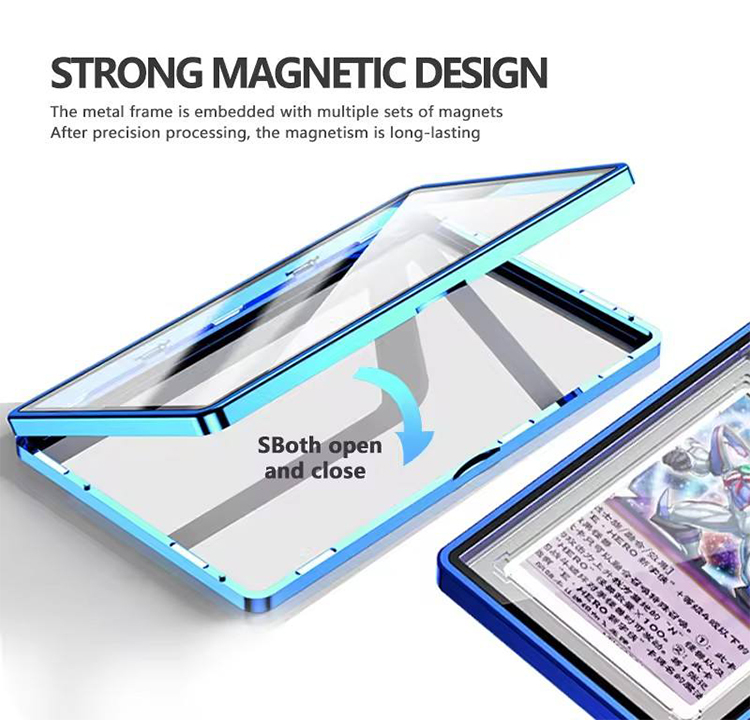
One might ask why magnets are preferred over traditional screw-down cases or simple snap-fit holders. The answer lies in both convenience and safety.
1. Ease of Access without Tools
Traditional display cases often required a small screwdriver to open and close. Not only was this a hassle, but it also presented a risk: if the screwdriver slipped, it could scratch the acrylic or even damage the card slab inside. Magnetic cases use high-strength neodymium magnets located at the corners. This allows collectors to swap cards in and out of the display in seconds without any tools, making it ideal for those who like to rotate their displayed collection frequently.
2. Uniform Pressure and Security
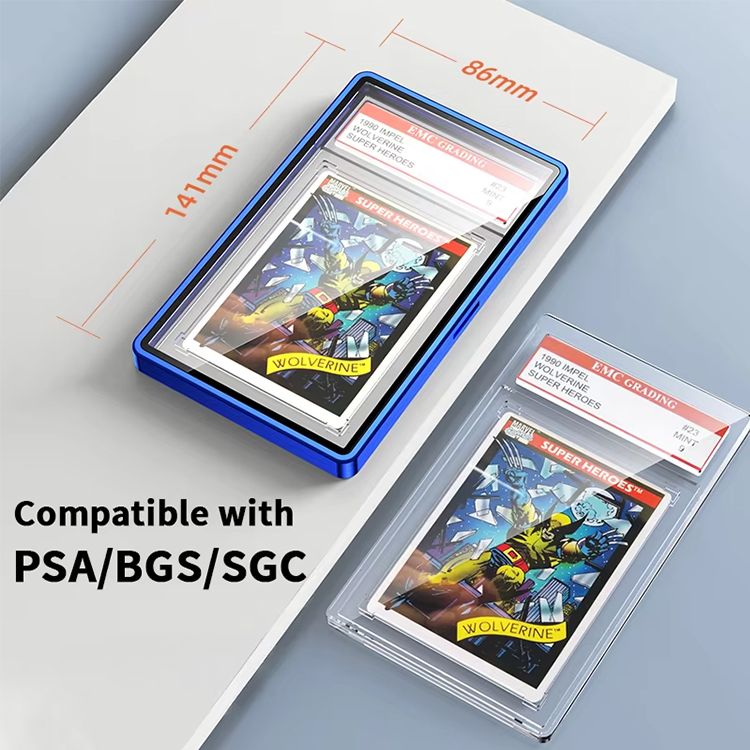
Magnetic closures provide a consistent, even seal across the entire frame. This prevents the "bowing" effect sometimes seen in cheap plastic holders. High-quality cases are engineered with recessed areas specifically measured to fit the dimensions of major grading company slabs, ensuring the card stays perfectly centered without rattling or shifting.
3. Modern Aesthetic
Visually, magnetic cases are much cleaner. Without the unsightly heads of screws or the bulky plastic hinges of snap-cases, the focus remains entirely on the card itself. The magnets are often integrated into the frame as small gold or silver accents, adding a touch of luxury to the presentation.
The single greatest threat to a graded card is not a drop or a spill, but the silent degradation caused by ultraviolet (UV) light. Over time, exposure to even indirect sunlight or harsh indoor fluorescent lighting can cause the vibrant colors of a trading card to fade, significantly reducing its market value and aesthetic appeal.
The Role of UV-Protective Acrylic
Premium magnetic graded card display cases are manufactured using specialized acrylic that contains UV-filtering additives. These materials are designed to block up to 99% of harmful UV rays. When shopping for a case, it is crucial to ensure the manufacturer specifies the level of UV protection. Standard "crystal clear" plastic does not necessarily mean UV-protected; professional-grade cases are a necessity for any display located in a room with windows.
Non-PVC and Acid-Free Materials
Cheaper plastics can release gases over time—a process known as "off-gassing"—which can chemically react with the grading slab or the card's surface, leading to clouding or discoloration. High-end magnetic cases are made from archival-safe, non-PVC, and acid-free materials. This ensures that the environment inside the case remains chemically neutral, preserving the "slab" in the same condition it was in the day it was graded.
Collectors have different philosophies when it comes to showing off their prize possessions. Manufacturers have responded by creating a variety of magnetic display formats.
Individual Magnetic Stands
For a "Holy Grail" card—such as a 1952 Topps Mickey Mantle or a 1st Edition Shadowless Charizard—an individual magnetic display stand is the preferred choice. These cases often feature a thicker, heavier acrylic base that allows the card to stand upright on a desk, shelf, or mantelpiece. They provide 360-degree visibility, allowing the collector to admire the grade on the back of the slab as well as the art on the front.
Multi-Card Magnetic Frames
Many collectors prefer to display "sets" or related cards together, such as a trio of rookie cards or a specific Pokémon evolution line. Multi-card magnetic cases can hold anywhere from two to nine graded slabs in a single sleek frame. These are often designed to be wall-mounted, turning a collection into a literal gallery of sports or gaming history.
Aluminum Alloy and Tempered Glass Options
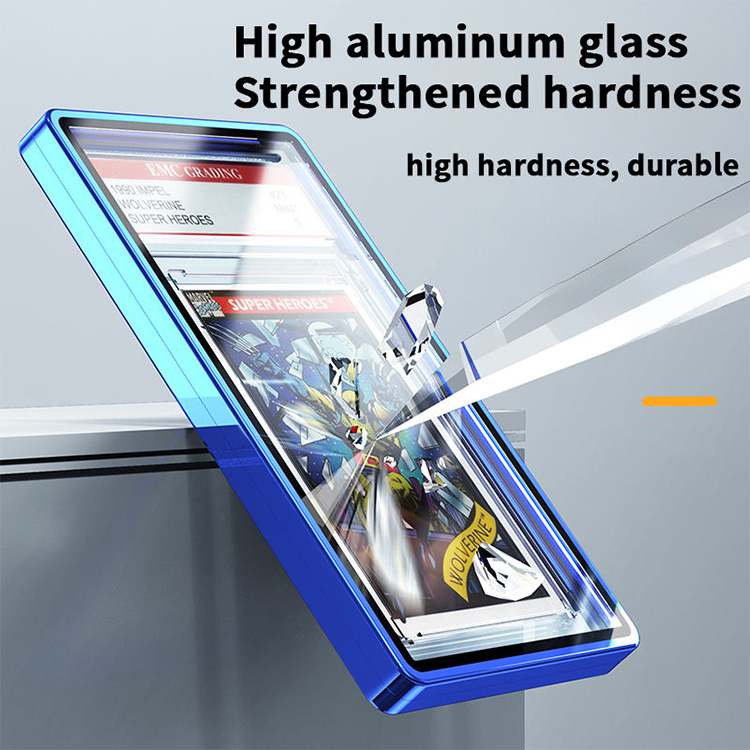
In recent years, the market has seen the introduction of "premium-plus" cases. These combine a magnetic aluminum alloy frame with tempered glass rather than acrylic. The aluminum provides unmatched structural rigidity, while the tempered glass offers superior scratch resistance compared to acrylic. These cases are the ultimate choice for high-value items where "over-protection" is the goal.
Displaying cards is an art form. A poorly placed display can look cluttered, while a well-thought-out arrangement can elevate the entire room.
Lighting Considerations
Even with UV protection, it is best practice to avoid placing your magnetic display cases in direct sunlight. Instead, use LED lighting. LEDs emit very little heat and almost no UV radiation, making them safe for long-term display. Many modern display cabinets now come with integrated LED strips that can be adjusted for color temperature, allowing you to highlight the holographic foils of your cards.
Color Coordination
Some magnetic cases come with colored borders—black, white, or even metallic finishes. Choosing a border that complements the colors of the card or the grading company's label (such as the red PSA header or the silver BGS label) can make the display pop. For a minimalist look, a "frameless" crystal-clear magnetic case allows the card to appear as if it is floating in mid-air.
To keep your display looking its best, a small amount of maintenance is required. Acrylic is a fantastic material, but it is prone to attracting dust due to static electricity and can be scratched if cleaned improperly.
Cleaning Tips
Never use glass cleaners like Windex on acrylic display cases, as the ammonia can cause the material to become "cloudy" or develop tiny cracks (a process called crazing). Instead, use a dedicated acrylic cleaner and a clean, high-quality microfiber cloth. Gently wipe the surface to remove fingerprints and dust.
Handling the Magnets
The magnets in these cases are incredibly strong. When closing the case, avoid letting the two halves "snap" together with full force, as this can occasionally cause the acrylic to chip at the impact points. Instead, guide the pieces together slowly until the magnets catch.
As the hobby continues to grow, we are seeing even more innovation in the magnetic display space. Some companies are experimenting with "smart cases" that include RFID tags for inventory management or integrated humidity sensors. Others are focusing on "security cases" that feature tamper-evident magnetic seals.
However, for the vast majority of collectors, the classic magnetic graded card display case remains the perfect balance of form, function, and value. It provides the peace of mind that comes with professional-grade protection while allowing the beauty of the collection to shine through.
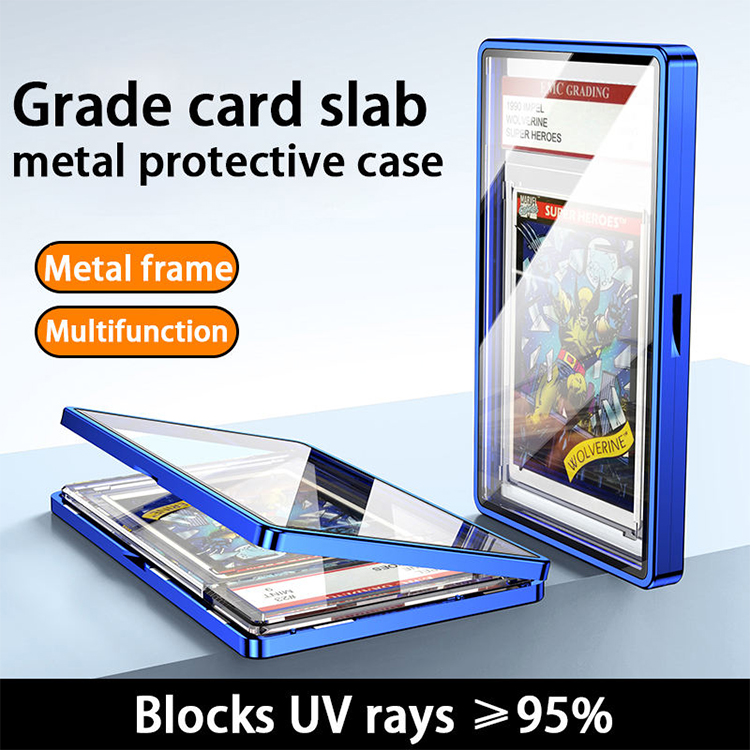
Whether you are a casual fan with a few favorite cards or a serious investor with a six-figure portfolio, the way you display your cards matters. A magnetic graded card display case is more than just a piece of plastic; it is an insurance policy for your collection and a tribute to the history of the hobby. By choosing cases with high UV protection, archival-safe materials, and a design that fits your space, you ensure that your cards remain as stunning as the day they were first pulled from a pack.
In an era where the condition is everything, don't settle for subpar storage. Invest in quality magnetic displays and let your collection take center stage.

---
Q1: Will a magnetic display case fit all types of graded slabs?
A1: Not necessarily. While many magnetic cases are designed as "universal" fits, grading slabs from PSA, BGS, SGC, and CGC all have slightly different dimensions and thicknesses. Always check the product specifications to see if the case is optimized for your specific grading company. PSA slabs are generally thinner, while BGS slabs are thicker and may require a deeper recessed area.
Q2: Does UV protection in acrylic last forever?
A2: UV-protective additives are very stable, but they can slowly degrade over many decades of extreme exposure. For standard indoor use away from direct windows, a high-quality UV-protected case should remain effective for the lifetime of your collection. However, it is always recommended to keep high-value items out of direct sunlight regardless of the case quality.
Q3: Can these cases be used for un-graded (raw) cards?
A3: There are magnetic "One-Touch" holders specifically designed for raw cards. However, the cases discussed in this article are specifically "Graded Card" display cases, which are much larger to accommodate the plastic slab. If you put a raw card inside a graded card display case, it will slide around and likely be damaged.
Q4: Are magnetic cases waterproof?
A4: No. While the magnetic seal is very tight and will protect against dust and accidental splashes, it is not an airtight or watertight seal. If submerged in water, moisture will eventually seep into the case. For flood protection, cases should be kept in a waterproof safe or dry box.
Q5: Why are some magnetic cases so much more expensive than others?
A5: The price difference usually comes down to three factors: the quality of the acrylic (clarity and UV rating), the strength of the magnets used, and the precision of the manufacturing. Premium cases offer 99% UV protection and "museum-grade" clarity with no yellow tint, whereas cheaper alternatives may offer lower protection and may cloud over time.
---


