

Views: 289 Author: Princee Lee Publish Time: 03-13-2026 Origin: Princee Lee


Content Menu
>> The Evolution of the Personal Wallet
>> Material Science: Why Aluminum Alloy?
>> Engineering Precision and CNC Machining
>> The Lightweight Advantage in Everyday Carry (EDC)
>> Security in the Digital Age: RFID Blocking
>> Ergonomics and Quick-Access Mechanisms
>> Sustainability and Environmental Impact
>> Comparing Aluminum to Other Materials
>> Design Trends and Customization in 2026
>> Maintenance and Care for Longevity
>> The Future of the Wallet: Beyond 2026
>> Conclusion
>> Related Questions and Answers
The journey of the personal wallet has undergone a radical transformation over the last century, moving from bulky leather bi-folds to the sleek, metallic structures we see today. Historically, wallets were designed to carry paper currency, coins, and a multitude of physical documents, leading to the infamous "Costanza wallet" syndrome characterized by thick, uncomfortable bulges in the back pocket. However, as the global economy shifted toward digital transactions and plastic credit cards, the necessity for a large storage vessel began to wane. This transition paved the way for the minimalist movement, where the focus shifted from carrying everything to carrying only what is essential. In 2026, the premium aluminum alloy card holder represents the pinnacle of this evolution, offering a perfect blend of high-tech security, structural integrity, and ergonomic efficiency.
The choice of aluminum alloy as the primary material for high-end card holders is not accidental; it is a calculated decision based on the material's unique physical properties. Aluminum is renowned in the aerospace and automotive industries for its incredible strength-to-weight ratio. When alloyed with elements like magnesium or silicon, the metal becomes significantly harder while maintaining its signature lightness. This makes it the ideal candidate for an item that is handled dozens of times a day and must withstand the pressures of being tucked into pockets or bags. Unlike plastic, which can crack under stress, or leather, which stretches and loses its shape over time, aluminum remains rigid and protects the delicate electronic chips within modern credit cards from being bent or crushed.
A premium aluminum card holder is often the product of advanced manufacturing techniques such as Computer Numerical Control (CNC) machining. This process allows manufacturers to carve a single block of aerospace-grade aluminum into a complex, multi-functional tool with tolerances measured in microns. The result is a seamless finish that feels substantial yet incredibly smooth to the touch. In the current 2026 market, many brands have moved toward "uni-body" designs that eliminate weak points like screws or hinges, further enhancing the device's durability. The anodizing process is another critical step, where the surface of the aluminum is chemically treated to create a hard, sapphire-like oxide layer. This not only allows for a wide range of vibrant colors—from deep space gray to champagne gold—but also provides superior scratch resistance and corrosion protection.

In the world of Everyday Carry (EDC), weight is one of the most critical factors. Users seek tools that provide maximum utility with minimum burden. A typical premium aluminum card holder weighs significantly less than a traditional leather wallet, often coming in at under 2 ounces. Despite this feather-light profile, the structural rigidity ensures that the user never feels like they are sacrificing security for comfort. The slim design, often as thin as 6mm, allows the card holder to disappear into a front pocket, reducing the strain on the lower back often caused by sitting on a traditional thick wallet. This "invisible" carry experience is a major driver for the adoption of metal card holders among modern professionals and travelers alike.
One of the most compelling reasons for the rise of metal wallets is the increasing prevalence of electronic pickpocketing or "skimming." Modern credit cards and IDs use Radio Frequency Identification (RFID) technology to allow for contactless payments. While convenient, this technology is vulnerable to unauthorized scanners that can steal card data from a distance. Aluminum is a naturally conductive material that acts as a Faraday cage. When cards are placed inside an aluminum card holder, the metal shell reflects and absorbs the radio waves, effectively "darkening" the cards to any outside scanners. In 2026, standard premium holders are engineered to block signals across the most common frequencies, including the 13.56 MHz frequency used by most credit card providers. This integrated security feature provides a level of peace of mind that traditional materials simply cannot offer.
Beyond protection and aesthetics, the premium aluminum card holder is designed for speed. Many modern models feature "pop-up" or "fan-out" mechanisms that allow users to access their cards with the flick of a thumb. These internal springs and levers are designed to reliably deploy cards in a staggered fashion, making it easy to identify and retrieve the correct card in seconds. This ergonomic innovation addresses one of the biggest pain points of traditional wallets: the struggle to dig through multiple pockets for a specific card. By centralizing the cards in a single, high-speed access point, the aluminum holder streamlines the transaction process, whether at a checkout counter or a transit gate.
In an era where consumers are increasingly conscious of their environmental footprint, aluminum stands out as a highly sustainable material choice. Aluminum is 100% recyclable without any loss in quality, and the recycling process requires only about 5% of the energy needed to produce primary aluminum. Furthermore, the sheer longevity of a metal card holder means it does not need to be replaced nearly as often as leather or fabric wallets, which tend to fray, stain, and fall apart within a few years of heavy use. Investing in a premium aluminum card holder is often viewed as a "buy it for life" decision, reducing the cycle of waste associated with fast-fashion accessories.
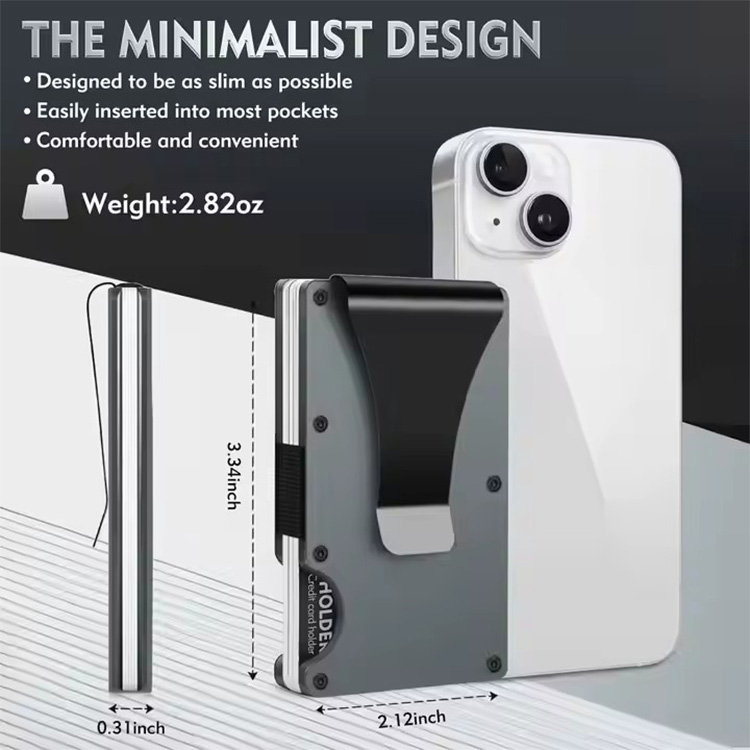
While other premium materials like carbon fiber and titanium are popular in the EDC community, aluminum remains the gold standard for most users. Carbon fiber offers an even lighter weight and a distinct high-tech look, but it can be more expensive and sometimes lacks the natural RFID-blocking efficiency of a solid metal plate. Titanium is incredibly strong and biocompatible, but its higher cost often puts it into a luxury category that is less accessible to the general public. Aluminum strikes the perfect balance, offering military-grade durability and professional aesthetics at a price point that reflects its value. Compared to traditional leather, aluminum is far more hygienic; it does not absorb sweat or bacteria and can be easily sanitized with a quick wipe, a feature that has become more relevant in the post-pandemic world.
The current design trends for card holders emphasize modularity and personalization. Many premium aluminum models now include interchangeable components, such as detachable money clips, elastic cash straps, or even integrated tracking device slots (for items like AirTags). This allows the user to customize the thickness and functionality of their carry based on their daily needs. From a stylistic perspective, the trend has moved toward minimalist branding and industrial textures. Matte finishes, knurled edges for better grip, and laser-etched patterns are all common features in 2026, allowing the card holder to serve as a subtle statement piece that complements other modern tech like smartphones and smartwatches.
Maintaining a premium aluminum card holder is remarkably simple, which adds to its appeal for busy professionals. Unlike leather, which requires conditioning and protection from water, aluminum is virtually maintenance-free. To keep the finish looking new, a periodic wipe with a microfiber cloth is usually sufficient. If the mechanism becomes stiff due to pocket lint or debris, a quick blast of compressed air can clear the internal tracks. The anodized coating is designed to resist most household chemicals, meaning the color will not fade even after years of exposure to sunlight or moisture. This resilience ensures that the card holder remains a reliable part of one's daily routine for a decade or more.
As we look toward the future, the integration of technology into these physical vessels will likely continue to increase. We are already seeing the emergence of biometric card holders that require a fingerprint to deploy cards, as well as those with built-in solar panels to power internal tracking chips. However, the core foundation remains the same: a protective, durable, and lightweight shell. The premium aluminum alloy card holder has successfully transitioned from a niche gadget for tech enthusiasts to a mainstream essential for anyone who values efficiency and security. It is more than just a place to store cards; it is a specialized tool engineered for the modern world.

The shift toward premium aluminum alloy card holders represents a logical response to the needs of the 21st-century consumer. By prioritizing durability through aerospace-grade materials, security through RFID-blocking technology, and comfort through a lightweight, minimalist design, these devices have redefined what it means to carry a wallet. As the world moves further away from cash and toward a fully digital infrastructure, the physical card holder serves as a vital bridge, protecting our most important credentials while reflecting a sophisticated, modern lifestyle. Whether you are an urban commuter, a frequent traveler, or a minimalist enthusiast, the aluminum card holder is an investment in both style and substance.
Q1: How many cards can a typical aluminum alloy card holder actually hold?
A1: Most premium designs are optimized to hold between 5 and 7 embossed credit cards within the internal chamber. Many models also include an external money clip or elastic strap that can hold additional cards or cash, bringing the total capacity up to 10 or 12 cards without significantly increasing the thickness.
Q2: Will the aluminum shell scratch my cards?
A2: No. High-quality aluminum card holders are designed with smooth internal tracks or felt/silicone linings to prevent metal-on-plastic friction. The cards are held securely in place by tension, ensuring they don't rattle or rub against each other during movement.
Q3: Can I carry business cards in these holders?
A3: Yes, but it depends on the design. Many "pop-up" mechanisms are specifically tensioned for the standard thickness of credit cards. However, many brands offer dedicated aluminum business card cases or "multi-carry" versions with wider internal slots specifically designed to protect paper cards from bending or fraying at the corners.
Q4: Is the RFID blocking 100% effective?
A4: While aluminum provides excellent protection against the standard 13.56 MHz frequency used for contactless payments, it may not block all low-frequency proximity cards (like some older building access badges). For financial security, however, a solid aluminum shell is considered one of the most effective physical barriers against electronic skimming.
Q5: What should I do if the card ejection mechanism gets jammed?
A5: Most jams are caused by pocket lint or carrying too many cards. First, try removing all cards and using compressed air to blow out the mechanism. If a card is stuck, gently tap the holder against a flat surface. Avoid using lubricants like oil, as these can attract more dust and damage the cards; instead, look for "dry" lubricants if the manufacturer recommends them.


