
Views: 296 Author: Princee Lee Publish Time: 03-14-2026 Origin: Princee Lee


Content Menu
● The Evolution of Personal Carry: From Bulky Wallets to Minimalist Precision
● Material Science: Why Aluminum Alloy is the Superior Choice
>> The Strength-to-Weight Ratio
>> Corrosion Resistance and Environmental Durability
● The Engineering of Longevity: Precision CNC Machining
>> Millimeter-Perfect Precision
>> Surface Treatment: The Role of Anodization
● Security in the Digital Age: RFID Blocking Capabilities
● Designing for the Human Element: Ergonomics and Ease of Use
>> The Card Ejection Mechanism
>> Minimalism and the Front-Pocket Carry
● Sustainability: A Permanent Solution to "Fast Fashion" Wallets
● Aesthetics and Professionalism: Making a Statement
>> The Intersection of Tech and Style
● Comparing Aluminum to Other Modern Materials
● Maintenance and Care for Lifelong Performance
● The Versatility of Use: Beyond Just Credit Cards
● Practicality in Different Environments
● Conclusion: An Investment in Quality and Simplicity
>> Related Questions and Answers
For decades, the traditional leather bifold wallet was the undisputed king of personal organization. It was a symbol of adulthood, often bulging with receipts, old business cards, and a stack of paper currency. However, as the digital revolution transformed how we interact with money and identification, the physical requirements for what we carry have shifted dramatically. We have entered the era of the minimalist carry, where efficiency, security, and durability are the primary objectives. At the heart of this movement is the high-quality aluminum alloy card clip, a tool designed for the modern individual who values both form and function.
The transition toward metal card clips is not merely a fashion statement; it is a response to the failures of traditional materials. Leather stretches, frays, and absorbs moisture, eventually losing its structural integrity. Plastic sleeves crack and discolor. Aluminum alloy, specifically engineered for longevity, offers a permanent solution. This article explores the intricate details that make a high-quality aluminum alloy card clip the ultimate choice for long-lasting use, examining its material science, engineering, security features, and its role in the contemporary lifestyle.
When discussing high-quality card clips, the conversation must begin with the material itself. Not all metals are created equal, and aluminum alloy sits in the "Goldilocks zone" of metallurgy for everyday carry items.
Aluminum is renowned for its incredible strength-to-weight ratio. In the context of a card clip, this is crucial. A wallet stays in your pocket for 12 to 16 hours a day. If it is too heavy, like stainless steel or brass, it becomes a literal burden, pulling on your trousers and causing discomfort. If it is too light, like certain plastics, it feels cheap and lacks the structural rigidity needed to protect your cards. High-grade aluminum alloys, such as 6061-T6 (often referred to as aircraft-grade aluminum), provide the toughness of steel at a fraction of the weight. This ensures that the card clip is virtually unnoticeable in the pocket while remaining strong enough to withstand being stepped on or dropped on concrete.
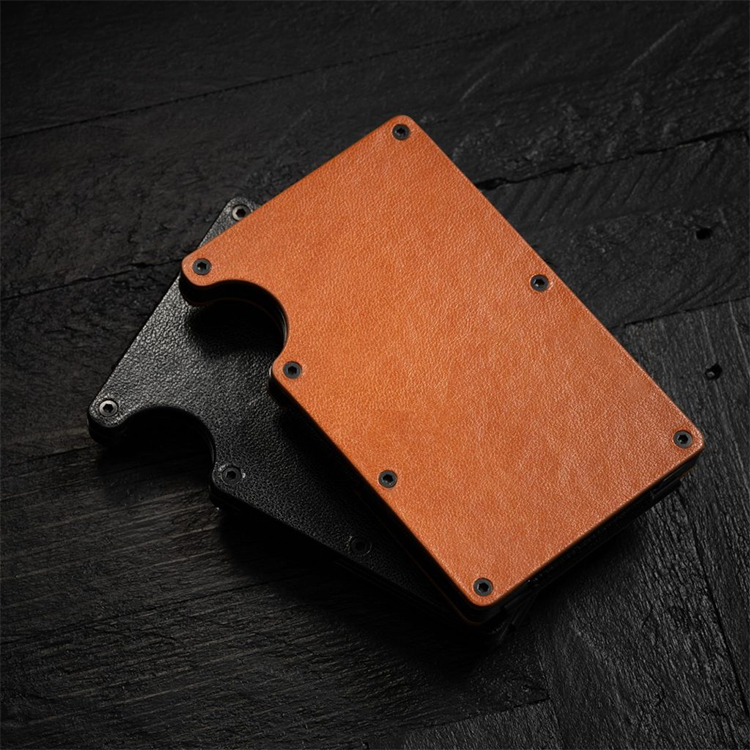
Unlike iron-based metals, aluminum does not rust. When exposed to air, it naturally forms a thin, protective layer of aluminum oxide that prevents further oxidation. For a card clip that may be exposed to sweat, humidity, or the occasional rain shower, this property is vital. A high-quality clip will maintain its structural integrity for decades without the need for specialized oils or treatments required by leather or carbon steel.
The difference between a generic metal clip and a high-quality aluminum alloy card clip lies in the manufacturing process. The most premium options on the market are created using Computer Numerical Control (CNC) machining.
Instead of being stamped out of thin sheets of metal—a process that can leave sharp edges and weak points—high-quality clips are milled from solid blocks of aluminum alloy. This allows for complex geometries, such as beveled edges that prevent pocket wear and thumb notches that allow for easy card ejection. CNC machining ensures that every unit is identical and that the tolerances are tight enough to hold a single card as securely as it holds twelve.
A key factor in "long-lasting use" is how the product looks after five years of daily friction against keys and coins. High-quality aluminum clips undergo a process called Type III Hard-Coat Anodization. This isn't just a layer of paint; it is an electrochemical process that thickens the natural oxide layer on the surface of the metal. This creates a finish that is nearly as hard as diamond, making the clip exceptionally resistant to scratches and fading. Whether in matte black, slate gray, or vibrant blue, an anodized finish ensures the clip retains its premium aesthetic throughout its lifespan.
In the modern world, your cards are vulnerable to more than just physical damage. Electronic pickpocketing, or RFID skimming, is a growing concern. Thieves use handheld scanners to read the information stored on the chips of your credit cards and passports without ever touching your wallet.
High-quality aluminum alloy card clips provide a natural defense against this threat. Because aluminum is a conductive material, it acts as a Faraday cage. When your cards are encased within the aluminum plates, the metal reflects and dissipates the electromagnetic waves used by scanners. This internal security feature is a significant advantage over traditional leather wallets, which offer zero protection against digital theft unless they are specifically lined with metallic mesh. By choosing an aluminum clip, you are investing in both physical and digital longevity for your financial data.

A tool is only as good as its usability. A card clip that is difficult to open or requires two hands to retrieve a card will eventually be abandoned. Engineers of high-quality aluminum clips focus heavily on the user interface.
Most premium aluminum clips utilize a "thumb notch" or a mechanical lever. The thumb notch allows the user to push the cards up slightly, fanning them out for easy selection. The internal tension—usually provided by high-performance elastic webbing or a precision-engineered spring hinge—is calibrated to be firm enough to prevent cards from falling out, yet smooth enough to allow for effortless access.
One of the most significant benefits of the aluminum card clip is its slim profile. Traditional wallets are usually carried in the back pocket, which has been linked to lower back pain and sciatica due to the spinal misalignment caused by sitting on a bulky object. The high-quality aluminum clip is designed for front-pocket carry. This not only improves posture and comfort but also makes the wallet much harder to pickpocket in crowded environments.
In an era of increasing environmental consciousness, the longevity of a product is a key metric of its sustainability. Leather wallets are often treated with harsh chemicals during the tanning process and eventually end up in landfills when they fall apart.
An aluminum alloy card clip is essentially a "buy it for life" product. Because it does not degrade, there is no need to replace it every two or three years. Furthermore, aluminum is one of the most recyclable materials on the planet. If, after decades of use, a user decides to move on, the material can be melted down and repurposed with minimal energy loss. By choosing a high-quality metal clip, consumers are moving away from the cycle of "disposable" accessories and toward a more responsible form of consumption.
While functionality is paramount, the visual appeal of a card clip cannot be ignored. A sleek, metallic clip conveys a sense of modern professionalism.

In a boardroom or a high-end restaurant, pulling out a slim aluminum clip feels more aligned with modern technology—like smartphones and laptops—than a bulging, weathered leather pouch. The clean lines and industrial finish of anodized aluminum complement a professional wardrobe, offering a look that is both sophisticated and rugged. It is a testament to the idea that a tool can be a piece of jewelry without losing its utility.
To truly appreciate aluminum alloy, it is helpful to compare it to other popular materials in the minimalist wallet market, such as carbon fiber and titanium.
Carbon fiber is incredibly light and has a distinctive "high-tech" look. However, it can be brittle if dropped at certain angles and is often significantly more expensive. Aluminum offers a better balance of impact resistance and value, providing a similar weight profile with greater overall durability in varied environments.
Titanium is the king of strength and is often used in medical implants and aerospace. However, it is much harder to machine, leading to much higher price points for the consumer. For the vast majority of users, the performance gap between titanium and high-quality aluminum alloy is negligible, making aluminum the more practical choice for a daily-use item.
One of the best features of a high-quality aluminum alloy card clip is how little maintenance it requires. Unlike leather, which needs to be conditioned to prevent cracking, aluminum only needs occasional cleaning.
To keep an aluminum clip looking new, a simple wipe-down with a damp microfiber cloth is usually sufficient. For deeper cleaning, a mild soap can be used to remove any oils or grit that may have accumulated in the thumb notch or between the plates. Because the material is non-porous, it does not harbor bacteria or odors, making it a more hygienic choice for something that is handled multiple times every day.
While designed for cards, these clips are surprisingly versatile. Most high-quality models come with an integrated money clip or a silicone-lined cash strap on the exterior. This allows users to carry a few folded bills for emergencies or for places that do not accept digital payments. Additionally, the rigid structure of the clip makes it an excellent place to store a spare key or a slim multi-tool, further consolidating your everyday carry.
The high-quality aluminum alloy card clip excels in diverse settings, making it the perfect companion for various lifestyles.
Traveling involves constant handling of IDs, boarding passes (often digital but backed up by cards), and corporate credit cards. The RFID protection and slim profile make navigating airports easier and safer. It fits perfectly into a suit jacket pocket without ruining the silhouette of the garment.
Whether hiking, cycling, or climbing, weight and durability are essential. An aluminum clip won't be damaged by moisture if you get caught in the rain, and its rugged construction means it can handle the vibrations and impacts associated with an active lifestyle. Its secure grip ensures that cards stay put even during vigorous movement.
The high-quality aluminum alloy card clip is more than just a place to store plastic; it is a refined tool that reflects the values of the modern age. It prioritizes the protection of one's most important assets—identity and finances—while stripping away the unnecessary bulk of the past. Through the use of aircraft-grade materials, precision engineering, and thoughtful design, these clips offer a level of longevity that traditional wallets simply cannot match.
In a world where we are often forced to choose between style and substance, the aluminum card clip provides both. It is a durable, secure, and elegant solution for anyone looking to declutter their life and invest in a product that will serve them faithfully for years to come. By moving toward a minimalist carry, we not only lighten our pockets but also simplify our daily routines, allowing us to focus on what truly matters.
Q1: How many cards can a typical high-quality aluminum alloy card clip hold?
A: Most high-quality clips are designed with an expandable architecture, usually utilizing heavy-duty elastic bands or adjustable screws. This allows them to hold anywhere from 1 to 12 cards securely. Some specialized models can even expand to hold up to 15 cards without losing their slim profile.
Q2: Will the metal edges of the clip damage my credit cards over time?
A: No, provided you choose a high-quality clip. Premium manufacturers use CNC machining to create beveled or "chamfered" edges. This means the edges are rounded and smoothed down, ensuring that cards slide in and out without being scratched or shaved.
Q3: Can I carry cash with an aluminum card clip?
A: Yes. Almost all high-quality aluminum clips feature either a traditional metal money clip on the back or an elastic "cash strap" with silicone grips. Both methods allow you to carry several folded bills on the outside of the device for quick access.
Q4: Is the RFID blocking feature permanent?
A: Yes, the RFID blocking capability is a physical property of the aluminum alloy itself. As long as the metal plates remain intact and surround your cards, the "Faraday cage" effect will continue to block unauthorized signals. It does not require batteries or software updates.
Q5: Is an aluminum card clip heavy compared to a leather wallet?
A: Surprisingly, it is often lighter. While metal is denser than leather, a minimalist aluminum clip uses significantly less material than a traditional bifold wallet. Most aluminum clips weigh between 2 and 3 ounces, which is often less than a leather wallet filled with unnecessary dividers and extra pockets.


