

Views: 236 Author: Princee Lee Publish Time: 02-28-2026 Origin: Princee Lee


Content Menu
>> Introduction
● What is a carbon fiber metal wallet?
>> Definition and basic construction
>> Common designs and mechanisms
● Why the material matters: properties of carbon fiber and metal
>> Durability and scratch resistance
>> Aesthetic and tactile qualities
● Functional benefits that drive adoption
>> Slim profile and pocket comfort
>> RFID protection and digital security
>> Organized access and convenience
>> Longevity and total cost of ownership
● Lifestyle and cultural reasons for popularity
>> Minimalism and decluttering trends
>> Everyday carry (EDC) communities
>> Tech-forward image and gifting
>> Travel and security-conscious consumers
● Comparative look: carbon fiber metal vs. traditional wallets
>> Versus full-metal wallets (aluminum/titanium)
>> Versus fabric or elastic wallets
● Real-world performance and user experience
>> Everyday handling and durability
>> Card compatibility and capacity
● Design variety and personalization
>> Custom engraving and modular options
● Price and value considerations
>> Entry-level versus premium models
● Purchasing tips and things to watch for
>> Match capacity to your habits
>> Warranty and customer support
>> Authenticity and true carbon fiber
● Potential downsides and trade-offs
>> Limited flexibility and capacity
>> Cold metal feel and comfort
● Who should buy a carbon fiber metal wallet?
● The future of wallets: where carbon fiber fits
● Frequently Asked Questions (at least five with answers)
>> Q1: Are carbon fiber metal wallets RFID-proof?
>> Q2: Can I carry cash in a carbon fiber metal wallet?
>> Q3: How many cards can a typical carbon fiber metal wallet hold?
>> Q4: Will a carbon fiber wallet damage my cards?
>> Q5: How long do carbon fiber metal wallets last?
>> Q6: Are all carbon fiber wallets expensive?
In recent years, a new style of wallet has surged in popularity: the carbon fiber metal wallet. Combining ultra-lightweight construction with a high-tech aesthetic and practical features like RFID protection and slim profiles, these wallets have captured the attention of minimalists, everyday-carry enthusiasts, and style-conscious shoppers alike. This article explores why most people are choosing carbon fiber metal wallets today, examining materials science, user needs, lifestyle trends, design variety, real-world performance, buying guidance, and potential downsides. By the end you will understand the drivers behind the trend and whether a carbon fiber metal wallet is the right fit for you.
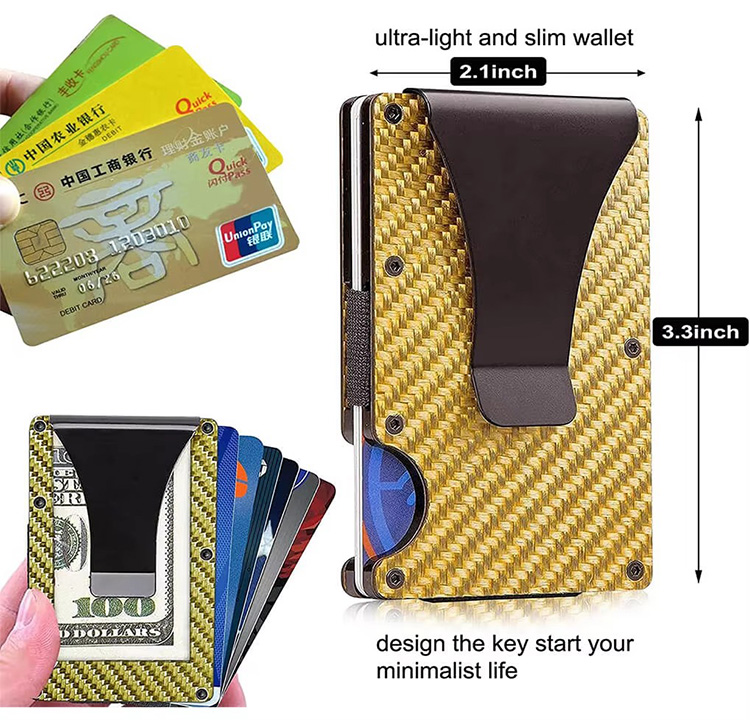
A carbon fiber metal wallet typically pairs carbon fiber panels or laminate with a metal frame or chassis—often aluminum, stainless steel, or titanium—to create a compact card-carrying device. The carbon fiber provides a lightweight, scratch-resistant outer surface with a distinctive woven appearance, while the metal core or clip supplies rigidity, mechanical functionality, and sometimes additional security features.
- Plate-style card holders: Two panels clamp cards between them, sometimes with an elastic band or expandable mechanism.
- Money-clip hybrids: A carbon fiber face with an integrated metal clip for folded bills.
- Slide or eject mechanisms: Spring or lever systems that fan out cards for quick access.
- Hybrid wallets: Carbon fiber paired with leather or elastic bands to combine classic looks with modern function.

Carbon fiber excels at delivering high strength with very low weight. Because it's made from woven carbon filaments embedded in resin, the material can resist bending and impacts while adding little bulk. When combined with a metal frame, you get a structure that is both featherlight and sturdy—ideal for daily carry.
Carbon fiber surfaces are highly resistant to abrasion and general wear, helping wallets maintain a near-new appearance for longer than typical leather. Metals used in frames—especially titanium and high-grade aluminum—add impact resistance and structural longevity.
The woven pattern of carbon fiber gives wallets a modern, technical look that appeals to people who favor minimalist, industrial, or sporty aesthetics. The feel is firm and cool to the touch, which many users perceive as premium compared with soft leather.
One major reason people switch to carbon fiber metal wallets is the reduced thickness. Traditional bifold wallets, packed with cards and folded cash, can create an uncomfortable bulge in a front or back pocket. Carbon fiber metal wallets are engineered to hold essentials in a compact stack, making them ideal for front-pocket carry and ergonomics.
Many carbon fiber metal wallets offer passive RFID shielding because the metal components block or attenuate electromagnetic fields used by contactless readers. For users concerned about unauthorized card scanning, this feature offers peace of mind without adding bulk.
Eject mechanisms, staggered card slots, and quick-push designs let users access the right card in seconds. The mechanical efficiency of some metal-frame designs reduces fumbling and keeps pockets uncluttered.
Because carbon fiber and quality metals resist wear and deformation, these wallets often outlast inexpensive leather alternatives. Buyers who treat the purchase as an investment appreciate the long usable life and lower replacement frequency.

Cultural shifts toward minimalism and conscious consumption have encouraged people to carry fewer items and value streamlined solutions. Carbon fiber metal wallets are emblematic of that mindset—small, purposeful, and efficient.
EDC enthusiasts prize gear that balances utility and aesthetics. Carbon fiber metal wallets fit perfectly into EDC culture, offering a blend of durability, compactness, and technical appeal that collectors and hobbyists celebrate.
Carbon fiber wallets often carry a “modern gadget” image, making them popular as gifts for tech-savvy friends or professionals who want to signal contemporary taste.
Frequent travelers and professionals who use public transit or attend large events appreciate slim, secure wallets with RFID protection and strong frames that can survive knocks and compressions.
- Size: Carbon fiber metal wallets are far slimmer.
- Durability: Carbon fiber and metals resist scratches and deformation better than many leathers.
- Aesthetic: Leather offers classic warmth; carbon fiber delivers a modern, technical look.
- Flexibility: Leather molds to content; rigid metal designs are less forgiving but more predictable.
- Weight: Carbon fiber panels reduce weight compared with full-metal bodies.
- Comfort: Carbon fiber feels less cold and less rigid against the body.
- Aesthetics: Mixed-material designs provide visual contrast and variety.
- Protection: Carbon fiber metal wallets offer superior structural protection for cards.
- Longevity: Fabric may wear faster; carbon fiber resists fraying and deformation.
- Expandability: Elastic wallets stretch to hold more, while rigid carbon fiber systems rely on design allowances.
Users report that carbon fiber metal wallets withstand daily rough handling better than soft wallets. Cards remain snug, and surfaces show fewer scuffs. Metal clips maintain tension over time better than elastic-only systems.
Unlike leather, carbon fiber is less sensitive to moisture and temperature extremes. Metal components can handle outdoor environments without significant performance loss, though saltwater exposure or corrosive conditions require attention depending on the metal type.
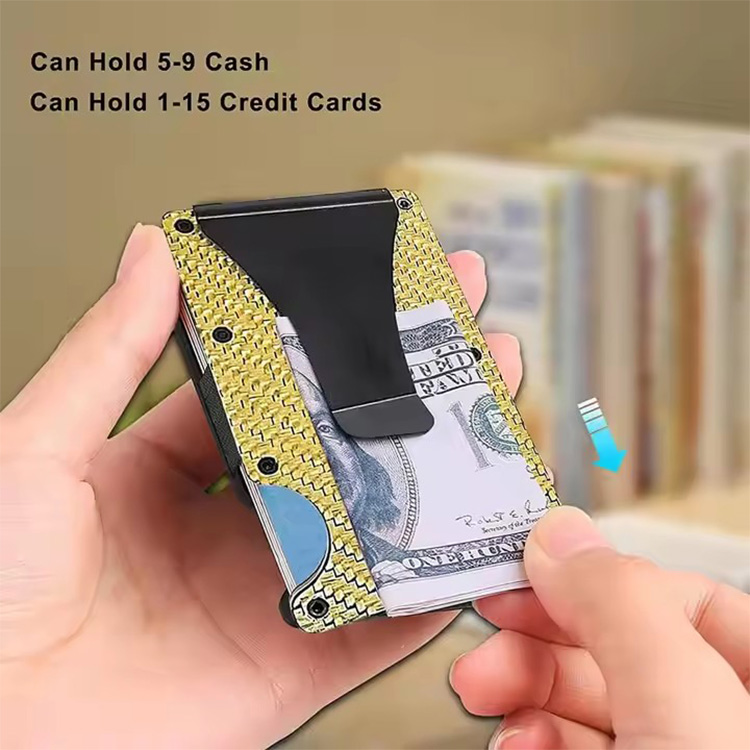
Most carbon fiber metal wallets are designed for 4–12 cards, sometimes with room for a few folded bills. Buyers must match capacity expectations to their personal carry habits to avoid overstuffing.

Manufacturers offer glossy, matte, and woven carbon finishes alongside colored resin layers, anodized metal frames, and textured accents. These choices allow buyers to select a wallet that fits their personal style or brand identity.
Many brands provide engraving, custom plates, and modular attachments—such as cash clips, coin pouches, or multi-tools—so users can tailor the wallet to specific needs.
To bridge the gap between tradition and modernity, some wallets pair carbon fiber exteriors with leather interiors, offering a familiar tactile experience with modern protection.

Carbon fiber metal wallets range from affordable mass-market units to high-end artisanal pieces. Prices vary based on the type of carbon fiber, the metal used, whether mechanisms are precision-engineered, and whether the wallet is handmade or mass-produced.
- Material grade: Aerospace-grade carbon fiber and titanium raise cost.
- Mechanism complexity: Sophisticated eject systems and custom clips add to manufacturing expense.
- Branding and craftsmanship: Boutique makers charge for hand-finishing and bespoke options.
Value is subjective: for users prioritizing longevity, slimness, and a modern look, a well-made carbon fiber metal wallet can be cost-effective across years of use.
Decide how many cards and whether you carry cash. Choose a wallet with a comfortable margin rather than the absolute minimum.
If the wallet uses springs, levers, or clips, test for smoothness and retention strength. Cheap mechanisms can wear out faster than the body materials.
- Aluminum: Lightweight and affordable but can dent.
- Stainless steel: Strong and durable but heavier.
- Titanium: Premium, corrosion-resistant, and light but expensive.
Look for warranties that cover manufacturing defects. Good customer support can make a difference if a clip loosens or a mechanism fails.
Some wallets use faux carbon fiber patterns printed on other materials. If you want real carbon fiber, verify material claims or inspect for the distinctive woven texture.
- Wipe surfaces with a soft, damp cloth and avoid harsh solvents.
- Keep metal parts dry when possible and dry them promptly if wet.
- Avoid excessive bending or forcing of mechanisms.
- For stubborn grime, use mild soap and water, then dry thoroughly.
Rigid designs don't compress to fit extra cards. Overstuffing can damage mechanisms or create wear.
Some users dislike the cool, hard feel of metal against skin when carried in a back pocket.
High-quality carbon fiber and titanium versions can be expensive compared with traditional wallets.
While carbon fiber resists scratches, resin or coated finishes can show marks over time. Metal surfaces may also accumulate scratches or dings depending on finish hardness.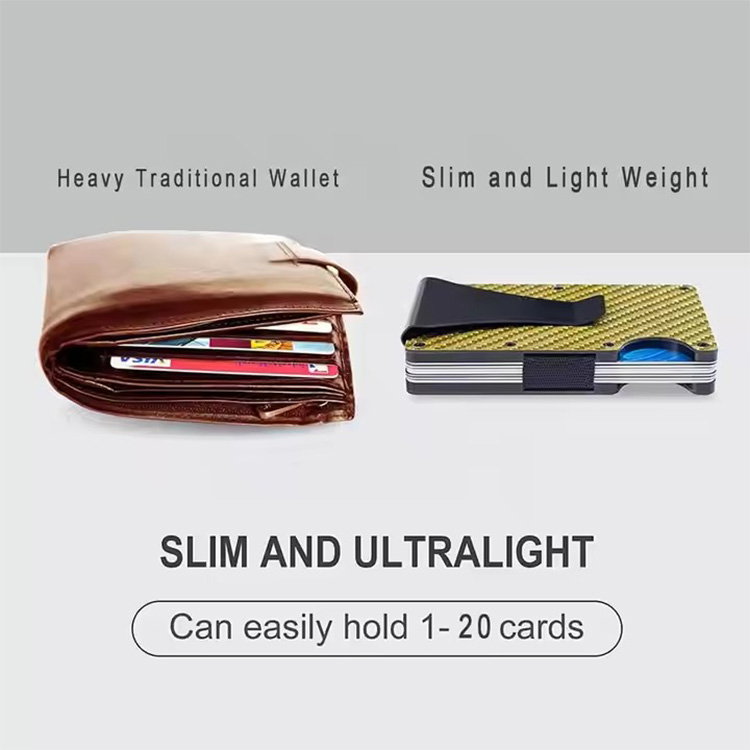
- Minimalists who carry essentials only.
- Frequent travelers and commuters valuing RFID protection and durability.
- Everyday carry enthusiasts who value engineering and aesthetics.
- Professionals seeking a modern, slim alternative to bulky leather.
- People who habitually carry many cards and cash.
- Those who prefer the warmth and stretch of leather or fabric.
- Buyers on a very tight budget who need a simple, inexpensive wallet.
As lifestyles continue to favor minimalism, tech-enabled payments, and durable, sustainable purchases, carbon fiber metal wallets are well-positioned to remain popular. Innovation may increase modularity, integrate smart features (like trackers), or use recycled carbon fiber to improve environmental credentials.
Carbon fiber metal wallets rose from a convergence of material science, lifestyle trends, and practical user needs. Lightweight yet durable, slim but protective, and richly varied in design, these wallets address many problems posed by bulkier traditional wallets. They are not without trade-offs—cost, rigidity, and limited capacity matter—but for many people, the combination of longevity, security features, and modern aesthetics outweighs the downsides. If you prioritize a slim carry, mechanical access, and a wallet that looks and feels contemporary, a carbon fiber metal wallet is an excellent choice.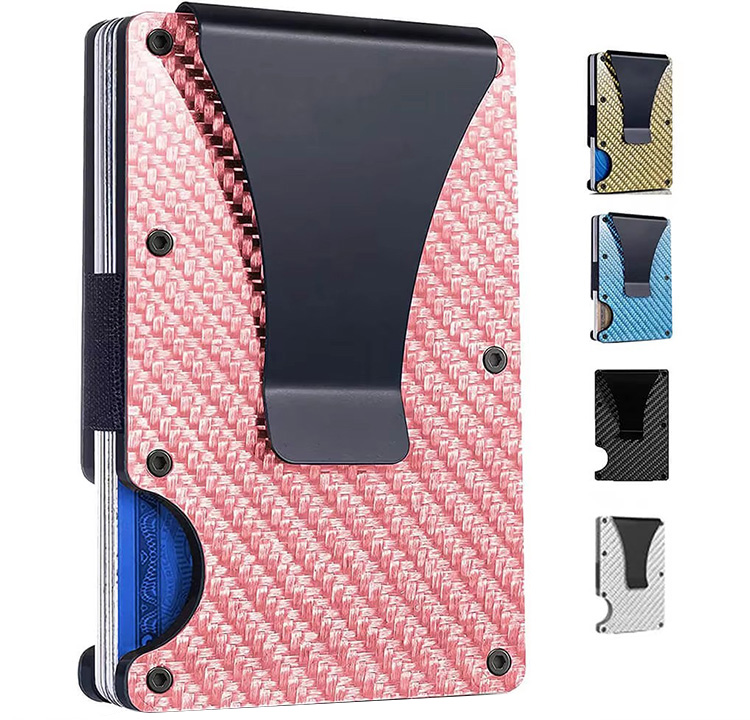
A1: Many carbon fiber metal wallets provide passive RFID shielding because the metal frame blocks or reduces electromagnetic signals used by contactless readers; however, performance varies by design and not all models block every frequency band.
A2: Yes—many models include a money clip or compartment for folded bills, though capacity is generally limited compared with a full bifold.
A3: Most designs comfortably hold between 4 and 12 cards depending on the mechanism; some expandable designs can accommodate a bit more, but rigid systems usually have a fixed comfortable capacity.
A4: No—when properly designed, the wallet holds cards snugly without bending or scratching them; ensure you choose a model with smooth edges and secure retention to prevent wear.
A5: With quality materials and typical daily use, these wallets can last many years—often outlasting leather alternatives—though lifespan depends on build quality and how the wallet is used and maintained.
A6: Prices vary widely; entry-level models are affordable while premium versions with aerospace-grade carbon and titanium frames can be costly. Choose based on desired features and budget.


