

Views: 266 Author: Princee Lee Publish Time: 03-26-2026 Origin: Princee Lee


Content Menu
● Understanding the Technology Behind the Shield
>> How Contactless Communication Works
>> The Principle of the Faraday Cage
● The Evolution of Protective Materials
● The Great Security Debate: Is RFID Blocking Necessary?
● Top Contenders for the Best RFID Blocking Wallet of 2026
>> The Ridge: The King of Minimalism
>> Ekster: The Smart Wallet Innovator
>> Bellroy: The Sophisticated Traditionalist
● How to Choose the Wallet That Is Right for You
>> Front Pocket vs. Back Pocket Carry
>> Mechanical vs. Static Designs
● How to Test and Maintain Your RFID Wallet
● Conclusion: The Verdict on the Best RFID Wallet
>> Related Questions and Answers
The humble wallet has undergone a radical transformation over the last century. For decades, the standard bifold leather wallet was a static accessory, designed primarily to hold paper currency, coins, and a handful of identification cards. However, as the global financial ecosystem shifted toward digital and contactless payments, the requirements for a personal wallet evolved from simple storage to active security. Today, the conversation around the "best" wallet is no longer just about the quality of the leather or the number of card slots; it is increasingly defined by a wallet's ability to protect its contents from high-tech threats.
RFID blocking technology has moved from a niche feature for tech enthusiasts to a standard requirement for the modern traveler and urban professional. As contactless "tap-to-pay" credit cards, electronic passports, and keyless entry cards become ubiquitous, so too does the potential for unauthorized access to the sensitive data stored on those items. This article provides a comprehensive exploration of the RFID blocking wallet landscape, examining how the technology works, the reality of the security risks involved, and a detailed review of the top contenders vying for the title of the best RFID blocking wallet in 2026.
To identify the best RFID blocking wallet, one must first understand the fundamental technology it is designed to counteract. RFID, or Radio Frequency Identification, is a form of wireless communication that uses electromagnetic fields to identify and track tags attached to objects. In the context of personal finance, your credit cards and passports contain tiny chips and antennas that transmit information when stimulated by a radio signal from a reader.
Contactless credit cards and modern passports typically operate on a high-frequency band of 13.56 MHz. When you place your card near a payment terminal, the terminal emits a radio wave that powers the chip on the card, allowing it to send back the necessary data to complete the transaction. This happens almost instantaneously and requires no physical contact, hence the term "contactless."
While this technology offers immense convenience, it also creates a theoretical vulnerability. In a process known as "RFID skimming," a malicious actor equipped with a portable RFID reader could potentially stimulate your cards while they are still inside your pocket, capturing your card number, expiration date, and other sensitive information without you ever knowing.

The primary defense against this threat is the Faraday cage, a concept named after the scientist Michael Faraday. An RFID blocking wallet acts as a portable version of this cage. By surrounding your cards with a layer of conductive material, the wallet creates a shield that distributes electromagnetic charges around the exterior of the wallet rather than allowing them to penetrate the interior.
When a radio wave hits the conductive surface of an RFID blocking wallet, the electrons in that material rearrange themselves to cancel out the field's effects on the inside. This ensures that the chip inside your card never receives the signal from the external reader, effectively "silencing" the card until you physically remove it from the wallet to use it.
The earliest RFID blocking solutions were bulky and often relied on thick layers of metal that made wallets uncomfortable to carry. However, material science has advanced significantly, allowing manufacturers to integrate protective shielding into a wide variety of styles.
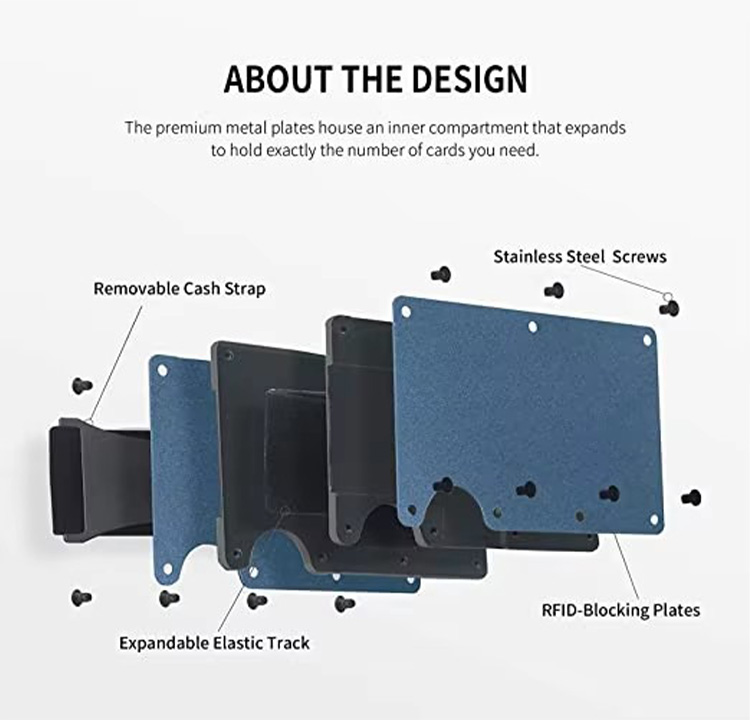
Aluminum remains one of the most effective and popular materials for RFID protection. It is naturally conductive, lightweight, and can be easily machined into sleek, minimalist frames. Many modern wallets, such as those produced by The Ridge, utilize anodized aluminum plates that provide 360-degree protection while maintaining a profile no thicker than a smartphone. These "hard shell" wallets are virtually indestructible and offer the highest level of passive shielding.
For those seeking a more premium or tactical feel, carbon fiber and titanium have become the gold standard. Carbon fiber is prized for its incredible strength-to-weight ratio and its distinct aesthetic. While it is more expensive than aluminum, it provides excellent RFID blocking capabilities in an even lighter package. Titanium, on the other hand, is favored for its extreme durability and resistance to corrosion, making it the ideal choice for those who demand a wallet that can last a lifetime in harsh environments.
One of the biggest breakthroughs in wallet design is the development of ultra-thin, conductive fabrics. These materials, often composed of a mesh of copper, nickel, or silver fibers, can be sewn directly into the lining of traditional leather wallets. This allows users to enjoy the classic look and feel of a leather bifold while still benefiting from modern digital security. The best leather RFID wallets use these high-quality linings to ensure that even the outer card slots are fully protected when the wallet is closed.
Before choosing the best wallet, it is important to address a common question: is RFID skimming a real threat, or is it a marketing myth? The answer lies somewhere in the middle, and your specific needs often depend on your lifestyle and travel habits.
Security experts generally agree that the risk of RFID skimming is relatively low compared to other forms of financial fraud. Most modern credit cards use advanced encryption and one-time transaction codes that make intercepted data difficult to use for actual purchases. Furthermore, criminals are far more likely to steal data through large-scale online breaches or physical "skimmers" placed on ATMs and gas pumps, which capture data from the card's magnetic stripe.
Despite the low statistical probability of being skimmed, RFID blocking wallets remain incredibly popular for several reasons. First, the cost of a high-quality RFID blocking wallet is often no higher than a standard wallet, making the protection a "free" or low-cost insurance policy. Second, for international travelers, the risk is slightly higher. Passports and certain government IDs contain more static information than credit cards, and protecting that data while navigating crowded airports or tourist hubs provides a significant psychological benefit.
Ultimately, the best RFID blocking wallet is one that offers security as part of a larger package of durability, functionality, and style. Even if you never encounter a digital pickpocket, the organization and build quality of a top-tier RFID wallet make it a worthwhile investment.
When evaluating the market, three brands consistently rise to the top: The Ridge, Ekster, and Bellroy. Each offers a different philosophy on what a wallet should be, catering to different types of users.
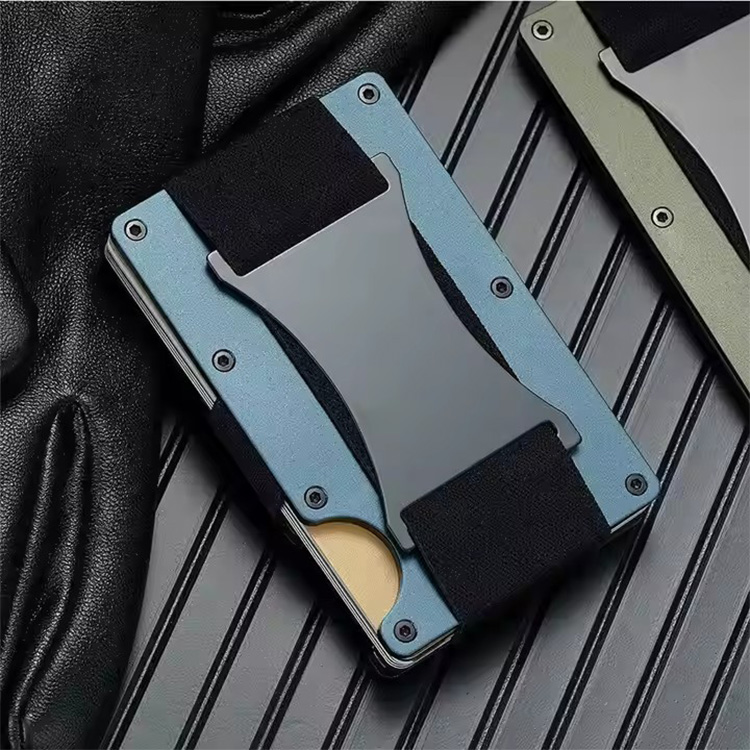
The Ridge Wallet is often cited as the catalyst for the minimalist wallet revolution. Its design is deceptively simple: two metal plates held together by a durable elastic band. This sandwich-style construction allows the wallet to expand to hold anywhere from one to twelve cards, with a profile that remains remarkably slim.
Key Features:
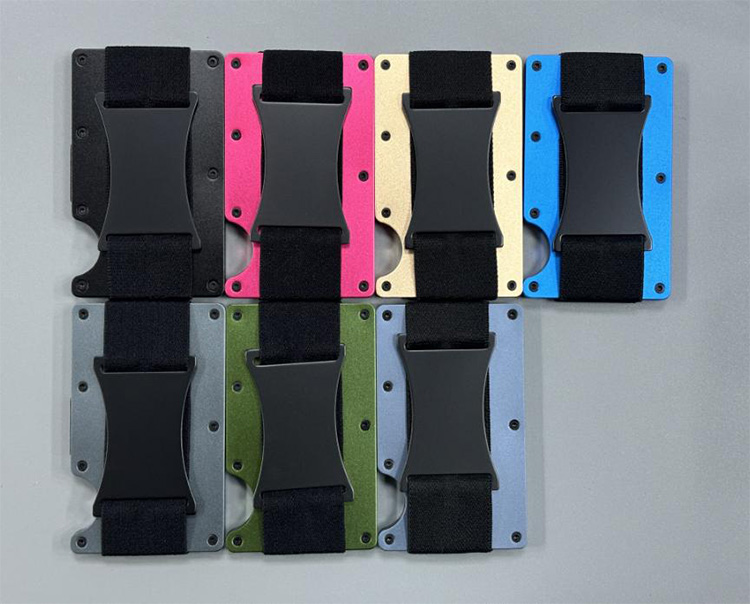
- Material Options: Available in aluminum, titanium, and carbon fiber.
- Attachment Versatility: Users can choose between a traditional money clip or a flexible cash strap for holding paper currency.
- RFID Performance: Because the cards are encased between metal plates, the RFID blocking is near-perfect.
- Longevity: Backed by a lifetime warranty, the Ridge is designed to be the last wallet you ever buy.
The Ridge is the best choice for the "everyday carry" enthusiast who wants to declutter their pockets and prioritizes rugged, industrial durability.
While The Ridge focuses on durability, Ekster focuses on speed and technology. Their "Parliament" series is famous for its patented card ejection mechanism. With the click of a button at the bottom of the wallet, your cards fan out in a tiered fashion, allowing you to grab exactly the one you need without fumbling.
Key Features:
- Rapid Access: The pop-up mechanism is the fastest way to access cards on the market.
- Premium Materials: Uses high-quality, environmentally certified leather wrapped around an aluminum cardholder.
- Tracking Capability: Ekster offers an optional solar-powered tracking card that fits into the wallet, allowing you to find it via your smartphone if it's lost.
- Expandability: While the main chamber holds 6 cards, the leather wrap provides additional slots for cash and IDs.
Ekster is the best RFID blocking wallet for the tech-savvy professional who values convenience and modern aesthetics.
Bellroy has built a reputation for creating the world's most efficient leather wallets. Unlike the tactical look of metal wallets, Bellroy products look like classic fashion accessories but are engineered with hidden features that minimize bulk.
Key Features:
- Sustainable Leather: Uses premium, eco-tanned leather that ages beautifully.
- Integrated Shielding: The RFID blocking material is seamlessly integrated into the lining, invisible to the naked eye.
- Hidden Compartments: Designs like the "Hide & Seek" include secret sections for extra cash and cards.
- Comfort: Because they are made of soft leather, these wallets are much more comfortable for back-pocket carry than metal alternatives.
Bellroy is the ideal choice for someone who wants the protection of an RFID wallet without sacrificing the classic elegance of a traditional bifold.
Identifying the "best" wallet is a subjective process that depends on your specific priorities. To make the right choice, consider the following factors:
The first step in choosing a wallet is a realistic audit of your daily carry. Most people carry far more cards than they actually use. If you can slim down to 6-8 cards, a minimalist wallet like the Ridge or Ekster will drastically improve your pocket comfort. However, if you must carry 12+ cards and significant amounts of cash, a larger RFID-protected bifold from Bellroy or Fossil may be more appropriate.
Medical professionals have long warned about the dangers of sitting on a thick wallet, which can lead to spinal misalignment and sciatica. Front-pocket wallets have become the preferred choice for ergonomics. Metal wallets are strictly front-pocket items, as sitting on them is uncomfortable and can damage the cards inside. If you are a die-hard back-pocket user, stick to a leather bifold with integrated RFID shielding.
Mechanical wallets, like those from Ekster or Secrid, offer a "fidget factor" and incredible speed. However, any mechanical device has the potential to fail over time. Static wallets, like the Ridge or a leather bifold, have no moving parts to break. Consider whether you prefer the convenience of a button or the reliability of a simple design.
Once you have purchased an RFID blocking wallet, you may want to verify that it is actually working. You don't need a lab full of equipment to do this; a simple real-world test will suffice.
The easiest way to test your wallet is at a local grocery store or cafe that accepts contactless payments. Keep your card inside your wallet and try to "tap" the entire wallet against the payment terminal. If the terminal fails to read the card, the shielding is doing its job. Note that if your wallet has an "easy-access" outer pocket, that specific pocket might be intentionally unshielded to allow for transit cards or building access badges.
- Leather Care: For leather RFID wallets, use a high-quality leather conditioner every few months to keep the material supple. Avoid overstuffing, as this can stretch the leather and eventually damage the internal RFID-blocking fabric.
- Metal Care: For metal wallets, occasionally check the screws (if applicable) to ensure they haven't loosened. Use a microfiber cloth to wipe away fingerprints and oils.
- Elastic Longevity: For wallets like the Ridge, the elastic band is the only part that will eventually wear out. Most manufacturers sell replacement elastics, allowing you to refresh the wallet for a fraction of the cost of a new one.
In the search for the best RFID blocking wallet, there is no single winner that suits everyone, but there are clear leaders in specific categories. For the modern man or woman who wants to embrace minimalism and extreme durability, The Ridge remains the undisputed heavyweight champion. Its combination of metal construction and a lifetime warranty makes it a peak example of functional engineering.
For those who prioritize speed and have a passion for gadgets, Ekster offers a "smart" experience that makes every payment feel futuristic. Their ejection mechanism is not just a gimmick; it is a genuine improvement in user experience.
Finally, for the person who values heritage, craftsmanship, and a professional appearance, Bellroy provides the perfect bridge between the old world and the new. Their wallets prove that you can protect your digital identity without looking like you are carrying a piece of military hardware.
Digital security in 2026 is about more than just passwords and firewalls; it is about physical layers of protection that fit into our daily lives. By choosing a high-quality RFID blocking wallet, you are taking a simple but effective step toward securing your personal information in an increasingly connected world.
Q1. Can an RFID blocking wallet damage my credit cards?
A1:No, RFID blocking wallets are completely safe for your cards. They use passive shielding to deflect radio waves and do not emit any harmful radiation or magnetism. In fact, hard-shell RFID wallets often protect your cards better than leather ones by preventing them from bending or cracking in your pocket.
Q2. Will my building access badge or transit card work inside an RFID wallet?
A2:In most cases, no. RFID blocking wallets are designed to block the 13.56 MHz frequency used by credit cards, which is the same frequency used by many modern transit cards and high-security building badges. If you need to use a badge frequently, look for a wallet with an unshielded external pocket or a dedicated "ID window" designed to allow signals through.
Q3. Do I need a special wallet for my passport?
A3:If you travel frequently, an RFID-blocking passport holder is a wise investment. Modern e-passports contain an RFID chip with your photo and personal details. While the data is encrypted, the extra layer of shielding prevents any unauthorized attempts to access the chip while you are in crowded public spaces like airports.
Q4. Does aluminum foil really block RFID signals?
A4:Yes, aluminum foil can act as a rudimentary Faraday cage and will block most RFID signals. However, it is not a durable or practical long-term solution. Foil tears easily and lacks the structural integrity to protect your cards from physical damage. A dedicated RFID wallet provides a more reliable and professional alternative.
Q5. Are all leather wallets now RFID-blocking?**
A5:No, many traditional leather wallets still lack RFID protection. If a wallet does not specifically state that it includes RFID-blocking technology or a conductive lining, you should assume it offers no protection against electronic skimming. Always check the product specifications before purchasing.


