

Views: 281 Author: Princee Lee Publish Time: 03-26-2026 Origin: Princee Lee


Content Menu
● The Chaos of the Traditional Keychain
>> The Problem of Bulk and Discomfort
>> The "Jingle-Jangle" Nuisance
>> Damage to Personal Property
● Defining the Smart Slim Minimalist Key Organizer
>> The Shift Toward "Smart" Features
● The Core Benefits of Making the Switch
● Material Science: Choosing the Right Build
>> Top-Grain Leather and Polymer
● The Smart Advantage: Never Lose Your Keys Again
● Is It Worth the Effort? The Setup Ritual
>> The Initial Investment of Time
● Real-World Scenarios: Who Needs It Most?
>> The Runner and Fitness Enthusiast
● Addressing the Potential Drawbacks
● The Psychological Impact of Decluttering
>> Related Questions and Answers
In the ever-evolving world of Everyday Carry (EDC), the quest for the perfect pocket setup has become more than just a hobby—it is a pursuit of efficiency, aesthetics, and organization. Among the various tools that have emerged to streamline our daily lives, the smart slim minimalist key organizer stands out as a transformative accessory. But is it a necessary investment or just a passing trend? To answer this, one must look closely at the frustrations of traditional key management and the sophisticated solutions offered by modern engineering.
For decades, the standard way to carry keys has been the split ring. While functional, the traditional keychain is fundamentally flawed in several ways that many of us have simply learned to tolerate.
Traditional keychains are essentially clusters of jagged metal. When placed in a pocket, they create an unsightly bulge and often dig into the leg. This "pocket bulge" not only ruins the silhouette of well-fitted clothing but also causes physical discomfort during long periods of sitting or walking. Because keys on a ring are free to rotate and overlap in random patterns, they occupy significantly more volume than the sum of their parts.
Noise is another significant drawback. Every step taken with a traditional keychain results in a metallic clinking sound. In quiet environments—such as offices, libraries, or even when walking home late at night—this constant noise can be an annoying distraction. More than just a nuisance, the "jingle" is a sign of inefficiency; it represents keys rubbing against each other, causing unnecessary wear and tear.
Perhaps the most practical reason to move away from the split ring is the damage it causes. Keys are made of hard metals designed to withstand torque. When they share a pocket with a smartphone, a leather wallet, or a pair of expensive sunglasses, they act like miniature saws. Scratched screens and punctured pocket linings are common casualties of the unorganized keychain.
A minimalist key organizer is designed to solve these issues by borrowing a concept from the Swiss Army Knife. Instead of letting keys dangle freely, it stacks them neatly between two protective plates or within a wrap.
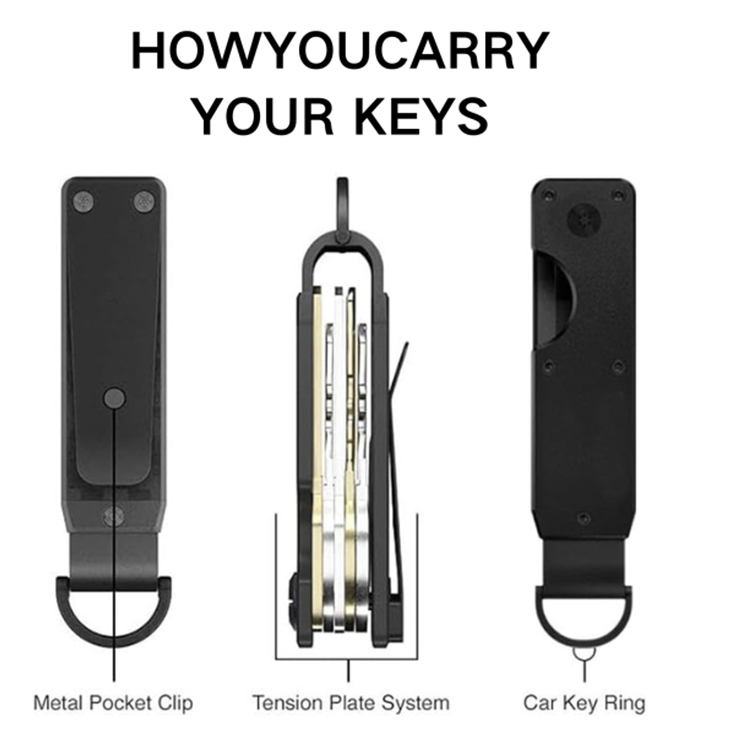
Most high-quality organizers use a post-and-screw system. Keys are threaded onto one or two posts, separated by small washers that provide just enough tension to keep the keys in place while allowing them to be swiveled out with a flick of the thumb. This design ensures that the keys remain in a fixed, linear stack, drastically reducing the overall footprint.
What elevates a "minimalist" organizer to a "smart" one is the integration of technology. In recent years, brands have begun incorporating Bluetooth tracking modules, such as those powered by Tile or proprietary find-my networks. This allows users to locate their keys via a smartphone app or use their keys to find their phone. Beyond tracking, "smart" can also refer to modularity—the ability to add LED flashlights, multi-tools, or even contactless payment chips to the same slim chassis.
If you are still questioning whether you need such a device, it is helpful to categorize the benefits into three main pillars: organization, protection, and psychological clarity.
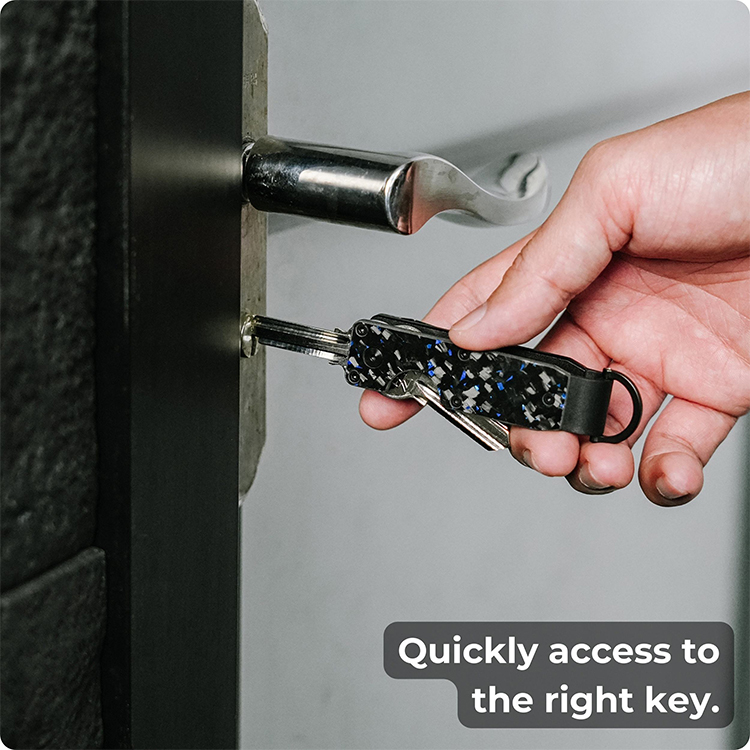
The primary advantage is the transformation of a messy clump into a sleek, rectangular tool. By fixing the keys in a specific order, you develop muscle memory. You no longer need to look at your keys to find the right one; you know the front door is the first key on the left, and the office key is the second on the right. This micro-efficiency adds up over weeks and months, removing the minor but frequent frustration of fumbling at your doorstep.
By enclosing the jagged edges of your keys, an organizer acts as a buffer. It protects your phone screen from scratches and prevents your keys from wearing holes in your pockets. Furthermore, because the keys are held under tension, the "jingle" is completely eliminated. You move silently, which contributes to a more polished and professional presence.
Let's be honest: traditional keychains look cluttered. A minimalist organizer, whether crafted from top-grain leather, carbon fiber, or aircraft-grade aluminum, serves as a piece of functional jewelry. It communicates a sense of order and attention to detail. For many, the visual satisfaction of a well-organized EDC kit provides a small but meaningful boost in daily confidence.
The durability and feel of your key organizer depend heavily on the materials used. The market offers a wide range of options to suit different styles and environments.
Aluminum is the most popular choice for its balance of weight and strength. It is incredibly light, making it ideal for those who want to minimize the weight in their pockets. Many aluminum organizers are anodized, allowing for a variety of colors that resist scratching.
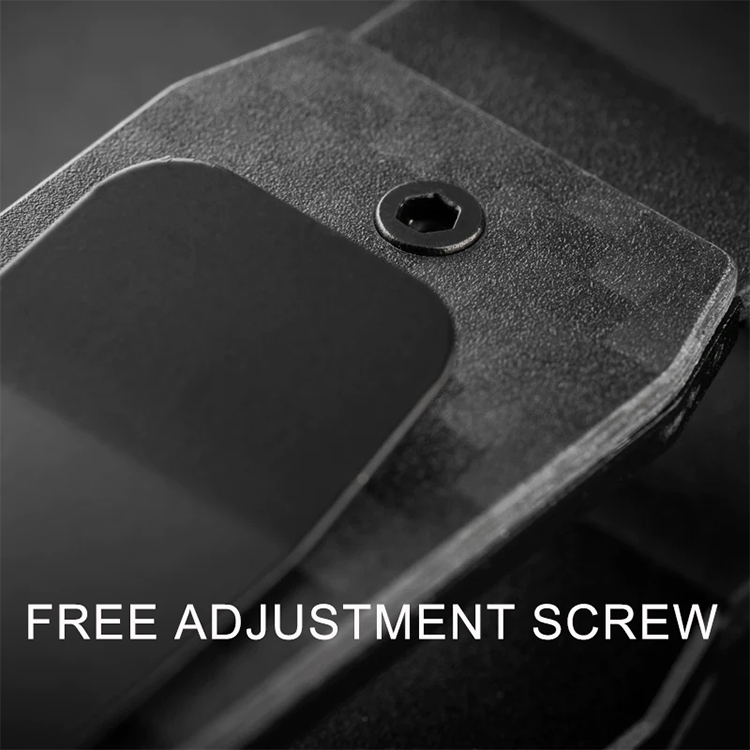
For the high-end enthusiast, carbon fiber and titanium are the gold standards. Carbon fiber offers an unmatched strength-to-weight ratio and a modern, high-tech look. Titanium, on the other hand, is prized for its biocompatibility, extreme durability, and the beautiful patina it develops over time. These materials are for those who view their EDC as a long-term investment.
If you prefer a more classic or "gentlemanly" aesthetic, leather wraps are an excellent choice. They feel soft in the hand and silent against other objects. For those who prioritize utility and budget, high-density polymers or "flex" materials offer a rugged, lightweight alternative that can survive harsh environments without breaking the bank.
The "smart" aspect of these organizers is perhaps the strongest argument for their necessity. The average person spends thousands of minutes over their lifetime searching for misplaced keys.
By choosing an organizer with built-in Bluetooth tracking, you gain peace of mind. If your keys fall between the couch cushions or are left at a restaurant, your phone will alert you. Some systems even offer community-based tracking, where other users of the same app can anonymously update the location of your lost item if they pass by it.
Modern organizers are often modular. You can swap out a key for a bottle opener, a flathead screwdriver, or a USB drive. This turns your key holder into a pocket multi-tool, reducing the need to carry separate items. Some even feature small LED lights, which are incredibly helpful for finding a keyhole in the dark.
One common critique of minimalist key organizers is that they require a "setup" period. Unlike a split ring where you just slide a key on, an organizer requires you to unscrew the posts, arrange the keys with washers, and find the right balance of tension.
Yes, the first setup might take ten minutes. You have to ensure that the keys are leveled so the plates sit flat. However, most users find this ritual satisfying. It is an opportunity to declutter—to remove the old gym membership tags, the keys to a previous apartment, and the broken trinkets that have accumulated over time.

Like any mechanical tool, a key organizer may require occasional maintenance. The screws might loosen over months of use, requiring a quick tighten with a coin or screwdriver. High-quality brands often include locking mechanisms or rubber O-rings to prevent this, but it is a factor to consider for those who want a completely "set it and forget it" solution.
While everyone can benefit from better organization, certain lifestyles make a slim key organizer almost essential.
If you spend your day in business attire, a bulky keychain is a distraction. A slim organizer fits perfectly in a suit pocket or a slim briefcase, maintaining a professional appearance while ensuring you have what you need.
For those who run or go to the gym, the bouncing noise of keys is a major irritant. A minimalist organizer keeps the keys silent and compact, fitting easily into a running belt or a small pocket in gym shorts without slapping against the leg.
If your life is integrated with gadgets, a smart key organizer is the logical next step. It bridges the gap between traditional physical security (the metal key) and modern digital convenience (tracking and modularity).
No product is perfect, and it is important to acknowledge why a minimalist organizer might *not* be for everyone.
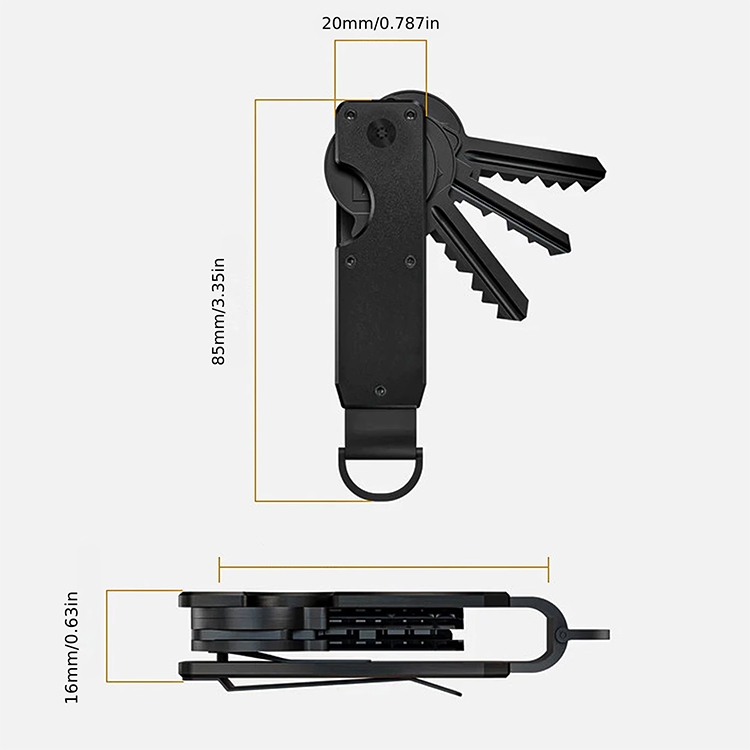
The biggest challenge for slim organizers is the modern car key. Car fobs are thick, plastic, and often contain buttons for remote entry. They generally do not fit *inside* the stack of a minimalist organizer. Most brands solve this by including a "D-ring" or a loop piece on the end of the organizer, allowing you to attach your car fob to the outside. While this slightly increases the bulk, it still keeps the rest of your keys organized.
Most organizers are designed for 2 to 8 keys. If you are a property manager or someone who carries 20+ keys daily, a slim organizer might be too restrictive. While expansion kits exist to accommodate more keys, the device eventually becomes quite thick, losing some of its "minimalist" appeal.
Beyond the physical benefits, there is a psychological aspect to organizing your keys. Our physical environment often reflects our mental state. A cluttered, noisy keychain can be a subtle source of stress.
By choosing a specific tool to hold your keys, you are making a statement of intentionality. You are deciding that even the smallest parts of your day deserve to be handled with care and efficiency. This "minimalist mindset" often spreads to other areas of life, encouraging you to carry less, but carry better.
The goal of all great design is to remove friction. A smart slim minimalist key organizer removes the friction of noise, the friction of pocket damage, and the friction of lost time. It is a small upgrade that provides a high frequency of reward, given that most of us use our keys several times every single day.
So, do you need a smart slim minimalist key organizer? If you value your time, your clothing, and your peace of mind, the answer is a resounding yes. While the traditional keychain has served its purpose for a century, it is an artifact of a less organized era.
The modern organizer is more than just a holder; it is a sophisticated piece of engineering that brings silence, protection, and intelligence to your pocket. Whether you choose the rugged durability of titanium, the elegance of leather, or the high-tech tracking of a smart module, you are investing in a tool that simplifies your daily routine. In a world that is increasingly complex, finding a way to make your most essential tools work better for you is not just a luxury—it is a smart move toward a more efficient life.
Q1: Will my large plastic-headed keys fit in a slim organizer?
A1:Most minimalist organizers are designed to fit standard house keys. If your key has a very thick plastic head, it might not fit inside the stack. However, many users find that removing the plastic cover or using the included loop piece/D-ring to attach it to the outside is a viable solution. Some organizers are specifically designed with wider chassis to accommodate slightly larger keys.
Q2: How do I prevent the screws from coming loose over time?
A2:High-quality organizers often include "anti-loosen" washers or specialized screw designs to maintain tension. If yours does not, a tiny drop of low-strength thread locker (like purple Loctite) on the screw threads can keep them secure while still allowing you to unscrew them manually when needed.
Q3: Is the Bluetooth tracking feature worth the extra cost?
A3:If you have ever lost your keys or spent more than five minutes looking for them in your house, the answer is yes. The ability to "ring" your keys from your phone—and vice-versa—saves significant stress. It effectively turns a $30-50 accessory into an insurance policy for your daily routine.
Q4: Can these organizers hold things other than keys?
A4:Yes, that is one of their greatest strengths. Most brands offer a variety of "inserts" including bottle openers, multi-tools, USB flash drives, pocket knives, and even combs. This allows you to customize the device to your specific daily needs.
Q5: Will a metal key organizer scratch my phone if they are in the same pocket?
A5:While the organizer itself is much smoother than raw keys, a metal (aluminum or titanium) organizer can still scratch a glass screen if pressed hard enough. However, the risk is significantly lower than with a traditional keychain. For maximum protection, many people choose leather-wrapped organizers which provide a soft exterior buffer.


