

Views: 228 Author: Princee Lee Publish Time: 03-09-2026 Origin: Princee Lee


Content Menu
>> The Evolution of the Everyday Carry
>> Understanding the Mechanism: How It Works
● Core Features of the Modern Pop-up Wallet
>> RFID Blocking Technology: Digital Security
>> Material Science: Aluminum, Carbon Fiber, and Leather
● Why You Should Switch to an Automatic Pop-up Wallet
>> The Psychology of De-cluttering
● Leading Brands and Innovations in 2025 and 2026
>> Ekster: The Smart Wallet Pioneer
>> Secrid: The Original Dutch Design
>> Fantom: The Fan-out Specialist
>> Groove Life and Tactical Options
● Customization and Accessories
● How to Choose the Right Pop-up Wallet for You
● The Environmental and Ethical Impact
>> Vegetable-Tanned vs. Synthetic Leather
>> Longevity as Sustainability
>> Leather Care
● The Future of the Wallet: What's Next?
>> Conclusion
>> Related Questions and Answers
An automatic pop-up wallet is a compact card holder that uses an internal mechanism to raise multiple cards when you press or slide a trigger. Compared with a traditional bifold wallet, it offers faster card access, a slimmer profile, and better organization for everyday carry.
The traditional leather bifold, once a symbol of adulthood and fiscal responsibility, is rapidly becoming a relic of the past. In its place, a new generation of pocket hardware has emerged: the automatic pop-up credit card wallet. This innovation is not merely a fashion statement but a fundamental shift in how we interact with our most essential tools. As society moves toward a cashless economy, the demand for a slim, secure, and efficient way to carry plastic has never been higher.
For decades, the wallet remained largely unchanged. It was a bulky folder meant to hold paper bills, coins, family photos, and a stack of receipts. However, as the digital revolution transformed our currency into data stored on magnetic strips and EMV chips, the physical footprint required to carry wealth shrank. The "George Costanza" wallet—overflowing and back-straining—became a point of ridicule rather than a necessity.
The "Everyday Carry" (EDC) movement, which focuses on the utility and aesthetic of daily essentials, paved the way for minimalist wallets. Early iterations were simple elastic bands or metal plates held together by O-rings. While these were slim, they lacked the elegance and ease of use that modern consumers craved. This gap in the market led to the invention of the ejector mechanism, giving birth to the automatic pop-up credit card wallet.
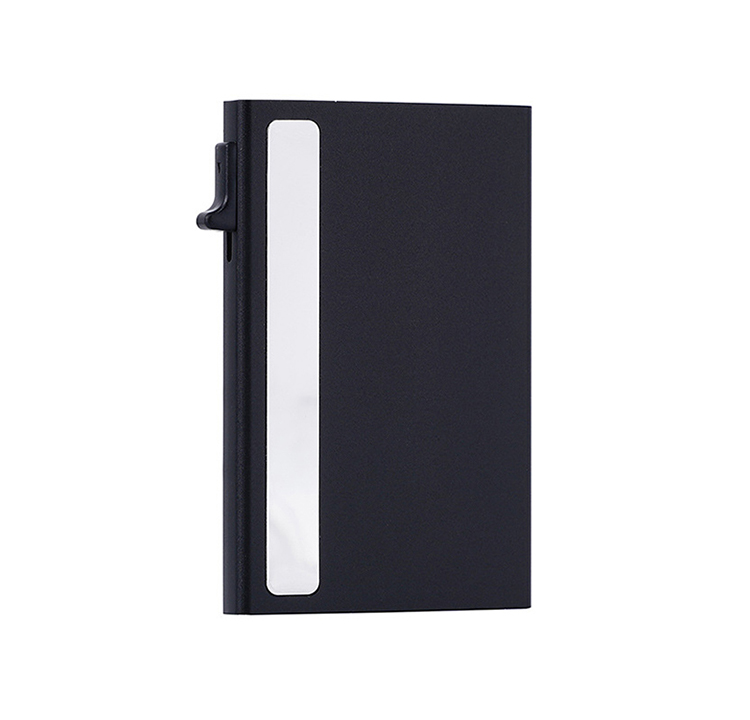
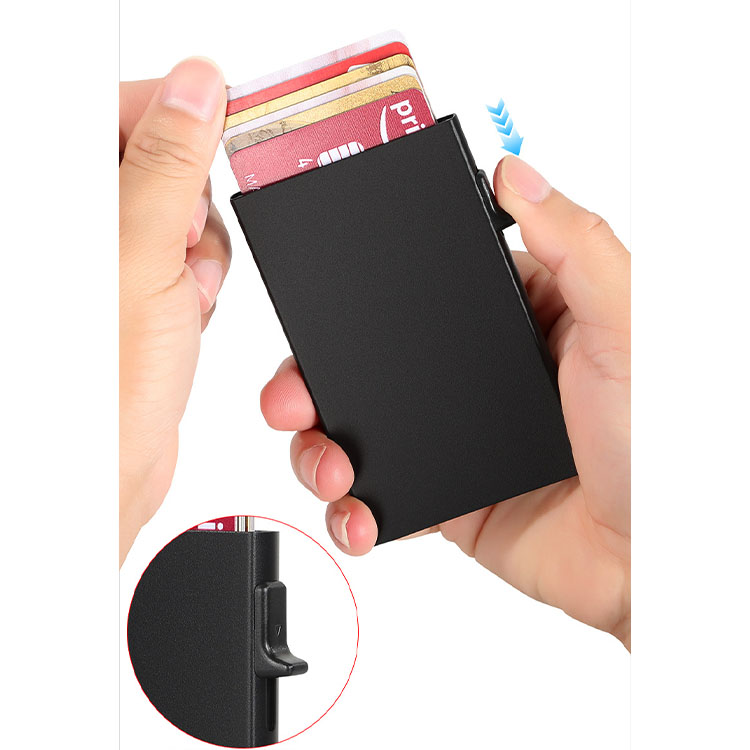
At the heart of every automatic pop-up credit card wallet is a precision-engineered internal system. Unlike a standard sleeve where you must dig for your cards, the pop-up wallet utilizes a trigger—usually a small lever or button at the base. When activated, a spring-loaded arm pushes the cards upward.You select the card you need and return the mechanism to its closed position.
The genius of this design lies in the "fanning" effect. The cards do not just slide up in a single block; they are staggered at different heights. This allows the user to identify and grab the specific card they need without fumbling through the entire deck. The internal chamber is typically lined with silicon or high-friction materials that prevent the cards from falling out, even if the wallet is shaken upside down.
When evaluating an automatic pop-up credit card wallet, it is essential to look beyond the surface. These devices are complex tools that balance engineering with ergonomics.
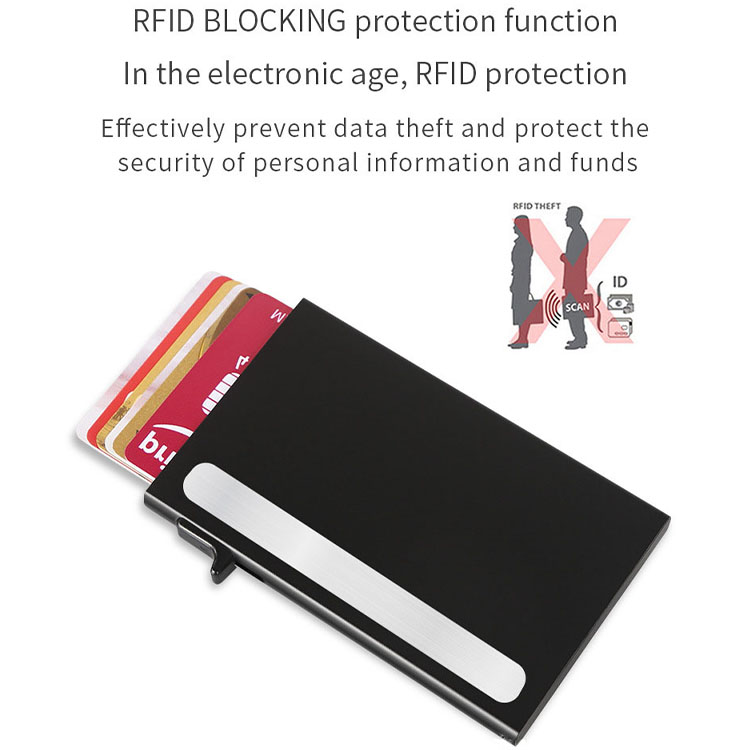
One of the most significant advantages of an automatic pop-up wallet is its inherent security. Most of these wallets are constructed with an aluminum or titanium core. These metals act as a Faraday cage, blocking Radio Frequency Identification (RFID) and Near Field Communication (NFC) signals.
In an era where "digital pickpocketing" is a growing concern, RFID blocking prevents hackers from using handheld scanners to skim credit card information through your pocket. When the cards are tucked inside the metal chamber, they are invisible to electronic readers. They only become "active" when you trigger the pop-up mechanism to make a payment.
The choice of material dictates both the durability and the aesthetic of the wallet.
- Aluminum: Aerospace-grade 6061-T6 aluminum is the industry standard. It is lightweight, incredibly strong, and provides the best RFID protection.
- Carbon Fiber: For those seeking a high-tech, tactical look, carbon fiber offers an unmatched strength-to-weight ratio. It is virtually indestructible and highly resistant to scratches.
- Leather: Many brands wrap their metal chambers in premium top-grain or full-grain leather. This creates a bridge between traditional style and modern function. Over time, the leather develops a patina, making the wallet look better as it ages.
The primary goal of a pop-up wallet is to maintain a slim silhouette. Most mechanisms are designed to hold between 5 and 7 cards. Some models include external pockets or cash straps to accommodate additional cards and paper currency. Despite this capacity, the thickness of a fully loaded pop-up wallet is often less than half that of a traditional empty bifold.
| Feature | Automatic Pop-Up Wallet | Traditional Wallet |
|---|---|---|
| Card access | Quick pop-up mechanism | Manual access |
| Capacity | Usually limited | Usually higher |
| Size | Slim profile | Depends on design |
| Card organization | Easy access | Depends on slots |
| Best for | Minimalist EDC | Higher card and cash capacity |
The transition from a traditional wallet to an automatic one is more than a change in hardware; it is a change in lifestyle.

Imagine standing at a checkout counter. In a traditional wallet, you open the flap, scan multiple slots, and use your fingernails to pry out the right card. With an automatic pop-up wallet, a single click of the thumb presents all your cards in a neat fan. You can select the card, pay, and slide it back in within seconds. This frictionless experience is why many users never return to old-fashioned wallets.
Carrying a thick wallet in your back-pocket can cause "Piriformis Syndrome," a condition where the wallet puts pressure on the sciatic nerve, leading to lower back pain and leg numbness. Pop-up wallets are designed specifically for front-pocket carry. By moving your wallet to the front, you eliminate the risk of postural issues and make it significantly harder for traditional pickpockets to steal your belongings.
Adopting a minimalist wallet forces you to audit what you truly need. Do you really need that library card from three years ago or a stack of expired coupons? Most people find that they only use two or three cards daily. By limiting your capacity, you simplify your life and reduce the mental clutter associated with carrying unnecessary items.
The market for automatic pop-up wallets is competitive, with several key players pushing the boundaries of what these devices can do.
Ekster has become synonymous with the "smart wallet" movement. Their flagship models feature a patented trigger mechanism that is widely considered the smoothest in the industry. Beyond the pop-up feature, Ekster has integrated tracking technology. Using a solar-powered tracker card, you can locate your wallet via a smartphone app if it ever goes missing. This integration of hardware and software sets a high bar for the competition.
Secrid is often credited with inventing the modern card protector. Their wallets are manufactured in the Netherlands with a focus on social responsibility and craftsmanship. The Secrid mechanism is mechanical and tactile, offering a satisfying "click" that many enthusiasts prefer. Their designs often feature a more classic, rounded look compared to the angular designs of their competitors.
While most pop-up wallets push cards straight up, Fantom wallets use a unique thumb-swipe mechanism that fans the cards out in a wide arc. This provides perhaps the best visibility of all cards at once. Fantom wallets are also highly modular, allowing users to add attachments like coin holders or key organizers.
For the outdoor enthusiast, brands like Groove Life offer ruggedized pop-up wallets. These are built to withstand extreme environments, featuring heavy-duty materials and simplified mechanisms that won't jam with sand or dirt. They often include a lifetime warranty, emphasizing their "built-for-life" philosophy.

The modern pop-up wallet is rarely just a cardholder. It is a modular system that can be tailored to your specific needs.
The fear of losing a wallet is a major deterrent for many. However, with the rise of the Apple AirTag and specialized Bluetooth trackers like Chipolo or Tile, pop-up wallets have adapted. Many now feature dedicated "AirTag slots" or are designed to be thin enough to house a credit-card-shaped tracker. This means your wallet is never truly lost; it's just a "ping" away on your phone.
Some manufacturers have introduced magnetic or clip-on modules. If you know you're going to be carrying cash one day, you can clip on a money strap. If you need more cards, you can attach an extra sleeve. This flexibility allows the wallet to grow or shrink depending on your daily requirements.
With the ubiquity of iPhones, MagSafe-compatible pop-up wallets have become a significant trend. These wallets use powerful magnets to snap onto the back of a phone. This combines two of your most important items—phone and wallet—into a single, cohesive unit. High-end MagSafe pop-up wallets even include shielding to ensure the phone's magnets don't interfere with the wallet's cards.
With so many options on the market, selecting the perfect automatic pop-up credit card wallet can be overwhelming. Consider the following factors before making a purchase.
How many cards do you actually carry? If you have more than eight cards that you use regularly, a standard pop-up wallet might be too small. You should look for "bifold" versions of pop-up wallets which combine the metal chamber with extra leather slots. However, if you only carry 4-5 cards, a "cardholder-only" model will offer the slimmest profile.
Different brands place the trigger in different locations. Some are at the bottom, meant to be pressed with the pinky finger. Others are on the side, designed for thumb activation. If possible, try to handle different models to see which feels most natural to your hand's grip.
Mechanical parts can eventually wear out. Check the manufacturer's warranty. Reputable brands like Secrid and Ekster offer multi-year warranties on their internal mechanisms. It is also worth checking if the mechanism is serviceable or if it requires a full replacement if it breaks.

In recent years, the industry has shifted toward sustainability. Many companies are now using recycled aluminum and eco-friendly leather alternatives.
Traditional leather tanning often involves harsh chemicals. Premium brands are increasingly using vegetable-tanned leather, which uses natural tannins from bark and leaves. This process is better for the environment and results in a more durable product. For those who avoid animal products entirely, high-quality vegan leathers and recycled ocean plastics are becoming common options.
The most sustainable product is the one you don't have to replace. Unlike cheap department-store wallets that fall apart after six months, high-quality automatic pop-up wallets are engineered to last for years. By investing in a durable piece of gear, you reduce waste and lower your overall consumption.
To ensure your automatic pop-up wallet functions smoothly for years, a little maintenance goes a long way.
Over time, pocket lint and dust can enter the card chamber. This can cause the cards to stick or the lever to feel "crunchy." To fix this, simply remove all cards and use a can of compressed air to blow out the debris. Avoid using oils or lubricants inside the chamber, as these will attract more dust and potentially ruin your cards.
If your wallet has a leather exterior, treat it like a pair of high-end shoes. Occasional application of a leather conditioner will keep the material supple and prevent it from cracking. If it gets wet, let it air dry naturally rather than using a heat source, which can cause the leather to warp.
For the best fanning effect, place your most-used cards at the front and back of the stack. If you have embossed cards (with raised numbers), they take up more space than flat cards. If your wallet feels too tight, try alternating the orientation of embossed cards so the numbers don't overlap.
As we look toward 2030, the "automatic" nature of these wallets may evolve further. We are already seeing the beginning of biometric integration, where a fingerprint sensor on the wallet allows it to open or "unlock" cards for use. There is also the potential for integrated displays that show your current balance or recent transactions via a low-power E-ink screen.
However, the core appeal will remain the same: the perfect marriage of form and function. The automatic pop-up credit card wallet represents a mastery of small-scale engineering. It proves that even the most mundane objects can be reinvented to better suit the needs of the modern human.
The shift toward automatic pop-up credit card wallets is not just a passing trend in men's fashion; it is a logical response to the evolution of commerce. By combining security, speed, and a minimalist aesthetic, these wallets offer a superior way to navigate the world. Whether you are a tech enthusiast looking for a trackable smart wallet or a minimalist seeking to slim down your pocket, there is a pop-up wallet designed for your lifestyle. As we move further into a digital-first world, your wallet should be more than just a pouch for cards—it should be a high-performance tool that enhances your daily life.
Most high-quality pop-up wallets use internal friction strips or silicon grippers. These are designed to hold the cards securely in place even if the wallet is dropped or shaken vigorously. However, the grip can be less effective if you only have one or two cards in a chamber designed for six.
Yes, though the capacity is limited compared to a bifold. Most pop-up wallets include a "money strap," a "money clip," or a foldable leather flap where you can tuck a few bills. They are primarily designed for cards, so they are best for users who only carry cash occasionally.
Yes, the metal chamber will block all signals, including office key cards or bus passes. If you need to use a card for "tap-to-enter" without removing it, you should choose a wallet that has an external, non-RFID-shielded pocket.
Most chambers are designed to hold 5 to 6 standard credit cards. If your cards are flat (non-embossed), you might be able to fit a 7th. If you have many embossed cards, the capacity might drop to 4 or 5.
While any mechanical device can fail, reputable brands test their mechanisms for over 100,000 cycles. Under normal usage, these mechanisms are very durable. Problems usually only arise if foreign objects (like coins) are forced into the chamber.
A pop-up wallet uses a mechanical trigger or lever to move the cards upward from an internal card chamber. When the trigger is activated, the cards are pushed or guided upward in a staggered arrangement, making it easier to select a specific card. After the card is removed, the remaining cards can be pushed back into the chamber. Different manufacturers use different mechanisms, so the exact operation and card capacity vary by design.
A well-made pop-up wallet can be durable enough for everyday use. Its durability depends mainly on the quality of the card-ejection mechanism, materials, construction, and how heavily it is loaded. Aluminum or stainless-steel bodies can provide good structural protection, while the internal mechanism should be designed to withstand repeated opening and closing. Avoid overloading the wallet, as excessive card pressure can affect the mechanism over time.
Pop-up metal wallets prioritize quick card access. Compare material durability, card capacity, and RFID-shielding performance across popular models before choosing one for everyday carry.


