
Views: 289 Author: Gstar Technology (Shenzhen) Co., Ltd Publish Time: 03-03-2026 Origin: Site


Content Menu
>> Introduction
● What Is a PSA TPU Gradient Slab Bumper Guard Protector?
>> Manufacturing techniques for gradient finishes
● Protection Benefits — What They Safeguard
>> Scratch reduction and stacking support
>> Impact mitigation versus shipping protection
● Aesthetic and Display Considerations
>> Photography and presentation
● Installation and Removal — Best Practices
>> Safe removal
>> Reuse tips
● Pros, Cons, and Real-World Tradeoffs
● Buying Guide — How to Choose the Right Bumper
● Care, Maintenance, and Longevity
>> Storage and long-term preservation
● Use Cases and Collector Strategies
● Troubleshooting Common Problems
● Environmental and Ethical Considerations
● Frequently Asked Questions (Q&A)
The PSA TPU Gradient Slab Bumper Guard Protector has become a popular accessory among collectors who own PSA-graded trading cards. This accessory combines functional protection for vulnerable slab edges with decorative gradient finishes that elevate display aesthetics. The following article integrates a comprehensive overview of what these bumpers are, how they are made, how to choose and use them, care and preservation tips, and practical strategies for collectors. The goal is to provide a single, complete reference that covers everything from materials and fit to long-term preservation and collector use cases.
A PSA TPU gradient slab bumper guard protector is a snap-on or stretch-fit sleeve designed to fit around the perimeter of a standard PSA acrylic slab. It is typically made from thermoplastic polyurethane (TPU), a flexible polymer that balances clarity and impact resistance. The bumper covers the short and long edges, and sometimes the corners, of the slab to help prevent chips, scuffs, and other edge damage while adding a colored gradient accent to the slab's visible edge.
- Edge and corner protection: The bumper provides a cushioning layer where the slab is most likely to chip or dent.
- Surface separation: When stacking graded slabs, the bumper creates a buffer to prevent direct acrylic-to-acrylic contact that can cause scratches.
- Aesthetic enhancement: Gradient finishes add color and style without altering the slab itself, allowing collectors to personalize displays.
- Handling aid: Bumpers often improve grip and reduce the chance of accidental slippage during handling.
TPU is commonly chosen for slab bumpers because it offers a useful balance of mechanical properties:
- Durability: TPU resists tearing and maintains shape over repeated use.
- Clarity: High-grade TPU can be quite transparent, minimizing visual obstruction of the slab face and label.
- Elasticity: TPU stretches enough to snugly fit a PSA slab while returning to shape when removed.
- Impact absorption: Its slight flexibility helps disperse minor impacts to edges and corners.
Gradient slab bumpers are produced using methods that incorporate color transitions directly into the TPU material rather than relying solely on surface paint. Common techniques include:
- Gradient dyeing during molding: Different pigments are introduced to the mold so the TPU cures with a smooth color transition.
- Co-injection or overmolding: Multiple colored TPU streams are joined during molding to create gradient effects along the bumper edge.
- Embedded embellishments: Some limited editions include fine glitter or metallic flakes mixed into the TPU matrix to add sparkle without loose particles.
When evaluating the construction quality of a bumper:
- Uniform color transition without streaks suggests good pigment mixing.
- Precise edge molding that aligns with slab corners avoids label obstruction.
- Consistent wall thickness prevents weak spots that could tear or deform.
- Odor and finish: Low-odor TPU and smooth, bubble-free surfaces indicate better raw materials and finished goods.
Most gradient TPU bumpers are designed for PSA-standard slabs, which share consistent dimensions across standard single-card grades. However, other grading companies (such as Beckett or CGC) use different slab dimensions and bevels, so compatibility must be checked. Some bumper manufacturers produce variants specifically sized for alternate slab brands.
- Measure your slab: Compare length and width to the product's listed dimensions.
- Inspect corners and notches: Confirm the bumper's internal edge profile will not cover or press against the grade label.
- Look for fit guides: Reputable sellers provide fit photos or diagrams showing the bumper on a PSA slab.
- Snug wrap: A correct bumper should fit snugly without excessive stretching.
- Slight removal effort: A well-fitting TPU bumper typically requires gentle prying at a corner to remove it safely.
- Reusability: TPU bumpers are often reusable and maintain fit after multiple applications, provided they are not overstretched.

Edges and corners are the most vulnerable points of an acrylic slab, and bumpers reduce the chance of chipping during casual handling, shelving, or short-distance transit. The TPU material cushions impacts that would otherwise concentrate force directly on acrylic edges.
When slabs are stacked without a buffer, rubbing and micro-scratching can occur; bumpers add a dedicated contact surface that's less abrasive than acrylic. Many bumper designs also align or interlock slightly to create stable stacked columns, improving display security.
While bumpers offer useful protection for everyday handling, they are not a replacement for robust shipping packaging. For long-distance transit or heavy-duty shipping, bumpers should be paired with proper padding, corner protectors, and rigid boxes.
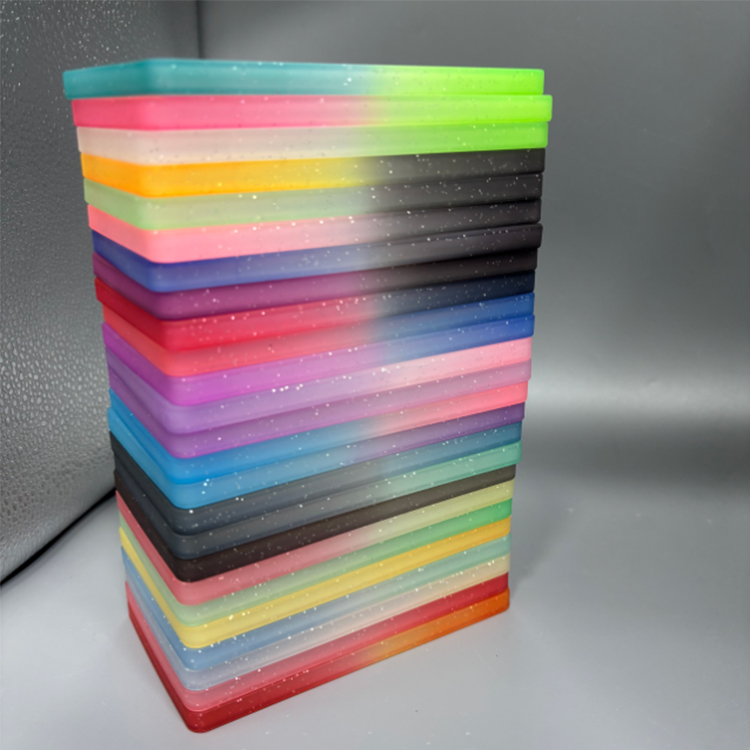
Gradient bumpers allow collectors to:
- Coordinate by set or theme: Assign colors to card sets, years, or franchises.
- Signal importance: Use specific gradients to mark higher-value or favorite cards.
- Create visual flow: Arrange shelves so color transitions form pleasing patterns.
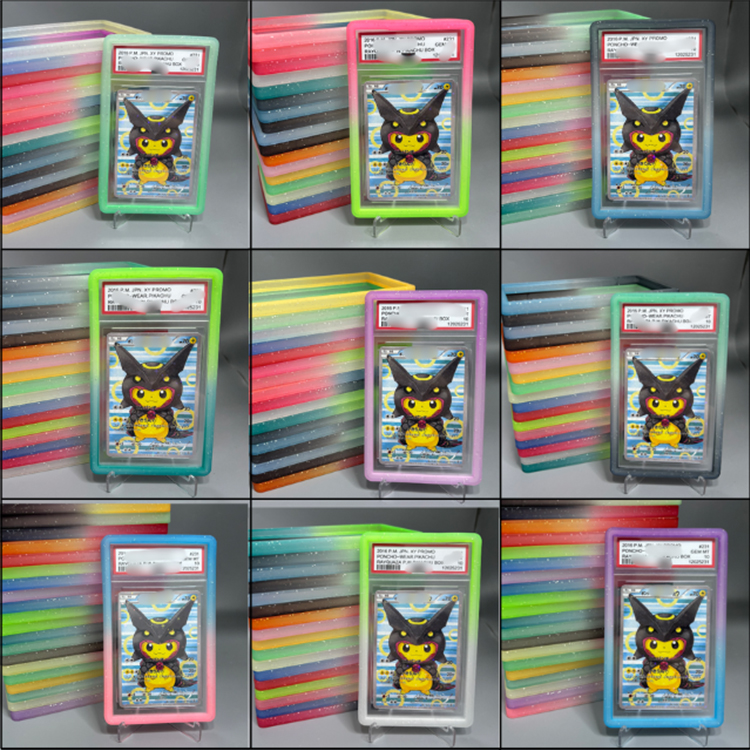
Gradient edges catch light in appealing ways and can make slabs stand out in photos for sales listings or social media. Clear TPU maintains visibility of the card face and label, while the gradient provides a subtle frame.
- Single-slab stands: A colorful bumper provides extra visual weight and helps a slab look finished in a vertical stand.
- Shelf rows: Using consistent or alternating gradients organizes rows visually.
- Grid or mosaic displays: Multiple gradients create patterns when combined across many slabs.


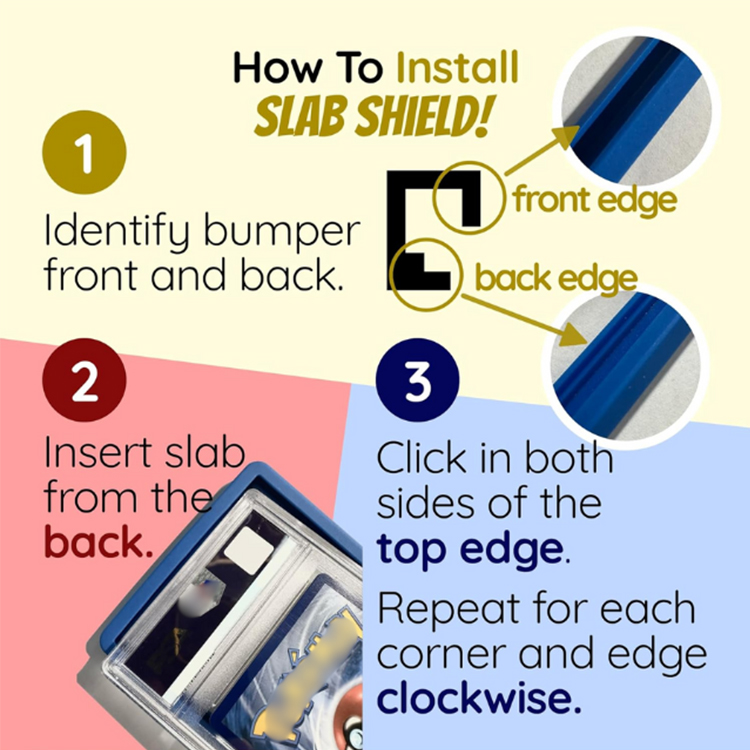
1. Clean the slab: Ensure the acrylic is free of dust and fingerprints before applying the bumper.
2. Align one edge: Start by slipping one long edge into the bumper channel.
3. Seat the opposite edge: Gently press the bumper around the slab until it snaps fully onto edges and corners.
4. Check the label visibility: Confirm the grading label is unobstructed and that any notches or cutouts on the bumper are correctly oriented.
- Find a corner gap or notch: Many bumpers include a small access area to initiate removal.
- Use two hands: Hold the slab securely while prying the bumper away with the other to avoid drops.
- Avoid metal tools: Use a plastic pry tool or fingernail to prevent scratching the acrylic.
- Store flat or slightly supported: Avoid storing tight curves that could deform the bumper's natural shape.
- Rotate use: If you rotate bumpers between slabs, check for cumulative wear before reapplying to a high-value slab.
- Targeted protection: Bumpers focus on the most vulnerable parts of a slab without changing the slab itself.
- Aesthetic upgrade: Color gradients turn a plain slab into a display piece.
- Stacking and grip: Bumpers can improve handling and allow for neater stacking on shelves.
- Not universal fit: If you own multiple slab brands, a PSA-specific bumper may not fit others.
- Label interference risk: Poor design or misalignment could partially cover the grade label or obscure key certificate details.
- False security: Bumpers reduce but do not eliminate the risk of damage from severe impacts or heavy pressure.
- Material concerns: Low-quality TPU or poorly cured dyes may show wear or color transfer over time.

- Material specification: Confirm the product uses TPU (not low-grade silicone) if clarity and firmness are priorities.
- Exact fit listing: Manufacturers should list intended slab types and provide dimensions.
- Design features: Look for stackable edges, removal notches, and consistent color finishes.
- Multi-packs vs singles: Multi-packs lower per-unit cost for collectors with many slabs.
- Brand reputation: Established hobby and card-supply brands tend to have better quality control and clearer fit information.
- Return policy: Because fit is critical, choose vendors with reasonable return or exchange policies.
- Budget options: Cheaper bumpers may work for low-value slabs or temporary use but may lack durability.
- Premium options: Better-quality bumpers often use superior TPU, have cleaner gradients, and resist deformation longer.
- Gentle cleaning: Use a soft cloth and mild soap with water; avoid solvents that can affect pigments or soften the TPU.
- Avoid abrasive cleaning: Harsh scrubbing can dull or scratch the surface finish.
- Avoid direct sunlight: Prolonged UV exposure can fade colors or affect polymer properties.
- Moderate temperatures: Extreme heat can make TPU softer and more pliable, while cold can make it brittle.
- Inspect occasionally: Look for cracks, tears, or color migration; replace bumpers that show wear.
- Color-coded categories: Use different gradient colors for rookie cards, Hall of Famers, or graded PSA 10s to make identification quicker at a glance.
- Tiered displays: Combine premium slab cases for highest-value items with gradient bumpers for mid-tier cards to create depth and focus.
- Short trips and shows: Slip bumpers on slabs when attending card shows or swaps to protect corners from crowd handling.
- Photo setups: Use bumpers for staging product photography; they add polish while protecting the slab edges.
- Visual appeal: Gradient bumpers can make listings more attractive, but always disclose any accessories used in photos so buyers know what comes with the card.
- Protect during shipping prep: Keep bumpers on during packaging to maintain corner integrity while preparing boxes.

- Check vendor specs: A mismatched size is often the cause.
- Warm the bumper slightly: Body heat can increase flexibility, making installation easier.
- Careful stretching: Gently stretch the bumpers incrementally rather than forcing them on.
- Confirm slab dimensions: Loose fit usually means the bumper was designed for a smaller slab or a different brand.
- Use temporary padding: Thin, non-abrasive foam strips inside the bumper can reduce slack for display purposes (use caution and test that no pressure affects the slab).
- Test before long-term use: Rub a small hidden area to check for pigment transfer.
- Avoid moisture and friction: Persistent wetness plus rubbing can accelerate transfer on poorly cured dyes—replace low-quality bumpers to avoid staining.
TPU is a plastic material that may have limited recycling options in many localities; therefore, durability and reuse are important factors in reducing waste. Choosing higher-quality bumpers that last longer reduces the need for frequent replacements.
Look for suppliers who disclose materials and manufacturing practices and avoid products with unknown chemical treatments or excessive, loose glitter particles that can shed and contaminate the environment.
PSA TPU Gradient Slab Bumper Guard Protectors offer a pragmatic blend of protection and personalization for PSA-graded card collectors. When thoughtfully selected and applied, they protect vulnerable slab edges, improve stacking behavior, and enhance display presentation. Collectors should prioritize correct fit, high-quality TPU construction, and reputable sellers to maximize value and longevity. While bumpers are not a substitute for proper shipping protection, they are an effective day-to-day safeguard and a stylish accessory for any serious collector.
---
Q1: Will a PSA TPU gradient bumper fit slabs from other grading companies?
A1: Not always; these bumpers are typically designed for PSA-standard slab dimensions, and other slab brands may have different sizes or edge profiles. Confirm product specifications before purchasing.
Q2: Can TPU bumpers be removed and reused multiple times?
A2: Yes, quality TPU bumpers are made to be reusable and will often retain shape after multiple installations if not overstretched or damaged.
Q3: Do gradient bumpers affect the resale value of graded cards?
A3: The bumpers themselves are external accessories and do not alter the slab or the card, but sellers should disclose any accessories used in photos; ensure the bumper does not obscure the grading label to avoid buyer concerns.
Q4: How should I clean and store TPU bumpers?
A4: Wipe with a soft, lint-free cloth and mild soap solution, dry thoroughly, and store flat or gently supported away from direct sunlight and extreme temperatures to preserve color and shape.
Q5: Are gradient TPU bumpers suitable for long-distance shipping?
A5: They add helpful corner protection for handling but should not be relied upon as the sole shipping protection; combine with appropriate padding, corner protectors, and rigid outer packaging for secure transit.
Q6: What should I look for to ensure a bumper won't obscure the grade label?
A6: Look for precise edge molding with label notches, photos of fitted slabs from sellers, and explicit notes about label clearance in product descriptions.
---


