
Views: 254 Author: Princee Lee Publish Time: 03-10-2026 Origin: Princee Lee


Content Menu
>> The Shift Toward Minimalist Utility
>> The Origins and Evolution of the Personal Wallet
>> Defining the Blanking Wallet with Money Clip
>> The Anatomy of a Money Clip Wallet
>> Material Science: Building a Wallet That Lasts
>> The Science of RFID Blocking and Digital Security
>> Ergonomic and Health Benefits of Front-Pocket Carry
>> Minimalism as a Lifestyle Philosophy
>> Styling and Fashion Compatibility
>> Longevity and Environmental Sustainability
>> Practical Tips for Transitioning to a Minimalist Wallet
>> The Future of Personal Carry Technology
>> Conclusion: A Necessary Upgrade for the Modern Era
>> Related Questions and Answers
For decades, the traditional leather bi-fold wallet was the undisputed king of personal organization. These bulky accessories were designed for an era when cash was the primary medium of exchange, and carrying a thick stack of bills, receipts, and dozens of plastic cards was a sign of preparedness. However, as the world moved toward a digital-first economy, the physical footprint of our daily essentials began to shrink. The rise of contact-less payments, digital IDs, and mobile banking has rendered the "George Costanza" wallet not just obsolete, but a physical burden.
Enter the blanking wallet with money clip—a sleek, modern solution that prioritizes efficiency, security, and aesthetics. This specialized accessory represents more than just a place to store currency; it is a manifestation of the minimalist movement, designed for the modern individual who values both form and function. By combining advanced signal-blocking technology with a streamlined money clip, these wallets offer a level of security and comfort that traditional designs simply cannot match.
To understand the significance of the modern money clip wallet, one must look at the history of how humans have carried wealth. In ancient times, "wallets" were little more than leather pouches used to carry coins, dried meat, and basic tools. These were typically worn on the belt, as pockets were not yet a common feature in clothing. As paper currency was introduced in the 17th century, the design of the wallet evolved to accommodate flat bills, leading to the early versions of the bi-fold.
By the mid-20th century, the introduction of the credit card changed everything again. Wallets became thicker to accommodate stacks of plastic, eventually leading to the back-pocket bi-fold that dominated the late 1900s. However, this design came with significant drawbacks. Physicians began to notice a rise in "wallet sciatica," a condition caused by sitting on a bulky wallet for hours, which misaligns the pelvis and puts pressure on the sciatic nerve. This health concern, combined with the aesthetic desire for a slimmer silhouette in modern fashion, paved the way for the minimalist revolution.
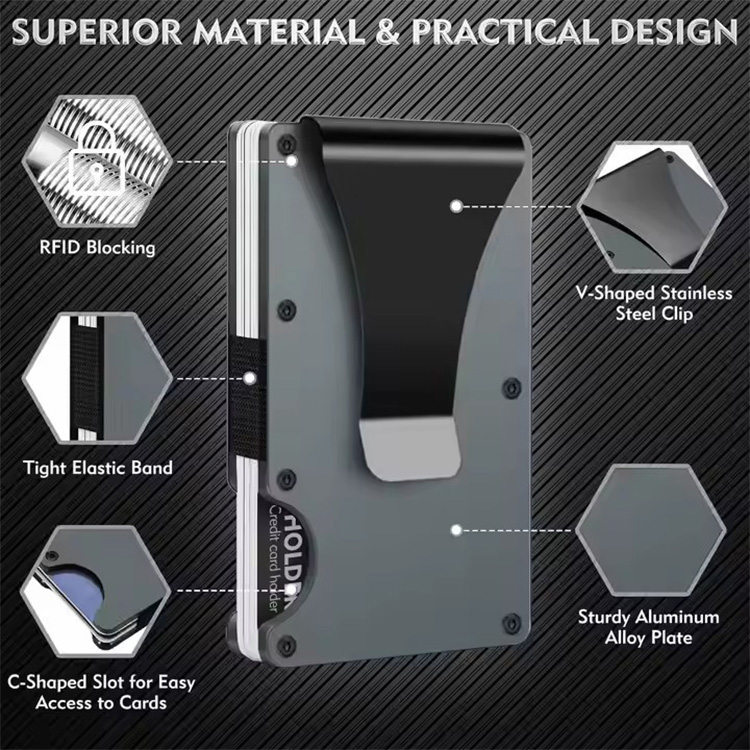
The term "blanking wallet" refers to a specific type of accessory designed to "blank out" or block electronic signals. Most commonly known as RFID-blocking wallets, these devices act as a shield for your sensitive information. When paired with a money clip, the result is a hybrid tool that provides the security of a high-tech vault with the accessibility of a traditional clip.
Unlike a standard wallet that uses layers of leather or fabric, a blanking wallet typically incorporates specialized metals or conductive fabrics. These materials create what is known as a Faraday cage. In simple terms, this cage prevents radio frequency identification (RFID) signals from reaching the chips embedded in your credit cards and passports. By "blanking" these signals, the wallet ensures that digital pickpockets cannot scan your data from a distance while you are standing in line at a coffee shop or commuting on a crowded train.
The design of a blanking wallet with money clip is a study in industrial engineering. While traditional wallets rely on folding mechanisms that add unnecessary thickness, the money clip variant uses a rigid frame to hold cards and an external or internal clip to secure cash.
The frame is usually the heart of the device. It is designed to hold between one and twelve cards in a stack, often utilizing a tension-based system or a mechanical ejector. Some models feature a "thumb notch" that allows the user to slide cards out with a single gesture, while others use a pull-tab mechanism for quick access. The integration of the money clip is where the design truly shines. Typically made from spring steel or titanium, the clip provides a firm grip on a small stack of bills, allowing for rapid retrieval without the need to unwrap a leather fold.
One of the primary reasons for the popularity of blanking wallets is the use of high-performance materials. While leather remains a classic choice for the outer shell, the structural integrity of these wallets often comes from more advanced substances.
Carbon Fiber: The Apex of Strength and Weight
Carbon fiber is a favorite in the world of high-end accessories. Known for its incredible strength-to-weight ratio, it is used in everything from aerospace engineering to professional racing. A carbon fiber blanking wallet is virtually indestructible, resistant to scratches, and incredibly light. Furthermore, the weave of the carbon fiber adds a sophisticated, high-tech aesthetic that appeals to modern professionals.
Aerospace-Grade Aluminum: Industrial Durability
Aluminum is the most common material used in the construction of blanking wallets. It is naturally RFID-blocking, making it an ideal choice for the structural plates. High-quality wallets use 6061-T6 aluminum, the same grade used in aircraft wings. This material can be anodized in a variety of colors, allowing for personalization while maintaining a rugged, matte finish that hides wear and tear.
Full-Grain Leather: A Touch of Tradition
For those who still appreciate the tactile feel of leather, many blanking wallets offer a leather-wrapped metal frame. This provides the best of both worlds: the signal-blocking security of metal and the aging "patina" of high-quality leather. Over time, the leather will soften and change color, reflecting the unique lifestyle of the owner.
In the digital age, theft has evolved. No longer do pickpockets need to physically remove a wallet from your pocket to steal your money. With a low-cost RFID reader purchased online, a thief can walk past you and "skim" the data from your contactless cards. This data can include your name, credit card number, and expiration date—everything needed to make unauthorized purchases or commit identity theft.
A blanking wallet works by surrounding your cards with a layer of conductive material. When an electromagnetic field (like that from a thief's scanner) hits the wallet, the electrons in the metal frame redistribute themselves to neutralize the field inside. This creates a "dead zone" where the cards remain invisible to the scanner. This technology is not just a luxury; it is a necessary defense in an era where data is more valuable than physical currency.
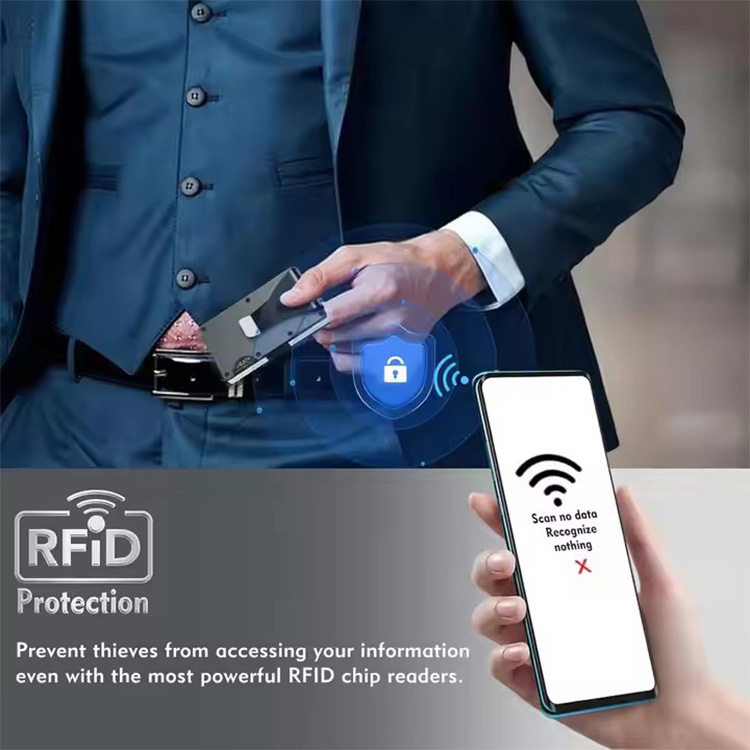
One of the most immediate benefits of switching to a blanking wallet with money clip is the shift from back-pocket to front-pocket carry. This small change has significant implications for both comfort and health.
As mentioned earlier, sitting on a wallet can lead to chronic back pain. By slimming down the profile of the wallet and moving it to the front pocket, users can maintain a neutral sitting position, significantly reducing the risk of spinal misalignment. Furthermore, front-pocket carry is a much more effective deterrent against traditional pickpocketing. It is far more difficult for a thief to reach into a tight front pocket without being noticed than it is to slip a wallet out of a back pocket.
The ergonomic design also extends to the way we interact with our money. In a crowded environment, fanning out your cards from a slim metal frame is faster and more discreet than digging through the multiple flaps and hidden pockets of a traditional bi-fold.
The adoption of a blanking wallet with money clip often coincides with a broader shift toward minimalism. The "less is more" philosophy suggests that by reducing the number of items we carry, we reduce mental clutter and increase focus.
When you transition to a minimalist wallet, you are forced to curate your essentials. Do you really need that punch card for a sandwich shop you haven't visited in three years? Do you need to carry five different credit cards when you only use one for 90% of your transactions? By stripping away the unnecessary, you are left with a toolkit that is perfectly tailored to your life. The money clip further encourages this by limiting the amount of physical cash you carry, pushing you toward the convenience of digital payments while still providing a fallback for cash-only situations.
From a fashion perspective, the blanking wallet with money clip is a game-changer. Modern men's and women's clothing—particularly slim-fit trousers and tailored suits—are not designed to accommodate bulky objects. A thick wallet ruins the silhouette of a well-fitted pair of pants, creating an unsightly bulge that detracts from a sharp appearance.
The slim profile of a metal or carbon fiber wallet disappears into the pocket, preserving the clean lines of the garment. Whether you are wearing a formal tuxedo or casual denim, a sleek money clip wallet complements the outfit rather than clashing with it. The variety of finishes—from tactical black to brushed gold—allows the wallet to serve as a subtle piece of jewelry, much like a high-quality watch.
Traditional leather wallets are often subject to "planned obsolescence." The stitching frays, the leather stretches out until cards fall out, and the internal plastic windows crack. In contrast, a well-built blanking wallet with a money clip is designed to last a lifetime.
Metal frames do not stretch. The money clips are often replaceable if they lose their tension, and the lack of complex stitching means there are fewer points of failure. By investing in a high-quality metal wallet, consumers are moving away from the "fast fashion" cycle of replacing accessories every year or two. This durability has a positive environmental impact, as it reduces the waste associated with the production and disposal of inferior products.
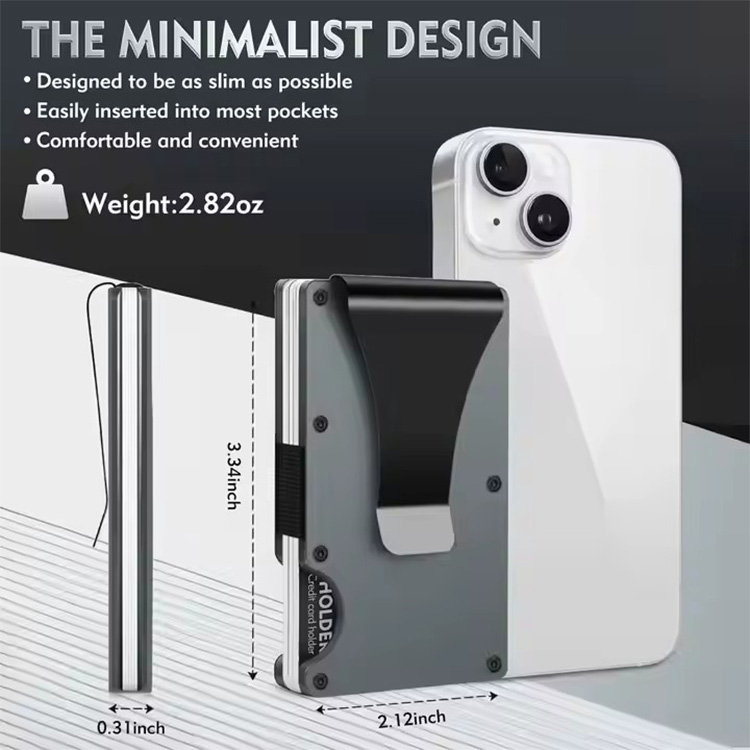
If you are considering making the switch, the process can be surprisingly liberating. Start by emptying your current wallet and categorizing everything. You will likely find three categories: "Essential" (ID, primary credit card), "Occasional" (insurance cards, backup credit card), and "Trash" (expired coupons, old receipts).
A blanking wallet with money clip typically holds 5-8 cards comfortably. Place your most-used card at the front or back of the stack for easy access. For the money clip, try to keep your bills folded in half or thirds to minimize bulk. Most users find that after a week of carry, they don't miss the extra space of a bi-fold at all. In fact, the feeling of "forgetting your wallet" because it's so light is a common—and eventually pleasant—experience for new adopters.
As we look toward the future, the integration of technology into our carry-goods will only increase. We are already seeing blanking wallets that include tracking technology, allowing users to find their wallet via a smartphone app if it is misplaced. Biometric locks, which only allow cards to be ejected after a fingerprint scan, are also on the horizon.
However, despite these high-tech additions, the core appeal of the blanking wallet with money clip will remain its simplicity. In an increasingly complex world, there is a profound satisfaction in an object that does exactly what it is designed to do—protect your identity and organize your currency—with as little fuss as possible.

The blanking wallet with money clip is not just a trend; it is a response to the changing landscape of security and style. By addressing the physical discomfort of bulky wallets, the security risks of RFID skimming, and the aesthetic needs of modern fashion, these accessories have earned their place in the pockets of millions. Whether you choose the rugged industrial look of aluminum, the high-tech allure of carbon fiber, or the classic feel of leather, you are making a statement about your commitment to efficiency and security. In the end, the best things we carry are the ones that make our lives easier without getting in the way.
Q1: What exactly does "blanking" mean in the context of these wallets?
A: "Blanking" refers to the signal-blocking or RFID-blocking capability of the wallet. It means the wallet uses materials that "blank out" or shield the radio frequencies used by scanners, preventing unauthorized access to the data on your credit cards.
Q2: Will a money clip damage my bills or the cards inside the wallet?
A: No, high-quality money clips are designed with smooth edges and calibrated tension. They are meant to hold bills securely without tearing the paper. Regarding the cards, the metal frame of the wallet actually protects them from bending or cracking, which is a common problem in flexible leather wallets.
Q3: Is RFID theft a common enough problem to warrant a special wallet?
A: While physical pickpocketing is still more common in many areas, digital "skimming" is a growing threat, especially in high-traffic areas like airports, subways, and festivals. An RFID-blocking wallet provides inexpensive insurance and peace of mind against a potentially devastating identity theft event.
Q4: How many cards can a typical minimalist blanking wallet hold?
A: Most minimalist designs are optimized for 6 to 12 cards. This is usually more than enough for the modern user who carries a driver's license, a couple of credit/debit cards, and perhaps a gym or transit pass.
Q5: Can I carry business cards in a money clip wallet?
A: Yes, business cards can be stored either in the internal card stack or held by the money clip on the outside. However, because business cards are often slightly larger or more fragile than plastic credit cards, many users prefer to keep a few choice cards in the money clip for quick distribution.


