
Views: 284 Author: Princee Lee Publish Time: 03-10-2026 Origin: Princee Lee


Content Menu
>> Introduction: Reimagining the Everyday Carry
>> The Allure of the Natural Wooden Wallet
>>> A Unique Aesthetic Signature
>>> The Tactile Experience of Raw Timber
>> Engineering Simplicity: How Wooden Wallets Are Made
>>> Wood Selection and Sourcing
>>> The Precision of Craftsmanship
>> Why Choose Wood Over Traditional Leather?
>>> Durability and Structural Integrity
>>> Environmental Impact and Biodegradability
>>> Ethical Considerations in Accessory Production
>> Functional Features for the Modern User
>>> Minimalist Design and Slim Profiles
>>> Lightweight Comfort for Daily Carry
>> Understanding Different Wood Species
>>> Walnut: The Classic Choice
>>> Bamboo: The Sustainable Giant
>>> Exotic Grains: Zebrawood and Ebony
>>> Cleaning and Conditioning Your Wallet
>>> Preventing Warping and Cracking
>> The Social and Psychological Impact
>>> Biophilic Design and Stress Reduction
>>> The Wallet as a Conversation Starter
>> Conclusion: The Future of Eco-Friendly Fashion
>> Related Questions and Answers
In the modern era of rapid technological advancement and mass-produced synthetic goods, a subtle but powerful counter-movement has emerged. People are increasingly seeking a deeper connection with the natural world, even through the smallest items they carry every day. This shift has given rise to the "Everyday Carry" (EDC) culture, where the quality, origin, and aesthetic of one's tools are just as important as their functionality. At the heart of this movement is the natural wooden wallet—a product that marries ancient craftsmanship with the needs of the 21st-century minimalist.
The journey of the wallet is a long one, evolving from simple leather pouches used to carry coins in ancient Greece to the bulky, overstuffed "George Costanza" style leather bifolds of the late 20th century. However, as we move toward a cashless society where digital security and physical slimness are prioritized, the bulky leather wallet is becoming an artifact of the past. The natural wooden wallet represents the next evolution. It is not just a container for cards and cash; it is a statement of values. It speaks to a preference for sustainability, a love for unique natural patterns, and an appreciation for the tactile warmth that only organic materials can provide.
One of the most compelling reasons to choose a natural wooden wallet is its inherent uniqueness. Unlike leather or plastic, which can be dyed or molded into identical copies, wood is a living canvas. Every piece of timber contains a history written in its rings, knots, and grain patterns. When you purchase a wooden wallet, you are essentially buying a one-of-a-kind piece of functional art. No two wallets are exactly alike, even if they are carved from the same tree. This individuality allows the owner to express a sense of personal style that is distinct from the uniform look of luxury leather brands.
The visual appeal of wood also transcends fashion trends. While certain colors of leather or synthetic patterns may go out of style, the natural look of walnut, oak, or bamboo remains timeless. It pairs effortlessly with a sharp business suit, adding a touch of sophisticated ruggedness, yet looks equally at home in the pocket of a hiker's flannel shirt. This versatility makes it an ideal accessory for those who value long-term style over fast-fashion fads.

The psychological impact of touch cannot be overstated. Leather can feel cold or sticky depending on the weather, and metal wallets often feel clinical and harsh. Wood, however, has a natural warmth. It is a poor conductor of heat, meaning it feels comfortable against the skin regardless of the temperature. Over time, as the wallet is handled, it absorbs the natural oils from the user's hands, developing a unique patina that enhances its smoothness and deepens its color. This physical transformation creates a bond between the object and the owner—the wallet grows and changes with you, becoming more beautiful the longer you use it.
The creation of a high-quality natural wooden wallet begins long before the first cut is made. It starts with the selection of the wood itself. Ethical manufacturers prioritize sustainable sourcing, often utilizing wood certified by the Forest Stewardship Council (FSC). This ensures that the timber is harvested in a way that protects biodiversity and supports the livelihoods of local communities.
Beyond sustainability, the species of wood determines the wallet's durability and weight. Hardwoods like Black Walnut, Maple, and Rosewood are popular because they offer high density and resistance to impact. Bamboo, although technically a grass, is another excellent choice due to its incredibly fast growth rate and high strength-to-weight ratio. The seasoning process is also critical; the wood must be properly dried to a specific moisture content to prevent it from warping or cracking once it is shaped into a thin wallet.
Manufacturing a wooden wallet requires a delicate balance between modern technology and traditional hand-finishing. Most high-end wooden wallets are initially shaped using Computer Numerical Control (CNC) machining. This allows for incredible precision, ensuring that card slots are measured to the millimeter and that the overall profile remains as slim as possible. CNC technology enables the creation of internal cavities and complex locking mechanisms that would be nearly impossible to achieve by hand alone.
However, the "soul" of the wallet comes from the hand-finishing. After the machine has done its work, skilled artisans sand each piece through progressively finer grits of sandpaper until the surface is as smooth as glass. This stage is vital for removing the mechanical marks left by the CNC and ensuring that the corners are comfortably rounded for pocket carry.
A natural wooden wallet must be protected from the elements, but many users prefer to avoid heavy chemical lacquers that mask the wood's natural feel. Instead, premium wallets are often treated with natural oils and waxes, such as linseed oil, tung oil, or beeswax. These finishes penetrate deep into the fibers, protecting the wood from moisture and sweat while allowing it to "breathe." This natural approach to finishing ensures that the wallet remains non-toxic and eco-friendly throughout its entire lifecycle.
A common misconception is that wood is fragile. In reality, a well-engineered wooden wallet can be more durable than leather. Leather is prone to stretching over time; if you put five cards into a leather slot, that slot will eventually stretch and become too loose to hold a single card securely. Wood, being a rigid material, maintains its shape perfectly. Whether you carry one card or six, the structure remains consistent, ensuring your essentials are always held firmly. Furthermore, wood does not rot, peel, or crack in the way that cheap "genuine leather" or synthetic alternatives often do.
The leather industry is one of the most resource-intensive and environmentally damaging sectors of the fashion world. The tanning process involves heavy metals and toxic chemicals like chromium, which often end up polluting waterways. In contrast, the production of a natural wooden wallet involves far fewer chemicals and significantly lower carbon emissions. Wood is a renewable resource that acts as a carbon sink during its growth. When a wooden wallet finally reaches the end of its life, many years down the road, it is biodegradable. Unlike plastic or metal wallets that will sit in a landfill for centuries, a wooden wallet can return to the earth.
For many modern consumers, the ethical origin of a product is a major purchasing factor. Choosing wood over leather often aligns with a vegan or cruelty-free lifestyle. It allows the user to enjoy a high-end, luxury accessory without contributing to the livestock industry. By supporting small-scale woodworking shops, consumers are also often investing in local craftsmanship rather than massive industrial factories.

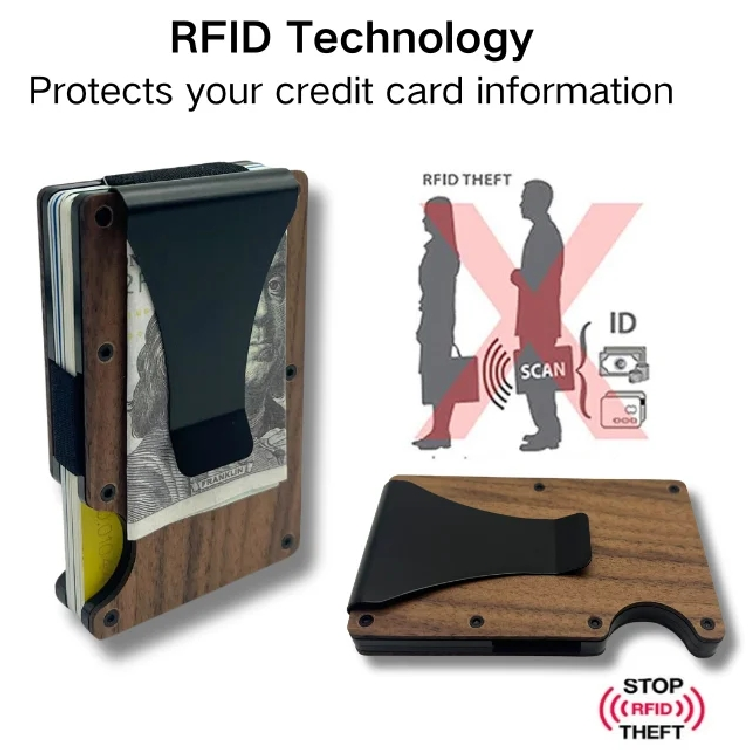
In an age where digital theft is a real concern, security is paramount. Many people assume that a "natural" material like wood cannot offer the same protection as a metal wallet. However, modern wooden wallets are often designed with a "sandwich" construction, where a thin layer of RFID-blocking metal (usually aluminum or steel) is hidden between two layers of beautiful wood. This allows the user to enjoy the organic aesthetic of the wood while resting easy knowing their credit card data is protected from unauthorized scanning.
The primary goal of a wooden wallet is to eliminate bulk. By forcing the user to curate their essentials—carrying only the most important cards and a small amount of cash—the wooden wallet promotes a more organized lifestyle. Most designs use an elastic band system or a tension-based card holder mechanism. This results in a profile that is often less than half the thickness of a traditional bifold. A slim wallet is not just more comfortable; it also prevents the "back-pocket bulge" that can ruin the silhouette of a pair of trousers and cause spinal misalignment over years of sitting on a thick wallet.
Despite its strength, wood is surprisingly light. A minimalist wooden wallet often weighs less than a standard leather one. This makes it ideal for individuals with active lifestyles—runners, cyclists, and travelers who want to minimize the weight of their gear. Because it is so light and slim, many users find they can comfortably carry a wooden wallet in their front pocket, which is both safer from pickpockets and better for physical comfort.


Black Walnut is perhaps the most beloved wood for high-end accessories. It is known for its deep, chocolatey tones and rich grain. Walnut is exceptionally strong and stable, making it resistant to the wear and tear of daily use. It develops a stunning dark patina over time, making it a favorite for those who want a wallet that looks better with age.
Bamboo is the go-to choice for the environmentally conscious. Because it grows so quickly, it is one of the most renewable materials on the planet. Bamboo wallets are often lighter in color, ranging from pale straw to a toasted honey tone. The straight, uniform grain of bamboo provides a clean, modern aesthetic that appeals to fans of Scandinavian or Japanese design.
For those who want something a bit more bold, exotic woods like Zebrawood offer striking high-contrast patterns. Zebrawood features dark brown stripes against a golden background, creating a look that is impossible to ignore. Ebony, on the other hand, provides a near-black, incredibly dense surface that feels more like stone than wood. Each species brings its own personality to the wallet.
To ensure a natural wooden wallet lasts for a decade or more, a small amount of maintenance is required. Occasionally, the wood should be wiped down with a slightly damp cloth to remove any dust or grime. Every few months, applying a drop of food-safe mineral oil or a natural wood balm will help keep the fibers hydrated. This prevents the wood from becoming brittle and helps maintain its water-resistant properties.
While wood is tough, it is still an organic material. Users should avoid leaving their wooden wallet on a hot car dashboard in direct sunlight, as extreme heat can cause the wood to dry out too quickly and crack. Similarly, while a quick splash of rain won't hurt a well-oiled wallet, it should not be submerged in water. If it does get wet, it should be dried slowly at room temperature rather than being placed near a heater.
Biophilic design is the concept of incorporating natural elements into the human-built environment to improve well-being. Studies have shown that interacting with natural materials like wood can lower heart rates and reduce stress levels. In a high-stress, digital-heavy world, the simple act of pulling a piece of nature out of your pocket can provide a momentary sense of calm. The visual and tactile presence of wood serves as a grounding reminder of the physical world.
Because they are still relatively rare compared to leather wallets, natural wooden wallets are incredible conversation pieces. Whether you are paying for a coffee or handing over a business card, people notice the unique material. It provides an opening to talk about sustainability, craftsmanship, and the beauty of nature. For many owners, the wallet is more than a tool; it is a point of connection with others.


The rise of the natural wooden wallet is a testament to the fact that we do not have to sacrifice style or security to live more sustainably. By choosing a product that is biodegradable, ethically sourced, and built to last, consumers are making a conscious choice to step away from the cycle of disposable fashion. As we look toward the future, the integration of organic materials into our daily lives will only become more important. The wooden wallet is a small but significant step in that direction—a piece of the forest that you can carry in your pocket, serving as a constant reminder that the best designs are often those perfected by nature over millions of years.
Q1: Is a wooden wallet uncomfortable to sit on if I keep it in my back pocket?
A1: Because wooden wallets are rigid and slim, most manufacturers recommend carrying them in the front pocket. Sitting on a hard object for long periods can be uncomfortable and may lead to back pain or "wallet sciatica." However, due to their minimalist design, they are much easier to carry in the front than traditional leather bifolds.
Q2: Will the wood crack if I drop the wallet on a hard surface?
A2: High-quality wooden wallets are made from dense hardwoods and are treated to be resilient. While a very high drop onto concrete might cause a small dent or chip, they are generally designed to withstand everyday drops. The internal reinforcement (like the RFID metal layer) often adds structural support that prevents the wood from shattering.
Q3: How many cards can a natural wooden wallet typically hold?
A3: Most minimalist wooden wallets are designed to hold between 5 and 10 cards. Some use an expandable elastic system that allows you to carry more if needed, while others have a fixed capacity to encourage minimalism. It is best to check the specific model's capacity before purchasing.
Q4: Can I use a wooden wallet if I live in a very humid or very dry climate?
A4: Yes, but maintenance becomes more important. In very dry climates, you should oil the wood more frequently to prevent it from becoming brittle. In very humid climates, ensure the wallet has a good wax finish to prevent it from absorbing too much moisture, which could lead to slight swelling.
Q5: Are wooden wallets TSA-compliant for air travel?
A5: Absolutely. Wooden wallets are treated like any other wallet during airport security. You will still need to remove it from your pocket and place it in the bin for X-ray scanning, but the material itself does not pose any issues with flight regulations.


