

Views: 225 Author: Princee Lee Publish Time: 03-26-2026 Origin: Princee Lee


Content Menu
● Understanding the Appeal of the Front Pocket Wallet
● Essential Tools and Materials for Leathercraft
>> Selecting the Right Leather
>> The Cutting and Marking Kit
>> Stitching and Finishing Tools
● The Construction Process: Step-by-Step
>> Step 1: Cutting the Leather
>> Step 2: Preparing the Pockets
>> Step 4: Marking and Punching Stitching Holes
>> Step 6: Final Edge Finishing
● Refining Your Technique: Advanced Tips
● The Philosophy of the Handmade Object
● Related Questions and Answers
>> What is the difference between "Grain" and "Flesh" sides of leather?
>> Why do I need to use a poly mallet instead of a metal hammer?
>> Can I use a regular sewing machine for leather?
>> How do I fix a mistake if I punch a hole in the wrong place?
>> How long does it typically take to make a front pocket wallet?
The art of leatherworking is a timeless craft that combines utility, durability, and personal expression. In an age of mass-produced, disposable goods, creating something with your own hands that can last a lifetime is immensely satisfying. Among the most popular projects for both beginners and seasoned artisans is the minimalist front pocket wallet. Designed to carry the essentials—a few cards and some folded cash—this type of wallet focuses on sleekness and comfort, eliminating the bulk of traditional bi-folds.
The transition toward minimalist everyday carry (EDC) has made the front pocket wallet a staple. Traditional wallets, often worn in the back pocket, can cause discomfort and even spinal alignment issues over time. By moving the wallet to the front, you not only improve ergonomics but also enhance security against pickpockets.
When you choose to make your own, you are not just making a container for currency; you are engaging in a process of selection and precision. You choose the temper of the leather, the color of the thread, and the exact dimensions that fit your specific needs. This guide will walk you through every nuance of the process, from selecting the hide to the final buffing of the edges.
Before you make your first cut, you must assemble the necessary kit. Leathercraft is a tool-heavy hobby, but for a simple wallet, you don't need a massive workshop. Quality over quantity is the rule here.
The soul of the wallet is the leather itself. For a front pocket wallet, vegetable-tanned (veg-tan) leather is the gold standard. Veg-tan leather is firm, takes a beautiful patina over time, and allows for "burnishing"—the process of friction-sealing the edges to a glass-like finish.
Thickness in leather is measured in ounces or millimeters. For a slim wallet, you generally want leather between 2.0 oz (0.8 mm) and 3.0 oz (1.2 mm). Anything thicker will result in a bulky wallet once the layers are stacked; anything thinner might stretch too much or feel flimsy.
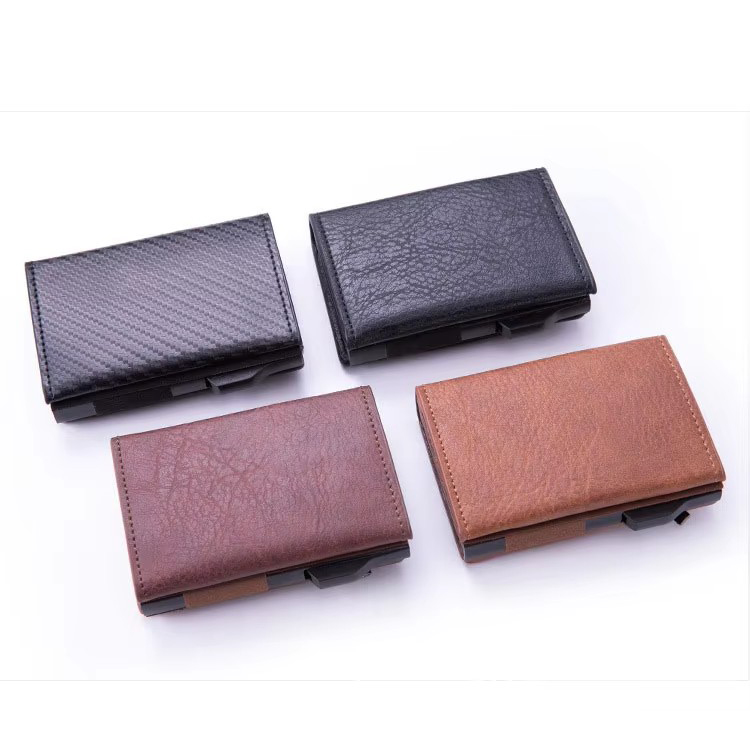
Precision is everything. A fraction of a millimeter can be the difference between a professional finish and a DIY look.
- Utility Knife or Rotary Cutter: A sharp blade is safer and more accurate than a dull one.
- Steel Square and Ruler: Essential for ensuring your corners are perfectly 90 degrees.
- Wing Dividers: These are used to mark consistent stitching lines and border distances.
- Scratch Awl: Used for tracing patterns onto the leather surface without using ink.
Since we are hand-sewing using the saddle stitch method, you will need:
- Pricking Irons or Stitching Chisels: These create the holes for your thread.
- Leather Needles: These are blunt-tipped (harness needles) because the holes are already punched.
- Waxed Polyester or Linen Thread: 0.6 mm to 0.8 mm is a standard weight for small leather goods.
- Wood Slicker and Edge Beveler: These tools are used to round off and smooth the sharp edges of the leather.
A great wallet begins on paper. While you can find many free templates online, designing your own allows for true customization.
A standard credit card is approximately 3.37 inches by 2.125 inches. To ensure the cards fit comfortably but securely, your internal pocket width should be at least 3.75 inches. For a simple three-pocket design (two card slots and one central cash pocket), consider a total height of about 3 inches.
Use heavy cardstock or acrylic to create your template. This allows you to trace the shape repeatedly if you decide to make more than one. Mark where the stitching lines will go and where the pockets will overlap. Remember to account for the "thickness" of the cards; if the wallet is too tight, you won't be able to get your cards out once the leather is stitched.
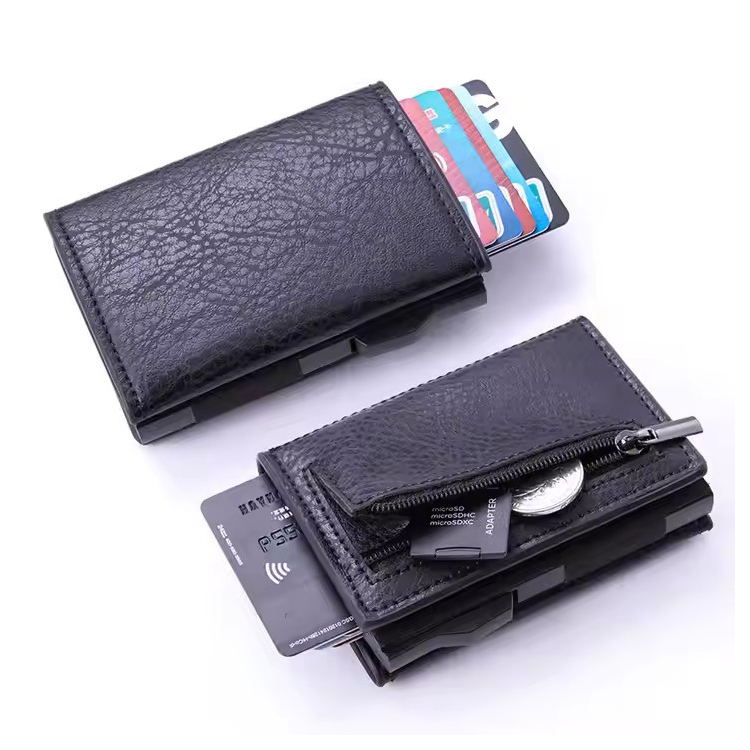
Lay your leather flat on a cutting mat. Place your template on the "grain" side (the smooth side) of the leather. Use your scratch awl to lightly trace the perimeter. When cutting, always use a metal ruler as a guide. It is often better to make three light passes with your knife rather than trying to force the blade through in one go. This prevents the leather from "creeping" or stretching under the pressure of the blade.
Before the wallet is assembled, you must finish the "top" edges of the pockets—the parts that will be accessible once the wallet is sewn.
1. Beveling: Use your edge beveler to take the sharp 90-degree corner off the top edge.
2. Sanding: Use 400-grit sandpaper to smooth the edge.
3. Burnishing: Apply a small amount of water or burnishing compound (like Tokonole) and rub the edge vigorously with your wooden slicker. The friction creates heat, which seals the fibers and creates a shiny, hard edge.
To keep the pieces from moving while you punch holes, use a thin layer of leather cement or double-sided adhesive tape along the very edge (within 3mm of the perimeter). Align your pieces carefully. Once the glue sets, your wallet will look like a single unit, but the edges might be slightly uneven. Use your knife or sandpaper to "square up" the edges so all layers are perfectly flush.
This is the most critical aesthetic step. Use your wing dividers to mark a light line 3mm or 4mm from the edge. This line ensures your stitches stay straight.
Place your stitching chisel on the line and strike it with a poly mallet. Never use a metal hammer, as it will damage the chisels. When moving to the next set of holes, place the first tooth of the chisel into the last hole you made to maintain perfect spacing. Ensure the chisel is perfectly vertical so the holes on the back of the wallet look just as good as the ones on the front.

The saddle stitch is superior to a machine lockstitch. If one thread breaks in a saddle stitch, the other thread continues to hold the piece together.
1. Thread Length: Measure out a piece of thread about four times the length of the seam you are sewing.
2. Threading: Thread a needle onto both ends of the string.
3. The Process: Pass one needle through the first hole until the thread is centered. Then, pass the left needle through the next hole, followed by the right needle through the same hole. Tighten the stitch with equal tension. Repeat this until you reach the end.
4. Backstitching: To secure the thread, sew backward for two or three holes, then trim the thread and lightly melt the ends with a lighter, pressing the warm wax into the hole.
Now that the wallet is sewn, the exterior edges need to be treated.
1. Sanding Progression: Start with 200-grit sandpaper to level the layers. Move to 400, then 800, and finally 1500 for a glass-like surface.
2. Beveling: Bevel both the front and back exterior edges.
3. Burnishing: Apply your burnishing agent and use the wood slicker. You will hear a "tacky" clicking sound as the friction builds—this is the sign of a good burnish.
4. Waxing: For extra durability, rub a bit of beeswax onto the edge and buff it with a canvas cloth.
Once you have mastered the basic construction, you can look for ways to elevate your work.
Skiving is the process of thinning the leather at the edges where layers overlap. By using a skiving knife to shave down the thickness of the leather where it will be glued and stitched, you can keep the overall profile of the wallet much thinner, even when using multiple pockets.
A "crease line" is a decorative indentation run along the edge of the leather, usually just inside the stitching or along the top of a pocket. This can be done with a manual creaser or a heated tool. It adds a level of sophistication found in high-end luxury goods.
Leather is an organic material. Once your wallet is finished, apply a light coat of high-quality leather conditioner. This hydrates the fibers and protects the surface from moisture and oils from your hands. Over the first few weeks of use, the wallet will "break in," molding itself to the shape of your cards and developing a unique character.
1. Rushing the Cutting: If your knife isn't sharp, you will pull the leather, leading to curved lines where they should be straight.
2. Inconsistent Tension: When stitching, if you pull one stitch harder than the next, the seam will look wavy. Develop a rhythm.
3. Over-Gluing: Using too much glue can seep into the pocket area, making it impossible to slide a card in. Only glue the outermost 2-3mm.
4. Skipping Sanding Steps: You cannot get a perfect burnish if you don't spend time sanding. Each grit of sandpaper removes the scratches from the previous one.
When you carry a wallet you made yourself, you carry a story. You know every stitch, every imperfection, and the effort it took to smooth every edge. This wallet will age with you. The oils from your skin will darken the leather, and the friction of your pocket will polish it. Unlike a plastic or fabric wallet that degrades over time, a well-made veg-tan leather wallet only improves. It becomes a testament to the value of slow craft in a fast-paced world.
The grain side is the outer surface of the hide where the hair used to be. It is smooth, dense, and takes finishes well. The flesh side is the underside of the hide, which has a more fibrous, suede-like texture. In most wallet designs, the grain side faces out, though some artisans use the flesh side for a "rough-out" aesthetic.
A metal hammer is much harder than the steel used in pricking irons and punches. Striking these tools with metal will eventually mushroom the tops of your expensive tools and can cause them to chip or shatter. A poly or rawhide mallet absorbs some of the shock while protecting the longevity of your equipment.
Standard home sewing machines are generally not designed for leather. Leather requires a "walking foot" and a much stronger motor to pierce multiple layers. Additionally, machine needles create a "lockstitch" which is prone to unraveling if a single thread breaks. For small leather goods, hand-sewing with a saddle stitch remains the superior method for both beauty and durability.
Unfortunately, holes in leather are permanent. This is why the marking stage is so vital. If a hole is slightly off, you can sometimes "massage" the leather with a smooth tool to close the gap slightly, but it will rarely disappear. Many crafters incorporate "happy accidents" into a slightly modified design or simply start that piece over to ensure quality.
For a beginner, the entire process—from cutting the pattern to the final burnish—usually takes between 3 to 5 hours. As you become more proficient with the knife and the saddle stitch, you can likely complete a high-quality minimalist wallet in about 90 minutes to 2 hours.


