
Views: 256 Author: Princee Lee Publish Time: 03-25-2026 Origin: Princee Lee


Content Menu
>> The Evolution of Card Preservation
>> What is a Metal Protective Magnetic Graded Card Display?
>> The invisible Enemy: The Science of UV Protection
>> Structural Integrity and Impact Resistance
>> The Aesthetic Appeal: Enhancing the "Eye Appeal"
>> Versatility and the Ecosystem of Display
>> The "Overkill" Argument: When is it Too Much?
>> Comparing Materials: Metal vs. Plastic vs. Wood
>> Market Trends and the Investment Mindset
>> User Experience: The Satisfaction of the "Click"
>> Practical Tips for Choosing the Right Case
>> Conclusion: The Final Verdict
>> Related Questions & Answers
The world of trading card collecting has undergone a seismic shift over the last decade. What was once a hobby relegated to shoeboxes and rubber bands has transformed into a multi-billion-dollar asset class. Central to this evolution is the "slab"—the sonically sealed plastic case provided by third-party grading services like PSA, BGS, and CGC. However, as the value of these cards has skyrocketed, a new question has emerged among serious collectors: is the slab itself enough protection? Enter the metal protective magnetic graded card display. This premium accessory has become a staple for high-end collectors, but at a significant price point, many wonder if it is a necessary investment or simply a luxury indulgence.
To understand the need for advanced display cases, we must first look at the history of card preservation. In the early days, collectors used PVC sleeves and binders. These were eventually replaced by "top-loaders" and "one-touches." When professional grading became the gold standard, the slab was viewed as the ultimate fortress. It was waterproof, tamper-evident, and provided a clear view of the card.
However, as slabs became more common, their weaknesses were exposed. Slabs are made of various types of plastic that, while durable, are prone to scratching, scuffing, and most importantly, UV degradation. A scratched PSA slab can detract from the visual appeal of a five-figure card, and even worse, it can make the card harder to sell. This led to the creation of "slab protectors"—initially just soft plastic sleeves (fitted bags) and later silicone bumpers. The metal magnetic display case is the final stage of this evolutionary line, offering a level of structural and environmental protection that plastic simply cannot match.
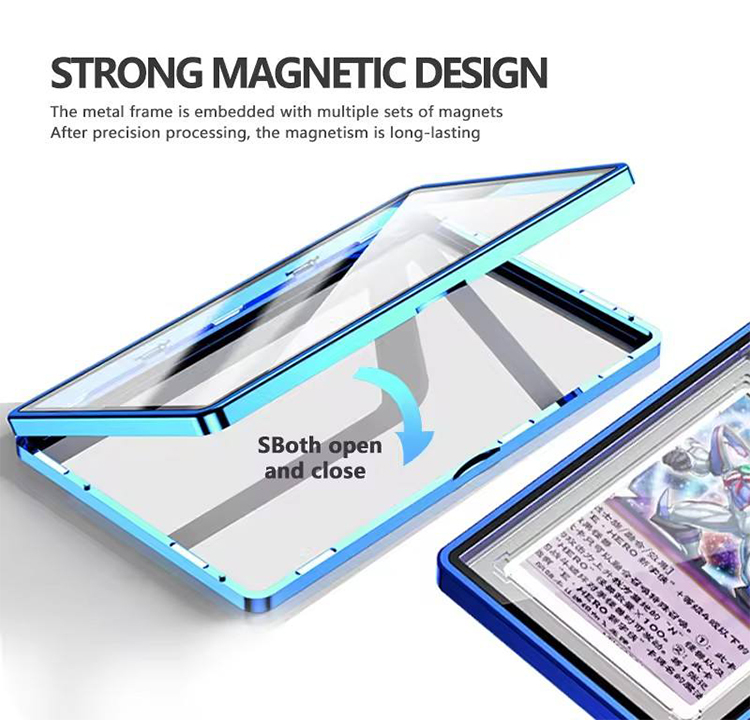
Unlike standard plastic holders, these displays are typically constructed from high-grade aluminum alloys, often CNC-machined to precise specifications. They consist of a two-piece frame—a front and a back—that "sandwiches" the graded slab. Instead of screws or snap-fits, they utilize powerful neodymium magnets (often N52 grade) to snap the two halves together.
The front of the case usually features a pane of tempered glass or high-clarity acrylic that is treated with UV-resistant coatings. The interior is often lined with soft materials or precisely cut to ensure the slab does not rattle or shift. These displays are not just protectors; they are engineered pieces of hardware designed to turn a standard plastic slab into a museum-quality exhibit.
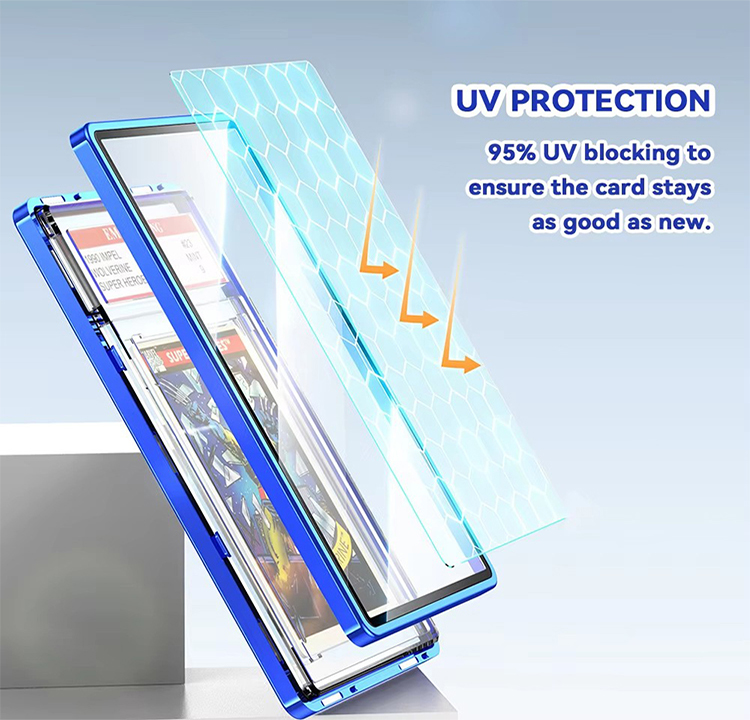
The most compelling argument for a metal magnetic display is UV protection. Most standard grading slabs do not offer 100% protection against ultraviolet light. Over time, exposure to sunlight—or even certain types of indoor lighting—can cause the ink on a card to fade. This is especially true for vintage cards from the mid-20th century, where the dyes used were more susceptible to chemical breakdown.
A high-quality metal display case often boasts UV-blocking rates of 95% to 99%. By adding this extra layer of defense, collectors can confidently display their "grails" on shelves or walls without fearing that a nearby window will slowly erase the card's value. The metal frame itself also provides an opaque barrier around the edges of the slab, preventing light from leaking in through the sides—a common oversight in all-plastic holders.
While we like to think of graded slabs as indestructible, they are surprisingly brittle. If a slab is dropped onto a hard surface, the plastic can crack or chip. In some extreme cases, the impact can even cause the card inside to shift violently, damaging the corners or edges—a phenomenon known as "shaking" or "slab movement."
A metal display case acts as an exoskeleton. Aluminum is far better at absorbing and dissipating kinetic energy than rigid plastic. If a card in a metal display falls, the frame takes the brunt of the impact. The magnetic closure is also designed to stay shut under stress, whereas a snap-fit plastic case might fly open. For collectors who frequently travel to card shows or move their collection, this physical peace of mind is often worth the entry price.
In the grading world, "eye appeal" is a subjective but vital metric. A card might be a technical PSA 10, but if the slab is covered in micro-scratches, it looks dull. Metal magnetic displays provide a "frame" for the card, much like a frame for a fine painting.
These cases come in various finishes—anodized black, brushed silver, gold, and even limited-edition colors like "charcoal" or "iridescent." A black aluminum frame can make the colors of a Pokemon card pop, while a silver frame might complement the chrome finish of a modern Prizm basketball card. By elevating the card from a piece of plastic to a framed object, the collector signals that the item inside is of significant importance.
One of the modern innovations in this space is the "display ecosystem." Many manufacturers of metal magnetic cases, such as Phantom Display or Slabmags, design their products to work with stands, wall mounts, and even modular shelving units. Because the cases are magnetic, they can often be attached to metal surfaces or specialized magnetic "trees."
This allows a collector to change their display in seconds. If you want to swap the card on your desk from a Michael Jordan rookie to a 1st Edition Charizard, you simply snap the case off the magnetic stand and snap a new one on. This "snap-and-swap" functionality is much more convenient than traditional frames that require unscrewing or sliding panels.
Despite the benefits, it is important to address the reality: not every card needs a metal display. These cases can cost anywhere from $20 to $60 USD each. If you have a collection of 500 graded cards, outfitting every single one would cost more than a luxury car.
The metal display is a "top-tier" solution. It is generally reserved for:
1. High-Value Assets: Cards worth $1,000 or more.
2. Display Pieces: The 3-5 cards you keep on your desk or mantle.
3. Sentimental Favorites: Cards that you never plan to sell and want to preserve for a lifetime.
For bulk collections or mid-tier "slabs," standard plastic bumpers or sleeves remain the more logical choice. Using a metal display for a $10 card is like putting a $500 frame on a $5 poster—it is aesthetically pleasing but economically nonsensical.

When choosing a display, collectors often weigh metal against other materials.
- Plastic/Acrylic: Lightweight and cheap, but prone to scratching and yellowing over time. It lacks the "premium" feel of metal.
- Wood: Provides a classic, warm look but can be bulky. Wood is also sensitive to humidity and does not offer the same "industrial" protection as aluminum.
- Metal (Aluminum): Offers the best balance of weight, durability, and modern aesthetics. It is non-corrosive and can be machined to very tight tolerances, ensuring a perfect fit for specific grading company slabs.
As the hobby becomes more professionalized, the condition of the *holder* is starting to matter almost as much as the *card*. On secondary markets like eBay or Heritage Auctions, "pristine" slabs often command a slight premium because they are ready for immediate display. By keeping a slab inside a metal protective case from day one, a collector ensures that if they ever decide to sell, the slab will look exactly as it did when it left the grading facility. This "protection of the protector" is a growing trend among investors who view their cards as liquid assets.
There is a psychological component to using metal magnetic displays. There is a certain satisfaction in the "click" of high-powered magnets snapping together. It feels substantial. In an era where so much of our lives is digital, having a heavy, cold, metal object that houses a physical piece of history provides a tactile connection to the hobby. This "premium" user experience is why many collectors find themselves "addicted" to these cases once they buy their first one.
If you decide that you do need a metal magnetic display, there are a few things to keep in mind:
- Slab Compatibility: Not all slabs are the same size. A PSA slab is thinner than a BGS slab. Make sure the case you buy is specifically designed for the brand you use, or look for "universal" fits that use spacers.
- Glass Quality: Ensure the glass is tempered and has a verified UV rating. Some cheaper "metal" cases use thin plastic windows that scratch easily.
- Magnet Strength: Look for N52 neodymium magnets. Lower grade magnets might not hold the case together if it is dropped.
- Interior Lining: Some cases have a bare metal interior. Look for those with silicone or soft-touch inserts to prevent the metal from scratching the plastic slab itself.
So, do you really need a metal protective magnetic graded card display?
If you are a casual collector with cards stored in boxes, the answer is likely no. Your money is better spent on more cards or basic storage solutions. However, if you are a "curator"—someone who views their collection as a gallery—then these displays are more than just a luxury. They provide the ultimate defense against the dual threats of physical accidents and environmental decay.
The metal magnetic display represents the pinnacle of card preservation technology. It bridges the gap between a "collectible" and a "masterpiece." By investing in one, you aren't just buying a frame; you are buying peace of mind and ensuring that your most prized possessions remain in "Gem Mint" condition for generations to come. In a hobby defined by condition and scarcity, can you really afford *not* to have the best protection available?
Q1: Will a metal display case scratch my PSA slab?
A1: High-quality metal displays are designed with precise tolerances and often include soft interior linings or silicone gaskets. If the case is designed correctly, there is no metal-on-plastic contact that would cause scratches. However, it is always important to ensure no dust or grit is trapped between the slab and the case before closing it.
Q2: Can I use these cases for "raw" (ungraded) cards?
A2: Most metal magnetic displays are specifically "recessed" to fit the dimensions of a graded slab (PSA, BGS, etc.). A raw card would be too small and would slide around inside, potentially causing damage. Some companies make specific "one-touch" style metal frames for raw cards, but you should always check the product specifications.
Q3: How much UV protection do I actually need?
A3: For cards displayed in a room with windows, a UV rating of at least 95% is recommended. It is important to remember that UV protection is not a permanent shield; over decades, even small amounts of light can have an effect. It is still best practice to keep high-value cards out of direct sunlight.
Q4: Are the magnets safe for the card inside?
A4: Yes. Trading cards do not contain magnetic materials, so the neodymium magnets used in the frame will have no effect on the card itself. The only risk is if you have a very old electronic device nearby, but even then, the magnets are localized within the frame.
Q5: Is it difficult to remove the card once it is inside the metal case?
A5: No, that is one of the primary benefits. Unlike screw-down holders, the magnetic closure allows you to open the case in seconds without tools. Most cases have a small notch or "thumb groove" to help you pry the two halves apart safely.


