

Views: 288 Author: Princee Lee Publish Time: 03-16-2026 Origin: Princee Lee


Content Menu
● The Evolution of Everyday Carry: Why Metal Matters
>> The Strength of Aluminum Alloy 6061-T6
>> Corrosion Resistance and Environmental Endurance
● Engineering Precision: The Art of CNC Machining
>> Slim Profiles and Pocket Ergonomics
>> Integrated Clip and Attachment Options
● The Shield Against Digital Theft: RFID Blocking
>> The Faraday Cage Concept in Your Pocket
● Aesthetic Versatility: From Boardroom to Backcountry
>> Anodization: Color and Surface Hardness
● Comparison: Aluminum vs. Traditional Materials
● Sustainability and the Circular Economy of Metal
● User Experience and the Pop-Up Mechanism
● Maintenance and Care for Longevity
● The Psychological Impact of a Reliable Tool
● Conclusion: The Ultimate EDC Investment
>> Frequently Asked Questions (FAQ)
In the modern era, the way we carry our essentials has undergone a radical transformation. Gone are the days of bulky, overstuffed leather wallets that create an unsightly bulge in one's trousers and lead to chronic back pain from sitting on uneven surfaces. Today, the mantra is minimalism, efficiency, and above all, security. The aluminum alloy card holder has emerged not just as a trend, but as a definitive solution for the contemporary professional and the outdoor enthusiast alike. When we speak of a tool being "crafted for reliability," we refer to a synergy of material science, precision engineering, and ergonomic design that ensures your most valuable data and currency are protected under any circumstances.
The concept of Everyday Carry (EDC) has evolved from simple utility to a sophisticated philosophy of preparedness. For decades, leather was the gold standard for wallets. While leather offers a classic aesthetic and a soft touch, it suffers from inherent vulnerabilities. It absorbs moisture, stretches over time, and offers zero protection against the rising threat of electronic pickpocketing. The transition to aluminum alloy marks a pivotal shift toward structural integrity and digital safety.
Aluminum, often referred to as the "miracle metal" of the 20th century, provides the perfect middle ground between the lightness of plastic and the indestructible nature of steel. By utilizing high-grade aluminum alloys—specifically those in the 6000 series used in aerospace and automotive industries—manufacturers have created card holders that can withstand incredible pressure while remaining light enough to be forgotten in a pocket until needed. This reliability is not just about the holder not breaking; it is about the holder maintaining its shape and function for decades.
Most premium card holders utilize 6061-T6 aluminum alloy. The "T6" refers to the tempering process, which involves solution heat-treating and artificial aging. This process increases the yield strength of the metal significantly. When you hold a card holder crafted from this material, you are holding a piece of engineering that resists bending, even if stepped on or dropped from significant heights. Unlike plastic holders that shatter or leather that deforms, an aluminum alloy frame acts as an exoskeleton for your credit cards, IDs, and transit passes.
Reliability also means performance in diverse environments. Whether you are navigating a humid tropical climate, a salty coastal breeze, or a freezing mountain trail, aluminum alloy remains unfazed. Natural aluminum forms a thin, protective layer of oxide when exposed to air, which prevents further rust or corrosion. In high-end card holders, this is further enhanced through anodization—an electrochemical process that thickens the natural oxide layer, making it harder than the base metal and resistant to the scratches and abrasions of daily use.

A product is only as reliable as its construction method. The hallmark of a high-quality aluminum alloy card holder is CNC (Computer Numerical Control) machining. Rather than being cast in a mold, which can leave internal air bubbles and weak points, these holders are carved out of a solid block of aluminum. This subtractive manufacturing process ensures that every dimension is accurate to within microns, providing a consistent fit for cards and a smooth operation of any mechanical parts.
One of the primary reasons users switch to aluminum holders is the drastic reduction in size. A traditional leather wallet can be two inches thick when empty; an aluminum holder is often no thicker than the stack of cards it contains. This slim profile is not just for aesthetics; it is a functional reliability feature. A thinner wallet is less likely to snag on clothing, falls out of pockets less easily, and reduces the physical strain on the user's body. The rounded corners and chamfered edges produced by CNC machining ensure that the holder slides in and out of pockets without wearing down the fabric of your expensive suits or rugged denim.
Reliability extends to how the holder stays with you. Many aluminum alloy card holders feature integrated money clips made of spring steel or additional aluminum plates. These clips are engineered to maintain their tension over thousands of uses, ensuring that your cash remains securely fastened. Furthermore, some designs include lanyard loops or compatibility with key organizers, allowing for a modular EDC setup that adapts to the user's specific needs without compromising the security of the cards.
In the 21st century, physical theft is no longer the only concern. RFID (Radio Frequency Identification) skimming has become a silent threat. Most modern credit cards and passports contain chips that broadcast information via radio waves. Without protection, a thief with a handheld reader can "sniff" your card details from a distance without ever touching your wallet.
RFID technology uses electromagnetic fields to automatically identify and track tags attached to objects. In the context of credit cards, this allows for "tap-to-pay" convenience. However, these waves can pass through leather, fabric, and plastic with ease. The information transmitted often includes the card number and expiration date—enough for many types of fraudulent transactions.
An aluminum alloy card holder acts as a portable Faraday cage. Because aluminum is a highly conductive material, it creates a shield that distributes the electromagnetic charges around the exterior of the holder, neutralizing them before they can reach the cards inside. This is a passive reliability feature; it requires no batteries or software updates. As long as your cards are encased in the aluminum shell, they are invisible to electronic scanners. This peace of mind is a cornerstone of the "Crafted for Reliability" promise.

Reliability is also found in a product's ability to fit into every aspect of a user's life. A card holder that looks good in a professional setting but fails in an outdoor environment is not truly reliable. Aluminum alloy offers a unique aesthetic that bridges the gap between industrial utility and modern luxury.
The process of anodizing does more than protect against corrosion; it allows for deep, vibrant colors that are chemically bonded to the metal. Unlike paint, which can chip or peel, an anodized finish is part of the metal itself. This means your "Midnight Blue" or "Gunmetal Grey" card holder will look as striking in five years as it does on the day of purchase. The matte finish common on these holders also provides a tactile grip, ensuring that the device doesn't slip from your hands in wet conditions.
To understand the reliability of aluminum, one must compare it to the alternatives.
1. Leather: While beautiful and traditional, leather is organic. It rots if it stays wet, it stretches if overfilled (and never returns to its original shape), and it provides no RFID protection. Over time, the stitching in a leather wallet is almost guaranteed to fail.
2. Plastic/Polycarbonate: These are lightweight and can offer RFID protection if lined with metal. However, they are prone to cracking under thermal stress or physical impact. The "hinges" or "clips" on plastic holders are notorious for snapping after a few months of use.
3. Titanium: Titanium is stronger and lighter than aluminum but significantly more expensive. For the average user, aluminum alloy provides 95% of the benefits of titanium at a fraction of the cost, making it the more practical choice for a reliable everyday tool.
Aluminum alloy stands out because it offers a "lifetime" build quality. It is a one-time investment that replaces a cycle of buying and discarding cheaper wallets every year or two.
Reliability also involves the impact of the product on the world. We live in an era where sustainability is a form of reliability—the reliability of our planet's resources. Aluminum is one of the most sustainable materials available. It is "infinitely recyclable," meaning it can be melted down and repurposed without losing any of its structural properties.
Most high-quality card holders are designed to be disassembled. If a screw looses or an elastic band wears out after years of service, these parts can often be replaced, rather than throwing away the entire unit. This "right to repair" mentality, combined with the longevity of the aluminum frame, makes it an environmentally responsible choice compared to synthetic "vegan leathers" (which are often just plastics) or low-grade bonded leathers that end up in landfills.
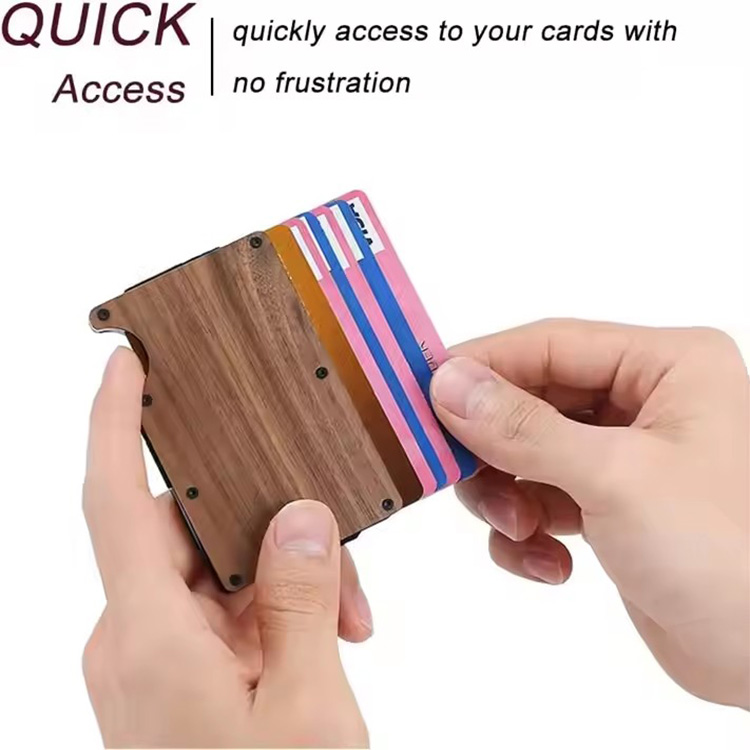
A card holder is only useful if you can get your cards out quickly. Reliability in user experience often manifests in the "fanning" or "pop-up" mechanism. Some aluminum holders use a side-trigger or bottom-lever system that ejects the cards in a staggered fashion. This allows the user to see every card at a glance and select the one they need with a single hand.
The reliability of these mechanisms is tested through tens of thousands of cycles. Engineers use precision springs and friction-fit silicon grippers to ensure that cards do not fall out even if the holder is shaken upside down, yet remain easy to deploy when the lever is pressed. This balance of security and accessibility is what defines a premium EDC item.
While aluminum alloy is incredibly low-maintenance, a small amount of care ensures it remains reliable forever. Because the tolerances are so tight, occasionally blowing out dust or lint with compressed air can keep the mechanical parts moving smoothly. If the surface becomes dirty, a simple wipe with a damp cloth and mild soap is all that is required. Unlike leather, which requires specialized conditioners and oils to prevent cracking, aluminum is essentially "set it and forget it."
There is a subtle psychological benefit to carrying a sturdy aluminum alloy card holder. In an increasingly digital and ephemeral world, carrying an object with weight, structure, and tactile coldness provides a sense of groundedness. It is a physical manifestation of security. When you hear the "click" of the cards locking into place or feel the solid metal frame in your pocket, it reinforces a sense of order and preparedness. You are not just carrying cards; you are carrying a vault.
The "Sturdy Aluminum Alloy Card Holder: Crafted for Reliability" is more than a simple accessory. It is a testament to how modern materials and thoughtful design can solve the age-old problems of bulk, fragility, and insecurity. By choosing aluminum alloy, you are opting for a material that is light enough for daily comfort, strong enough for a lifetime of use, and advanced enough to protect against modern digital threats.
Whether you are a minimalist looking to declutter your life, a professional seeking to project an image of sharp efficiency, or an adventurer needing gear that can survive the elements, the aluminum card holder is the definitive choice. It represents a shift away from the disposable culture of the past and toward a future where our tools are as resilient and reliable as the people who carry them. Investing in a high-quality aluminum card holder is not just about buying a wallet; it is about upgrading your daily experience to one of uncompromising stability and style.
Q1: Will the metal edges of the card holder scratch my credit cards or IDs?
A: High-quality aluminum card holders are designed with smooth internal tracks and often utilize soft-touch silicon or plastic inserts to hold cards in place. The CNC machining process ensures that there are no burrs or sharp edges inside the chamber that could damage the magnetic strips or chips of your cards.
Q2: Can I carry the aluminum card holder in my back pocket?
A: While it is physically possible because of the metal's strength, it is generally recommended to carry aluminum holders in the front pocket. Because the metal does not flex like leather, sitting on it for long periods can be uncomfortable and may eventually cause the metal to press against your cards with unnecessary force. Front-pocket carry also provides better security against physical pickpocketing.
Q3: Does the RFID blocking interfere with my office security badge or transit card?
A: Yes, the RFID blocking is comprehensive. If you have a card that you need to "tap" frequently (like a subway pass or work ID), you will likely need to slide it out of the holder slightly or use a holder that features an external, non-shielded slot specifically for those types of cards.
Q4: How many cards can a standard aluminum alloy card holder typically hold?
A: Most minimalist aluminum holders are designed to hold between 1 and 6 cards in the main shielded compartment. Many models also include an expandable back plate or a money clip that can accommodate additional cards or cash, bringing the total capacity up to 12 or 15 cards without significantly increasing the thickness.
Q5: Is the card holder TSA-friendly for airport security?
A: Absolutely. Aluminum alloy is a non-prohibited material. However, because it is metal, it will set off the walk-through metal detector. You should place it in the bin with your phone and keys when going through security. It does not cause any issues with X-ray machines.


