
Views: 296 Author: Princee Lee Publish Time: 03-13-2026 Origin: Princee Lee


Content Menu
● The Modern Shift Toward Minimalist Security
● The Science of Material: Why Aluminum Alloy?
>> Durability and Structural Integrity
>> Aesthetics and Surface Finishing
● The Functional Advantage of the Transparent ID Window
>> Instant Identification Access
>> Protection Meets Visibility
● Advanced Security: The Role of RFID Blocking
>> Understanding the Threat of Electronic Pickpocketing
>> How Aluminum Acts as a Faraday Shield
>> Targeted Frequency Blocking
● Ergonomics and the User Experience
>> The Pop-Up Mechanism and Card Fan
>> Slim Profile and Space Optimization
>> Integration of Money Clips and Straps
● Sustainability and the Lifecycle of Metal Gear
>> The Environmental Cost of Disposable Fashion
● Versatility Across Different Lifestyles
● Choosing the Right Aluminum Card Holder
>> Factors to Consider: Capacity vs. Size
>> Window Quality and Orientation
● Maintenance and Care for Aluminum Accessories
>> Managing Scratches and Patina
● Conclusion: The Future of Personal Carry
>> Frequently Asked Questions (FAQ)
In an era where digital efficiency and physical portability have become the twin pillars of urban life, the traditional bulky leather wallet is rapidly becoming an artifact of the past. For decades, the bifold and trifold wallets were staples of menswear and professional accessories, often stuffed with paper receipts, expired coupons, and a thick stack of rarely used plastic cards. However, the contemporary professional demands something different: a tool that is as streamlined as their smartphone, as secure as their encrypted data, and as durable as the devices they carry every day. This evolution has led to the rise of the aluminum alloy card holder, specifically those integrated with a transparent ID window.
The "Aluminum Alloy Card Holder with Transparent ID Window" represents more than just a place to store credit cards. It is a sophisticated piece of everyday carry (EDC) gear that addresses the specific needs of the 21st-century user. By combining the lightweight strength of aerospace-grade aluminum with the practical convenience of a dedicated viewing portal, this accessory solves the problems of pocket bulge, identity theft, and accessibility in one sleek package.
Aluminum alloy is the material of choice for high-performance applications ranging from aircraft fuselages to professional racing bicycles. When applied to a card holder, it provides a rigid exoskeleton that protects sensitive plastic cards from bending, snapping, or cracking. Unlike leather, which softens and stretches over time, aluminum maintains its shape indefinitely. This structural integrity ensures that even if you sit on your wallet or drop it on a concrete surface, the internal contents remain shielded from physical trauma.
One of the primary reasons users switch to aluminum is the weight-to-strength ratio. Aluminum is roughly one-third the weight of steel while providing sufficient hardness to resist scratches and dents. For individuals who prioritize a "front pocket carry" lifestyle, this lightness is crucial. It eliminates the uneven silhouette in trousers and reduces the strain on clothing fabric, allowing for a more comfortable and aesthetically pleasing carry experience.
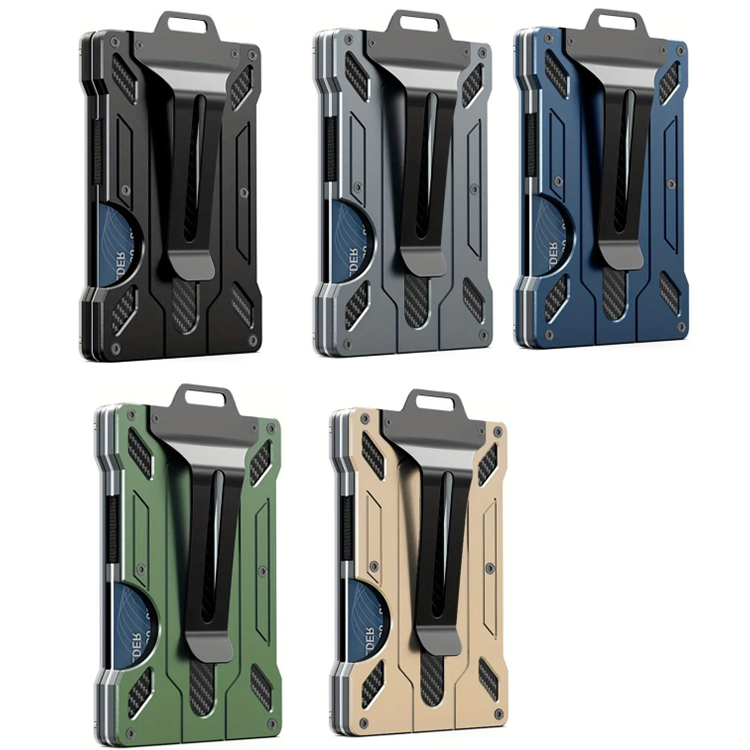
The visual appeal of aluminum alloy lies in its versatility. Through a process called anodizing, manufacturers can create a wide spectrum of colors—from deep space gray and midnight black to vibrant blues and reds—that are chemically bonded to the metal surface. This means the color will not chip or peel like paint. Furthermore, textures can be applied via CNC machining or bead-blasting to give the holder a matte, brushed, or satin finish that resists fingerprints and provides a secure grip.
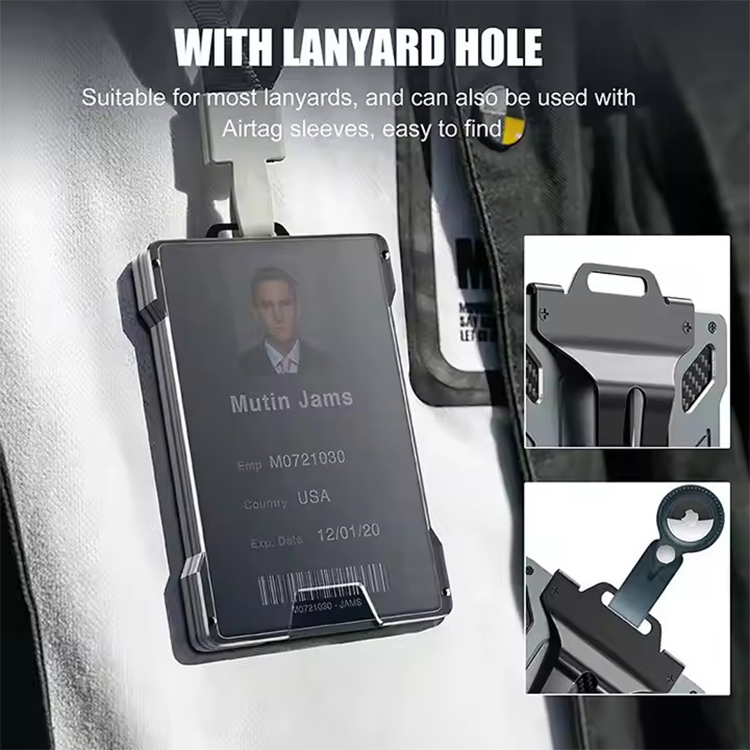
The inclusion of a transparent window is perhaps the most significant functional upgrade in recent minimalist wallet designs. In many professional and social environments, the need to present identification is frequent. Whether it is a driver's license at a security checkpoint, a work badge for office entry, or an age-verification card, having to dig through a stack of cards is a nuisance. The transparent window, usually made of high-grade polycarbonate or scratch-resistant PVC, allows the user to show their ID without ever removing it from the security of the holder.
While the window provides visibility, it does not compromise protection. Modern designs ensure that the transparent layer is UV-resistant, preventing the sun from fading the printed information or photos on the ID card. Additionally, the window is often recessed slightly within the aluminum frame, protecting the clear surface from direct contact with keys or other abrasive items in the pocket. This balance ensures that the most important card in your possession remains both legible and pristine.
As credit and debit cards have shifted toward contactless "tap-to-pay" technology, a new form of theft has emerged: RFID skimming. Using inexpensive handheld scanners, bad actors can theoretically capture the unencrypted data from a card's Radio Frequency Identification (RFID) chip simply by standing near the victim. This information can then be used to clone the card or make unauthorized purchases.
The aluminum alloy body of these card holders acts as a natural Faraday cage. Because aluminum is a conductive material, it intercepts and grounds the electromagnetic waves used by RFID scanners. When cards are tucked inside the metal housing, they are effectively "invisible" to any external electronic interrogation. This passive security feature provides peace of mind for travelers and commuters who navigate crowded public spaces where the risk of electronic pickpocketing is highest.

It is important to note that these holders are specifically engineered to block the 13.56 MHz frequency used by credit cards and passports. However, many designs allow for "selective transparency." By placing a transit card or a building access badge behind the transparent ID window (which often lacks the same heavy shielding as the core metal body), users can sometimes still use tap-to-enter functions for work without exposing their financial cards to risk. This nuanced engineering reflects a deep understanding of daily user workflows.
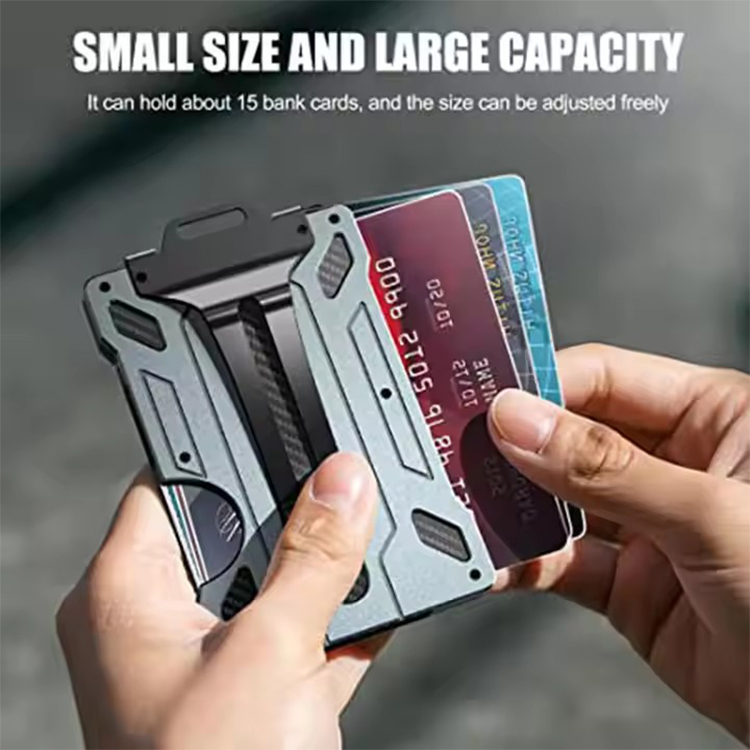
Many premium aluminum card holders utilize a mechanical ejection system. With the flick of a side lever or a bottom button, the internal cards are fanned out in a staggered fashion. This allows the user to see every card at a glance and select the one they need with a single finger. This "pop-up" functionality is not just a gimmick; it is an ergonomic solution to the "index finger struggle" often associated with tight leather card slots.
A typical aluminum alloy card holder is approximately 10mm to 15mm thick, even when holding up to six or eight cards. Compared to a traditional wallet that might be 30mm thick when empty, the space savings are enormous. This slim profile allows the holder to fit into shirt pockets, small clutch bags, or the dedicated "tech pockets" found in modern backpacks. It encourages a lifestyle of "essentialism," where the user carries only what they truly need, leading to better organization and less mental clutter.
While the focus is on cards, the reality is that cash is still necessary in some situations. Designers often include a spring-steel money clip or a high-tension elastic strap on the exterior of the aluminum body. This allows for the secure carry of a few folded bills or a receipt. The integration is seamless, ensuring that the primary focus remains on the cards while providing secondary utility for currency.
Leather production involves intensive chemical tanning processes and a high carbon footprint, while cheap plastic wallets often end up in landfills within a year or two due to cracked seams and frayed edges. In contrast, aluminum is one of the most sustainable materials on the planet. It is 100% recyclable without any loss of quality.
An aluminum alloy card holder is essentially a "buy it for life" product. There are no threads to unravel, no glue to dry out, and no fabric to tear. By choosing a metal accessory, the consumer is making a conscious decision to move away from the "fast fashion" cycle. The longevity of the product means fewer resources are consumed over the user's lifetime, making it an environmentally responsible choice for the eco-conscious consumer.
For the executive or office worker, the aluminum card holder exudes a sense of precision and modernity. It complements the aesthetic of laptops, smartphones, and high-end pens. The ability to quickly display a building pass through the transparent window saves time during the morning rush, while the RFID protection keeps corporate cards secure during business travel.
For hikers, cyclists, and travelers, the ruggedness of aluminum is the main draw. It is often water-resistant and immune to the sweat and humidity that would ruin a leather wallet during physical activity. The secure clamping mechanism ensures that cards do not spill out even during vigorous movement, making it a reliable companion for the "active" side of life.
International travel requires a balance of security and accessibility. The aluminum holder protects the digital data on a passport card or global entry ID while keeping a few essential credit cards and local currency organized. Its compact size also makes it easier to hide in a front pocket or a hidden neck pouch, reducing the visibility of valuables to potential thieves in tourist areas.
When selecting a holder, the user must balance the number of cards they carry with the desired thinness. Most minimalist holders are designed for 5–7 cards. If you require more, look for "expandable" models that use elastic backings or dual-chamber designs. However, the true benefit of this accessory is found in its ability to force you to downsize to the essentials.
Not all transparent windows are created equal. Some are designed for vertical orientation (portrait), while others are horizontal (landscape). Ensure the window orientation matches your primary ID. Additionally, look for windows that have a thumb slot, which makes it much easier to slide the ID out when you actually need to hand it over to an official.
If choosing a model with a pop-up lever, research the reputation of the internal mechanism. High-quality brands use reinforced springs and friction-fit components that are tested for thousands of cycles. A cheap mechanism that jams can turn a convenient tool into a source of frustration.
Unlike leather, which requires specific oils and conditioners, aluminum is incredibly easy to maintain. A simple wipe with a damp microfiber cloth is usually enough to remove surface dust. For a deeper clean, a drop of mild dish soap can be used. Because the surface is non-porous, it does not harbor bacteria or odors, making it a more hygienic option for an item that is handled multiple times every day.
While anodized aluminum is hard, it is not invincible. Over years of use, the edges may develop a "patina" where the silver of the base metal shows through the colored coating. Many EDC enthusiasts actually prefer this look, as it tells a story of use and reliability. However, to keep it looking new, avoid carrying the holder in the same pocket as loose keys or coins, which are the primary culprits for surface scratching.
The "Aluminum Alloy Card Holder with Transparent ID Window" is a testament to how traditional items can be reimagined for a high-tech world. It bridges the gap between the physical necessity of carrying identification and the digital necessity of protecting one's data. By investing in a material that lasts a lifetime and a design that prioritizes both security and ease of use, the modern consumer is not just buying a wallet—they are upgrading their daily efficiency.
As we move closer to a truly cashless society, the need for large containers for paper money will continue to dwindle. However, the need for physical identification and secure storage for essential chips and cards will remain. The aluminum card holder is perfectly positioned to remain the gold standard for personal carry well into the future, offering a blend of strength, style, and security that no other material can match.
Q1: Will the aluminum material scratch my credit cards?
A: Most high-quality aluminum card holders are designed with internal plastic or silicone linings and smooth guide rails. These components ensure that the metal never directly grinds against the cards. The "pop-up" mechanisms are specifically engineered to fan the cards out without causing surface friction, keeping your cards' magnetic strips and chips in excellent condition.
Q2: Can I use the tap-to-pay feature without taking the card out?
A: Generally, no. The primary purpose of the aluminum alloy is to block RFID signals. If you want to use tap-to-pay, you will need to slide the card out slightly or use the pop-up lever to expose the card's chip to the reader. However, some models feature a specific slot outside the metal shielding or behind the transparent window that may allow for low-frequency signals (like office badges) to pass through.
Q3: How many cards can typically fit in one of these holders?
A: Standard minimalist models usually hold between 5 and 7 cards in the main shielded compartment. If the holder includes an external strap or an additional pocket behind the ID window, you can often carry an additional 2 to 4 cards. It is designed to encourage carrying only the essentials.
Q4: Is the transparent ID window replaceable if it gets scratched?
A: In most mass-market designs, the ID window is integrated into the frame and is not easily replaceable by the user. However, because the window is usually made from heavy-duty polycarbonate (the same material used in safety glasses), it is highly resistant to impact and significant scratching under normal use.
Q5: Is an aluminum card holder heavy to carry?
A: On the contrary, aluminum is exceptionally light. Most of these holders weigh between 2 and 4 ounces (roughly 60 to 110 grams). They are often lighter than a traditional leather wallet filled with the same number of cards, primarily because they eliminate the weight of thick leather layers and internal fabric linings.


