

Views: 285 Author: Princee Lee Publish Time: 03-23-2026 Origin: Princee Lee


Content Menu
>> The Evolution of the Modern Wallet
>> Understanding the Materials: Aluminum and Carbon Fiber
>>> The Role of Aerospace-Grade Aluminum
>>> The Strength and Beauty of Carbon Fiber
>> RFID Blocking: Security in the Digital Age
>>> How the Card Holder Protects You
>> Ergonomics and the Minimalist Lifestyle
>>> Health Benefits of a Slimmer Profile
>>> The Psychology of Minimalism
>> The Versatility of the Money Clip
>>> Traditional Money Clips vs. Elastic Straps
>> Comparing Traditional Leather to Metal and Fiber
>> How to Choose the Right Card Holder
>>> Weight and Feel
>> Conclusion: Is the Upgrade Worth It?
>> Frequently Asked Questions (Q&A)
The history of the wallet is as old as currency itself. In ancient times, people used small pouches made of leather or fabric to carry coins and basic essentials. As paper money became more prevalent in the 17th century, the design of the wallet shifted to accommodate flat bills. For decades, the leather bifold and trifold wallets were the gold standard of personal organization. They were bulky, heavy, and often filled with unnecessary receipts, expired coupons, and ancient business cards. However, as the world transitioned into a digital-first economy, the nature of what we carry has changed fundamentally.
Today, we live in a society where physical cash is increasingly rare, and credit cards, identification, and digital payment methods are the primary tools for transactions. This shift has paved the way for the minimalist movement. People are no longer looking for a portable filing cabinet in their back pocket; they want something sleek, durable, and efficient. This demand led to the creation of the aluminum carbon fiber card holder with money clip—a masterpiece of modern engineering that combines aerospace-grade materials with high-end security features.
When discussing the superior quality of a modern card holder, one must look closely at the materials used in its construction. The combination of aluminum and carbon fiber is not a coincidence; it is a calculated choice designed to provide the best possible user experience.
Aluminum is one of the most versatile metals on the planet. In the context of a minimalist wallet, manufacturers often use 6063 or 6061 aluminum alloys, commonly referred to as "aerospace-grade." These alloys are prized for their high strength-to-weight ratio. Aluminum provides the structural integrity of the wallet, ensuring that it can withstand high pressure without bending or breaking. Furthermore, aluminum is naturally resistant to corrosion, meaning it won't rust or degrade over time, even if exposed to moisture or sweat in a pocket. The anodized finish often applied to the aluminum plates adds an extra layer of scratch resistance while allowing for a wide variety of colors and textures.
Carbon fiber is a material that has revolutionized industries ranging from Formula 1 racing to aerospace engineering. It is made of thin, strong crystalline filaments of carbon that are used to strengthen material. In a card holder, carbon fiber plates are often layered over the aluminum frame. The most common type used is the 3K weave, which refers to the 3,000 filaments used per "tow" or bundle.
The primary benefit of carbon fiber is its incredible strength; it is five times stronger than steel and twice as stiff, yet it weighs significantly less. Beyond its mechanical properties, carbon fiber offers a unique, futuristic aesthetic. The weave pattern catches the light in a way that leather or plain plastic simply cannot match, making it a favorite for those who value both form and function.
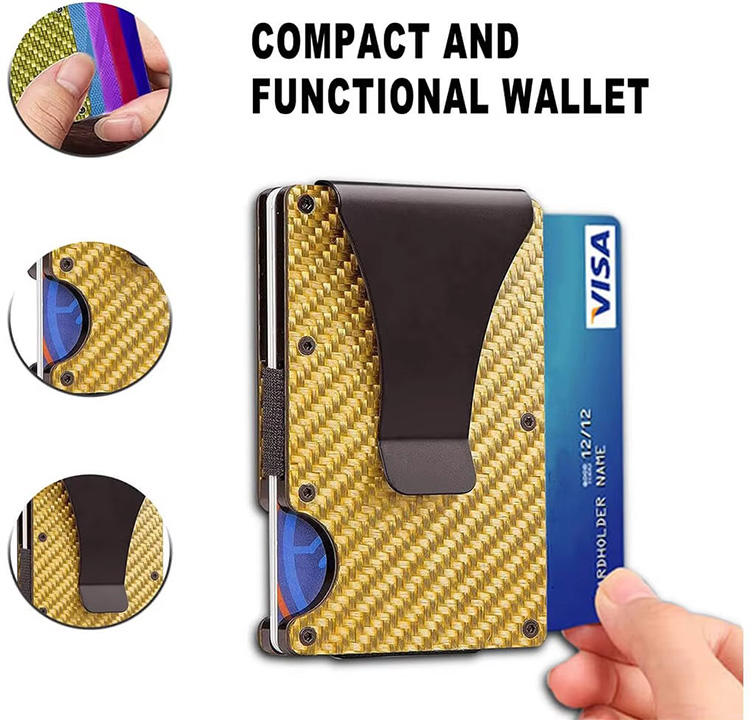
One of the most critical features of a modern aluminum carbon fiber card holder is its ability to protect the user from digital theft. Traditional leather wallets offer zero protection against a rising threat known as RFID skimming.
Most modern credit cards, debit cards, and passports contain Radio Frequency Identification (RFID) chips. These chips allow for contactless payments and quick scanning at security checkpoints. While convenient, these chips emit a signal that can be intercepted by unauthorized handheld scanners. A thief can walk past you in a crowded area and "skim" your card details without ever touching your wallet.
The metal plates of an aluminum card holder act as a Faraday cage. Because aluminum and carbon fiber are conductive materials, they create a shield that blocks electromagnetic signals. When your cards are tucked inside the wallet, the RFID scanner cannot communicate with the chip, effectively making your data invisible to potential thieves. This peace of mind is one of the primary reasons why millions of people are switching from traditional wallets to metal card holders.
The shift toward a minimalist wallet is often more than just a fashion choice; it is a lifestyle adjustment. Carrying a bulky bifold wallet in your back pocket can lead to more than just a ruined silhouette; it can cause physical health issues.
Doctors and chiropractors have long warned against "wallet sciatica." When you sit on a thick wallet for hours, it creates an imbalance in your pelvis and puts pressure on the sciatic nerve, leading to lower back pain and posture problems. By switching to a slim aluminum carbon fiber card holder, users typically move their wallet to their front pocket. This simple change eliminates the structural stress on the spine and significantly improves comfort during daily commutes or long office hours.
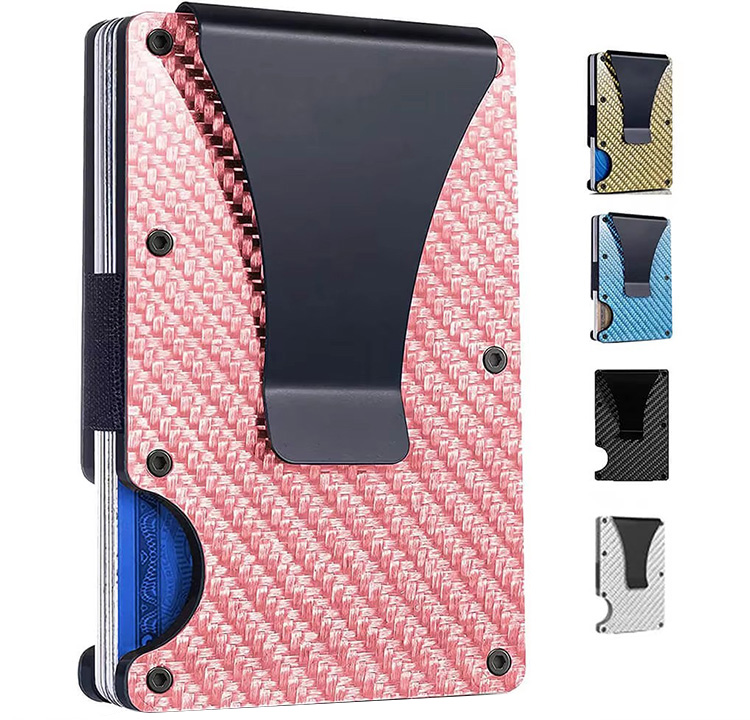
There is a psychological benefit to decluttering. By choosing a wallet that only holds 1-12 cards, you are forced to evaluate what you actually need. Most people find that they only use two or three cards regularly. Removing the clutter of old receipts and loyalty cards leads to a more organized mind and a more efficient daily routine. When you reach for your wallet, you know exactly where everything is, and the "fanning" mechanism found in many of these card holders allows for instant access to the right card.
While we are moving toward a cashless society, having the ability to carry some physical bills is still a necessity. Whether it's for tipping, emergency situations, or small vendors that don't accept cards, a bit of cash is always good to have. This is where the money clip comes into play.
Most high-quality card holders give you the option of a traditional spring-steel money clip or an elastic cash strap. The money clip is usually made of manganese steel or titanium, providing a high tension that keeps bills securely in place on the exterior of the wallet. It offers a classic "executive" look. On the other hand, the cash strap uses a high-tensile elastic band with silicone grips to hold cash flat against the wallet. Both designs ensure that the wallet remains slim while still providing the flexibility to carry physical currency.
To truly appreciate the value of an aluminum carbon fiber card holder, it is helpful to compare it against the traditional leather bifold.
* Durability: Leather is an organic material. Over time, it stretches, cracks, and absorbs oils and moisture from your skin. Eventually, a leather wallet will lose its shape and the stitching will fail. Metal and carbon fiber are virtually indestructible under normal conditions. They do not stretch, and they maintain their sleek shape for a lifetime.
* Maintenance: Leather requires conditioning to prevent it from drying out. An aluminum wallet requires almost zero maintenance. A quick wipe with a damp cloth is all it takes to keep it looking brand new.
* Protection: As mentioned, leather provides no security against digital theft. The aluminum card holder is a functional tool for security.
* Size: Even an empty leather bifold is often thicker than a fully loaded aluminum card holder.
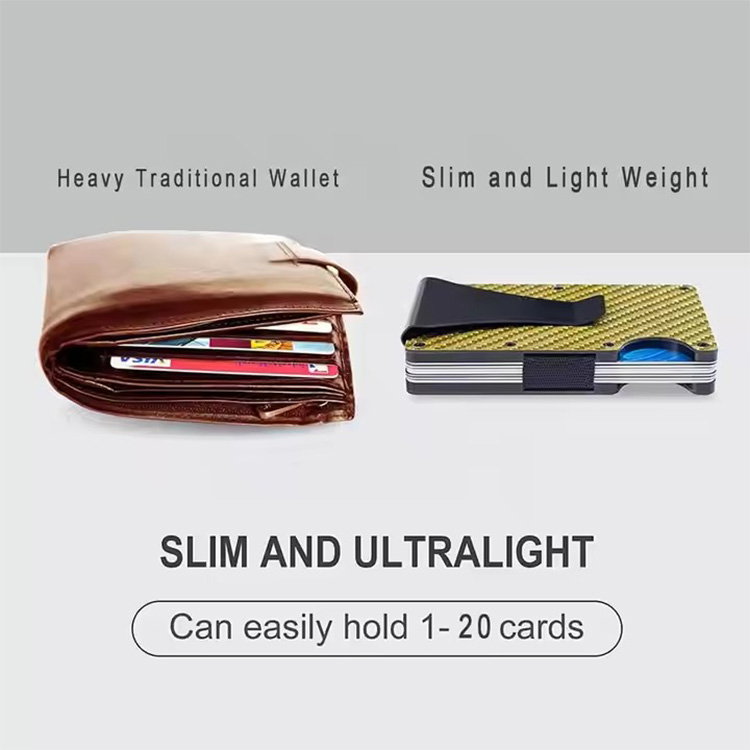
Not all card holders are created equal. If you are in the market for an aluminum carbon fiber card holder with money clip, there are several factors to consider.
Consider how many cards you absolutely need to carry. Most minimalist wallets are designed for 1 to 12 cards. If you try to overstuff them, the elastic bands may wear out faster. Look for a design that allows the plates to expand and contract smoothly.
Some wallets use a "thumb notch" that allows you to push cards out with one hand. Others use a trigger mechanism that fans the cards out in a tiered fashion. The thumb notch is generally more durable because it has fewer moving parts, while the trigger mechanism offers a higher "cool factor" and easier visibility of individual cards.
Aluminum is light, but some people prefer the even lighter feel of full carbon fiber versions. However, a bit of weight can be beneficial, as it makes you more aware of the wallet's presence in your pocket, reducing the chance of losing it.
While these wallets are built to last a lifetime, a little bit of care goes a long way. The most common point of failure in a minimalist wallet is the elastic band that holds the plates together. High-quality manufacturers use specialized elastic that is tested for thousands of expansions. If the elastic does eventually lose its tension, many brands offer replacement kits.
Another area to monitor is the screws. Most aluminum wallets are held together by tiny T5 or T6 Torx screws. Over months of being jostled in a pocket, these can occasionally loosen. It is a good idea to check them every few months and tighten them if necessary. Some users apply a tiny drop of thread-locking fluid to ensure they stay in place permanently.
In an era where sustainability is becoming more important, the longevity of your wallet matters. Leather production involves heavy chemical tanning processes that can be harmful to the environment. Furthermore, because leather wallets need to be replaced every few years, they contribute to a cycle of waste.
An aluminum and carbon fiber wallet is often marketed as a "buy it for life" product. Aluminum is also one of the most recyclable materials on earth. By choosing a product that lasts decades rather than years, you are reducing your overall environmental footprint.

Switching to an aluminum carbon fiber card holder with money clip is a significant departure from the traditional way of carrying essentials. However, the benefits are undeniable. You gain a higher level of security through RFID blocking, a more comfortable physical experience by reducing pocket bulk, and a durable accessory that can withstand the rigors of daily life.
Whether you are a professional looking for a sleek addition to your business attire, an outdoor enthusiast who needs a rugged and lightweight carry, or simply someone looking to declutter their life, the modern minimalist wallet is the ultimate solution. It is a fusion of style, security, and strength that represents the next generation of personal organization.
1. Will the aluminum or carbon fiber plates scratch my credit cards?
Most high-quality card holders have beveled internal edges and polished surfaces to prevent scratching. While the cards are held tightly together, they are designed to slide against each other rather than the metal frame. Over time, slight surface wear on cards is normal for any wallet, but significant damage is rare.
2. Can I carry more than 12 cards in this type of holder?
While many designs claim a 12-card capacity, some can stretch to hold slightly more. However, doing so may make it harder to retrieve cards quickly and can put excessive strain on the elastic bands. It is recommended to stick to the manufacturer's suggested limit for the best experience.
3. Does the money clip hold single bills securely?
Yes. The money clips are typically made of spring steel or titanium, which maintains high tension. Even a single bill folded over is held firmly in place. If you prefer carrying a large wad of cash, an elastic cash strap might be a more flexible option.
4. Is the wallet TSA-friendly?
Yes, aluminum and carbon fiber wallets are perfectly legal to carry through airport security. However, because they are made of metal, you will need to remove the wallet from your pocket and place it in a bin for the X-ray scanner, just as you would with a traditional wallet or phone.
5. How do I clean my carbon fiber wallet?
You can clean it using a soft cloth and a bit of warm water with mild soap. Avoid using abrasive chemicals or metal polishes, as these can damage the anodized finish on the aluminum or the resin coating on the carbon fiber. A quick wipe and dry will keep it looking pristine.


