

Views: 281 Author: Princee Lee Publish Time: 03-05-2026 Origin: Princee Lee


Content Menu
>> The Evolution of the Wallet: From Coins to Code
>> Understanding the Technology: How the AirTag Functions
>> Design Philosophy: Integrating Form and Function
>>> Built-in Silicone and Leather Mounts
>>> The Minimalist Metal Approach
>> The Benefits of Switching to an AirTag Tracker Wallet
>>> 1. Unparalleled Peace of Mind
>>> 2. Enhanced Security and Theft Deterrence
>>> 3. Streamlined Organization
>> Choosing the Right Material for Your Lifestyle
>>> Full-Grain Leather: The Classic Choice
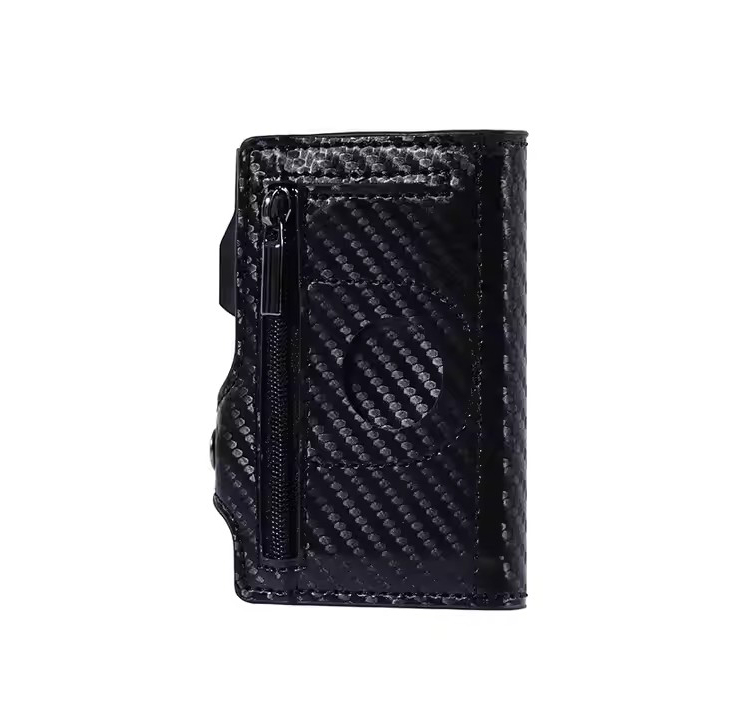
>>> Carbon Fiber: The Modern Edge
>>> Forged Aluminum: Tactical Efficiency
>> The Ecosystem: Privacy and Global Tracking
>> Comparison with Traditional Tracker Cards
>> Impact on Daily Life and Travel
>> The Future of Smart Wallets and EDC
>> Conclusion: A Worthy Investment for the Modern Individual
>> Related Questions and Answers
The modern world is defined by a constant tension between our physical possessions and our digital lives. For decades, the wallet has served as the humble guardian of our most essential tools—identification, currency, and credit. Yet, despite its importance, the traditional wallet has remained a low-tech accessory, prone to being left behind on a café table, slipping between couch cushions, or, in the worst-case scenario, being stolen. The introduction of the AirTag Tracker Wallet has fundamentally changed this dynamic, merging the artisanal heritage of leathercraft with the sophisticated precision of global tracking technology.
To understand why the AirTag Tracker Wallet has become a cornerstone of modern "Everyday Carry" (EDC), one must look at the history of the wallet itself. Historically, wallets were bulky pouches designed to hold coins and large paper bills. As the world transitioned to a plastic-heavy economy in the mid-20th century, the bifold and trifold became the standards. However, as we moved into the 21st century, the "minimalist" movement began to take hold. Men and women alike began to reject the "George Costanza" wallet—the overstuffed, spine-misaligning brick—in favor of slim cardholders.
But slimness brought a new problem: a smaller wallet is easier to lose and harder to feel when it's missing. Enter the era of the smart wallet. Initial attempts at trackable wallets relied on proprietary Bluetooth tags that were often thick, unreliable, and tied to small user networks. The game changed entirely when Apple released the AirTag. By creating a device that could tap into the "Find My" network—a web of nearly a billion Apple devices—the possibility of a truly "un-losable" wallet became a reality.
At the heart of every AirTag Tracker Wallet is the Apple AirTag itself. This small, coin-like device is a masterpiece of engineering, utilizing several layers of communication technology. The primary method of tracking is Bluetooth Low Energy (BLE). The AirTag emits a secure signal that can be detected by nearby devices in the Find My network. These devices then relay the location of your AirTag to iCloud, allowing you to see it on a map within the Find My app.
For those with newer iPhones, the technology goes even deeper with Ultra-Wideband (UWB). This allows for "Precision Finding," a feature that provides haptic feedback, audible pings, and visual arrows on your phone screen to guide you to the exact inch where your wallet is hiding. Whether it is buried under a pile of laundry or tucked inside a jacket pocket you haven't worn in weeks, the technology eliminates the "search" and replaces it with "discovery."
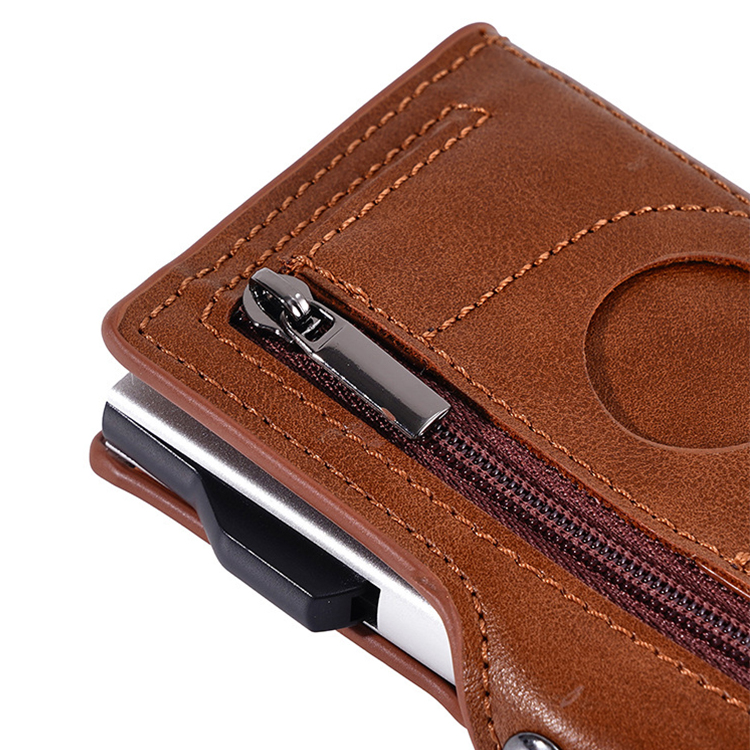
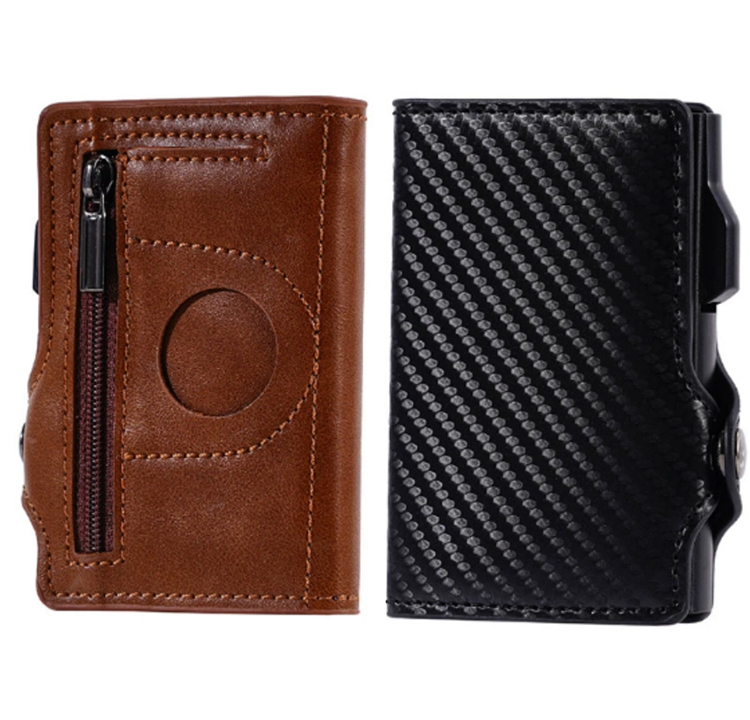
The true magic of a dedicated AirTag Tracker Wallet lies in its integration. While one could simply toss an AirTag into a standard billfold, doing so creates an unsightly bulge and risks the tag falling out. A purpose-built AirTag wallet is designed with a specific cavity or "vault" for the tracker.
Many high-end leather wallets now feature a circular cutout reinforced with silicone or a leather overlay. This secures the AirTag in a way that minimizes its profile, ensuring the wallet remains slim while the tag stays visible (or hidden, depending on the design preference). The placement is usually calculated to ensure the speaker of the AirTag is not completely muffled, allowing the "ping" to remain audible.
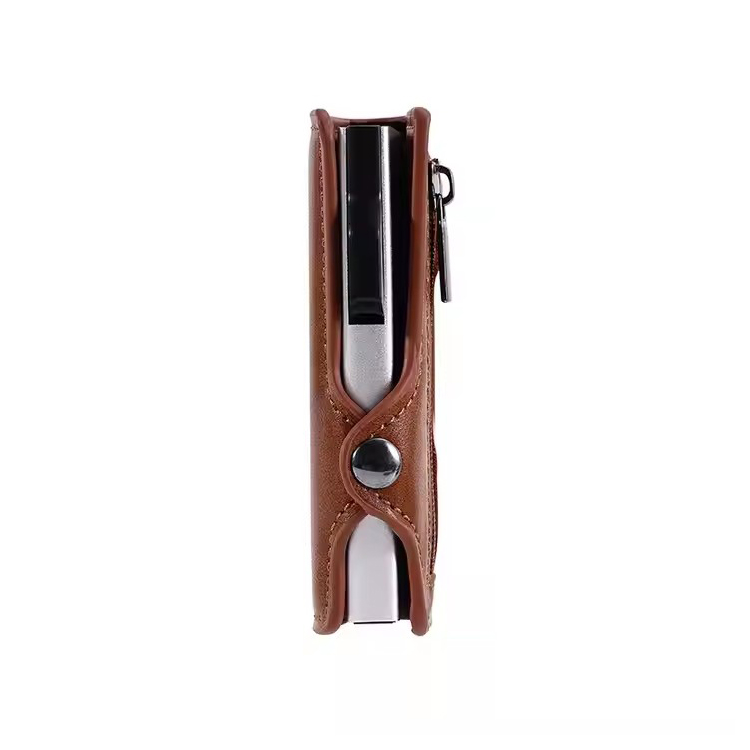
Brands specializing in tactical or industrial EDC have taken a different route. Using materials like aerospace-grade aluminum, titanium, or carbon fiber, these wallets often use a plate-and-band system. The AirTag is typically housed in a specialized outer plate. These wallets are popular among those who prioritize durability and RFID protection over the classic feel of leather.
Why are thousands of people making the switch? The reasons extend far beyond the "cool factor" of a new gadget.
The most immediate benefit is the reduction of anxiety. We have all experienced that heart-stopping moment of reaching for a pocket and finding it empty. With an AirTag integrated into your wallet, that panic is replaced by a quick check of your phone. You can set "Left Behind" alerts so that your iPhone notifies you the moment you walk away from your wallet at a restaurant or gym.
While a tracker doesn't physically stop a thief, it provides a powerful tool for recovery. If a wallet is stolen, the owner can track its movement in real-time across the city. Many modern AirTag wallets also come standard with RFID-blocking layers. These layers consist of a metallic mesh or foil that prevents "electronic pickpocketing," where thieves use handheld scanners to steal credit card information from a distance.
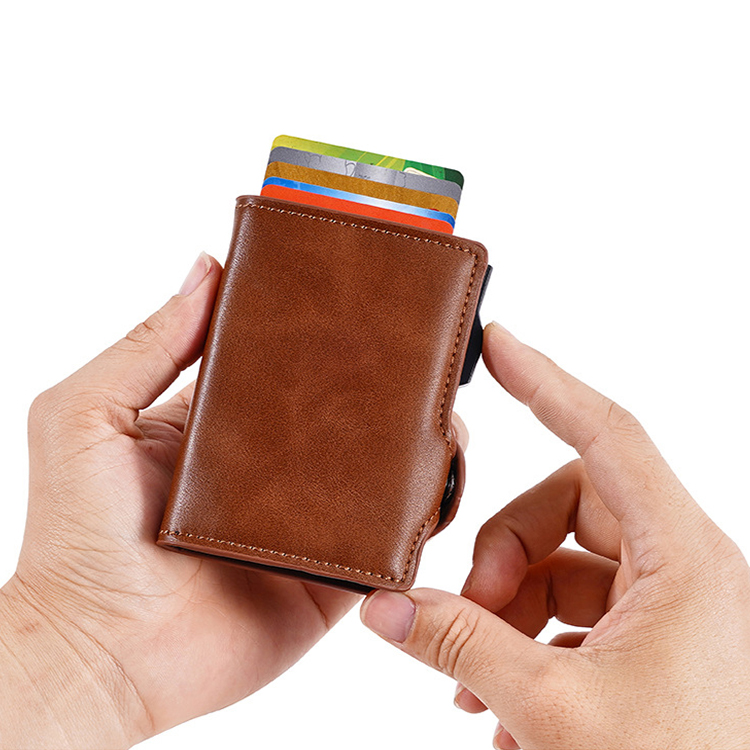
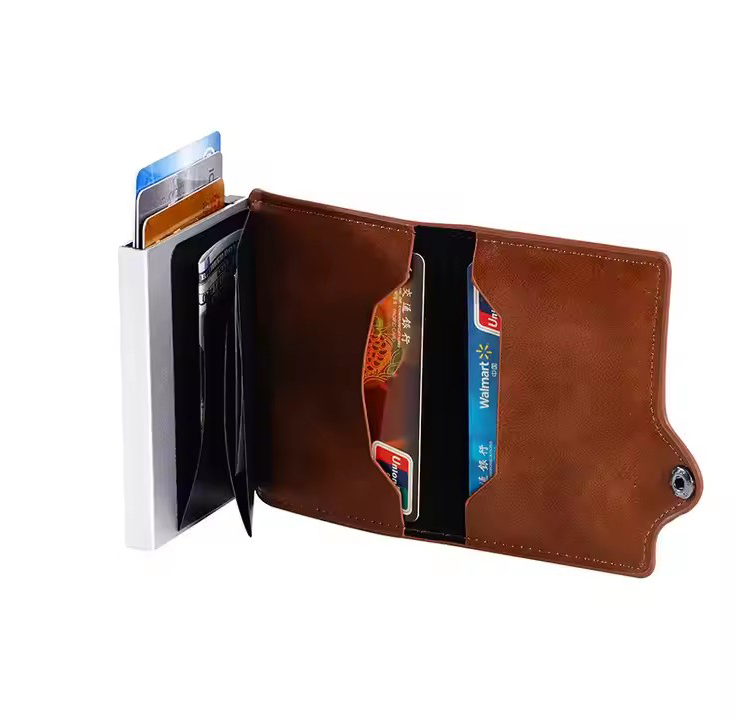
The move toward AirTag wallets usually coincides with a move toward minimalism. These wallets encourage the user to carry only what they need—typically 5 to 10 essential cards and a small amount of cash. This leads to better organization and less physical clutter. Many designs feature "pop-up" mechanisms where a flick of a lever fans out your cards for easy access, combining mechanical satisfaction with practical utility.
The choice of material for your AirTag Tracker Wallet dictates not only how it looks but how it ages and performs under pressure.
For those who appreciate the finer things, full-grain leather remains the gold standard. It is durable, smells wonderful, and develops a unique "patina" over time. A leather AirTag wallet feels organic and professional. However, leather requires some maintenance, such as occasional conditioning, and it can be thicker than metal alternatives.
Carbon fiber is prized for its incredible strength-to-weight ratio. It is virtually indestructible and has a distinct, high-tech aesthetic. It is an excellent choice for those who want a wallet that won't show scratches and can withstand harsh environments, making it a favorite for outdoor enthusiasts.
Aluminum wallets offer a middle ground. They are lighter than steel but tougher than plastic. Often finished with a matte powder coating or anodized colors, they provide a sleek, industrial look that pairs well with modern smartphones and tech gear.
One of the most common questions regarding the AirTag Tracker Wallet is the issue of privacy. Apple has implemented industry-leading "anti-stalking" measures. If someone else's AirTag ends up in your belongings, your iPhone will alert you. Furthermore, the location data is encrypted at every step. Not even Apple knows the location of your wallet; only the owner with the paired Apple ID can access that information.
This privacy doesn't come at the cost of efficiency. Because the Find My network is passive and uses encrypted "pings," it doesn't drain the battery of the devices helping to find your wallet. The AirTag itself runs on a standard CR2032 coin battery, which typically lasts about a year and is easily replaceable by the user.
Before the AirTag, many turned to "Tracker Cards" from brands like Tile or Chipolo. These cards are often as thin as two credit cards and fit easily into any slot. However, they usually rely on a much smaller network of users. If you lose a Tile-enabled wallet in a rural area, you are dependent on another Tile user passing by. With an AirTag, you are leveraging the power of every iPhone in the vicinity, which provides a significantly higher "find rate" in almost every corner of the globe.
The AirTag Tracker Wallet is perhaps most valuable when traveling. In the chaos of international airports, train stations, and crowded tourist spots, the risk of misplacing a wallet is high. Having a wallet that can be tracked across borders provides a safety net that was previously unavailable to the average traveler. You can track your wallet from the plane's Wi-Fi or see that it's safely in your hotel room while you're out exploring.
As we look toward the future, the integration of technology into our physical accessories will only deepen. We are already seeing the emergence of "Find My" compatible cards that are even thinner than the AirTag, though they often lack the Precision Finding UWB chip. The AirTag Tracker Wallet represents the first successful "bridge" between the world of fashion and the world of Silicon Valley. It suggests a future where no essential item—be it a wallet, a key ring, or a backpack—is ever truly lost.
In conclusion, the AirTag Tracker Wallet is more than just a niche gadget for tech enthusiasts; it is a practical solution to an age-old problem. By combining the security of the Apple ecosystem with the craftsmanship of modern wallet design, it offers a level of protection and convenience that traditional wallets simply cannot match. Whether you prefer the timeless feel of leather or the rugged durability of carbon fiber, there is an AirTag-integrated option that fits your style. Investing in one means investing in peace of mind, ensuring that your most important cards and memories are always just a tap away on your screen.
Q1: Will an AirTag make my wallet too bulky for a front pocket?
A1: While an AirTag does add a small amount of thickness (about 8mm), most dedicated AirTag Tracker Wallets are designed to be "minimalist." By reducing the number of unnecessary card slots and using slim materials, these wallets often end up being thinner than a traditional, non-tracking bifold, even with the AirTag included.
Q2: Does the AirTag Tracker Wallet protect against digital theft?
A2: Yes, the vast majority of AirTag wallets include RFID-blocking technology. This prevents thieves from using scanners to capture your credit card data through your pocket. When combined with the physical tracking of the AirTag, it provides a comprehensive 360-degree security solution.
Q3: Can I use an AirTag wallet with an Android phone?
A3: While you can physically put an AirTag in the wallet, the tracking features are designed specifically for the Apple ecosystem. Android users cannot use the "Find My" app to locate an AirTag. Android users should look for wallets compatible with trackers like the Chipolo CARD or Tile, which have their own dedicated Android apps.
Q4: How long does the battery in the wallet's tracker last?
A4: The Apple AirTag uses a CR2032 battery that lasts approximately one year. Your iPhone will send you a notification when the battery is running low. Replacing the battery is a simple process that takes less than a minute and requires no special tools.
Q5: Is the AirTag waterproof if my wallet gets wet?
A5: The AirTag itself has an IP67 rating, meaning it is water-resistant up to a depth of one meter for 30 minutes. If you are caught in the rain or accidentally drop your wallet in a puddle, the tracker should continue to function perfectly, though you should dry off the wallet material itself to prevent damage.
Q6: Can I see the history of where my wallet has been?
A6: No, for privacy reasons, Apple's Find My network only shows the current or last known location of the AirTag. It does not keep a "breadcrumb" history of everywhere the wallet has traveled, ensuring your movement history remains private.


