

Views: 255 Author: Princee Lee Publish Time: 03-16-2026 Origin: Princee Lee


Content Menu
● The Evolution of the Modern Wallet: From Bulk to Brilliance
● Engineering Excellence: Why Aluminum Alloy?
>> The Strength-to-Weight Ratio
>> The Anodization Process and Durability
● The Intelligence Within: Integrated GPS Tracking
>> How Crowdsourced GPS Networks Work
>> Geofencing and Separation Alerts
● Shielding Your Identity: The Science of RFID Protection
>> Balancing Shielding and Connectivity
● Minimalism and Ergonomics: Form Follows Function
>> Front Pocket Carry and Health
● The Lifecycle of a Smart Accessory
>> Battery Management and Sustainability
>> Software Updates and Ecosystem Longevity
● The Aesthetic Appeal: A Statement of Modernity
>> Customization and Personal Style
>> Professional vs. Casual Use
● Comparison: Aluminum vs. Other Modern Materials
● Practical Tips for Transitioning to a Smart Card Clip
● The Future of the Smart Card Clip
For decades, the traditional leather bifold wallet remained an unchallenged staple of the male wardrobe. It was thick, cumbersome, and often filled with unnecessary receipts, expired coupons, and a chaotic stack of cards. However, as the world transitioned into a digital-first economy, the physical requirements for what we carry changed drastically. The "Costanza wallet" era has officially ended, making way for a new philosophy: Every Day Carry (EDC) minimalism. At the pinnacle of this revolution sits the Smart Aluminum Alloy Card Clip with integrated GPS tracking.
This device is not merely a container for currency; it is a sophisticated piece of hardware designed to bridge the gap between physical security and digital convenience. By combining the structural integrity of aerospace-grade metals with the intelligence of modern geolocation technology, this smart card clip addresses the two greatest fears of the modern commuter: identity theft and the loss of personal property. The shift toward aluminum alloy card clips represents a broader cultural movement toward efficiency, where every item in one's pocket must justify its weight and volume through multi-functional utility.
The choice of material is the foundation of any high-quality EDC item. While carbon fiber and titanium are popular alternatives, aluminum alloy remains the gold standard for card clips due to its unique balance of properties. Most premium smart clips utilize 6061-T6 aluminum, a grade frequently used in aircraft wings and high-end bicycle frames.
Aluminum is remarkably light, yet when alloyed with elements like magnesium and silicon, it achieves a structural rigidity that rivals steel. For a card clip, this means the device can withstand the pressure of being sat upon or dropped without deforming, all while remaining almost imperceptible in a front pocket. This lightweight nature is crucial for comfort, as a heavy wallet can lead to posture issues and discomfort during long periods of movement.

Unlike leather, which scuffs, peels, and absorbs moisture over time, aluminum alloy can be treated through a process called anodization. This electrochemical process increases the thickness of the natural oxide layer on the surface of the metal parts. The result is a finish that is significantly harder than the base metal, providing extreme resistance to scratches and corrosion. Furthermore, anodization allows for a wide array of deep, metallic colors that will not fade or chip, ensuring the card clip looks as pristine after five years of use as it did on day one.
The "Smart" in the Smart Aluminum Alloy Card Clip refers to its ability to communicate with the owner's digital ecosystem. Losing a wallet is more than a financial loss; it is a logistical nightmare involving the cancellation of cards and the replacement of government identification. Integrated GPS tracking transforms the card clip from a passive object into an active participant in its own security.
Most modern smart clips do not rely on a dedicated, battery-draining GPS chip that connects directly to satellites. Instead, they utilize Low-Energy Bluetooth (BLE) technology to sync with global tracking networks, such as Apple's "Find My" or Google's "Find My Device." When the card clip is out of the owner's range, it sends out a secure Bluetooth signal that can be detected by nearby devices in the network. These devices then relay the clip's location to the owner's app, providing a precise location on a map without the need for a cellular subscription.
Beyond just finding a lost item, integrated tracking provides proactive security through geofencing. Users can set "Safe Zones," such as their home or office. If the card clip moves beyond a certain distance from the owner's smartphone while they are outside a safe zone, the phone will immediately trigger a separation alert. This feature ensures that you never leave a restaurant or a taxi without your wallet in the first place, stopping the loss before it happens.

In the modern age, a thief does not need to physically touch your wallet to rob you. Radio Frequency Identification (RFID) technology, which allows for "tap-to-pay" convenience, also opens the door to digital pickpocketing. Remote scanners can potentially capture the data from your credit cards or passport while they are still inside a traditional leather wallet.
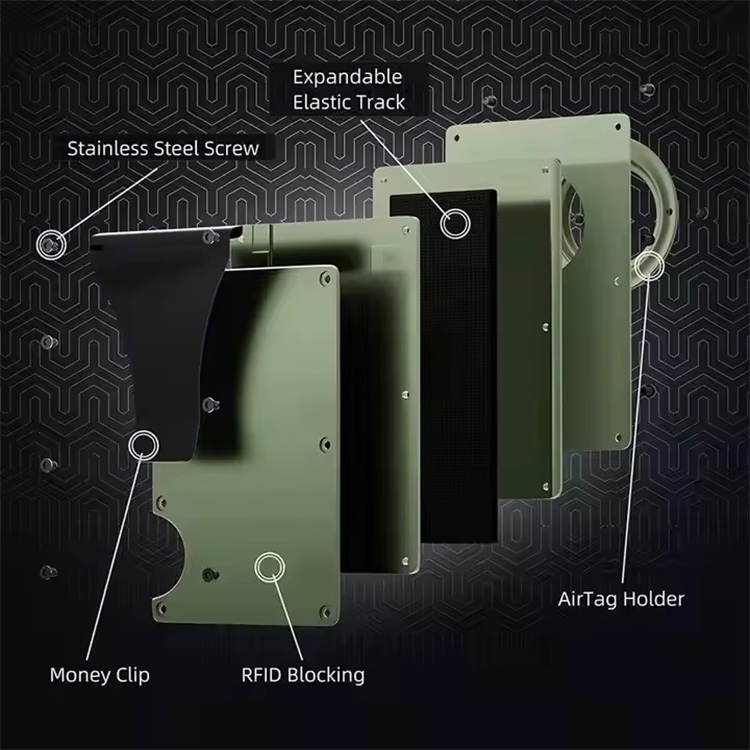
Aluminum is an excellent conductor of electricity, which makes it a natural shield against electromagnetic waves. When your cards are encased in an aluminum alloy clip, the metal acts as a "Faraday Cage." This physical barrier blocks the signals sent by RFID scanners, ensuring that your sensitive information remains invisible to unauthorized devices. This is not just a secondary feature; in an era of increasing cybercrime, RFID blocking is a mandatory requirement for any security-conscious individual.
One of the engineering challenges in designing a smart clip is ensuring that the aluminum body blocks malicious RFID signals while still allowing the internal Bluetooth tracker to communicate with the owner's phone. Innovative designs solve this by incorporating small "windows" or using specific internal layouts that isolate the tracking module from the card-holding compartment. This allows for 360-degree card protection without compromising the range of the GPS tracking features.
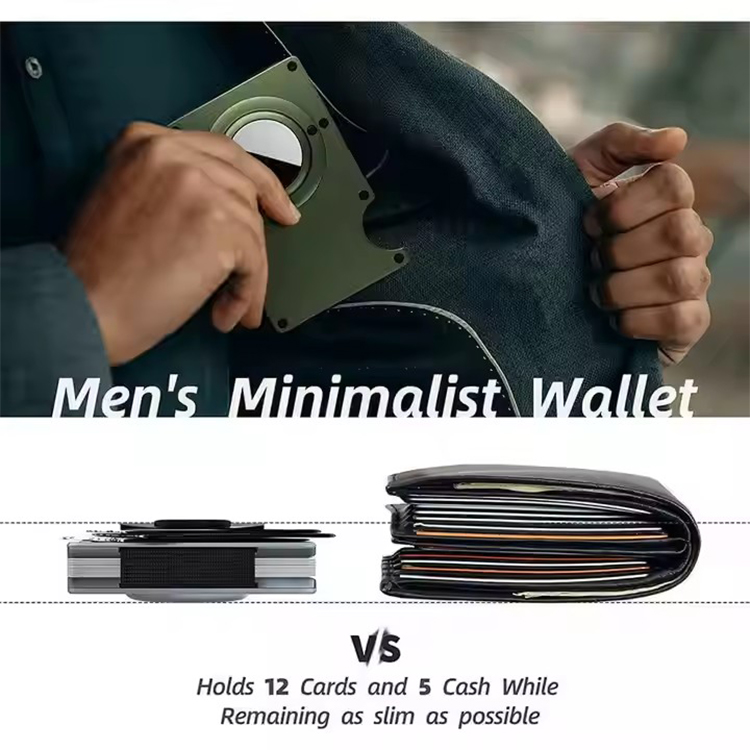
The design of a smart aluminum card clip is a masterclass in ergonomics. Traditional wallets encourage hoarding, but the card clip enforces a disciplined approach to what we carry. By limiting the capacity to a specific number of cards—usually between 1 and 12—the device forces the user to prioritize.
Many high-end clips feature a mechanical trigger. With the flick of a switch or the push of a button, the cards are ejected in a tiered, fan-like fashion. This allows the user to see every card at once and select the one they need without fumbling. Once the transaction is complete, the cards are pushed back into the secure, tension-held slot. This mechanical interaction adds a tactile satisfaction to a mundane task, turning the act of paying into a seamless experience.
Physical therapists have long warned against the "fat wallet syndrome," where sitting on a bulky bifold in a back pocket causes spinal misalignment and sciatica. The slim profile of the aluminum card clip is designed specifically for front-pocket carry. This not only improves posture but also significantly reduces the risk of traditional pickpocketing, as items in a front pocket are much harder to steal unnoticed.
When purchasing a smart aluminum card clip, one must consider the long-term maintenance and lifecycle of the product. Unlike a leather wallet that eventually disintegrates, an aluminum clip is nearly indestructible, but its electronic components require a different kind of care.
Most integrated trackers use ultra-slim rechargeable lithium-ion batteries or replaceable coin cells. Rechargeable models often use magnetic charging cables that snap onto the side of the clip, providing several months of use on a single charge. High-quality manufacturers focus on longevity, ensuring that the battery can withstand hundreds of charge cycles before degrading. This focus on durability makes the aluminum clip a more sustainable choice than cheap synthetic wallets that must be replaced annually.
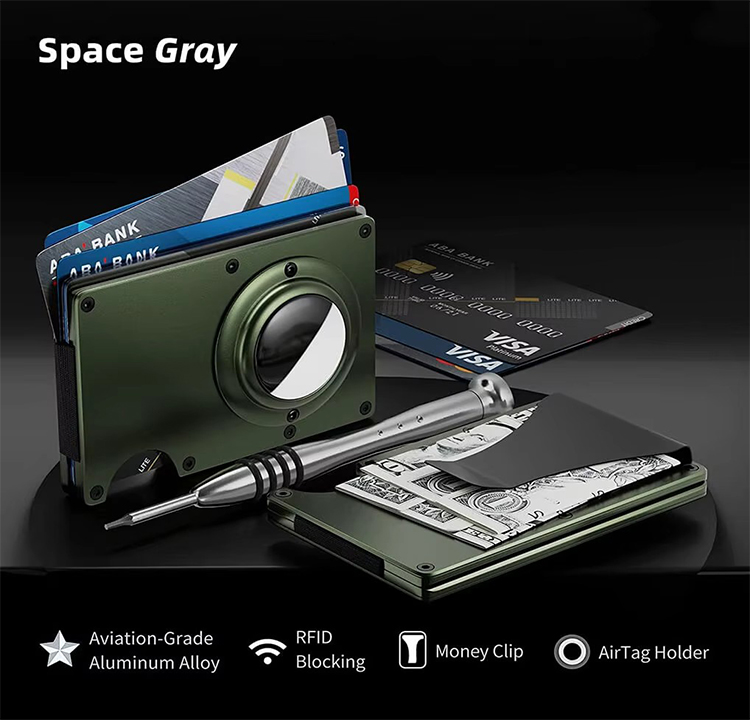
Because the tracking feature relies on smartphone apps, the "smart" aspect of the clip is subject to software evolution. Premium brands offer consistent firmware updates to improve tracking accuracy and battery efficiency. When choosing a clip, it is vital to select a brand that is integrated into a major ecosystem (like Apple or Google) to ensure the tracking network remains active and supported for years to come.
Beyond the technical specifications, the aluminum alloy card clip is a fashion statement. It reflects a personality that values precision, technology, and order. The clean lines and industrial feel of CNC-machined aluminum complement modern gadgets like smartphones and smartwatches.
The market for these clips has expanded to include various finishes, from matte black and space gray to "burnt" titanium looks and raw brushed metal. Some clips even offer modular plates that can be swapped out, allowing the user to change the color or add features like a multitool or a high-tension cash strap. This level of customization ensures that the tool fits the specific aesthetic and functional needs of the individual.
The sleek, metallic look transitions perfectly from a boardroom environment to a casual weekend hike. In a professional setting, pulling out a precision-engineered aluminum clip projects an image of organization and tech-savviness. In a casual or outdoor setting, the ruggedness of the aluminum ensures that the wallet can survive sweat, rain, and the occasional drop on a trail.
While aluminum is a leader, it is helpful to understand how it stacks up against other popular EDC materials like carbon fiber and leather.
- Aluminum vs. Carbon Fiber: Carbon fiber is lighter and has a distinct "high-tech" weave pattern. However, aluminum is generally more impact-resistant and offers better natural RFID blocking without needing additional internal liners. Aluminum is also more cost-effective for most users while providing 90% of the same benefits.
- Aluminum vs. Titanium: Titanium is stronger and more "exclusive," but it is also much more expensive and difficult to machine. For the average user, the weight difference is negligible, and aluminum offers more variety in terms of anodized colors.
- Aluminum vs. Leather: Leather is classic and soft, but it lacks the security features (RFID blocking) and the "find my" integration found in smart clips. Leather also stretches out over time, meaning cards can eventually fall out—a problem that the rigid tension of an aluminum clip solves permanently.
Moving from a traditional wallet to a minimalist smart clip requires a slight shift in habits.
1. Audit Your Cards: Go through your current wallet and remove anything you don't use at least once a week. Digitalize loyalty cards and insurance info into your phone's digital wallet.
2. Organize by Frequency: Place your most-used card (e.g., your primary debit card or transit pass) at the front or back of the stack for the easiest access.
3. Trust the Tracker: Take the time to set up the geofencing alerts immediately. It might take a day to get used to the notifications, but the peace of mind is worth it.
4. Cash Strategy: Most clips come with a "Money Strap" or a "Money Clip." If you carry a lot of cash, opt for the strap, as it is more flexible and keeps the profile slimmer.
As technology continues to shrink, we can expect even more features to be integrated into these aluminum chassis. Future iterations may include biometric fingerprint scanners to lock the cards in place, ensuring that even if the clip is stolen, the cards cannot be removed. We may also see the integration of ultra-wideband (UWB) chips for "precision finding," which can guide you to within inches of your wallet using augmented reality on your phone.
The Smart Aluminum Alloy Card Clip is more than just a trend; it is the logical conclusion of the evolution of personal storage. By synthesizing material science, electronic security, and minimalist design, it provides a solution for the modern individual who demands both style and substance.
Q1: How long does the battery in the GPS tracker typically last?
A1: Depending on the model, batteries can last anywhere from 3 to 12 months. Rechargeable versions usually require a quick charge every few months, while those using replaceable coin-cell batteries (like the CR2016) typically last about a year before needing a replacement.
Q2: Does the aluminum casing interfere with the Bluetooth signal of the tracker?
A2: Engineered smart clips are designed with internal non-metal spacers or specific antenna placements to ensure the signal can exit the device. While all metal provides some interference, high-quality clips are tested to maintain a reliable connection within a standard 30-to-100-foot Bluetooth range.
Q3: Is the card clip waterproof?
A3: The aluminum body itself is entirely waterproof and rust-proof. However, the "smart" component's water resistance varies by brand. Most are rated IP67, meaning they can survive a splash or a brief drop in water, but they are not intended for swimming or prolonged submersion.
Q4: Can I carry coins in an aluminum card clip?
A4: Most minimalist card clips are designed specifically for cards and folded bills. However, some brands offer modular "coin trays" that are the same dimensions as a credit card and can be slotted into the clip to hold a few coins or a spare key.
Q5: Will the aluminum scratch my credit cards?
A5: No. The interior of quality card clips is usually lined with microfibers or polished smooth to ensure that cards slide in and out without surface damage. The tension is held by the edges of the cards rather than the magnetic strips or chips.


