

Views: 323 Author: Professor Leon Publish Time: 08-18-2026 Origin: Site


Content Menu
● 1. Understanding Leather Card Holder Women: Types and Applications
● 2. Leather Card Holder Women Quality and Performance Factors
● 3. How to Evaluate Leather Card Holder Women Suppliers
● 4. Key Quality Indicators for Leather Card Holder Women Buyers
● 5. Relevant Industry Standards and Certifications
● 6. Our Leather Card Holder Manufacturing Capabilities
● 7. Customization and OEM/ODM Options
● 8. Ordering Process: MOQ, Lead Time, and Shipping
● 9. Certifications and Industry Standards
● 10. Case Studies and Supply Chain Assurance
● 11. Questions to Ask Before Ordering
12 min read
The email arrives on a Tuesday. A brand owner in Melbourne has sold 2,000 card holders in three weeks — more than she projected for the entire quarter. Her supplier in another country just told her the next batch will take 45 days, not the promised 20. She needs a backup. She needs someone who understands that a leather card holder is not a complicated product, but producing 5,000 identical ones, consistently, is a different story.
That gap — between a single beautiful sample and repeatable quality at volume — is where most sourcing relationships break. This guide covers what procurement teams actually need to know when buying leather card holder women products: material science, construction specs, quality benchmarks, and supplier verification.
A leather card holder women product is a slim, multi-slot accessory designed to carry cards, IDs, and folded cash without the bulk of a traditional wallet. The category includes snap-button closures, zip-around styles, magnetic flaps, and open-top multi-slot designs.
The market has shifted decisively toward slim profiles. Consumers carry fewer cards and less cash than a decade ago. What they carry more of: transit passes, work IDs, loyalty cards, and contactless payment cards. This functional change drives product design.
Two subcategories deserve specific attention from buyers:
The saffiano leather card holder uses a cross-hatch textured leather — originally patented by Prada in the 1930s — that resists scratches and water damage. The texture is pressed or embossed into the leather surface. It holds its shape well and hides wear. This makes it a strong choice for daily-use products.
The id and card holder incorporates a clear PVC or TPU window on one or both sides, allowing users to display a transit card or work ID without removing it from the holder. The window adds manufacturing complexity — the PVC must be stitched or welded securely without tearing the surrounding leather.
The accessories market data tells a clear story. Global demand for compact card holders has grown steadily as consumers consolidate their daily carry items. The product's price point — typically $25–$80 at retail — offers high perceived value relative to material cost, making it an attractive margin product for brands.
The high turnover rate matters too. Card holders are fashion-adjacent items. Color trends shift seasonally. A brand that can respond quickly to trend shifts — rather than placing one massive order per year — gains a meaningful advantage.
Leather quality determines 70% of the product's perceived value. The other 30% comes from construction: stitching, edge finishing, and hardware.
| Material | Durability | Scratch Resistance | Cost per Unit | Best For |
|---|---|---|---|---|
| Saffiano leather (genuine) | High | Excellent | Medium-High | Daily use, luxury positioning |
| Full-grain leather | High | Moderate | High | Premium lines, aging patina |
| PU leather | Low-Medium | Low | Low | Budget lines, fashion items |
Saffiano leather is not always the right answer. It is stiffer than full-grain and takes longer to soften. For a buyer targeting a "buttery soft" feel, full-grain leather performs better despite being more prone to surface scratches. The choice depends on the brand's positioning, not on which material is "better."
Zippers matter. Most reputable manufacturers use YKK or equivalent branded zippers. A cheap zipper fails after 500 cycles; a quality zipper lasts thousands. For snap closures, brass or zinc alloy hardware with proper plating (nickel, gold, or antique finishes) resists tarnishing.
Stitching density is measured in SPI (stitches per inch). Quality card holders typically use 8–10 SPI. Below 7 SPI, the seams may pull apart under stress. Above 11 SPI, the leather can be perforated too densely, weakening the material.
Edge painting — the coating applied to cut leather edges — separates premium products from budget items. A well-painted edge is smooth, glossy, and free of gaps. Multi-layer edge painting (3–5 coats) costs more but prevents peeling.
Clear PVC windows require specific manufacturing care. The PVC thickness typically ranges from 0.3mm to 0.8mm. Thinner PVC is more flexible but tears easily at the stitch line. Thicker PVC is more durable but adds stiffness to the product.
The critical failure point: the seam where PVC meets leather. Because PVC is non-porous, it does not absorb the needle the same way leather does. Without proper tension adjustment on the sewing machine, the PVC tears away from the stitching within weeks of daily use. An experienced factory adjusts tension settings for each material combination.
Procurement teams need a framework. Here is a practical one, based on what consistently separates reliable suppliers from problematic ones.
Request a pre-production (PP) sample before committing to a bulk order. Examine it for:
Texture consistency: Run your finger across the saffiano leather card holder surface. The cross-hatch pattern should feel uniform, not patchy.
Stitching alignment: Hold the sample at eye level. The stitching lines should be straight and parallel to the edges. Wavy stitching indicates poor machine calibration.
Edge paint quality: Check the edges for gaps, bubbles, or color mismatch with the leather.
Smell: Genuine leather has a distinctive, pleasant odor. Chemical or plastic smells indicate poor-quality material or excessive finishing chemicals.
Hardware function: Open and close any snaps or zippers 30 times. They should operate smoothly without catching.
A supplier's claimed capacity means nothing without verification. Ask for:
Monthly production output for card holders specifically (not total factory output)
Number of production lines dedicated to leather goods
Machine inventory (CNC cutting machines, edge painting equipment, sewing stations)
Current order backlog — if a factory is fully booked for 3 months, your order will be delayed
AQL (Acceptable Quality Limit) is the industry standard for sampling inspection. The common standard for small leather goods is AQL 2.5 for major defects and 4.0 for minor defects. This means: in a random sample, no more than 2.5% of items may have major defects (e.g., broken zipper, torn leather) and 4.0% may have minor defects (e.g., slightly misaligned stitching).
Ask suppliers for their AQL documentation and inspection procedures. A factory that cannot explain its AQL protocol likely has no functioning QC system.
No minimum quality standard: If a supplier says "we check everything is good" without citing AQL or similar standards, they have no formal QC process.
Reluctance to share production photos: Reputable manufacturers regularly share production line photos or videos.
Vague lead time commitments: "About 30 days" is a red flag. "28 days from sample approval, 7 days buffer for material issues" demonstrates planning.
No returns policy for defective goods: Even with good QC, issues occur. A supplier without a defect replacement policy is risky.
When evaluating production quality, focus on these measurable indicators:
Stitch density: 8–10 SPI (stitches per inch)
Stitch tension: The thread should sit flat against the leather, not loose or overly tight
Edge paint adhesion: No peeling after 90-degree bend test
Hardware pull strength: Snaps should withstand 5kg of pull force without opening
Leather thickness: 1.2–1.5mm for card holder exteriors; 0.8–1.0mm for interior linings
PVC window tear resistance: No tearing after 1,000 flex cycles
Color fastness: No significant fading after 24 hours of light exposure
These numbers are not arbitrary — they represent the minimum thresholds that established brands in the market accept. Products below these specifications will likely generate customer complaints and returns.
Leather goods manufacturing does not have a single universal certification, but several standards apply:
REACH (EU): Restricts hazardous chemicals in consumer products. Required for selling in EU markets.
Proposition 65 (California): Requires warnings for products containing certain chemicals. Relevant for US sales.
ISO 9001: Quality management systems certification. Indicates structured process control.
SGS / TÜV inspections: Third-party verification of production quality. Often requested by large retail buyers.
A factory with REACH compliance documentation demonstrates awareness of chemical safety in leather tanning and finishing. A factory without it may still produce quality goods, but you assume legal risk by importing without verifying compliance.
Here is how the industry standards translate into our production reality. As a manufacturer with 13 years of experience in the card holder and wallet category, our approach to the saffiano leather card holder and id and card holder is based on process control rather than inspection-dependent quality.
Our production line follows a structured sequence:
Material inspection: Every leather roll is checked for thickness consistency and surface defects before cutting. Saffiano leather is verified for pattern uniformity across the roll.
CNC cutting: We use in-house CNC machines for leather and metal components. This ensures dimensional accuracy to ±0.3mm — critical for products that must hold cards snugly without being impossible to remove.
Edge beveling and painting: Cut edges are beveled, then painted in 3–5 layers. Each layer is dried and sanded before the next application.
Assembly and stitching: Skilled operators assemble components using industrial sewing machines calibrated for 8–10 SPI. PVC windows for id and card holder designs are stitched with adjusted tension settings to prevent tearing.
Hardware attachment: Snaps, rivets, and zippers are installed using pneumatic presses calibrated for consistent pressure.
Final inspection: Every piece undergoes a visual check. Random samples are pull-tested for hardware strength and stitch integrity.
We apply a three-stage QC framework:
Incoming material check: Every batch of leather, hardware, and PVC is inspected before entering production. Defective material is returned to suppliers.
In-line inspection: QC staff check work-in-progress at each production stage. Stitching alignment, edge paint quality, and hardware function are verified continuously.
Final random inspection: Before packing, orders are sampled according to AQL 2.5/4.0 standards. This aligns with what retail buyers expect from their own third-party inspections.
Our 300,000+ monthly production capacity means we can scale with your brand's growth. We have the machine capacity and skilled labor to handle both small test orders and large-scale production runs.
The leather card holder women market rewards differentiation. Brands that sell identical products to competitors compete on price alone — a losing game. Customization is how you win.
If you have a design or technical drawing, our OEM service turns it into production reality. This includes:
Pattern making and sample development
Material selection guidance
Hardware specification support
Pantone color matching for leather and stitching
Packaging design and production
Not every brand has an in-house design team. Our ODM service offers existing designs — including saffiano leather card holder styles and id and card holder configurations — that you can private label. This is the fastest path to market, with typical sample delivery within 7–10 days.
For stock designs, we apply your logo and branding to existing products. This requires no new tooling or pattern development. The cost is lower, and lead times are shorter — typically 15–20 days from order confirmation.
Minimum order quantities vary by product and customization level:
Stock designs (private label): MOQ from 200 pieces
ODM (existing design, your branding): MOQ from 300 pieces
OEM (full custom design): MOQ from 500 pieces
Flexible MOQs are not a favor — they are a practical necessity for a market where new brands launch monthly and established brands test new designs with small batches before committing to larger runs. The lower MOQ allows you to validate a product before scaling inventory.
Stock design with private label: 15–20 days
ODM with minor modifications: 20–25 days
OEM full custom: 25–35 days
These timelines assume material availability. Custom leather colors or exotic materials may add 5–10 days for procurement.
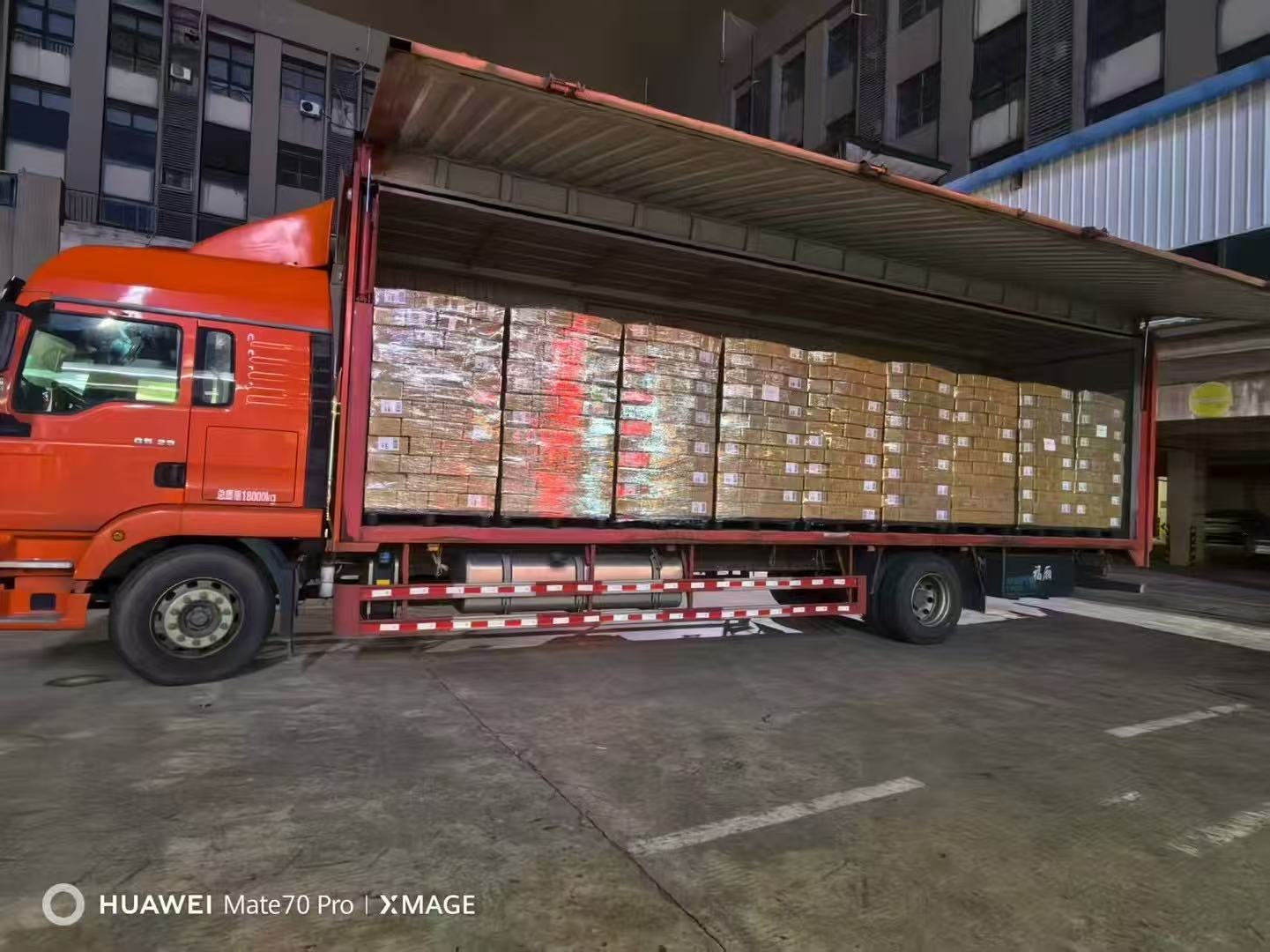
We ship worldwide via sea freight (FOB Shenzhen), air freight, or express courier (DHL, FedEx, UPS). For urgent orders, express shipping takes 3–5 days to most global destinations. Sea freight is cost-effective for bulk orders but requires 20–30 days transit time.
Choose air freight if: your inventory is low and demand is proven. Choose sea freight if: you have 4+ weeks of lead time buffer and want to maximize margin.
Our production facility operates under ISO 9001 quality management principles. We maintain compliance documentation for REACH regarding chemical safety in materials. For US-bound orders, we can provide Proposition 65 compliance documentation upon request.
Third-party inspections (SGS, TÜV, or equivalent) are welcome at any stage of production. Many of our clients arrange their own inspections before shipment — we encourage this practice. A manufacturer that welcomes external scrutiny is usually worth the trust.
A top online shop seller in the United States approached us after experiencing stockouts during the holiday season with their previous supplier — a factory that prioritized larger clients. We provided a dedicated production slot within 10 days of order confirmation. The leather card holder women product line, including a saffiano variant, shipped in 22 days. The seller maintained inventory continuity through peak demand.
Supermarkets and gift shops treat card holders as impulse purchases. The packaging matters as much as the product. We provide custom packaging options — from simple poly bags to branded boxes — that align with retail display requirements. Consistent quality across orders prevents the returns that erode margins in this channel.
The lesson from both scenarios: stable supply is not about a single good batch. It is about repeatability. A supplier that follows the same documented process for every order, with the same material standards and the same QC thresholds, is worth more than one that occasionally exceeds expectations.
Before signing a purchase agreement, ask these questions directly:
What is your AQL standard for final inspection?
What is your defect replacement policy?
Can you provide production photos or videos at each stage?
What is your current production backlog for card holders?
How do you handle material shortages — substitute materials or delay production?
Can you provide REACH compliance documentation for leather materials?
What is your maximum monthly output for card holders specifically?
Do you have in-house CNC capability, or do you outsource metal components?
What is your policy for color matching — do you guarantee Pantone accuracy?
What happens if my order is delayed — is there a penalty clause?
The answers reveal the supplier's operational maturity. Vague answers are red flags.
Choose a saffiano leather card holder if: your target customers want a low-maintenance daily product that resists scratches and holds its shape. Saffiano is the safer choice for commuters and frequent travelers.
Choose a full-grain leather card holder if: your brand positioning emphasizes natural materials and aging patina. Accept that softer leathers will show wear more visibly.
Choose an id and card holder if: your target market includes urban commuters, office workers, or students who need quick access to transit passes or work IDs.
Choose a multi-slot design without a window if: your target customers prioritize minimalism and carry fewer than five cards.
Choose a supplier with flexible MOQs if: you are launching a new brand or testing new designs. The ability to order 300 pieces rather than 1,000 reduces inventory risk significantly.
Choose a supplier with higher MOQs if: your volume is established and you want the lowest per-unit cost. Larger orders command better pricing.
The leather card holder women market rewards brands that understand their customers' actual usage patterns. The product is simple. The manufacturing discipline behind consistent quality is not.
Ready to discuss your next project? Whether you need a bulk order of saffiano leather card holders or a custom id and card holder design, our team is ready to provide a detailed quote within 24 hours.
Prada Group. "Saffiano Leather: History and Characteristics." https://www.pradagroup.com
ISO 9001:2015 Quality Management Systems. https://www.iso.org/standard/62085.html
European Chemicals Agency (ECHA). "REACH Regulation." https://echa.europa.eu/regulations/reach/understanding-reach
California Office of Environmental Health Hazard Assessment. "Proposition 65." https://oehha.ca.gov/proposition-65
International Organization for Standardization. "ISO 2859-1: Sampling Procedures for Inspection by Attributes." https://www.iso.org/standard/1141.html


