

Views: 0 Author: Professor Leon Publish Time: 08-18-2026 Origin: Site


Content Menu
● 1. Market Demand: Why "Small" Is the New Standard
● 2. Material Science: Selecting the Right Substrate for Durability
● 3. The Anatomy of the Zipper: A Critical Procurement Checkpoint
● 4. Manufacturing Processes: From Cutting to Assembly
● 5. Quality Control and Testing Protocols
● 6. How to Evaluate Small Zippered Wallet Suppliers
● 7. Questions to Ask Before Ordering
● 8. Industry Standards and Certifications
● 9. Our Manufacturing Capabilities
● 10. Customization and OEM/ODM Options
● 11. Quality Control: Our Multi-Stage Inspection Process
● 12. Ordering Process: MOQ, Lead Time, and Shipping
● 13. Frequently Asked Questions
13 min read
When a buyer opens their first bulk shipment of small zippered wallets, the zipper is the first thing they test. Not the leather. Not the stitching. The zipper — because it is the most likely point of failure and the hardest component to fix after assembly. A snagged zipper turns a premium product into a return request within days.
Generic sourcing fails for one reason: small zippered wallets are deceptively complex. The tolerances are tight, the materials are thin, and the zipper track demands precision that most generalist factories cannot deliver. This guide breaks down the technical specifications, manufacturing processes, and supplier evaluation frameworks that matter when sourcing this product category.
A small zippered wallet typically measures 10–12 cm in width, 7–9 cm in height, and holds 4–8 cards plus folded cash. Unlike a standard cardholder, the zippered closure adds security and prevents items from sliding out — but it also introduces a mechanical component that must survive thousands of open-close cycles.
Consumer preference has shifted decisively toward compact carry solutions. The oversized bifold that dominated men's retail for decades is losing shelf space to slim profiles that fit front pockets. For women, the trifold wallet womens segment once meant bulk and capacity; now it means organized compartments in a package that fits a small handbag or wristlet.
This is not a niche trend. Sales data from major retailers consistently show that wallets under 12 cm in width outsell larger formats across both men's and women's categories. The zippered variant specifically appeals to travelers, commuters, and urban consumers who want closure security without the bulk of a full-size wallet.
The bifold mens wallet is not disappearing — it is evolving. Modern interpretations combine the classic bifold silhouette with a zippered coin pocket or a full perimeter zipper. This hybrid approach answers a real consumer need: the security of a closed pouch with the familiarity of a traditional wallet layout.
For manufacturers, this shift means production lines must handle both leather goods and zipper installation with equal competence. A factory that excels at stitching but struggles with zipper alignment will produce defective units regardless of material quality.
The trifold wallet womens search segment reveals an important insight: women are not looking for larger wallets — they are looking for better organization. A compact zippered trifold with dedicated card slots, a coin pocket, and a bill compartment answers this need without the bulk of traditional trifolds.
Zippered closures are preferred over snap buttons for a practical reason: snaps fail. The metal fatigue from repeated opening and closing eventually weakens the closure, and once a snap loses tension, the wallet never closes properly again. Zippers, when properly manufactured, maintain their function for thousands of cycles.
Material selection determines the wallet's lifespan, aesthetic, and price point. Three primary categories dominate the small zippered wallet market, each with distinct manufacturing requirements.
Full-grain leather remains the benchmark for premium wallets. The industry standard thickness for wallet leather is 1.0–1.2 mm — thin enough to keep the profile compact, thick enough to resist tearing at stress points. Edge painting is critical; a poorly finished edge will peel within months of daily use.
Full-grain leather is the preferred choice for bifold mens wallet lines because it develops a patina that consumers value. However, leather requires careful skiving near the zipper track. If the leather is not thinned at this junction, the zipper foot cannot move freely, causing snagging and premature wear.
Vegan leather offers a lower price point and consistent texture, but quality varies dramatically between suppliers. The best vegan leathers use a polyurethane coating over a knitted or woven backing, which provides flex without cracking. Inferior PVC-based materials crack within a year and are increasingly rejected by conscious consumers.
One trade-off worth noting: full-grain leather is not always the right choice. For entry-level price points or promotional products, a well-constructed vegan leather wallet can outperform a low-grade genuine leather that has been split and coated to hide defects. Buyers should match material grade to target price point rather than defaulting to "genuine leather."
Metal wallets occupy the top tier of the small zippered wallet category. CNC machining allows tolerances of ±0.1 mm on the zipper channel — precision that is impossible with fabric or leather. This precision eliminates the "snagging" issue that plagues softer materials.
Aluminum is the preferred metal for three reasons: weight (approximately 40% lighter than stainless steel), corrosion resistance, and anodizing capability. Anodized aluminum achieves a scratch-resistant surface that maintains its appearance under daily abuse. Stainless steel with PVD coating offers superior hardness but adds weight and cost.
Metal wallets provide inherent RFID blocking. A 1.0 mm aluminum housing attenuates RFID signals sufficiently for contactless payment cards — no additional lining required. This is a significant advantage for a small zippered wallet, where every millimeter of thickness matters.
Nylon and polyester wallets serve the budget and athletic segments. The critical component is the zipper: buyers should specify YKK or equivalent quality, as generic zippers account for the majority of warranty claims in fabric wallets.
Water resistance depends on the fabric's coating and the zipper's construction. A standard nylon coil zipper is not waterproof; even a "water-resistant" wallet will admit moisture through the zipper track. For genuinely waterproof construction, manufacturers use a waterproof zipper with a polyurethane coating — but this adds cost and reduces flexibility.
The zipper is the most frequently replaced component in wallet returns. Understanding zipper construction is essential for any buyer sourcing small zippered wallets.
Nylon coil zippers are flexible, quiet, and self-repairing to a degree — if a tooth is slightly misaligned, the coil can often correct itself during the next cycle. They are the most common choice for fabric and leather wallets because they conform to curved tracks.
Vislon zippers have plastic teeth molded onto a fabric tape. They are more rigid than coil zippers, which limits their use to straight or gently curved tracks. However, Vislon teeth are more durable and offer better aesthetic options, including metallic finishes.
For metal wallets, the zipper track is machined into the housing itself. The zipper must be selected for compatibility with the CNC-machined channel — a specification that requires close coordination between the zipper supplier and the machining team.
The zipper puller is a branding surface that consumers see and touch every day. Options include:
Metal pullers with laser engraving or debossing
Leather tabs that match the wallet material
Custom-shaped pullers molded from zinc alloy
The slider mechanism matters as much as the puller. Auto-lock sliders prevent the zipper from opening accidentally — a critical feature for wallets carried in bags or pockets. Non-locking sliders are cheaper but fail the "shake test" that many consumers perform in-store.
Understanding the production process helps buyers evaluate factory capability and set realistic quality expectations.
High-end leather goods use 8–10 stitches per inch (SPI). Higher SPI counts create a denser, more durable seam but require more time and skilled operators. For small zippered wallets, the stitch density around the zipper track is the most demanding area — the curve of the track requires the operator to maintain consistent spacing while feeding the material through the machine.
Skiving, the process of thinning leather at specific points, is critical near the zipper track. A wallet that measures 11 cm wide with a 1.2 mm leather thickness will have a visible bulge at the zipper junction unless the leather is skived to 0.6–0.8 mm at that point. Buyers should ask suppliers about their skiving capability; factories without in-house skiving will outsource this step, adding lead time and quality variability.
CNC machining for metal wallets requires a different skill set than leather production. The zipper channel must be machined to ±0.1 mm tolerance, and the surface finish must be consistent across the entire housing.
Anodizing for aluminum creates a hard, corrosion-resistant surface layer. The anodizing process also accepts dye, allowing manufacturers to match Pantone colors. PVD (Physical Vapor Deposition) coating for stainless steel provides a thin, hard film that resists scratching and maintains a metallic luster.
Surface finish quality is graded by visual inspection under controlled lighting. A Class A finish has no visible scratches, pits, or color variation — this is the standard for retail-ready products.
Quality control separates reliable suppliers from those who ship defects. For small zippered wallets, the following tests matter most.
The ISO standard for zipper durability requires 10,000 open-close cycles without failure. This is the baseline; premium brands often specify 20,000 cycles. The test simulates two years of daily use (approximately 10 cycles per day).
Buyers should ask suppliers for their cycle test data — not just a certification, but the actual test results for the specific zipper model used in the wallet.
The stress points of a small zippered wallet are where the zipper meets the material. A pull test measures the force required to separate the zipper from the wallet body. For leather wallets, a minimum of 15 kg pull strength is typical. Metal wallets should exceed this due to the mechanical fastening of the zipper track.
Color consistency is a common source of customer complaints. Leather dye lots vary between batches; a wallet ordered in "cognac" might arrive closer to "caramel." The industry standard is to approve a physical sample against a Pantone reference under standard lighting conditions (D65 daylight).
For metal wallets, anodizing color matching follows the same principle. However, anodizing is more consistent than leather dyeing because the process is electrochemical rather than manual.
Selecting a supplier requires a structured framework. Use the following criteria to compare factories objectively.
Supplier evaluation checklist:
Request zipper cycle test data for the specific zipper model proposed
Verify in-house CNC or skiving capability — outsourcing adds variability
Ask for defect rate data (industry standard is <2% for mid-tier, <0.5% for premium)
Confirm sampling timeline and whether samples are production-line units or hand-finished prototypes
Check lead time for bulk orders (30–45 days is typical for leather; 25–35 days for metal)
Verify MOQ flexibility — a supplier who insists on high MOQs may not be willing to support market testing
Red flags to avoid:
Suppliers who cannot identify the zipper brand and model in their quotation
Factories that offer "unlimited customization" without discussing material constraints
Quotations that do not specify SPI, leather thickness, or metal alloy grade
Suppliers who show only CAD renders and no physical samples
Decision guide:
Choose a leather specialist if your brand positioning is premium and your target price point exceeds $25 wholesale
Choose a metal specialist if RFID blocking, scratch resistance, or a modern aesthetic is your primary selling point
Choose a fabric specialist if your target price point is under $10 wholesale or your product will be used in athletic/outdoor contexts
Before committing to a supplier, ask these questions directly:
What is your defect rate for small zippered wallets specifically?
Can you provide cycle test data for the zipper you recommend?
Do you perform skiving in-house for leather wallets?
What is your sampling process — are samples produced on the same line as bulk orders?
What is your MOQ for a pilot run versus a standard production run?
How do you handle color matching for leather dye or metal anodizing?
What is your lead time breakdown: sampling, bulk production, and shipping?
Buyers should expect suppliers to reference the following standards:
ISO 17400 — Zipper durability testing (10,000 cycles minimum)
REACH compliance — Required for EU markets; restricts hazardous substances in materials
Proposition 65 — California regulation requiring disclosure of certain chemicals
ISO 9001 — Quality management system certification (not product-specific but indicates process discipline)
For RFID-blocking claims, there is no universal certification standard. The most reliable verification is independent lab testing using ISO 14443 (contactless card communication) as the test protocol.
The specifications discussed above are not theoretical — they are the standards we apply in our own production facility. As a manufacturer with 13 years of experience serving brands, wholesalers, and online sellers, our approach to the small zippered wallet category is centered on precision.
We operate in-house CNC machining for our metal wallet lines. This means the zipper channels on our aluminum and stainless steel wallets are machined to tolerances that prevent the snagging issue common in lesser products. We also maintain in-house skiving capability for leather production, ensuring consistent thickness at the zipper junction across every unit.
Our monthly production capacity of 300,000+ units means we can scale from pilot runs to mass production without supply chain bottlenecks. This capacity matters when a product sells faster than forecast — we can increase production without requiring a new tooling investment.
We understand that a trifold wallet womens line requires different leather softness than a bifold mens wallet line. Our OEM team adjusts material sourcing and stitching tension accordingly. We offer:
Custom logo integration through debossing, embossing, or metal engraving
Pantone color matching for leather dye and metal anodizing
Custom zipper puller design with your branding
Custom packaging and inserts matched to your retail presentation
We provide OEM and ODM solutions for popular brands and top online shop sellers globally. Our flexible MOQ policy allows you to test new markets without committing to large production runs upfront.
Every small zippered wallet passes through a three-stage inspection before packing:
Incoming material inspection — Leather hides, metal housings, and zippers are checked against approved specifications before entering production
In-process inspection — Operators check zipper alignment, stitch density, and edge finishing at each production stage
Final inspection — Each wallet is tested for zipper function, closure security, and aesthetic defects before packing
This inspection process is the reason our defect rate remains below industry averages — and the reason we can offer fast turnaround without sacrificing quality.
The ordering process is straightforward:
Sampling — 7–10 days for a physical sample based on your specifications
Production — 25–35 days for bulk production depending on quantity and complexity
Shipping — 3–5 days air freight or 25–35 days sea freight to major ports
We invite wholesalers and supermarkets to join our global agency networks. With fast turnaround times and flexible MOQ, we help you manage inventory risk while maintaining supply stability.
What is the minimum order quantity for custom small zippered wallets?
Our MOQ is flexible and depends on the complexity of the design. For standard designs with existing tooling, we can accommodate smaller pilot runs to help you test new markets. For custom designs requiring new tooling, the MOQ is higher to amortize the tooling cost.
Can you combine leather and metal materials in one small zippered wallet design?
Yes. Multi-material assembly is one of our capabilities. A common configuration is a metal frame with leather interior panels. This requires careful coordination between the CNC machining and leather production teams to ensure proper fit and finish.
How do you ensure RFID blocking without adding bulk?
For metal wallets, the housing itself provides RFID blocking — no additional material is needed. For leather and fabric wallets, we use a thin RFID-blocking lining (typically a metal alloy non-woven fabric of 0.1–0.2 mm thickness) that does not affect the wallet's profile.
What is the typical lead time for a custom bifold mens wallet with a zipper closure?
Sampling takes 7–10 days. Bulk production takes 25–35 days depending on quantity and material availability. If you have a deadline, we can discuss expedited production options.
Can you produce a trifold wallet womens design with a zippered coin pocket?
Yes. We regularly produce trifold designs with dedicated zippered coin compartments. The zipper adds a manufacturing step but does not significantly affect production time or cost when planned from the design stage.
Do you offer custom zipper puller branding?
Yes. Options include metal pullers with laser engraving, leather tabs that match the wallet material, and custom-shaped pullers molded from zinc alloy. The puller design should be finalized during the sampling phase to ensure compatibility with the selected slider mechanism.
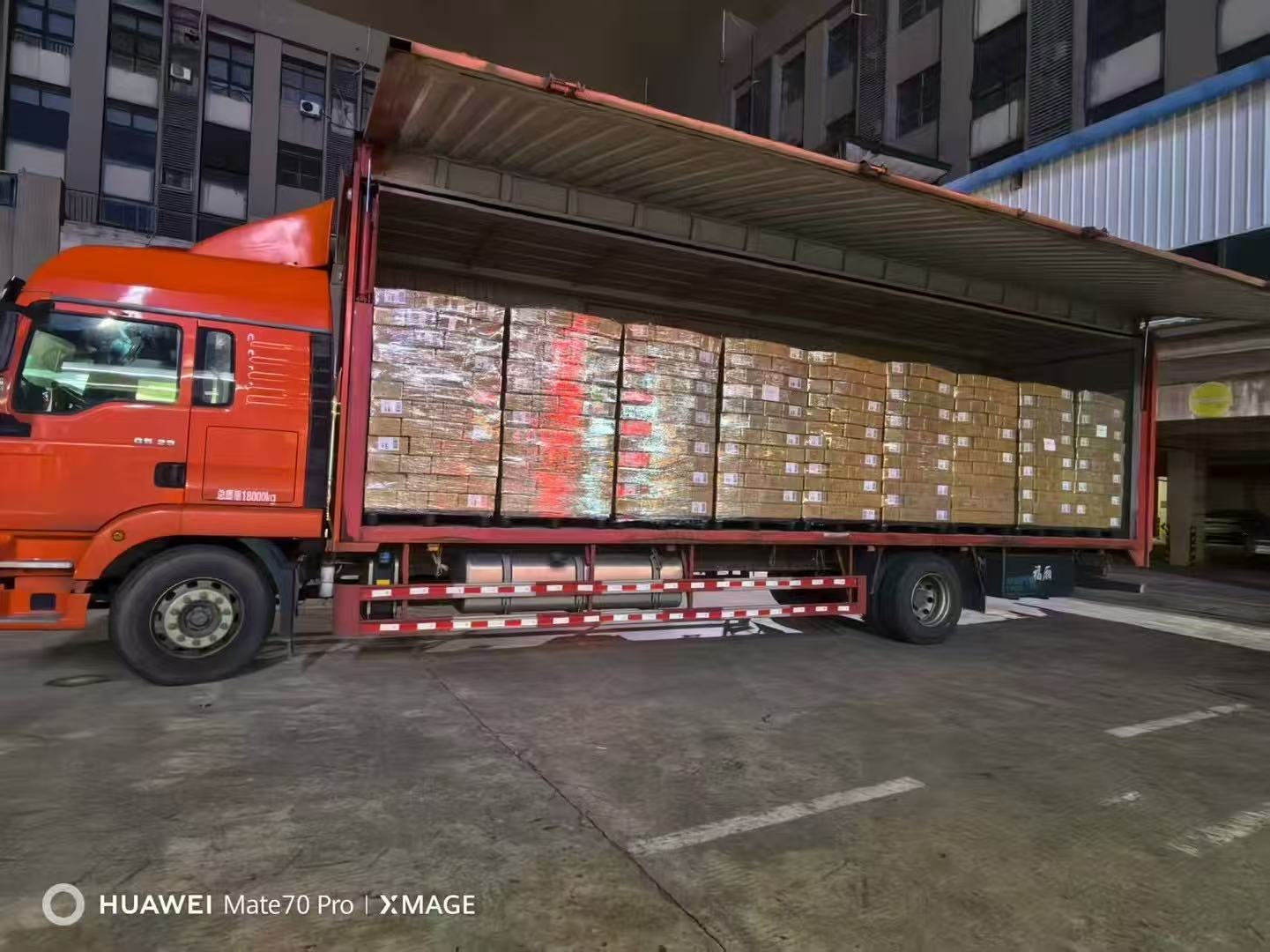
Ready to source a small zippered wallet that meets your brand's exact specifications? Our team can provide samples and detailed quotations within 24 hours.
ISO 17400:2021 — Footwear and leather goods — Test methods for sliding fasteners. International Organization for Standardization. https://www.iso.org/standard/74676.html
ISO 14443 — Identification cards — Contactless integrated circuit cards. International Organization for Standardization. https://www.iso.org/standard/73598.html
REACH Regulation (EC) No 1907/2006. European Chemicals Agency. https://echa.europa.eu/regulations/reach/understanding-reach
California Proposition 65. Office of Environmental Health Hazard Assessment. https://oehha.ca.gov/proposition-65
ISO 9001:2015 — Quality management systems. International Organization for Standardization. https://www.iso.org/iso-9001-quality-management.html


