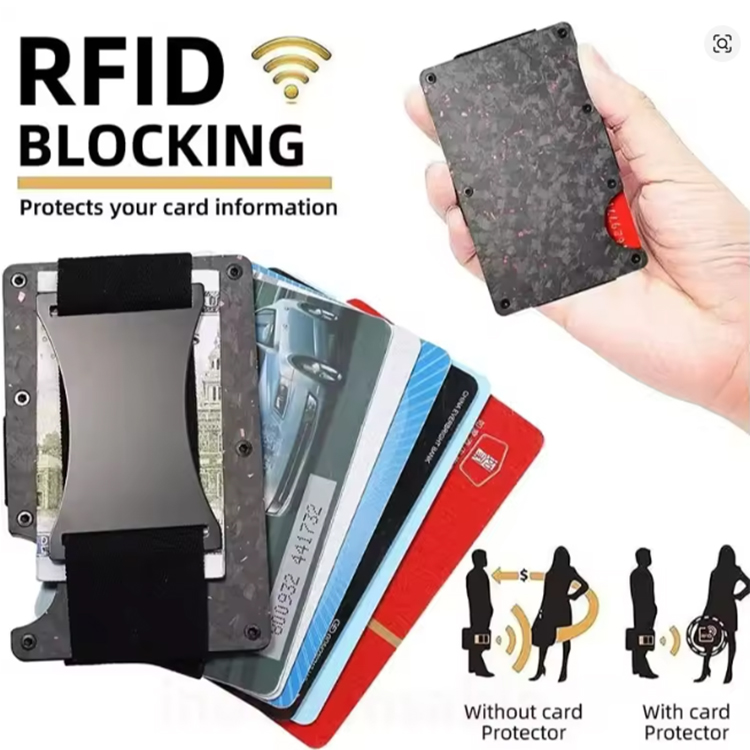
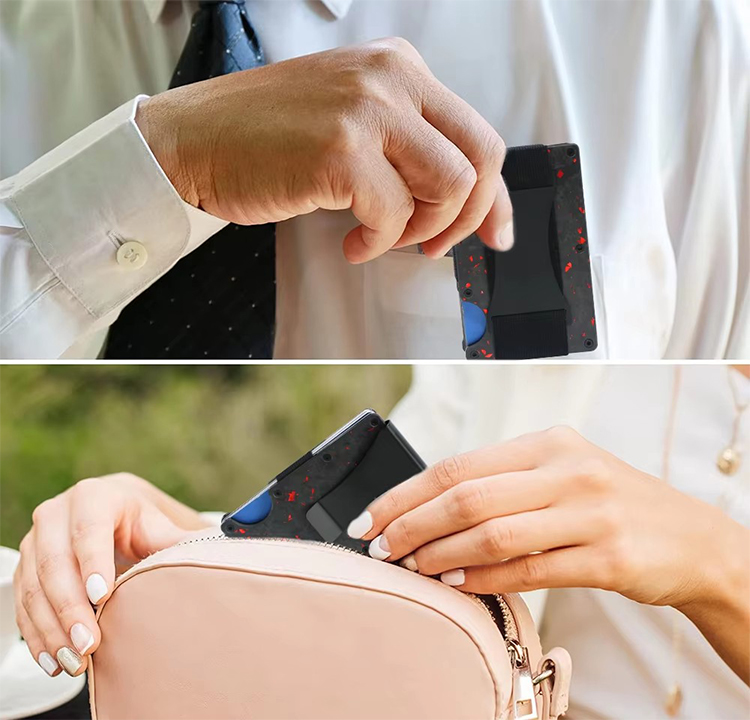
Many wallets claim to offer RFID-blocking protection, but labels and appearance alone cannot prove how well the shielding works.
An effective shielding structure should produce a meaningful reduction in the card's detectable response under the tested conditions.
The goal is not simply to obtain a single “yes” or “no” result.
A more useful evaluation asks:
How consistently does the wallet reduce card detection when the card is fully enclosed?
If the result changes substantially when the card is moved, rotated, or placed near an edge, further investigation may be necessary.
For commercial validation, professional test equipment and controlled test procedures provide a stronger basis for performance evaluation than a home experiment.
Why RFID Wallet Tests Can Produce Misleading Results
Many simple online tutorials explain how to perform a test but do not explain why two tests can produce different results.
This is important because an RFID wallet is a physical structure, and its performance can depend on how the card, wallet, and reader interact.
Partial Shielding Coverage
A wallet may contain shielding material without completely surrounding the card-carrying area.
For example, a card may be well covered when positioned in the center but become more exposed when it moves toward an edge or opening.
This is why testing only one position can produce a misleading result.
Edge and Seam Gaps
The main shielding material may perform well while construction details create weaker areas.
Potential weak points can include:
A wallet therefore needs to be evaluated as a complete construction rather than simply by asking whether it contains conductive material.
Card Position
The position of the card can affect the test result.
A card located directly behind a shielding layer may behave differently from the same card positioned close to an edge.
For this reason, repeat the test with the card in more than one position.
Overstuffing and Deformation
Adding too many cards can change the physical shape of the wallet.
Excessive loading may:
stretch card slots;
change how the wallet closes;
deform the shielding layer;
increase gaps around edges or seams.
This does not mean that carrying several cards automatically destroys RFID protection.
The important point is that testing should reflect the way the wallet is actually intended to be used.
If the wallet is designed to carry a specific number of cards, testing it under realistic loading conditions provides a more useful result than testing an empty wallet.
Angle and Orientation
The relative position and orientation of the card and reader can affect detection.
A result obtained from one angle should therefore not automatically be treated as representative of every possible position.
If a wallet passes a test in one orientation but behaves differently when the card or wallet is rotated, repeat the test and investigate the difference.
Different Readers Can Produce Different Results
Different devices can have different detection characteristics.
A smartphone, contactless reader, and dedicated RFID reader are not interchangeable measurement instruments.
This is one reason why:
Passing one test does not necessarily mean that a wallet will behave identically in every other test environment.
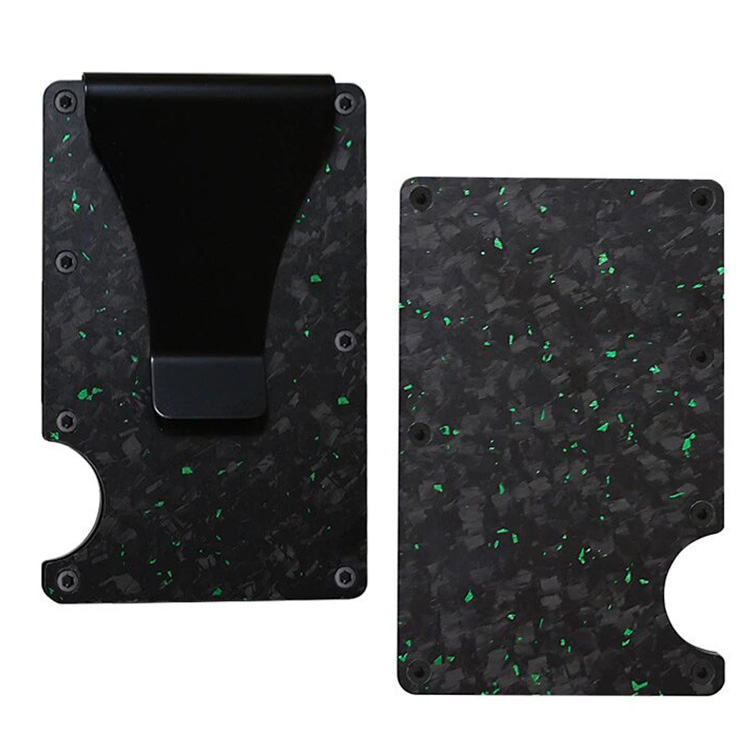
How to Interpret Your RFID Wallet Test Results
The following matrix provides a practical way to interpret common results.
| Test result | What it may indicate | What it does not prove |
| Card works normally outside the wallet | The card and test setup provide a usable baseline | Nothing about the wallet yet |
| Phone cannot detect the card inside the closed wallet | Positive indication of shielding under that test | Complete protection in every condition |
| Phone can still detect the card | Possible shielding weakness or test-condition issue | The exact cause without further testing |
| Contactless reader cannot detect the card | Evidence of effective shielding under the tested conditions | Universal protection against every reader |
| Contactless reader can still detect the card | Possible incomplete shielding under those conditions | The exact structural cause |
| Results change when the card is moved | Possible coverage, edge, or construction limitation | A specific defect without further inspection |
| Foil blocks detection but the wallet does not | Possible insufficient shielding under the test conditions | Exact material or manufacturing defect |
| Results remain consistent across multiple positions and tests | Stronger evidence of effective shielding | Formal laboratory certification |
The practical rule
Establish a baseline, keep the test conditions as consistent as possible, repeat the test, and compare more than one method when practical.
What Matters in RFID Wallet Shielding Quality
From a manufacturing and quality-control perspective, RFID shielding is not simply a matter of adding conductive material to a wallet.
The material, coverage, construction, and way the wallet behaves during use all matter.
Shielding Material
The conductive material needs to be suitable for the intended application and incorporated consistently into the wallet structure.
Simply including a conductive layer does not automatically guarantee effective shielding.
Coverage
The shielding needs to cover the relevant card-carrying area.
Partial coverage can create areas where the card is more exposed.
Continuous Construction
The shielding structure should be designed with attention to seams, edges, openings, and transitions between panels.
A well-performing material can still produce inconsistent results if the overall construction leaves significant weak areas.
Structural Stability
Everyday use can change the shape of a wallet.
Folding, compression, repeated loading, and carrying multiple cards can affect how the shielding layer and card compartments interact.
For this reason, product quality evaluation should consider realistic use conditions rather than testing only a new, empty wallet.
Consistent Testing
A useful quality-control process should use consistent equipment, test conditions, card position, and repeat measurements.
The objective is not simply to obtain one successful demonstration.
It is to determine whether the shielding performs consistently under the conditions for which the product is designed.
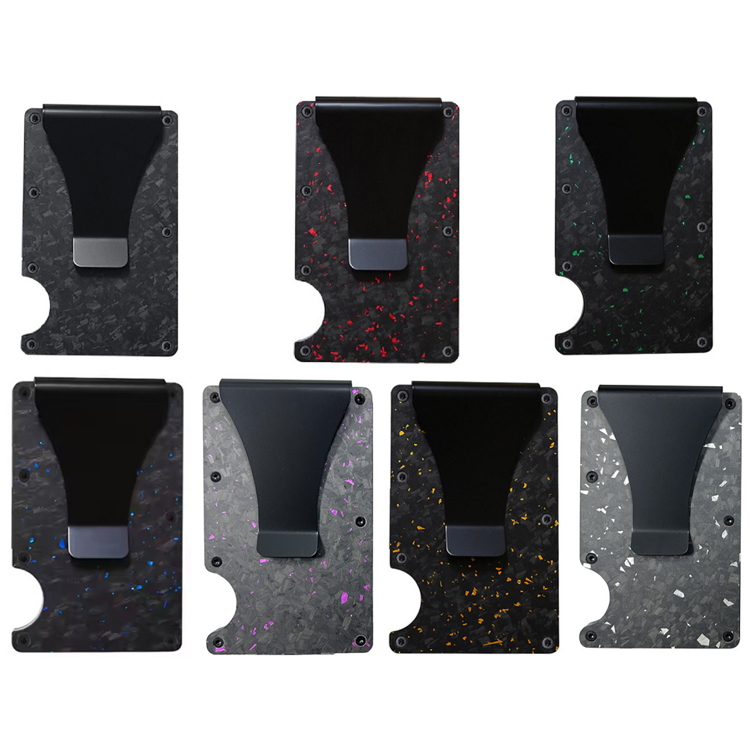
What to Check Before Buying an RFID-Blocking Wallet
You do not need professional equipment to make a more informed buying decision.
Focus on the construction and the evidence behind the product's claims.
1. Shielding Coverage
Look for information showing that the card-carrying areas are actually protected rather than assuming that any wallet labeled “RFID-blocking” provides complete coverage.
2. Construction Quality
Pay attention to:
stitching;
edges;
seams;
card compartments;
lining;
how the wallet closes.
These details can affect the continuity of the shielding structure.
3. Realistic Performance Claims
Be cautious with claims such as:
“100% RFID protection”
unless the manufacturer provides meaningful information about what was tested and under which conditions.
A useful test claim should identify the relevant card or technology and provide enough information to understand the testing conditions.
4. Intended Card Capacity
Consider how many cards the wallet is designed to carry.
A wallet should be evaluated under realistic loading conditions rather than only when empty.
5. Evidence of Testing
If a manufacturer provides test information, look for specific testing details rather than relying only on a marketing label.
Conclusion
Testing an RFID-blocking wallet does not require specialized equipment for a useful first check.
Start by confirming that your card can be detected normally outside the wallet. Then place it completely inside the closed wallet and compare the result using an NFC-capable phone, contactless reader, or other suitable equipment.
For a stronger evaluation, repeat the test with the card in different positions and use consistent testing conditions.
Most importantly, do not treat one successful or failed test as absolute proof of complete RFID protection.
Partial shielding, edge and seam construction, card position, wallet loading, orientation, and differences between readers can all affect the result.
From a manufacturing perspective, effective RFID shielding depends on more than the presence of a conductive material. Coverage, construction continuity, structural stability, and consistent testing all contribute to reliable performance.
If you are evaluating RFID-blocking wallets for personal use or bulk sourcing, you can browse our range of RFID-blocking wallet designs and compare their construction and intended applications.
Frequently Asked Questions
Can I reliably test an RFID-blocking wallet with my smartphone?
A smartphone NFC test is useful as a preliminary screening method, but it is not a universal RFID performance test.
The result can depend on the phone, card, application, position, distance, and other testing conditions.
For stronger verification, repeat the test and compare the result with another suitable method.
Why does my RFID wallet pass some tests but fail others?
Different results can occur because of differences in card position, reader sensitivity, orientation, shielding coverage, edges, seams, or wallet deformation.
It does not necessarily mean that one test is wrong.
Repeat the tests under consistent conditions and check whether the result changes when the card is moved or the testing device is changed.
Do all RFID-blocking wallets provide the same level of protection?
No.
RFID shielding performance depends on factors such as shielding coverage, construction, card position, and testing conditions.
Price, exterior material, or an RFID-blocking label alone cannot establish performance.
Can carrying too many cards affect RFID shielding?
It can.
Overloading a wallet may change its shape, stretch card compartments, or alter how the shielding structure closes around the cards.
The effect depends on the wallet's construction and intended capacity, so testing under realistic loading conditions is more useful than testing an empty wallet.
Can an RFID wallet block every RFID signal?
Not necessarily.
RFID and NFC systems can operate under different technologies, frequencies, cards, and reader configurations.
A wallet designed for contactless payment or identification cards should be evaluated against the type of card and technology it is intended to protect.
Is a visual inspection enough to prove that an RFID wallet works?
No.
Visual inspection can reveal potential construction problems, but it cannot measure shielding performance.
Electronic testing is needed to determine whether the wallet actually reduces card detection under the tested conditions.
Author
RFID wallet product specialist with experience in RFID-shielded wallet manufacturing and product quality evaluation.