

Views: 338 Author: Professor Leon Publish Time: 09-02-2026 Origin: Site


Content Menu
● 1. The B2B Buyer's Guide to China Ladies Travel Wallet Wholesale
● 2. What Types of Ladies Travel Wallets Are Available for Wholesale?
● 3. What Quality and Performance Factors Should You Evaluate?
● 4. How Do You Evaluate China Ladies Travel Wallet Wholesale Suppliers?
● 5. What Are the Key Quality Indicators for Wholesale Buyers?
● 6. What Industry Standards and Certifications Apply?
● 7. How Does the Production Process Work?
● 8. What Customization and OEM/ODM Options Are Available?
● 9. What Are the MOQ, Lead Time, and Shipping Considerations?
● 10. How Do We Meet These Standards?
● 11. Common Questions About China Ladies Travel Wallet Wholesale
8 min read
The first question most importers ask is never about price. It is about whether a factory can replicate the sample quality across 5,000 units without the stitching pulling loose or the RFID shielding failing. The transaction begins with trust, and trust begins with understanding how the product is actually made.
This guide covers the product categories, material trade-offs, and the exact information a manufacturer needs to give you an accurate quote. You will also learn the four-step RFQ process that separates serious buyers from tire-kickers.
The ladies travel wallet category splits into three distinct product types. Each serves a different customer profile and carries different manufacturing requirements.
RFID-Blocking Wallets — These feature metallic shielding to protect passport chips and credit cards from digital theft. Common constructions include die-cast zinc alloy, brushed aluminum, or PU leather with an internal metal mesh layer. The RFID-blocking function is the primary selling point, and it directly impacts material costs.
Multi-Functional Passport Holders — These act as an all-in-one travel hub. They hold passports, boarding passes, cards, currency, and sometimes a pen or SIM card. They are typically made from nylon, canvas, or full-grain leather. The complex stitching and multiple compartments increase assembly time, which affects lead times more than material costs.
Compact and Minimalist Wallets — For travelers who carry only the essentials. These are small cardholders with cash clips or zip-around designs. They are usually made from high-strength aluminum or thin-profile leather. Premium anodized finishes are popular in this segment.
The category you choose determines your target price point, your supplier's production complexity, and your retail positioning.
Quality in travel wallets comes down to four measurable factors: material integrity, RFID effectiveness, hardware durability, and stitching consistency.
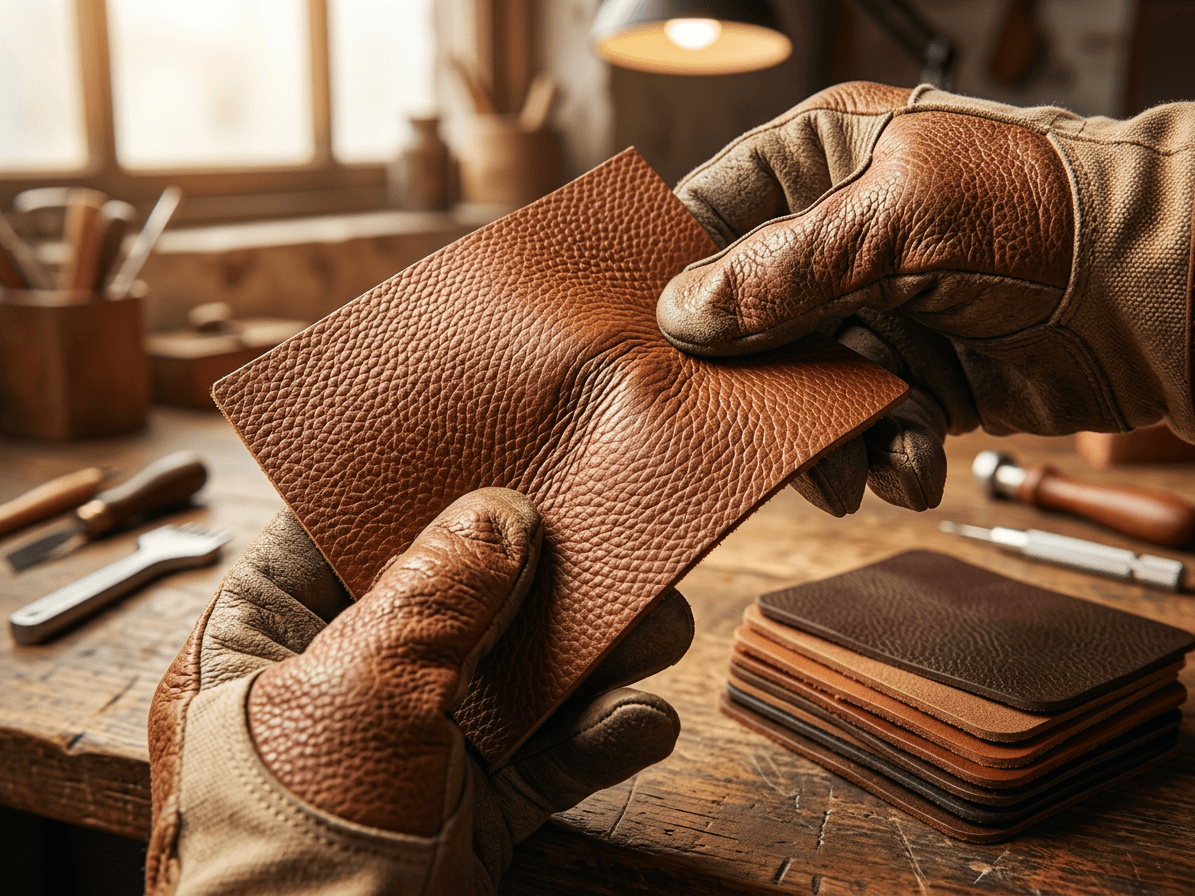
Material Integrity — For metal wallets, check the alloy grade. Zinc alloy (Zamak 3) is standard for die-casting. Aluminum should be 6061 or 7075 grade for structural strength. For leather, full-grain is the highest grade; PU leather is a cost-effective alternative but will not age as gracefully.
RFID Effectiveness — Not all RFID-blocking claims are equal. A wallet with a full metal lining blocks all frequencies (LF, HF, UHF). Wallets with only a metal mesh layer may block HF (13.56 MHz, used by credit cards) but fail on other frequencies. Ask for a signal-blocking test report.
Hardware Durability — Zippers, snaps, and buckles fail first. YKK zippers are the industry benchmark. Snap buttons should undergo 10,000+ open-close cycles in testing.
Stitching Consistency — Check the stitches per inch (SPI). Leather goods should have 6–8 SPI for durability. Loose threads, skipped stitches, or uneven tension indicate poor quality control.
One honest caveat: metal wallets are not always the right choice. Aluminum frames add weight, and the hard edges can scratch other items in a handbag. For buyers targeting the mass market, PU leather with an RFID-blocking lining is often the more practical option.
Supplier evaluation requires a framework. The following criteria separate manufacturing partners from middlemen.
| Factor | Metal (Aluminum/Zinc) | Leather (PU/Real) | Plastic (ABS/PC) |
|---|---|---|---|
| RFID Protection | Excellent (inherent) | Requires lining | Requires lining |
| Tooling Cost | High (CNC/die-cast) | Low-Moderate | Moderate (injection mold) |
| Perceived Value | Premium | Premium (real) / Mid (PU) | Budget |
| Weight | Heavier | Light-Medium | Lightest |
| Durability | Excellent | Good (real) / Fair (PU) | Good |
| Lead Time | Longer (CNC) | Moderate | Moderate |
OEM (Original Equipment Manufacturer) — You provide the design and specifications. The factory produces to your exact drawings. This is necessary for unique branding, patented designs, or specific material requirements.
ODM (Original Design Manufacturer) — The factory offers existing designs that you customize with your logo, colors, and packaging. This is the fastest route to market and avoids mold costs entirely.
For first-time importers, starting with an ODM base model is the pragmatic choice. Test the market before committing to expensive custom molds.
Vague response to RFQs. A supplier who cannot answer specific questions about materials, MOQs, or lead times will not handle production problems well.
No sample policy. Factories that refuse pre-production samples are hiding something.
Unrealistic pricing. If a quote is 40% below the market average, quality is being sacrificed somewhere.
Trading company pretending to be a factory. Ask for photos of the production floor and a video call during production.
Experienced buyers inspect three things before placing a bulk order: the pre-production sample, the production line, and the final inspection report.
The pre-production sample confirms color, material, and workmanship. The production line visit (or live video call) confirms the factory has the capacity and equipment to fulfill your order. The final inspection report (from SGS, QIMA, or similar) confirms the finished goods meet your specifications.
Choose a supplier who offers flexible MOQs for trial orders if you are testing a new market or launching a new design.
Choose a supplier with strict MOQs and higher unit pricing if you need consistent quality at scale and have established demand. The lower unit price often justifies the larger commitment.
The travel wallet industry does not have a single mandatory certification, but several standards apply depending on your target market:
REACH and RoHS — Required for EU markets. These cover chemical safety in materials and finishes.
Prop 65 — Required for California. This covers specific chemicals in consumer products.
ISO 9001:2015 — Quality management certification for the factory itself.
ASTM D5486 — Relevant for packaging materials, if applicable.
RFID effectiveness can be verified against ISO 14443 (proximity cards) and ISO 15693 (vicinity cards). Ask for test reports against these standards.
The production process varies by material. For aluminum wallets, the process is:
CNC Machining — Aluminum sheets are cut and milled into the wallet body parts. This requires precise tooling and experienced operators.
Surface Finishing — Anodizing (for color) or powder coating (for texture). Anodizing creates a durable, scratch-resistant surface.
Assembly — Parts are fitted with hinges, closures, and interior card slots. RFID-blocking layers are installed if required.
Quality Inspection — Each unit is checked for fit, finish, and function. RFID blocking is spot-tested.
Packaging — Individual polybags or retail-ready boxes.
For leather wallets, the process shifts:
Cutting — Leather is die-cut into pattern pieces.
Stitching — Pieces are sewn together. This is the most labor-intensive step.
Edge Painting — Exposed edges are painted and sealed for a clean finish.
Hardware Installation — Snaps, zippers, and rivets are attached.
Final Inspection — Check stitching, hardware function, and RFID lining placement.
Customization levels range from simple logo printing to full redesign.
Level 1: Logo Customization — Debossed, embossed, or printed logos on existing designs. This requires only artwork confirmation and adds minimal lead time.
Level 2: Color and Material Changes — Changing the anodized color, leather type, or hardware finish. This may require new material sourcing but no new tooling.
Level 3: Structural Modifications — Changing card slot layouts, adding features, or altering dimensions. This may require new molds or CNC programming.
Level 4: Full Custom Design — You provide drawings or a 3D model; the factory engineers the manufacturing process. This is the highest-cost option but gives you full ownership of the design.
A good factory provides DFM (Design for Manufacturing) feedback at Level 3 and 4. This means the engineering team reviews your design and suggests modifications that reduce cost or improve manufacturability.
MOQ for stock designs (ODM): Typically 300–500 pieces. Some factories allow mixed colors within the same design to meet this threshold.
MOQ for custom OEM designs: Typically 1,000 pieces. This covers mold costs and production setup.
Production lead time: 25–35 days after deposit and artwork approval. Complex designs with new molds take longer.
Sample lead time: 3–7 days for production, 3–5 days for express shipping (DHL/UPS/FedEx).
Shipping: Sea freight is cost-effective for bulk orders. Air freight is suitable for urgent restocks or small quantities. FOB (Free on Board) pricing includes factory-to-port transportation, while EXW (Ex-Works) requires you to arrange all logistics.
As a manufacturer specializing in metal and leather accessories, our production floor is set up around the exact requirements discussed above.
Our in-house CNC machining allows us to control quality and tolerance on aluminum and zinc alloy components. We do not outsource critical steps, which means we can maintain the tight tolerances required for effective RFID blocking. The metal frames must fit precisely; gaps compromise signal shielding.
For RFQ processing, we follow the industry-standard timeline: a detailed quotation is delivered within 24 hours of receiving your specifications. The quote includes unit price (FOB or CIF), mold costs, sample costs, and delivery time.
Our monthly production capacity is 300,000+ pieces. This scale allows us to offer flexible MOQs for trial orders while maintaining the infrastructure for mass production. We provide OEM and ODM solutions for brands, wholesalers, and online sellers worldwide.
If you have a design ready or need assistance selecting materials that fit your budget, our engineering team can provide DFM feedback before you commit to tooling. This saves costs and prevents production surprises.
For a detailed analysis of your project, contact Jerry Lee at sales@gstartec.com.
What is the minimum order quantity for custom ladies travel wallets?
ODM designs (existing templates) typically start at 300–500 pieces. Fully custom OEM designs requiring new molds start at 1,000 pieces. Many factories offer flexible terms for first-time clients to test the market.
How long does sample production take?
Standard samples take 3–7 days to produce and 3–5 days for express delivery. Always request a pre-production sample before mass production to verify color, material, and workmanship.
How can I verify RFID blocking quality?
Request a signal-blocking test report. Ask for a physical demonstration where a card inside the wallet cannot be read by a standard RFID reader. Verify the wallet uses full metal lining or an RFID-blocking fabric layer.
Can I mix colors and styles in one order?
Yes, but this affects pricing. Factories typically require a minimum quantity per color (often 100–200 pieces) to manage raw material inventory and production efficiency.
What is the difference between FOB and EXW pricing?
EXW means you handle all logistics from the factory door. FOB means the factory handles transportation to the port and loading onto the ship. FOB is generally easier for international buyers.
ISO 14443-1:2018 Identification cards — Contactless integrated circuit cards. https://www.iso.org/standard/73598.html
ISO 15693-1:2018 Cards and security devices for personal identification. https://www.iso.org/standard/73599.html
Zamak 3 alloy specifications. https://www.azom.com/article.aspx?ArticleID=1395
YKK zipper quality standards. https://www.ykk.com/


