

Views: 415 Author: Professor Leon Publish Time: 09-02-2026 Origin: Site


Content Menu
● 1. Men's Wallet Manufacturers: A Complete OEM Sourcing Guide
● 2. What Do Men's Wallet Manufacturers Produce?
● 3. Factory Capabilities: What to Look For
● 4. Quality Control Systems in Wallet Manufacturing
● 5. OEM vs. ODM: How Manufacturers Serve Different Buyers
● 6. How to Evaluate and Select a Men's Wallet Manufacturer
● 7. Relevant Industry Standards and Certifications
● 8. Production Process: From Raw Material to Finished Wallet
● 9. How We Meet These Manufacturing Standards
9 min read
Jerry Lee, a sourcing manager in Shenzhen, watched a promising product launch collapse last spring. The factory he had contracted produced beautiful samples, but the bulk shipment arrived with misaligned card slots and uneven stitching on 30% of the units. The retailer canceled the order. The lesson was not about quality control — it was about understanding what happens inside a wallet factory before signing a contract.
This guide provides a factory-level view of what men's wallet manufacturers actually do. It covers production categories, equipment requirements, quality systems, and procurement frameworks that help buyers evaluate suppliers with confidence.
Men's wallet manufacturers produce a range of products including leather bi-folds, metal cardholders, RFID-blocking wallets, and hybrid designs combining multiple materials. Each category requires different manufacturing processes, equipment, and skill sets.
The wallet market is not monolithic. Buyers sourcing men's wallets typically fall into one of several product categories:
| Category | Primary Materials | Key Processes | Typical Complexity |
|---|---|---|---|
| Leather wallets | Full-grain, top-grain, PU leather | Cutting, stitching, edge painting | Moderate — skilled labor intensive |
| Metal wallets | 6061 aluminum, stainless steel, titanium | CNC machining, anodizing, laser engraving | High — equipment intensive |
| RFID-blocking wallets | Leather/metal + shielding layers | Standard construction + foil insertion | Moderate — material dependent |
| Hybrid wallets | Metal frame + leather/elastic inserts | Multi-material assembly | High — precision alignment required |
| Smart wallets | Various + electronic components | Standard construction + electronics integration | Very high |
Leather selection directly impacts cost and durability. Full-grain leather retains the natural surface and develops a patina over time. Top-grain leather is sanded to remove imperfections, making it thinner and more uniform. PU leather offers a lower-cost alternative but degrades faster.
For metal wallets, 6061 aluminum is the most common choice due to its strength-to-weight ratio and compatibility with anodizing. Stainless steel adds weight but increases durability. Titanium sits at the premium end with superior corrosion resistance.
RFID blocking requires either a metal foil layer or specialized conductive fabric. Not all manufacturers integrate this effectively — some rely on the metal housing of aluminum wallets, which provides partial shielding at best.
The most reliable men's wallet manufacturers control their critical production steps in-house. Verify whether the factory operates its own CNC machining, stitching lines, and assembly rather than outsourcing these functions.
A manufacturer that outsources key steps creates communication gaps. If the wallet factory handles only assembly but sources CNC machining from another vendor, quality issues become harder to trace. In-house production enables tighter tolerances, faster iteration during sampling, and direct accountability for defects.
Buyers should ask direct questions:
Do you operate your own CNC machining centers? How many?
Are stitching and edge painting done in-house or by subcontractors?
What is your internal defect rate for the product category we are ordering?
Different wallet types require different equipment:
CNC machining centers for metal wallets — 4-axis or 5-axis machines allow complex geometries
Laser cutting and engraving systems for precise leather cutting and logo application
Automated stitching machines for consistent seam quality on leather products
Injection molding machines for plastic cardholders and components
Anodizing lines for aluminum surface finishing
Equipment age matters. A factory running 10-year-old CNC machines will struggle with tight tolerances on complex metal wallet designs. Ask for equipment lists and maintenance records during factory audits.
Monthly output capacity determines whether a manufacturer can handle your order volumes. A factory producing 50,000 units per month may struggle with a sudden 200,000-unit order. Buyers planning seasonal spikes or multiple SKUs should verify capacity flexibility before committing.
Quality control in wallet manufacturing operates at three stages: incoming material inspection, in-process checks during production, and final pre-shipment inspection. Each stage requires specific testing protocols and documentation.
Raw materials determine final quality. A factory should verify:
Leather grade and thickness against specifications
Metal alloy composition certificates from suppliers
RFID shielding material effectiveness
Hardware batch consistency (snaps, rivets, magnetic closures)
During production, inspectors check:
Dimensional accuracy — wallets must fit standard cards and folded currency
Stitching tension and seam strength
Metal edge finishing and anodizing uniformity
Alignment of card slots and compartments
Functionality of closures and hinges
RFID wallets require specific testing. Not all factories have the equipment to verify blocking effectiveness. Buyers should request test reports or third-party verification for RFID products.
Material certifications matter for international shipping. REACH compliance covers chemical safety in the EU. RoHS restricts hazardous substances. ISO 9001 indicates a documented quality management system. Buyers should request current certificates and verify them with the issuing bodies.
OEM (Original Equipment Manufacturing) means the buyer provides the design and the factory builds it. ODM (Original Design Manufacturing) means the factory provides the design and the buyer brands it. Each suits different business situations.
OEM suits buyers with complete design files and existing brand equity. The buyer controls every specification — dimensions, materials, hardware, packaging. This route requires more upfront development time but results in a unique product that competitors cannot easily replicate.
ODM suits buyers entering the market quickly or lacking design resources. The manufacturer offers existing designs that can be customized with logos, colors, and minor modifications. ODM reduces development costs and accelerates time to market. Many successful brands start with ODM and transition to OEM as they grow.
Branding options vary by material:
Leather: embossing (debossing creates recessed logos), foil stamping
Metal: laser engraving, screen printing, anodized color contrast
Packaging: custom boxes, pouches, inserts — often overlooked but critical for retail presentation
Evaluating men's wallet manufacturers requires verifying credibility through factory audits, requesting physical samples, and understanding MOQ and pricing structures before committing to production.
Request a live video walkthrough of the production floor. A manufacturer that refuses or delays this request may have something to hide. Check export records, request client references, and verify business registration documents. Years in business and export experience provide context but do not guarantee capability.
Always request samples before bulk production. A quality manufacturer produces samples within 5–15 days depending on complexity. Bulk production typically requires 15–45 days after sample approval. Be wary of manufacturers promising 7-day bulk delivery on complex metal wallets — quality takes time.
Minimum order quantities vary significantly by product category. Metal wallets often require MOQs of 300–500 units due to CNC tooling costs. Leather wallets may have lower MOQs of 100–300 units if standard patterns are used. Some manufacturers offer flexible MOQs for startups and pilot runs.
A critical trade-off: lower MOQs often accompany higher per-unit pricing. Buyers should compare total costs — including tooling fees, packaging, and shipping — not just unit prices. Ask for itemized quotes that separate product cost from tooling and setup fees.
What is your defect rate on similar products?
Can you provide a pre-shipment inspection report?
What is your policy for defective units in bulk orders?
Do you handle customs documentation and export logistics?
What is your lead time for reorders after the initial production?
Refuse to provide a physical sample before bulk payment
Cannot specify which materials and grades they use
Lack verifiable certifications for their claims
Offer prices significantly below market rates — quality always costs something
Cannot articulate their quality control process in specific terms
Watch for vague responses to technical questions. A manufacturer that cannot explain how they handle RFID blocking testing or what tolerance they achieve on CNC-machined card slots may lack the capability you need. Professional manufacturers discuss these details readily.
Wallet manufacturers operate under material safety regulations including REACH and RoHS, with ISO 9001 as the most common quality management certification. RFID products may require additional testing for blocking effectiveness.
Key standards include:
REACH (EU): restricts hazardous chemicals in manufactured products
RoHS (EU): limits hazardous substances in electrical and electronic equipment
ISO 9001: quality management system certification
Proposition 65 (California): requires warnings for products containing listed chemicals
Material certifications matter most for leather sourcing. Leather tanneries should provide documentation on chrome content and chemical treatments. Buyers shipping to the EU should verify REACH compliance documentation before production.
Wallet manufacturing follows a logical sequence: material preparation, cutting or machining, assembly, finishing, and packaging. Each stage has specific quality checkpoints and common failure modes.
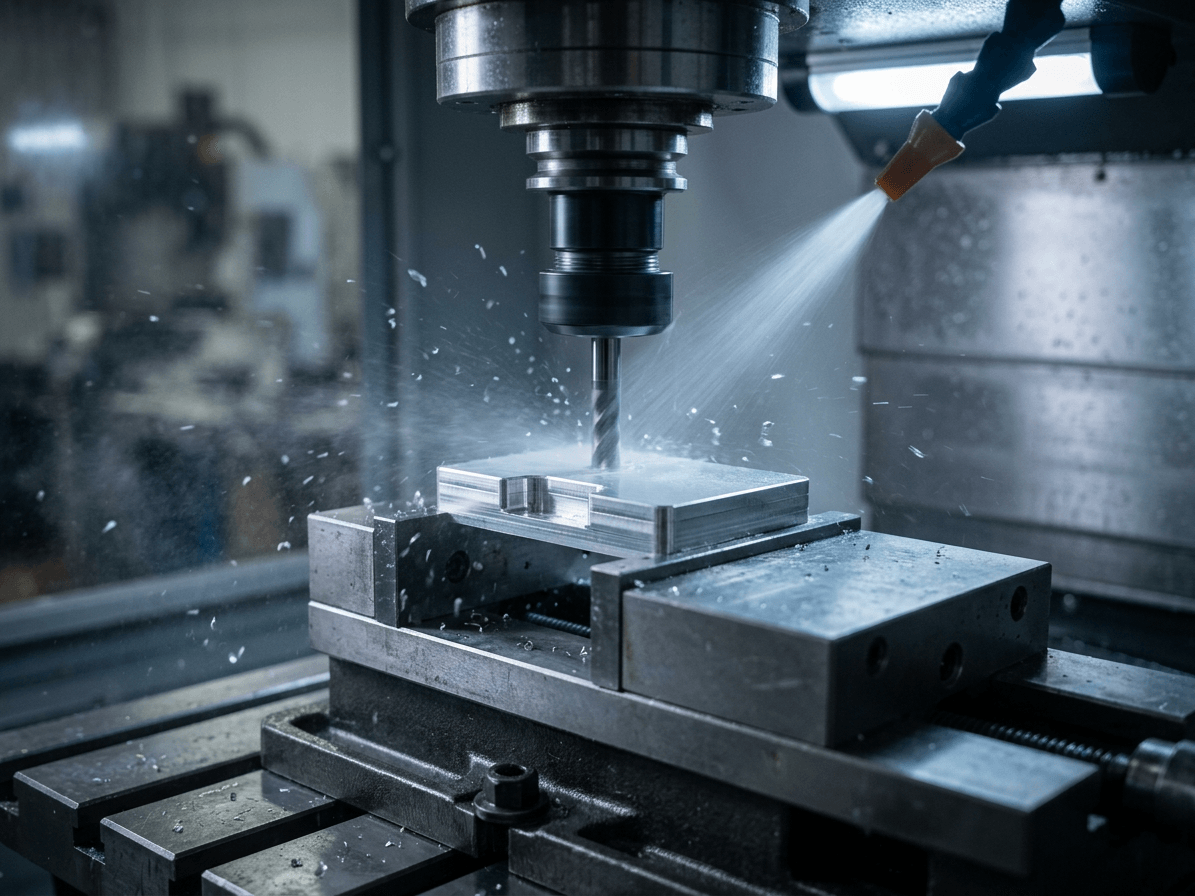
CNC machining: Aluminum or stainless steel plates are machined into wallet frames and cardholder shells
Deburring and surface preparation: Edges are smoothed; surfaces prepared for finishing
Anodizing or coating: Aluminum receives anodized color finishing; stainless steel may be brushed or polished
Laser engraving: Logos and designs applied
Assembly: Elastic bands, hinges, or leather inserts are fitted
Final inspection: Dimensional checks, function testing, packaging
Cutting: Leather is cut to pattern — either by hand or using die-cutting presses
Skiving: Edges are thinned where leather folds to reduce bulk
Stitching: Panels are stitched together — hand-stitching for premium products, machine stitching for volume
Edge painting: Exposed edges receive multiple coats of edge paint
Hardware attachment: Snaps, rivets, or magnetic closures fitted
Final inspection: Stitching tension, alignment, and finish checked
Choose a metal wallet manufacturer if your brand targets urban professionals seeking slim, durable, RFID-secure products. Choose a leather wallet manufacturer if your customers value traditional aesthetics, natural materials, and the patina that develops with age.
Choose a full-package manufacturer if you need design support, prototyping, and production under one roof. Choose a specialized manufacturer if you have extremely specific requirements — such as exotic leathers or complex metal mechanisms — that demand deep expertise in one area.
Understanding the industry standards above is essential. Here is how we apply them in practice as a men's wallet manufacturer operating in Shenzhen.
Our factory has spent over 13 years manufacturing wallets, cardholders, and key organizers for global brands. We have produced thousands of wallet styles across leather, metal, and hybrid categories. This range matters because it means we have encountered — and solved — most of the technical challenges that arise during product development.
Our monthly production capacity exceeds 300,000 units. This scale supports both startups launching their first product and enterprise clients running multi-SKU programs. We operate in-house CNC machining centers for metal wallets alongside dedicated leather production lines. Critical steps are not outsourced. This control directly addresses the quality control concerns discussed earlier — when machining, finishing, and assembly happen under one roof, defects are traced and corrected faster.
Our quality system follows the three-stage approach outlined in this guide. Incoming materials are verified against specifications. In-process checks monitor dimensional accuracy and stitching quality. Final inspection tests functionality — card slots must hold cards securely, RFID blocking must perform as specified, metal edges must be smooth and uniformly finished.
For RFID wallets, we verify blocking effectiveness rather than assuming the metal housing provides protection. This matters because partial shielding creates a false sense of security for end users.
Our clients range from startups bringing their first design to life to Fortune 500 companies managing global programs. Wholesalers and top online shop sellers work with us for private label production. Supermarket chains source our products for retail distribution.
The OEM/ODM distinction matters here. If you have complete design files, our OEM service builds to your exact specifications. If you need faster market entry, our ODM team offers existing designs that we customize with your branding. We handle everything from prototyping to packaging — a full-package manufacturing service that reduces your vendor management burden.
Getting started is straightforward. Send us your design files or product concept, and our team responds with a quote within 24 hours. Samples follow quickly so you can validate quality before committing to bulk production. Our flexible MOQ policy accommodates pilot runs for new product testing.
Ready to start your custom men's wallet project? Contact our team for a quote within 24 hours.
European Chemicals Agency. REACH Regulation. https://echa.europa.eu/regulations/reach/understanding-reach
RoHS Directive. European Commission. https://environment.ec.europa.eu/topics/waste-and-recycling/rohs-directive_en
International Organization for Standardization. ISO 9001:2015 Quality management systems. https://www.iso.org/standard/62085.html
California Office of Environmental Health Hazard Assessment. Proposition 65. https://oehha.ca.gov/proposition-65


